
Bone plaque or panel, 2 scenes from the life of San Millàn de la Cogolla, Spain, 16th-17th century
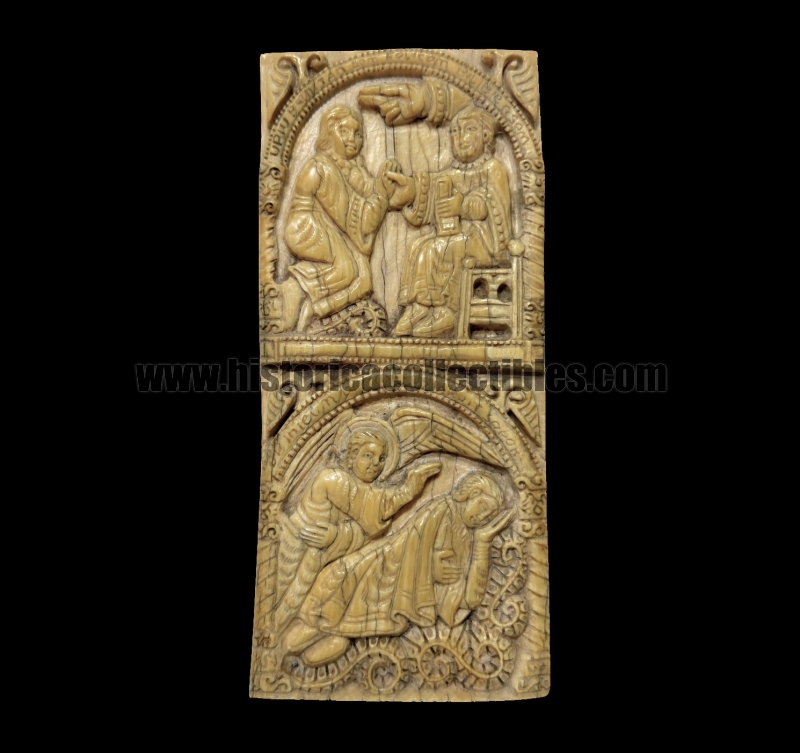
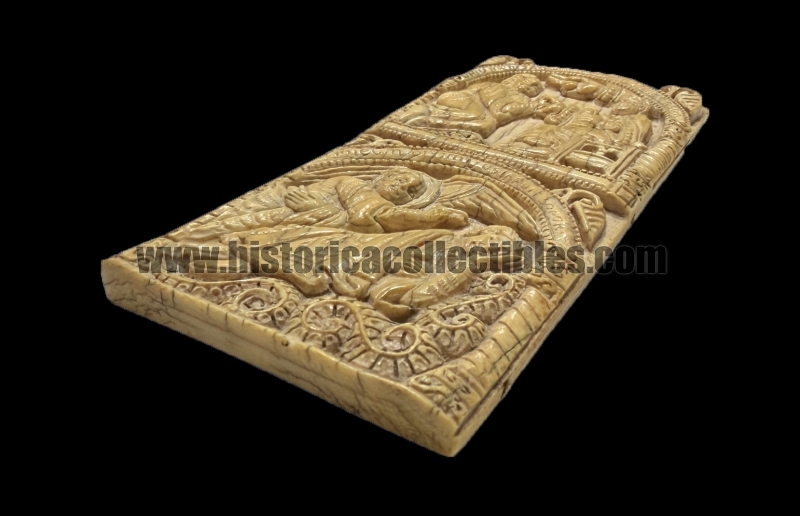
Bone plaque or panel depicting two scenes carved in bas-relief from the life of San Millán de la Cogolla, dated between the late 16th and early 17th centuries.
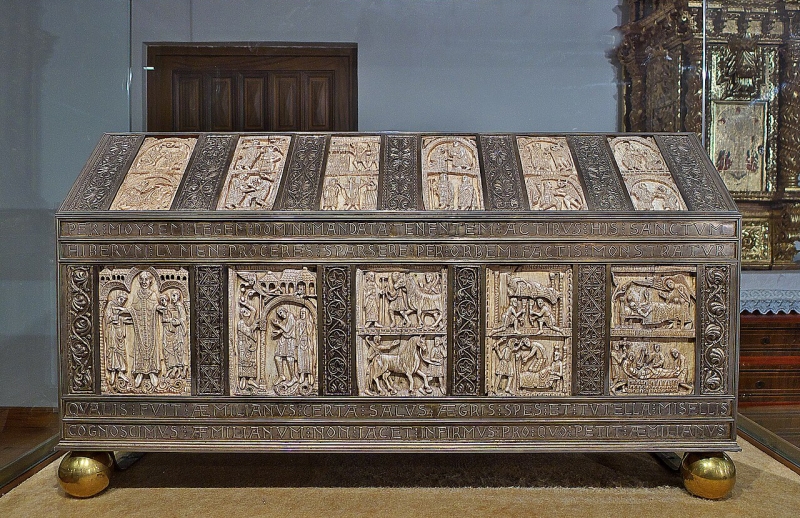
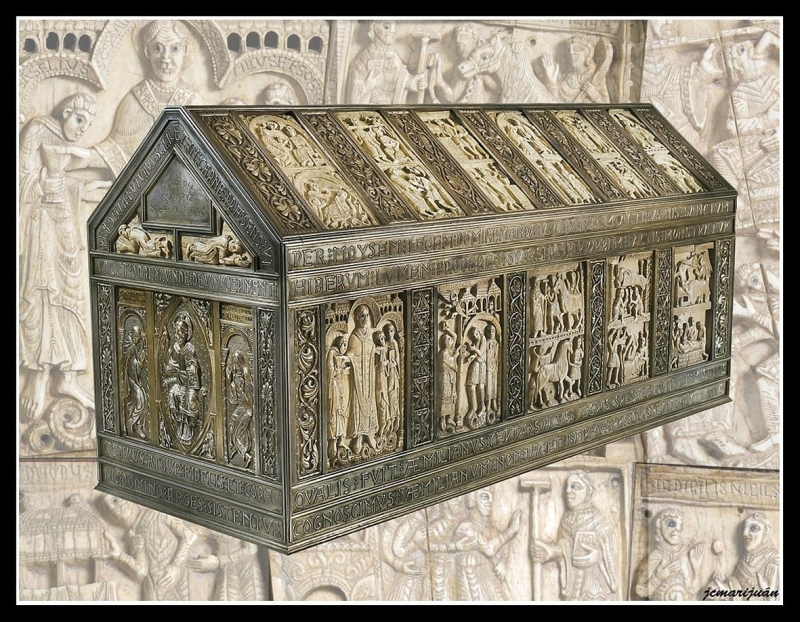
The original ivory plaque is kept at the Monastery of San Millán de Yuso, in San Millán de la Cogolla, in the Rioja region of Spain, and is set in the original reliquary ark, dated between 1060 and 1080, which houses the relics of the saint.
Over the centuries, moreover, although the original wooden core is still intact, the original ivory panels were largely dispersed and some, to this day, are preserved in important museums, including the Metropolitan Museum of Art and the Museum of Fine Arts in Boston.
Each tablet depicted scenes from the life of the Visigothic Hermit Saint Aemilian (Millán) and offered a hagiographic sequence, or a figurative narrative, depicting the main events of the saint's life.
Of the twenty-two original plaques that covered the nucleus, only sixteen remain, including the original, which was sculpted between the 16th and 17th centuries. It was likely deemed appropriate to create a second ark that could be transported for worship in other monastic or ecclesiastical structures, without violating the sacredness of the original relics preserved in an ark that, by the late 16th and early 17th centuries, boasted 500 years of history and was therefore very fragile.
This bone plaque, in fact, has three holes on each longer side, which were probably used to secure it.
It cannot be ruled out that this plaque was part of a series, created during the Renaissance, identical to the original because it was observed on site by the sculptor on the reliquary, to faithfully represent the life of the Saint.
Compared to the original ivory plaque dating to the 11th century, the faces of the figures here are softer and more rounded, revealing unmistakable signs of the transition to Mannerism. Furthermore, some details are rendered more detailed, as was becoming customary in sculptural art with the advent of the Renaissance.
The intention was not to deviate too far from the original, but the sculptor could not help but reflect the artistic influences and a more "contemporary" style of the 16th and 17th centuries, compared to the original, carved in the 11th century.
Excellent condition.
The object is documented by an important appraisal that defines its age and material.
Dimensions: approximately 15 cm x 6.5 cm.
References:
Álvarez da Silva, Noemi. "El trabajo de marfil en la España del siglo XI." PhD diss., Universidad de León, 2014. pp. 393–94, 515, fig. 333.
https://artofthemiddleages.com/s/main/item/147
https://www.taylorfrancis.com/chapters/edit/10.432...
Metropolitan Museum - Object Number: 1987.89: https://www.metmuseum.org/art/collection/search/469906
Museum of Fine Arts Boston - Accession Number36.626: https://collections.mfa.org/objects/64999https://collections.mfa.org/objects/64999