
Bronze Pommel, Rapier or Side Sword, Venice, second half of the 15th century
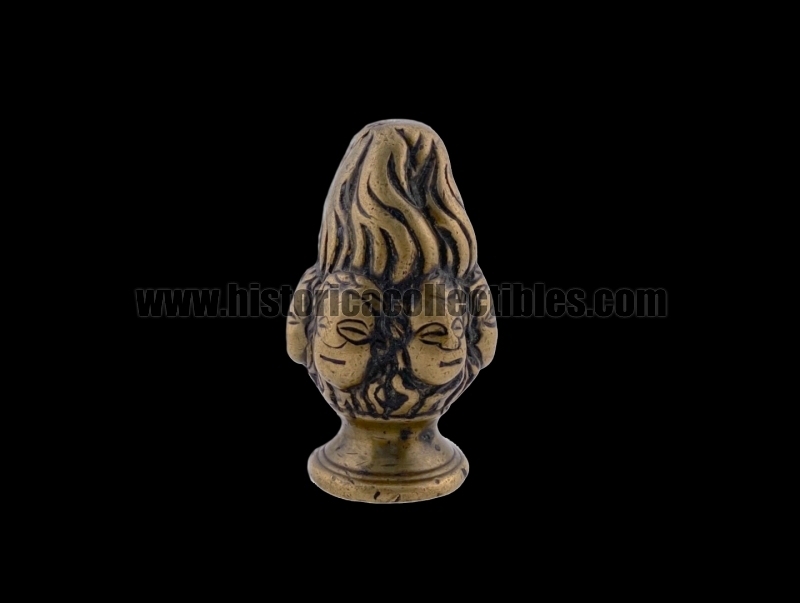
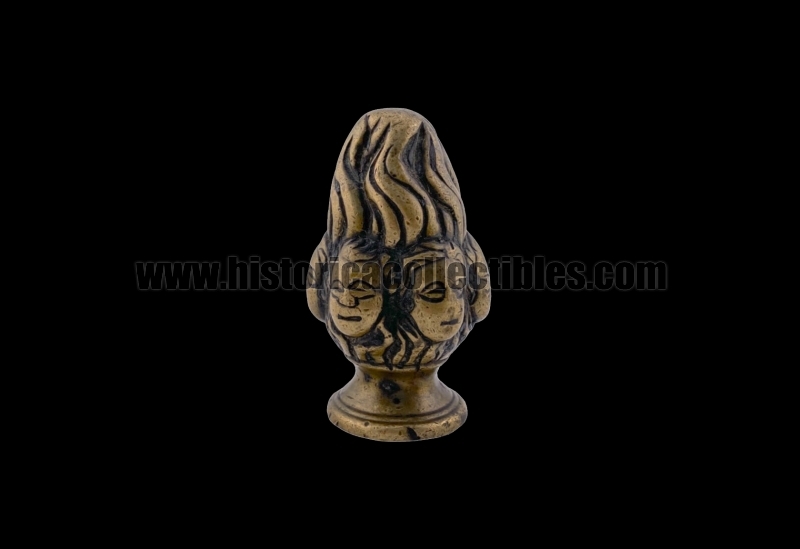
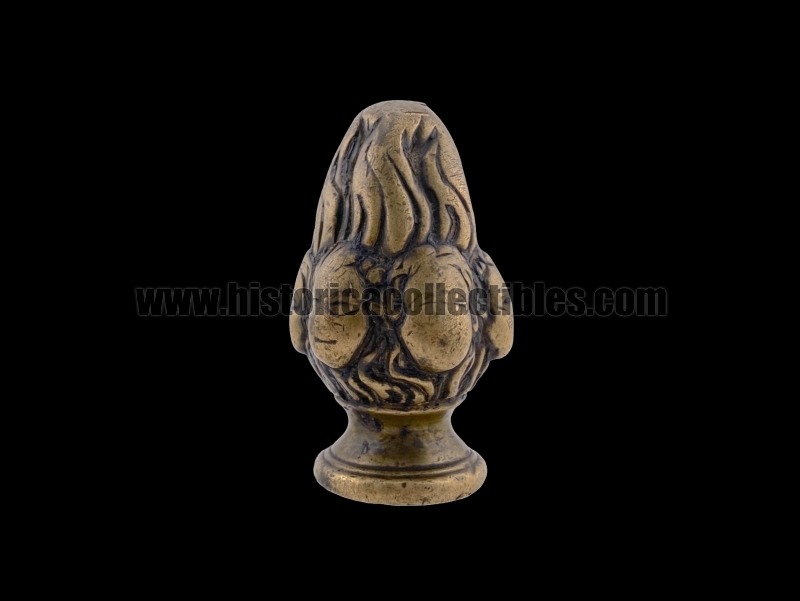
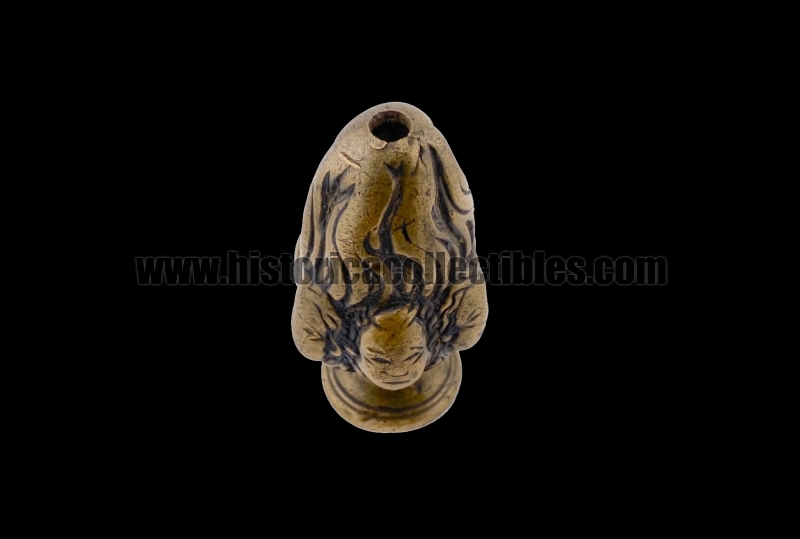
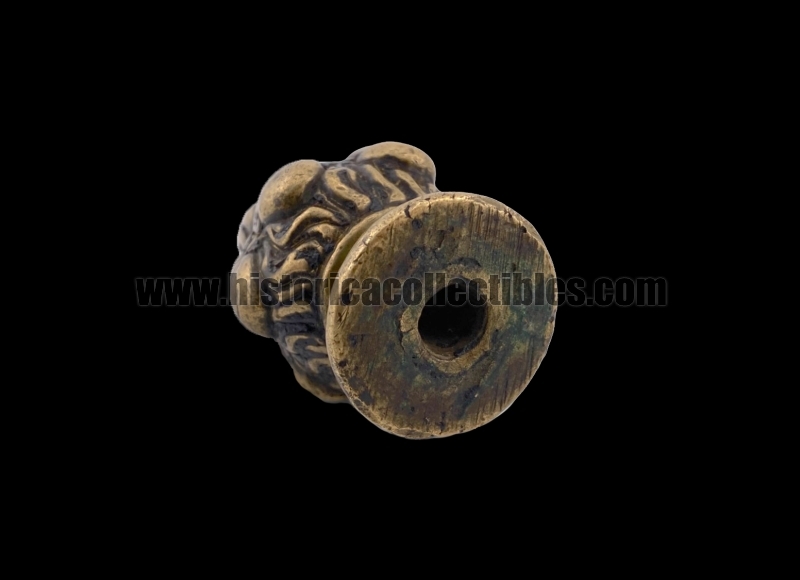
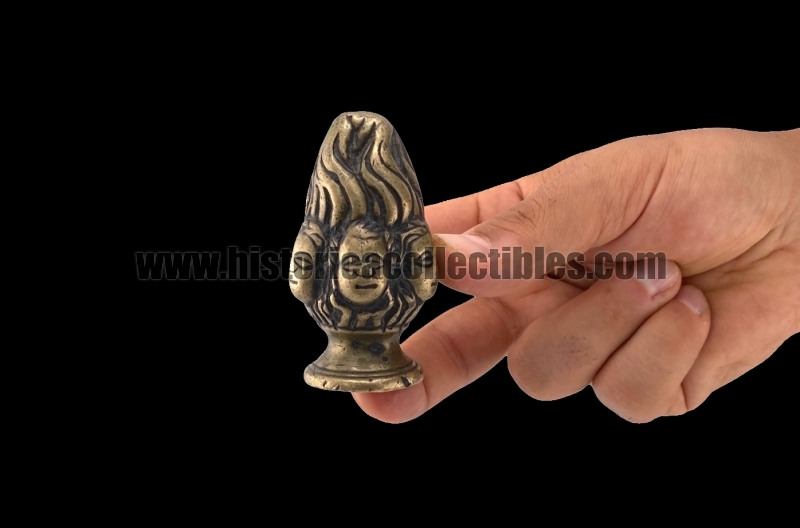
A large sword pommel, a rapier or a side sword, crafted of bronze in the shape of a pine cone and engraved with decorative elements in relief. It is divided by six flame-shaped ribs that begin just above the widest part (base) and end at the hole used to secure it to the handle by riveting. Furthermore, just under halfway up, the six ribs are adorned in the round with six high-relief faces with typical Gothic-Renaissance expressions, identifiable as "Geni" or "Guardian Nuns," who, since the Imperial Age, were considered supernatural entities tasked with protecting the individual and their home. These "Guardian Nuns" are distinguished from one another both by the different expressions imposed on their faces and by the uneven styles applied to their hair.
Given the salient features of this sword pommel, with six "facets" (usually two, rarely four), its pine cone shape, and its artistic execution, executed entirely in relief with chisel, it is believed that the sword may have been made at the specific request of a noble knight or other high-born nobleman.
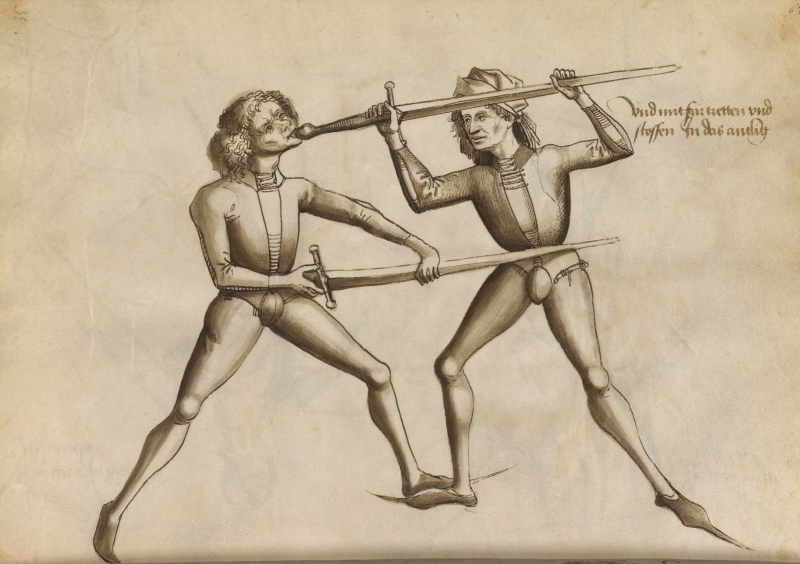
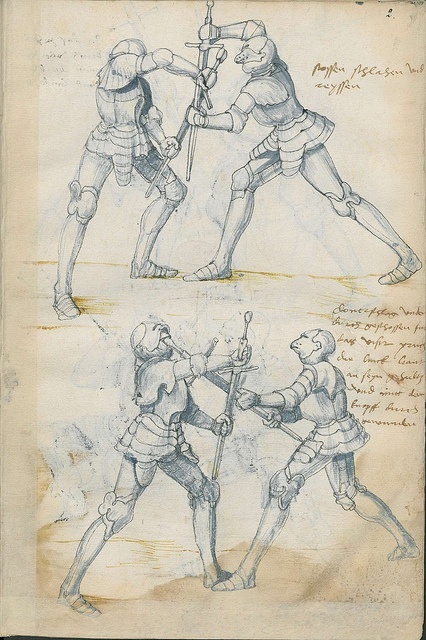
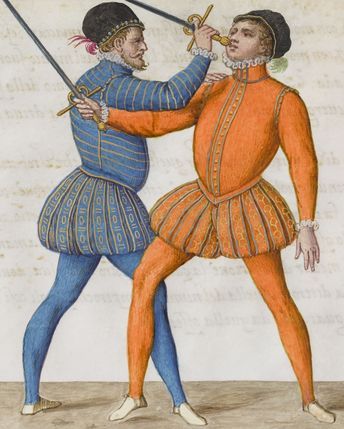
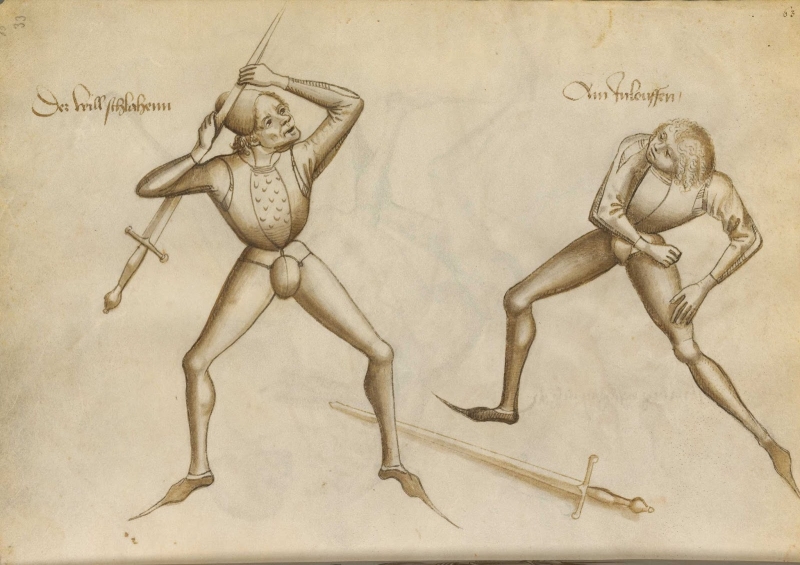
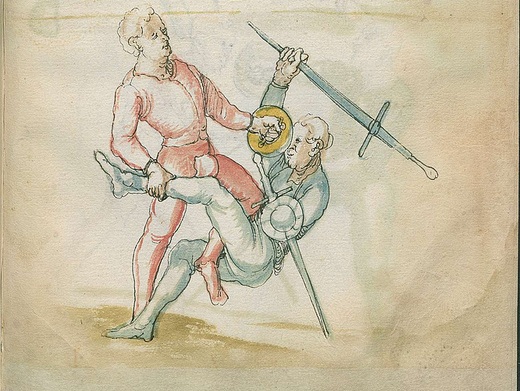
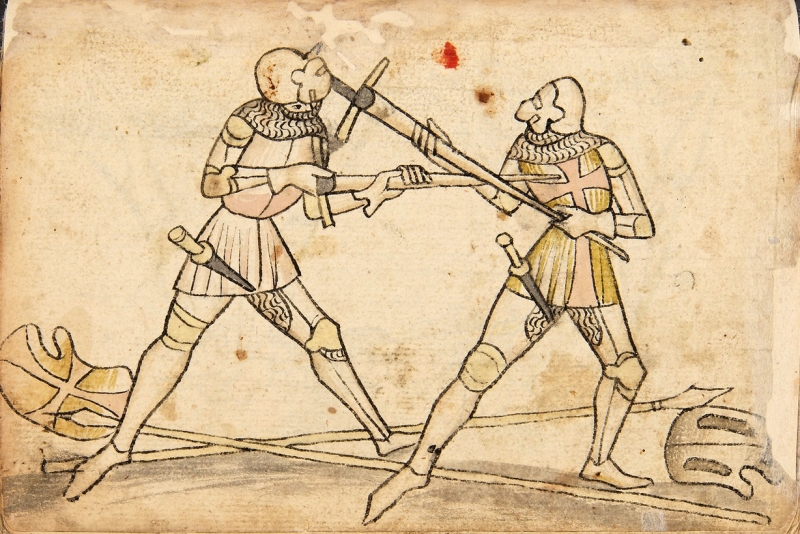
It was not uncommon at the time for these types of pommels, with their unique characteristics, to be used as actual mace heads with the sword held backwards. Indeed, this is evidenced by some original drawings from the Gothic-Renaissance period, which perfectly illustrate the methods in which they were used.
An important and unique sword pommel, crafted in bronze by a master swordsmith likely active in the territory of the Republic of Venice in the second half of the 15th century.
It measures 8x4.5 cm and weighs 310 grams.