
Casket (wooden and bone) engraved and sculpted, Tuscany, first half of the 16th century
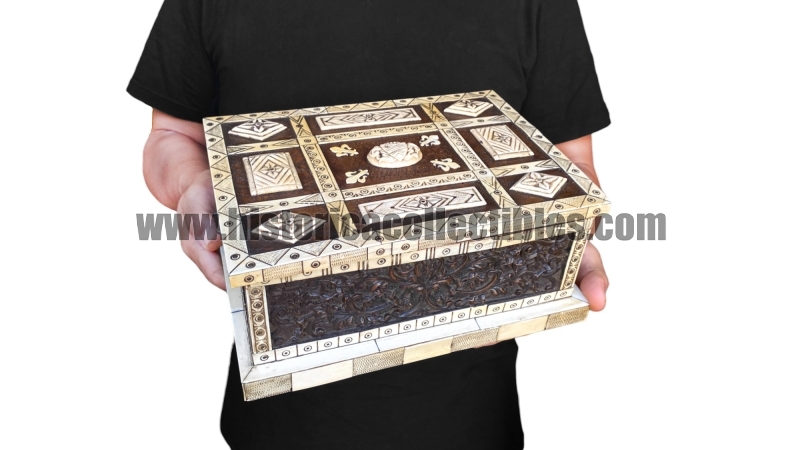
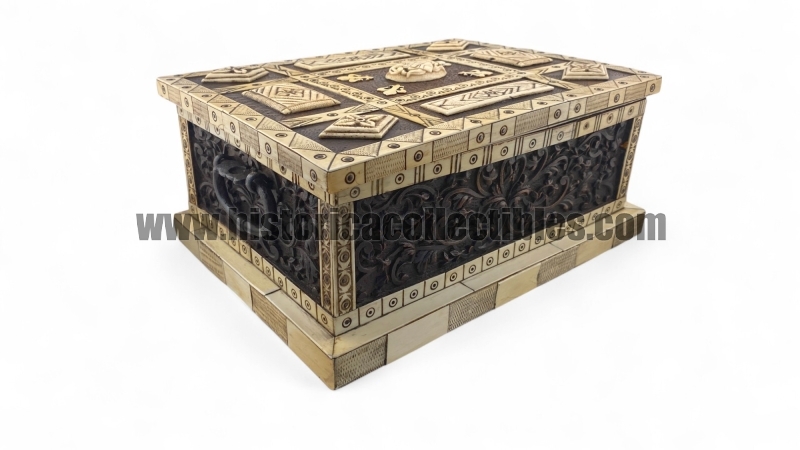
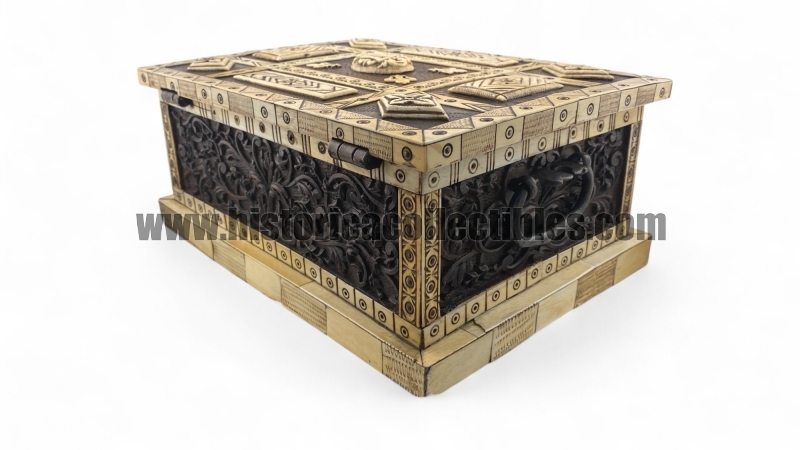
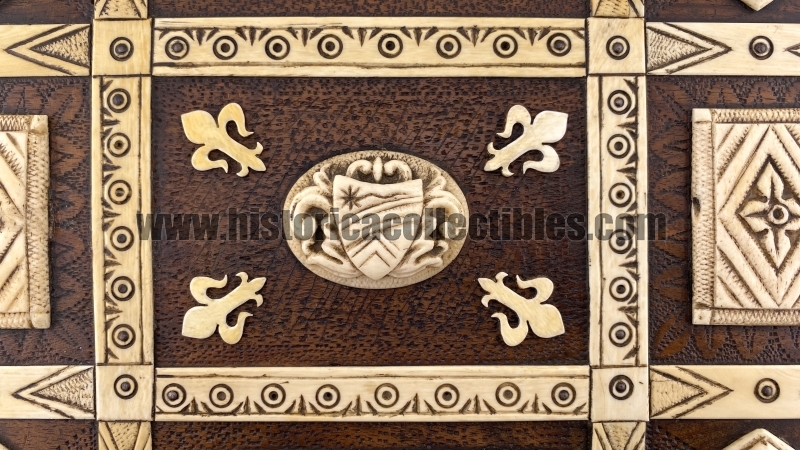
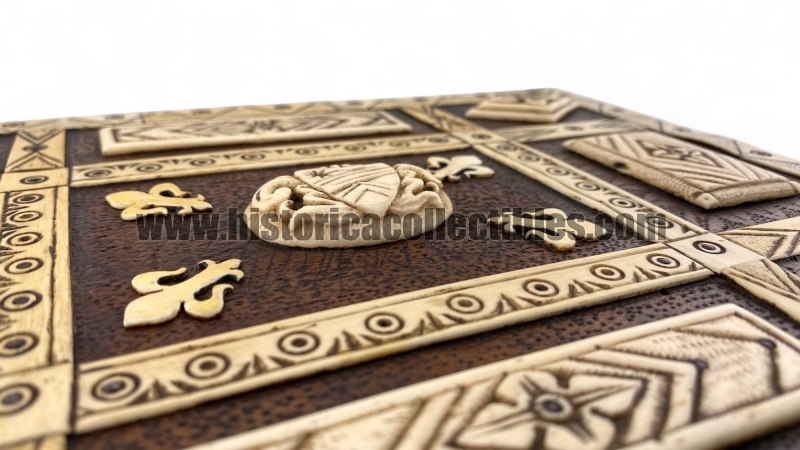
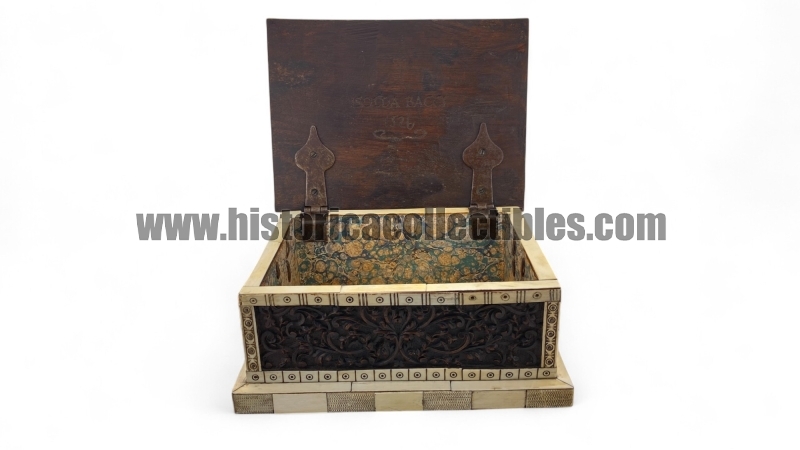
A large rectangular casket, resting on a molded base with engraved bone plaques. The four exposed wooden sides are entirely decorated with floral motifs and scrolls carved in relief. On the two narrower sides, two wrought iron handles are attached and riveted from the inside for easy grip. The lid, held together by solid iron hinges, is molded with engraved bone plaques along all edges. The lid is composed of nine spaces decorated with small burins, separated from each other by unequal engraved bone strips. Within these are fixed four rectangular and four diamond-shaped plaques, all made of bone and decorated with stepped, burin-embossed floral motifs. Also, in the larger space at the center, is a large bone cabochon engraved and sculpted in relief with a coat of arms or armorial. It likely belonged to a noble Tuscan (perhaps Florentine) family, presumably because it is framed by four lilies with characteristics found in the ancient artistic form of the Florentine lily. Furthermore, inside the lid, the name "Isolda Bacci," likely referring to the owner of the casket, and a date corresponding to 1526, are engraved and stamped with a burin.
This casket dates to the first half of the sixteenth century and was likely crafted by an artist influenced by the distinctive style adopted by the Embriachi or Embriaci, a famous Florentine family of bone carvers and makers of countless caskets, throughout their production, which continued uninterrupted from the late fourteenth century in Florence to the early sixteenth century in the territory of the Republic of Venice.
The measurements are 28 cm x 20 cm x 12 cm.