
Herm of Emperor Charlemagne, carved in red Verona marble, 16th century
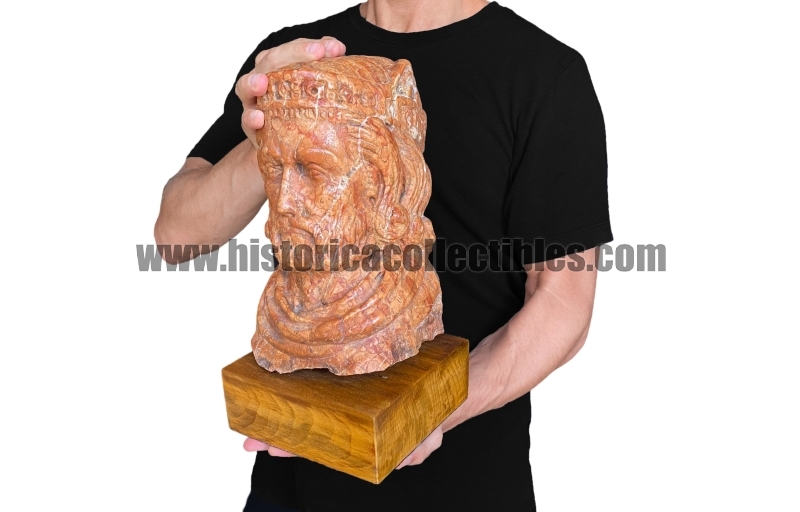
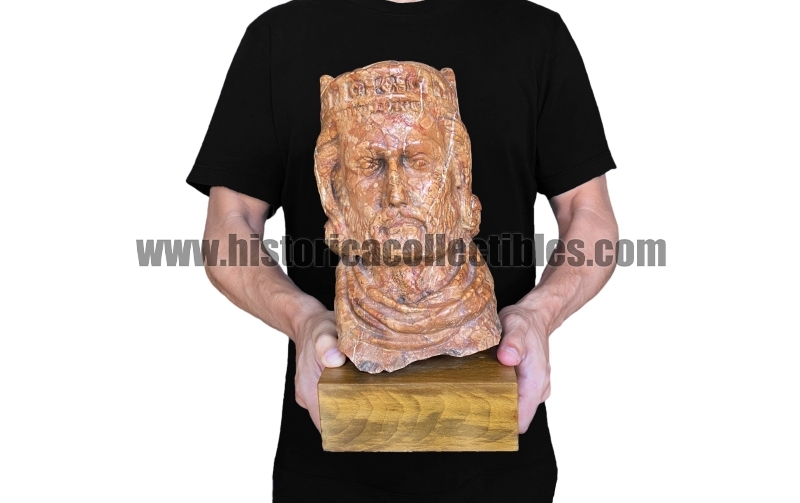
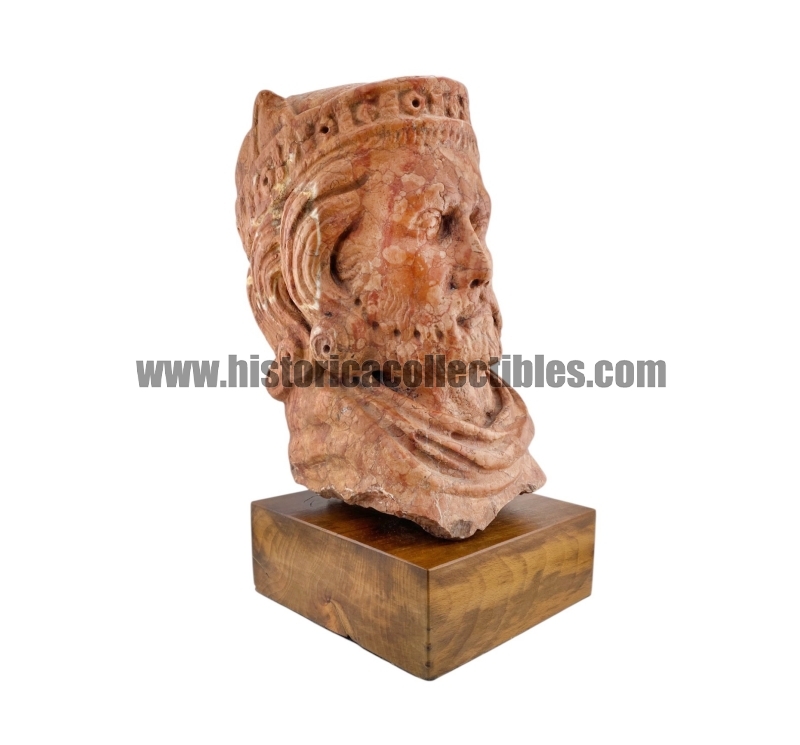
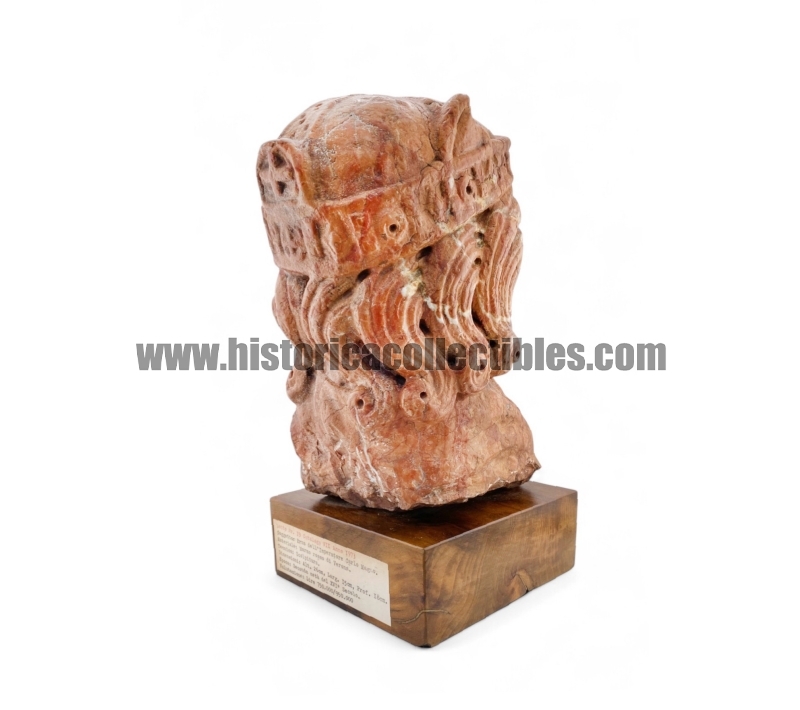
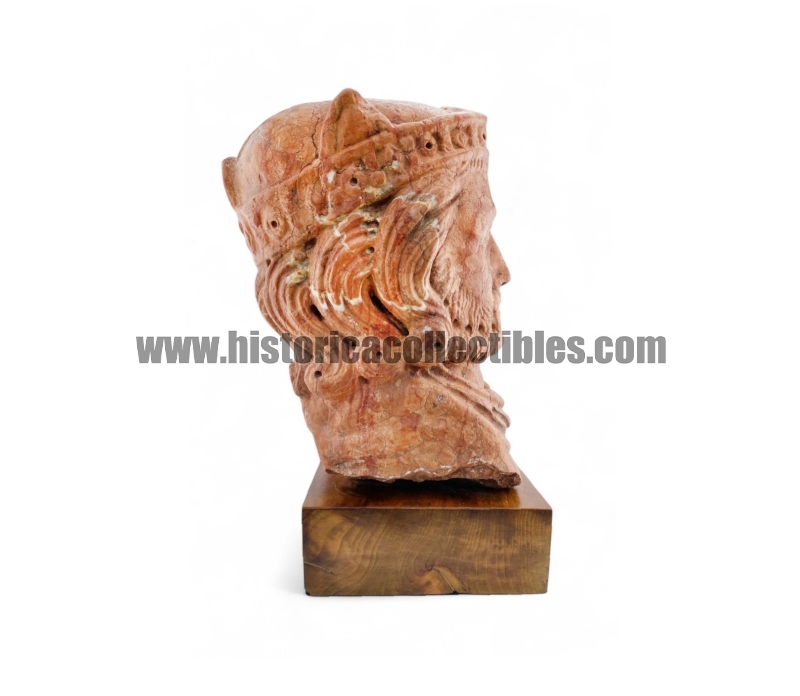
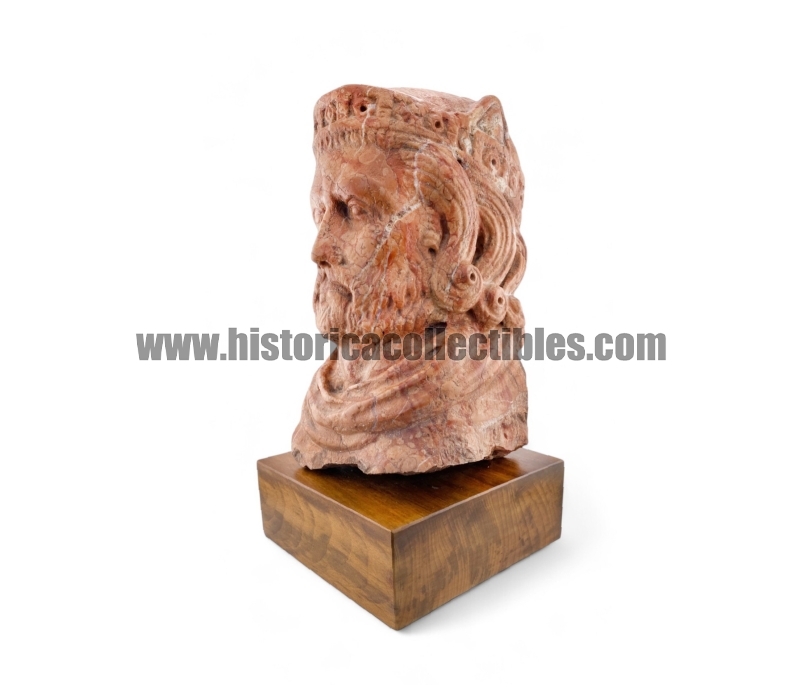
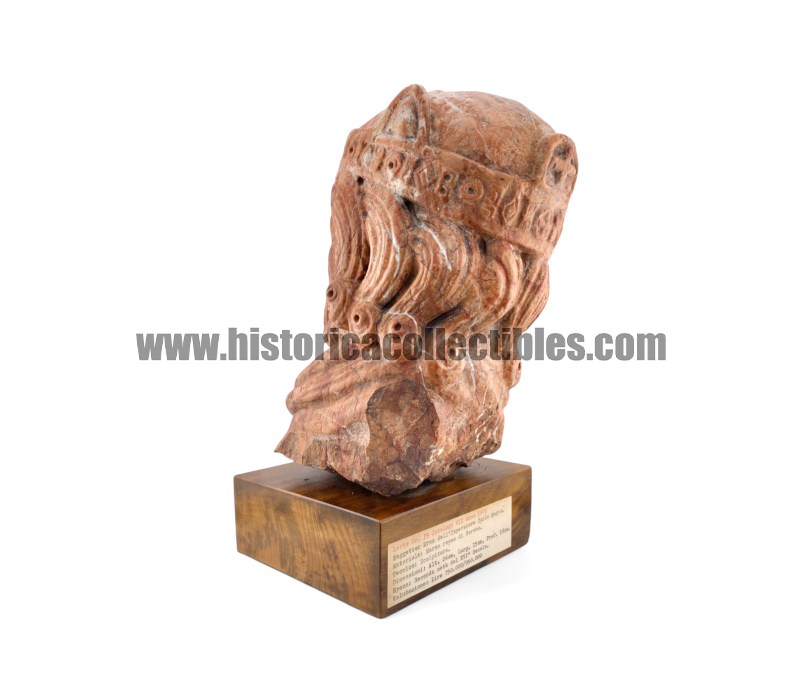
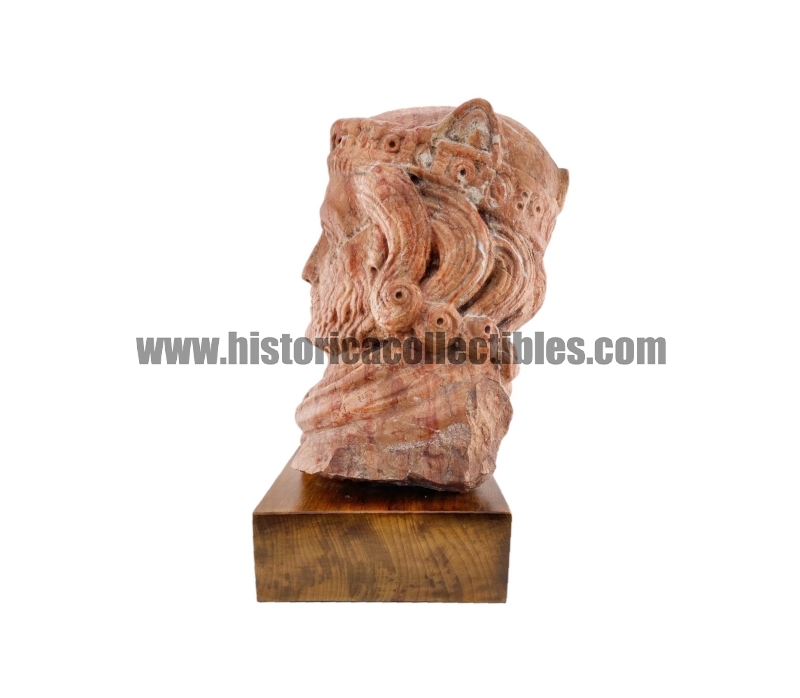
A sculpted herm depicting the head and part of the bust of Emperor Charlemagne, made of red Verona marble, dating back to the 16th century.
Although there are not many Renaissance sculptures that explicitly depict Charlemagne, his figure frequently appears in works celebrating the Empire, its power, and its cultural legacy, often recalling the iconography of the equestrian statuette preserved in the Louvre. This became a recurring iconographic model, despite likely having been created in the Carolingian era and not the Renaissance.
This extraordinary sculpture does not differ from the more well-known representations of the Emperor: the talented sculptor depicted him as an idealized ruler, with long beard and hair and an imperial crown with a Christian symbol of power, thus continuing to spread his image and inspiring subsequent patrons and artists.
During his reign Charlemagne, promoted a cultural renewal based on the revival of classical models, an aspect that was particularly appreciated, and his court in Aachen became a model for Renaissance rulers who sought to emulate his artistic and intellectual patronage. Carolingian art was influenced by classical and Byzantine models, as well as Germanic traditions, resulting in a unique style, albeit one not particularly rich in large-scale sculptures.
This Herm was listed as a sale lot at an auction house, which identified it, recorded its characteristics, and assigned an estimated value of between 750,000 and 950,000 lire in 1973, as reported on a label affixed to its wooden base.
Furthermore, despite the presence of this label which certifies its age according to the judgment of the auction house's experts who examined it, it is believed that this sculpture may be much older than the period attributed to it.
Dimensions: Height 26 cm, Width 15 cm, Depth 18 cm.
Charlemagne (April 2, 742 – Aachen, January 28, 814):
He was king of the Franks from 768, king of the Lombards from 774, and founder of the Carolingian Empire. On Christmas Day in the year 800, in the ancient Basilica of St. Peter in the Vatican, he was crowned Emperor of the Romans by Pope Leo III.
The title "The Great" was attributed to him by his biographer Einhard, who titled his work Vita et gesta Caroli Magni (The Great Life and Deeds of the Romans).
Son of Pepin the Short and Bertrand of Laon, Charlemagne became king in 768, upon the death of his father. He initially reigned jointly with his brother Carloman. Carloman's sudden death in 771 under mysterious circumstances made Charlemagne sole ruler of the Frankish kingdom. He expanded this kingdom, thanks to a series of victorious military campaigns, which included the conquest of the Lombard Kingdom, to encompass a large portion of Western Europe.
On Christmas Day 800, Pope Leo III crowned him Imperator Augustus, the title then designated the Emperor of the Romans. This coronation marked the official foundation of the Carolingian Empire, which some historians consider the first phase in the history of the Holy Roman Empire. Charlemagne's reign thus marked the end of the formal legal model of the Romano-Germanic kingdoms in Western European history, in favor of a new imperial model. Furthermore, his rule spurred the Carolingian Renaissance, a period of resurgence in political, theological, and humanistic studies in continental Europe.