
Small Crossbow or "Balestrino" also known as "Assassin's Crossbow", in forged iron, Venice 1570-1620
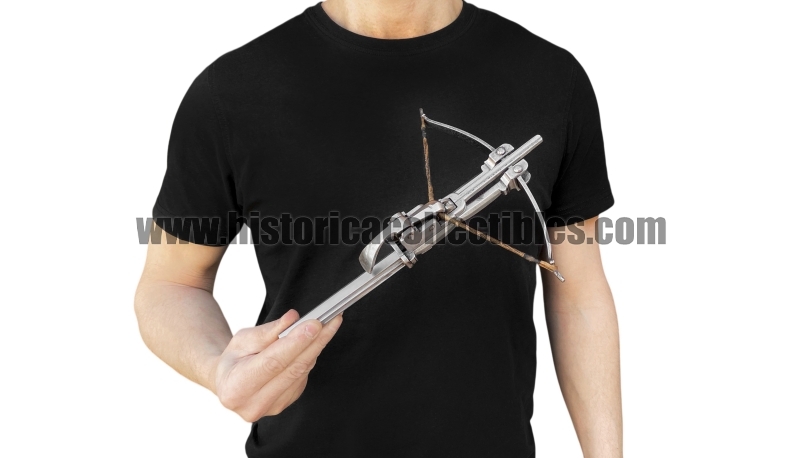
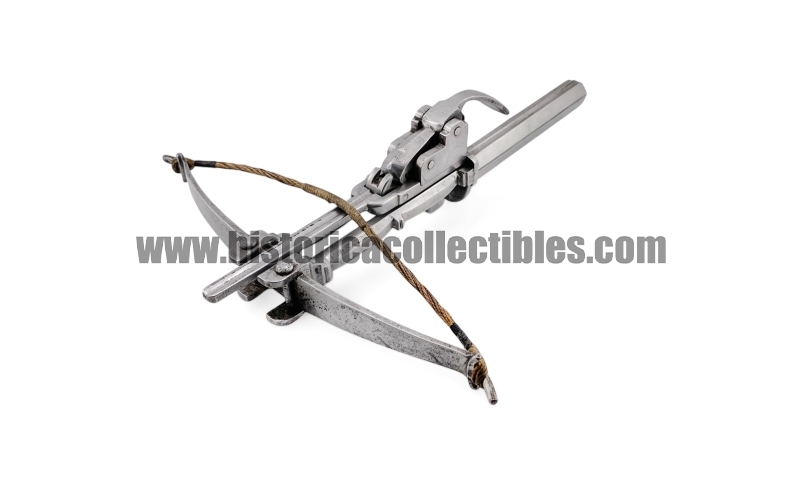
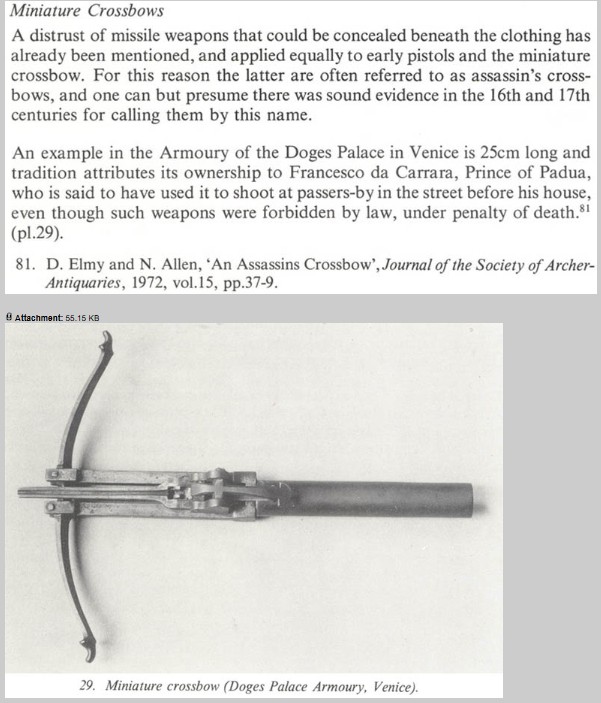
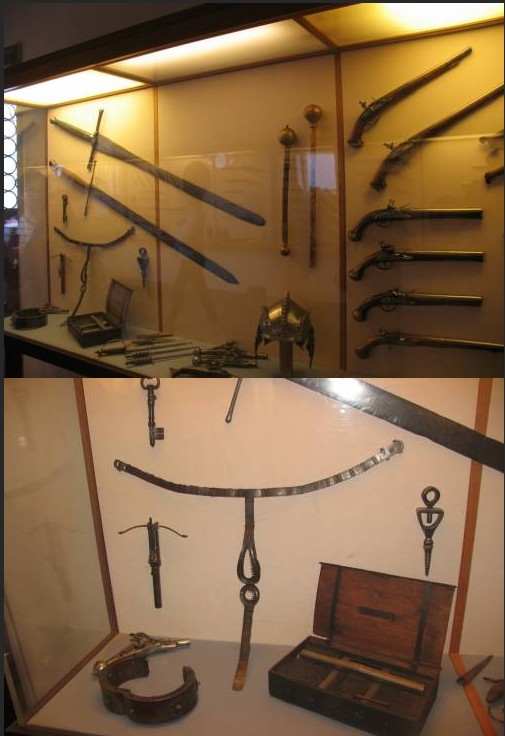
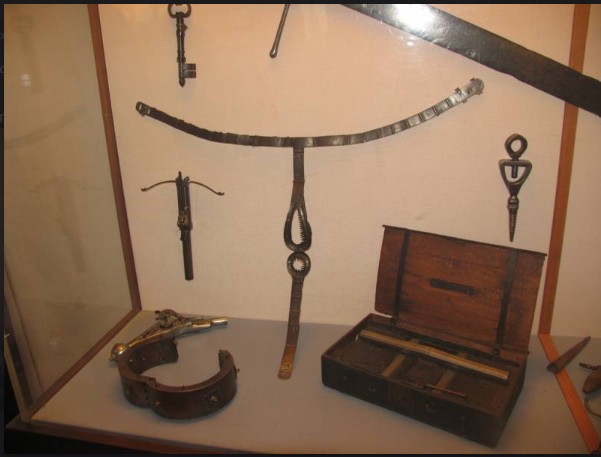
Small Crossbow or Balestrino, also known as the "Assassin's Crossbow", made of forged iron by a Magister Armorum, operating in the territory of the Republic of Venice, in the Renaissance period 1570-1620.
The distinctive features that make this Balestrino unique are essentially the unusual dimensions of its structure and the elements used to make it, all completely made from hand-wrought forged iron. These elements, in order to eliminate any possible imperfections and roughness of the metal caused by forging, were carefully smoothed and polished, operations which gave its final shape an excellent fluidity to the touch and extraordinary manageability and resistance to use.
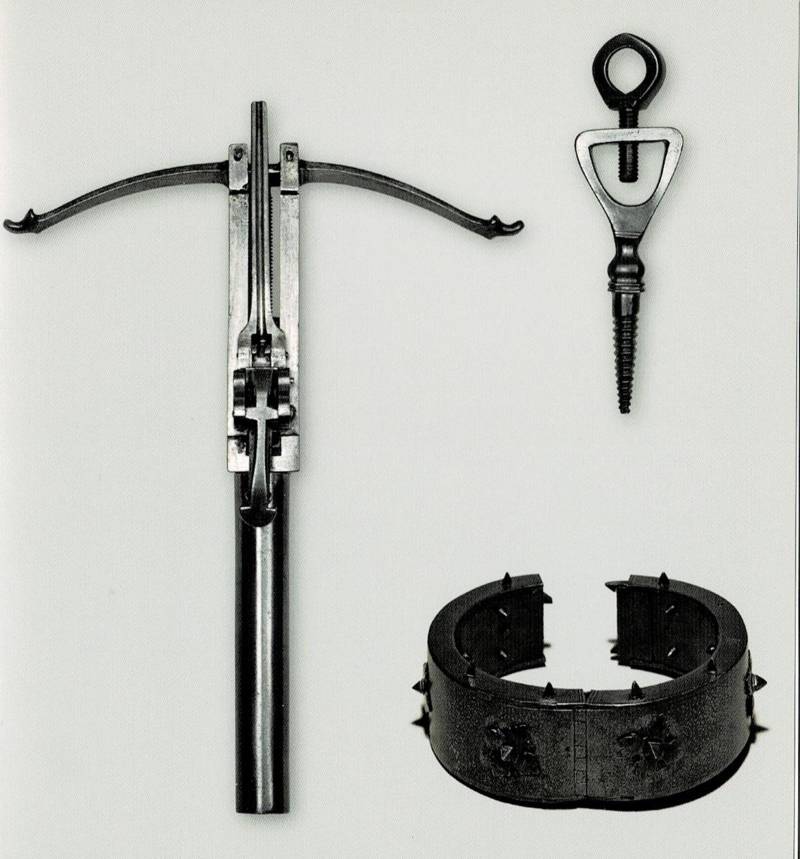
The bipartite Tenière (or load-bearing body), with slightly contoured profiles in the typical Renaissance style, constitutes the primary element on which the single bending bar traction bow and the Dart support are tied. The latter in turn houses the trigger mechanism composed of the nut, i.e. the component that hooks and holds the tension cord taut, and a curved trigger above it that activates its release. The Tension string, connected to the two ends of the bending bow is hooked to the Nut, and tensioned for the draw load by rotating the handle equipped with a sturdy screw; then, once its maximum traction capacity has been reached, and the Dart has been placed in the specific support (or grooved Slider), the Balestrino is ready to shoot, releasing in a lightning-fast and silent manner all the power from the bow accumulated during loading.
Despite its small size, this Balestrino had the characteristics of a very dangerous weapon if used with sharp darts, but also proved fatally lethal within a distance of 15 meters, if the darts were poisoned.
In fact, this Balestrino is also called "Assassin's Crossbow" because, in addition to being potentially lethal, it could be easily hidden inside clothing, and therefore was a privileged weapon among those used by unscrupulous criminals, or criminals hired to commit criminal crimes.
It has been historically established, as reported by the well-known writer Y. Shokarev in his book "Bows and crossbows, The history of weapons", that these Balestrine, which appeared in Italy for the first time around 1530, due to their small size, easy concealment and silence combined with the power of shooting, made them the perfect insidious weapon: in fact, in light of this, as early as 1542, the Senate of Venice prohibited their carrying by issuing a specific and austere edict.
Even the English writer Howard Blackmore, an illustrious author of books and publications on weapons, confirms how right it was to consider these Balestrine as the perfect weapon for the murderer, as it allowed him to avoid, unlike the use of cutting weapons or firearms, possible direct clashes or to be identified immediately after committing the crime.
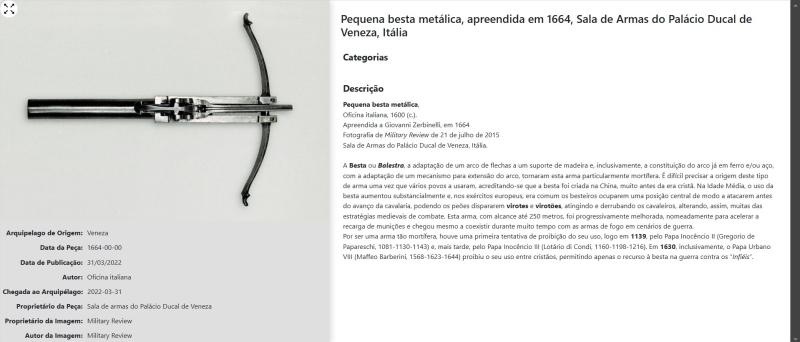
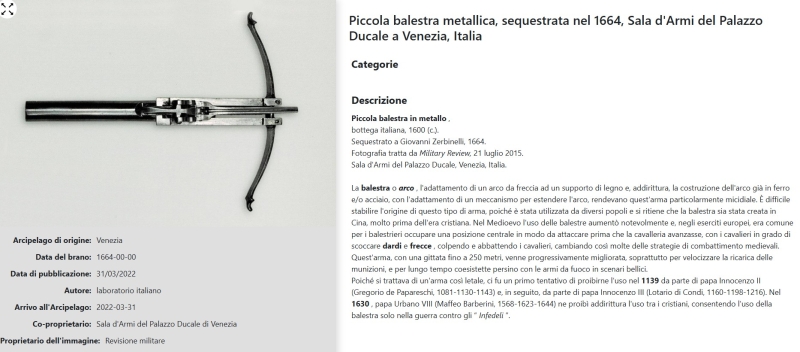
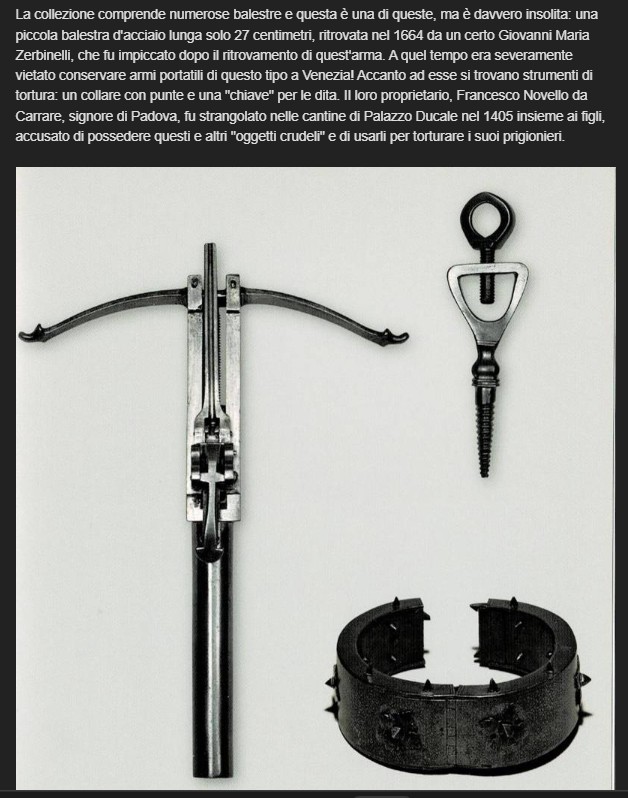
Even in the centuries following its creation, the authorities throughout Europe never revoked the bans imposed on it. It is in fact known that the Balestrino, preserved in the Sala d'Armi of the Palazzo Ducale in Venice, found in 1664 in the possession of a certain Giovanni Maria Zerbinelli, cost him hanging as a result of violating the bans issued 122 years earlier.
This Balestrino, compared with the one preserved and exhibited in the Hall of Arms of the Doge's Palace in Venice, has proven to be practically identical in size and various mechanisms, only on some parts of its conformation are there refined elaborations that make it more sinuous and elegant. Therefore we can affirm with certainty that this masterpiece of mechanical engineering of weapons, present in our collection, was created by the same Magister Armorum, operating in the territorial area of the Republic of Venice in the Renaissance period, between 1570 and 1620.
The crossbow emerged during a period of growing interest in weapons and defense, particularly in Italy and Spain. The weapon's association with assassination attempts reflects the anxieties and power struggles of the time.
References:
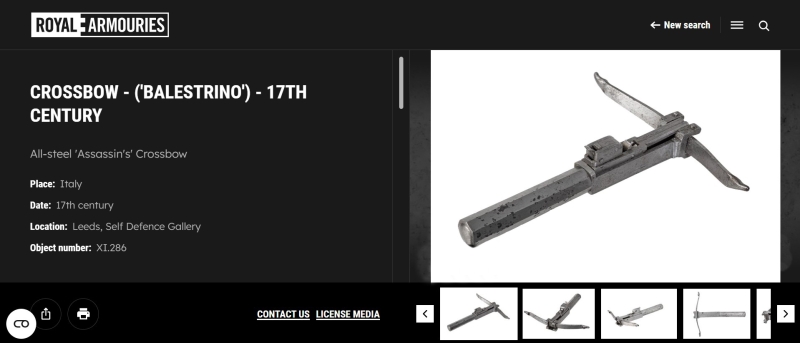
Royal Armouries - Object number: XI.286 - https://royalarmouries.org/collection/object/object-36420
Doge's Palace Venice - Hall of Arms
Royal Armoury of Turin
Literature:
"Bows and crossbows. The history of weapons." by Y. Shokarev
D. Elmy and N. Allen "An Assassins Crossbow", Journal of the Society Archer.Antiquaries, 1972, Vol. 15, pp. 37-9
D. Elmy and W.E. Flewett "An Assassins Crossbow", Journal of the Society Archer.Antiquaries, 1974, Vol. 17, pp. 27-34
"European Crossbows: A Survey by Josepf Alm" (Royal Armouries):
An Assassin's Crossbow - Journel of the Society of Archer-Antiquaries 15
The Assassin's Crossbow - Journel of the Society of Archer-Antiquaries 17
The Pistol Crossbow - Journel of the Society of Archer-Antiquaries 20
The Assassin's Crossbow - Journel of the Society of Archer-Antiquaries 39