Wrought iron door knocker, Bishop Cosimo de' Pazzi, Tuscany or France, 1492-1508
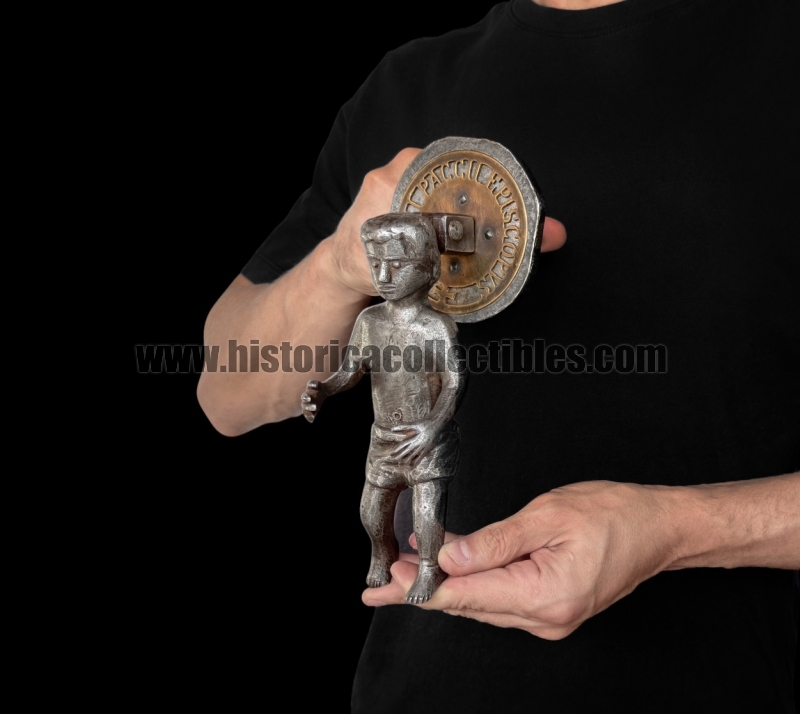
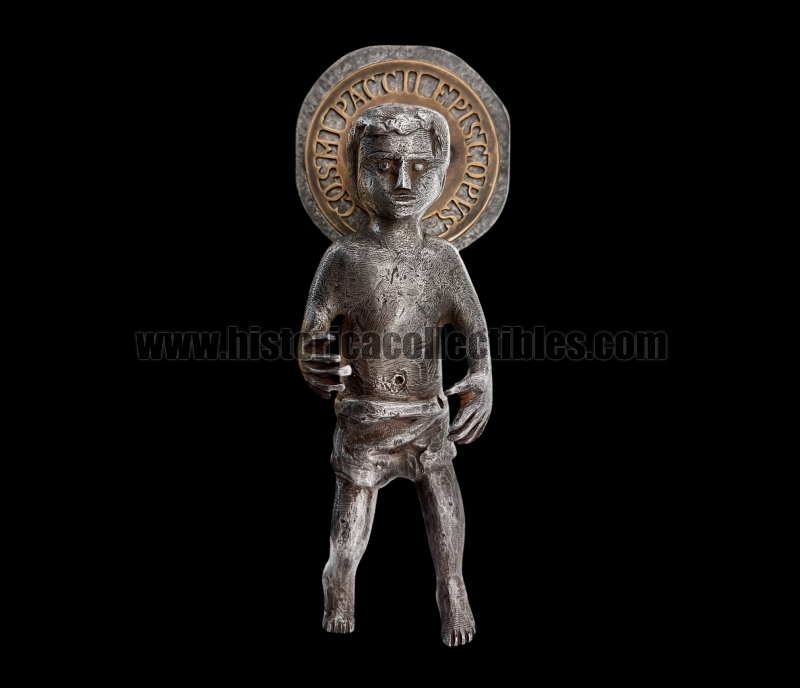
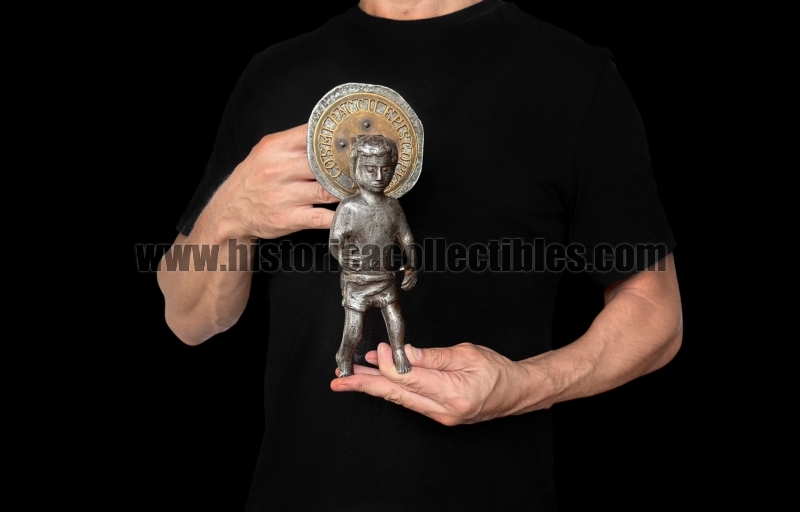
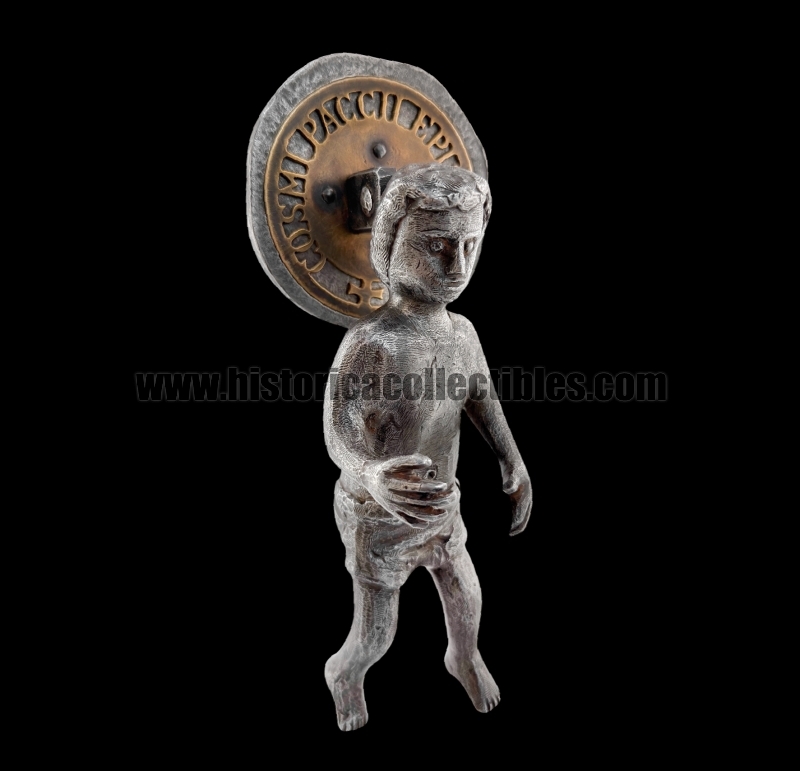
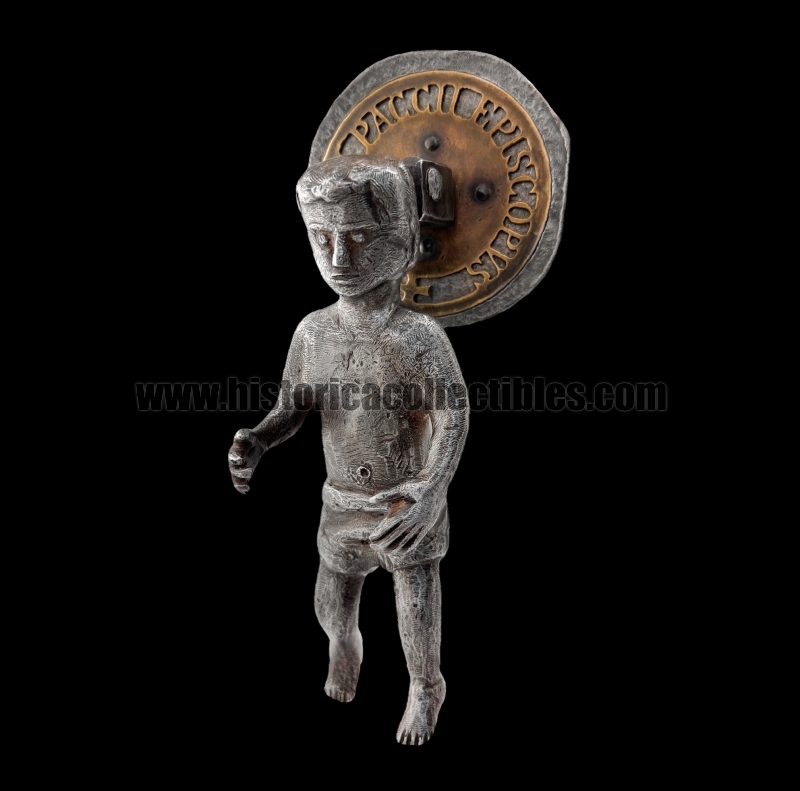
This extraordinary door knocker can be traced back to a bishop's residence or bishopric, home to Cosimo de' Pazzi, who, between 1492 and 1508, served as Bishop of Oloron (1492-1497) in France and as Bishop of Arezzo (1497-1508). He was later Archbishop of Florence and Ambassador to Maximilian I of Habsburg, Holy Roman Emperor.
In fact, the presence of a large, fully perforated bronze plate bearing the Latin name "COSMI PACCII EPISCOPVS," carefully set within a forged iron support plate essential for attaching the entire doorknocker to the original door, testifies to its ownership by the illustrious prelate of the ancient and noble Florentine "de' Pazzi" family.
This door knocker, crafted entirely of wrought and forged iron, is shaped in the round in the form of the "Baby Jesus." His strikingly realistic posture is that of a child still hesitating in his first uncertain steps, with his arms held forward to aid balance. His almost expressionless face still reflects the severe dictates of Gothic-era sculptural art.
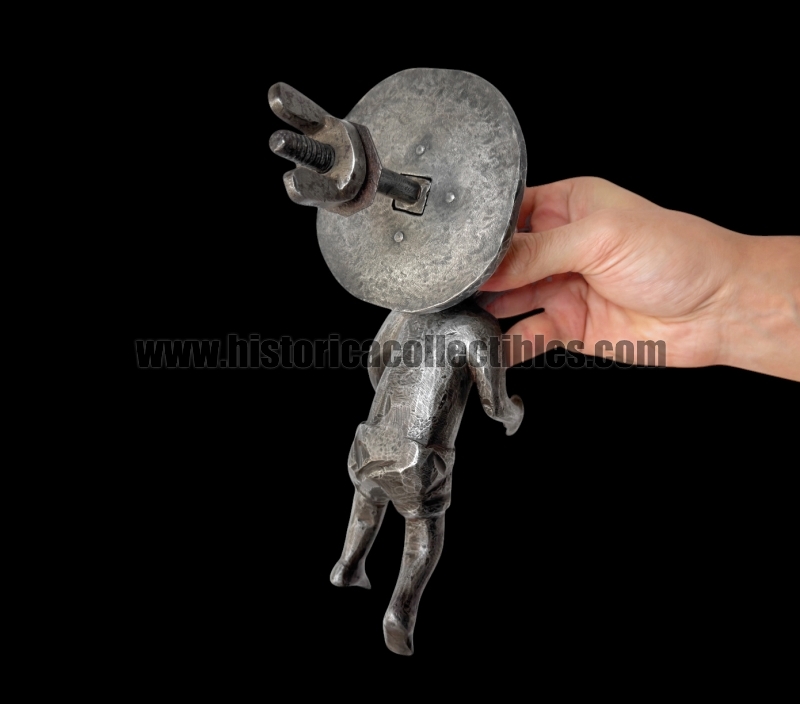
The sculpture comes complete with its swinging screw pin, used for fastening it from the inside of the door using the "rooster" (cock), a typical shape found on other door knockers from the high Tuscan Renaissance.
The sculpture was certainly crafted by a "Magister Ferrarius" with high technical and artistic skill, likely active in Tuscany or France, around the second half of the 15th century. He skillfully crafted this iron figure, lending it a lifelike and calm plasticity.
The unique nature of the subject, the technique employed together with the material used for its creation, as well as its completeness, weighing over 2 kg, make this sculpture a unique work of great historical and artistic interest, both for the importance of the high prelate to whom it belonged and for the period in which it was created.
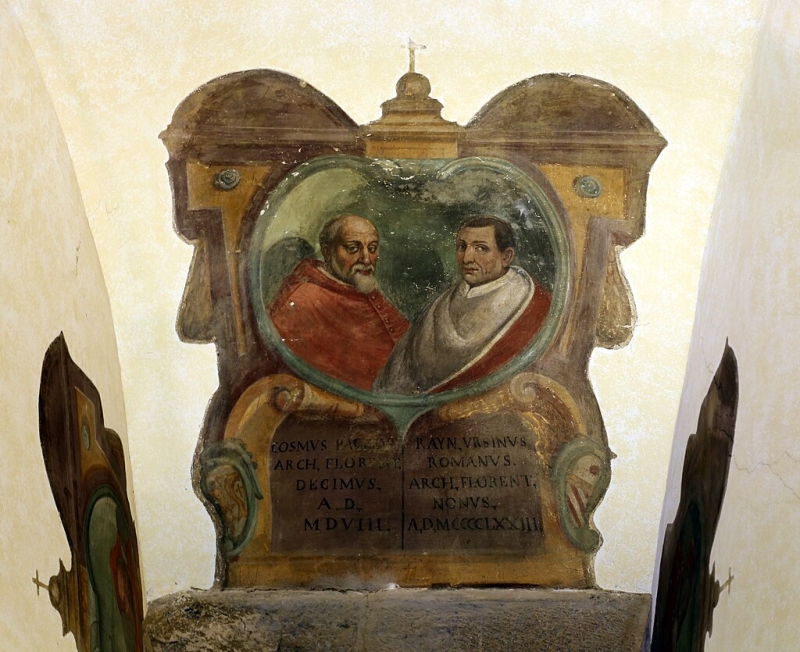
Cosimo de' Pazzi (Florence, December 9, 1466 – Florence, April 8, 1513) was an Italian abbot, Catholic archbishop, and diplomat from the Florentine Pazzi family. He was the son of Guglielmo de' Pazzi and Bianca de' Medici. He began his ecclesiastical career as a canon of the Metropolitan Archdiocese of Florence in 1475, later serving as abbot in various places: Santa Margherita a Tosina, San Pietro a Montegonzi (as prior), and San Fedele a Poppi.
He entered the Vatican Curia as a canon of St. Peter's in the Vatican, and was later appointed Bishop of Oloron on December 10, 1492. In 1496, he was sent as an ambassador to Emperor Maximilian I, and in 1497, he became Bishop of Arezzo. He was also ambassador to Spain, France, Cesare Borgia (1501), and Rome (1503).
After serving as Governor of Forlì in 1506, he was appointed Archbishop of Florence in 1508, succeeding Rinaldo Orsini. He was a diligent man of the Church, as chronicles of the time report. In Florence, he made a pastoral visit to the parishes and held a synod in 1508.
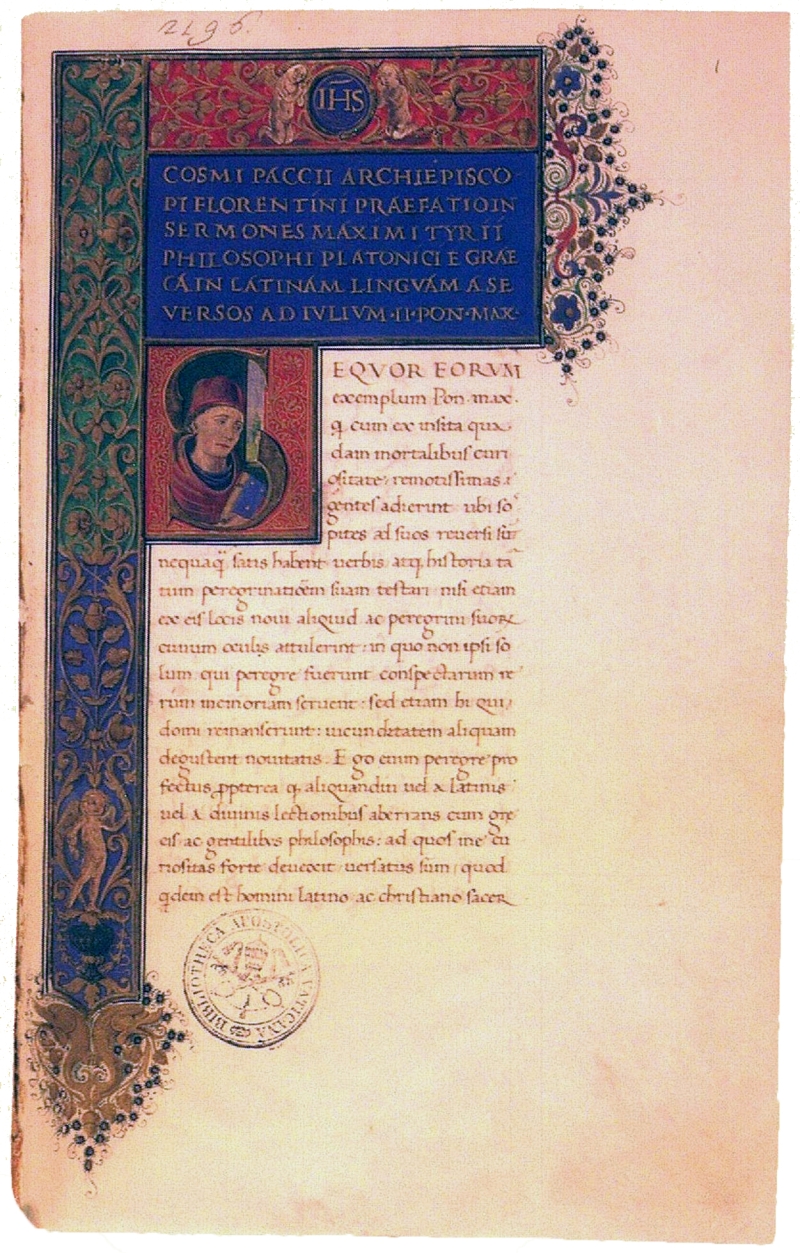
He was the author of a Latin translation of the Dissertations of Maximus of Tyre, the Greek text of which had been brought to the West from Constantinople by John Lascaris. Upon his death, he was buried in Santa Maria del Fiore (Florence-Italy).
References:
Wikipedia: https://it.wikipedia.org/wiki/Cosimo_de%27_Pazzi
Encyclopedia Treccani: https://www.treccani.it/enciclopedia/cosimo-de-pazzi_(Dizionario-Biografico)/
Metropolitan Museum: Door knocker, possibly French, early 16th century: Object Number: 52.135.
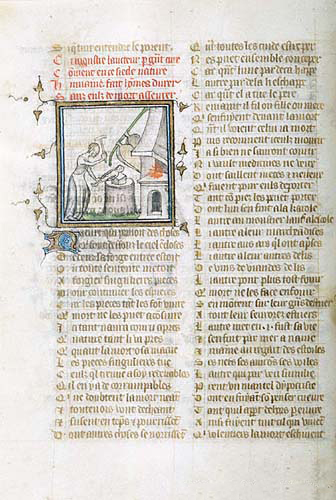
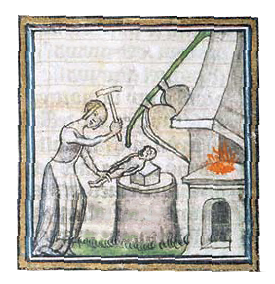
Medieval Manuscript 1350 ca - Roman de la Rose, MS M.132 fol. 118v (https://ica.themorgan.org/manuscript/page/51/77345)