
Beobachtungsfernrohr Ernst Leitz Wetzlar 15xL16 60=3,4°, circa 1909
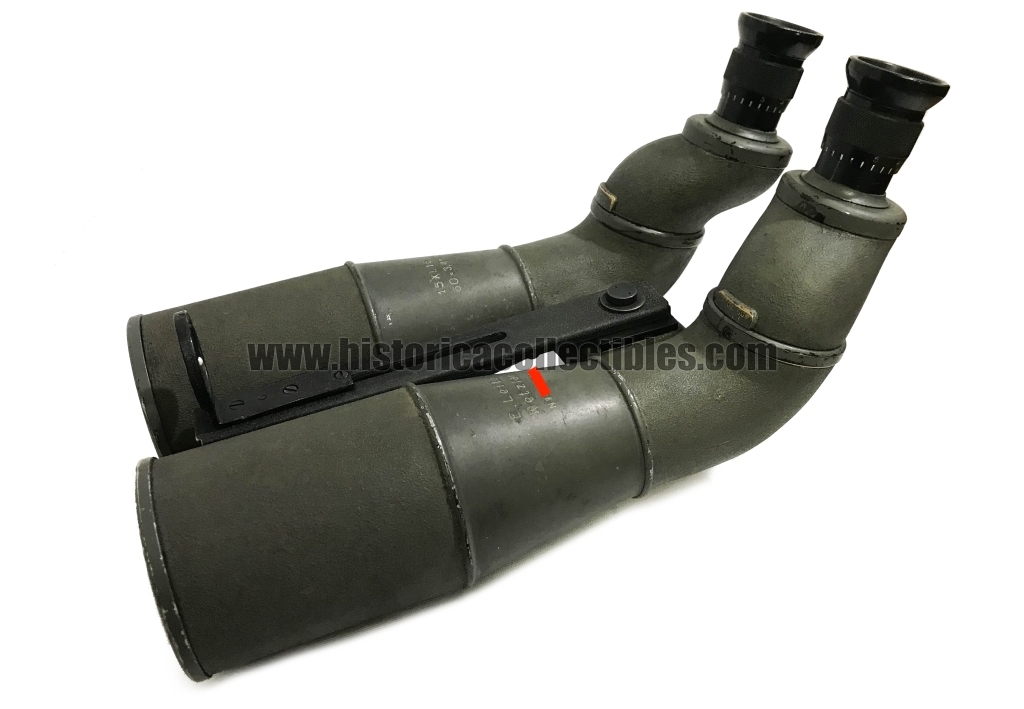
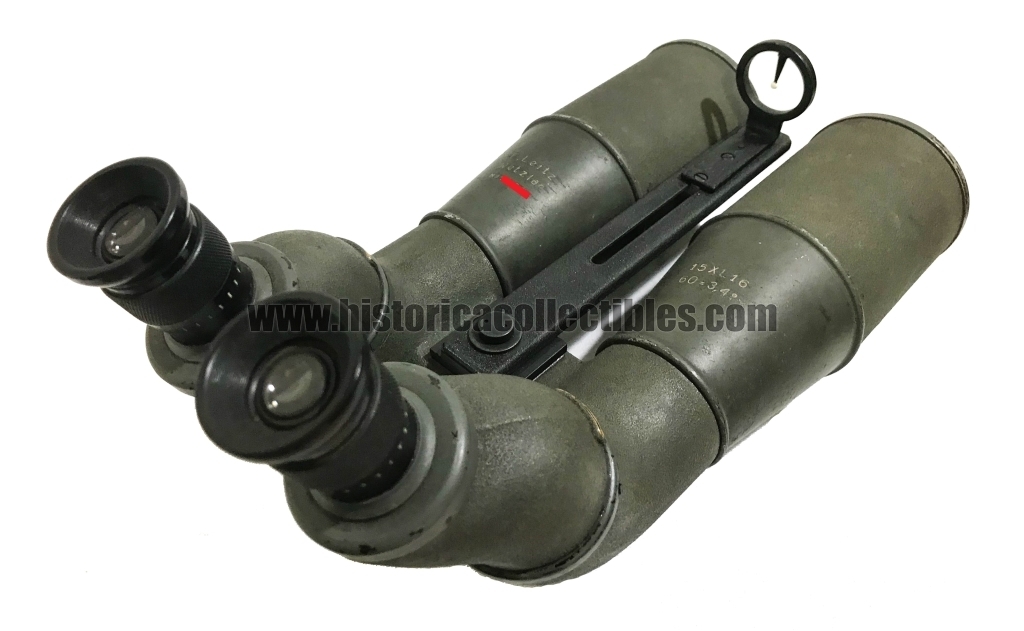
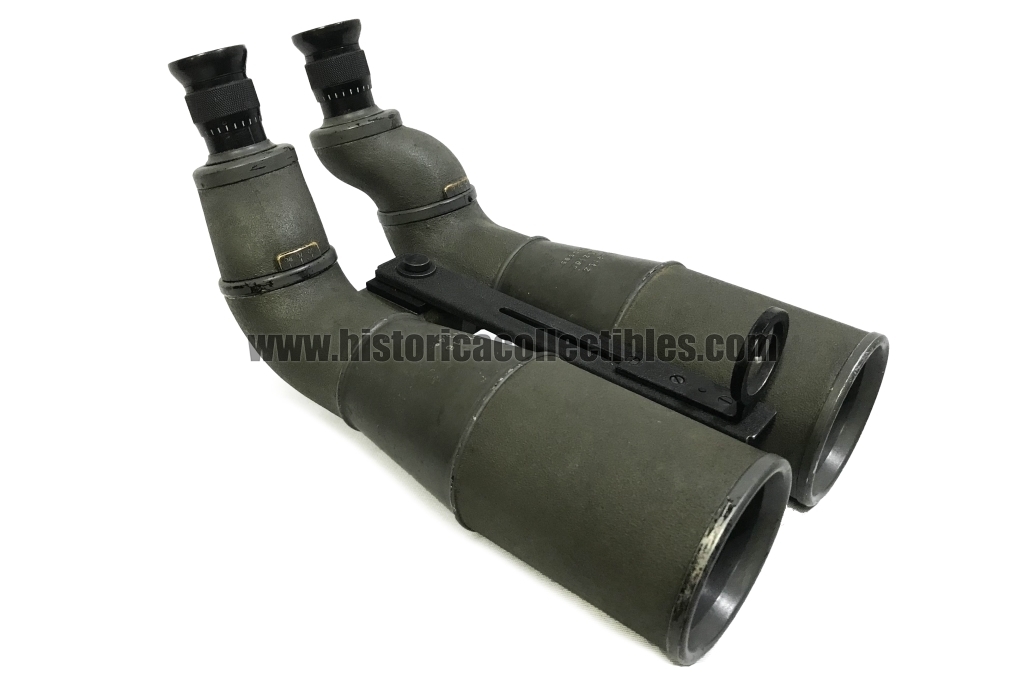
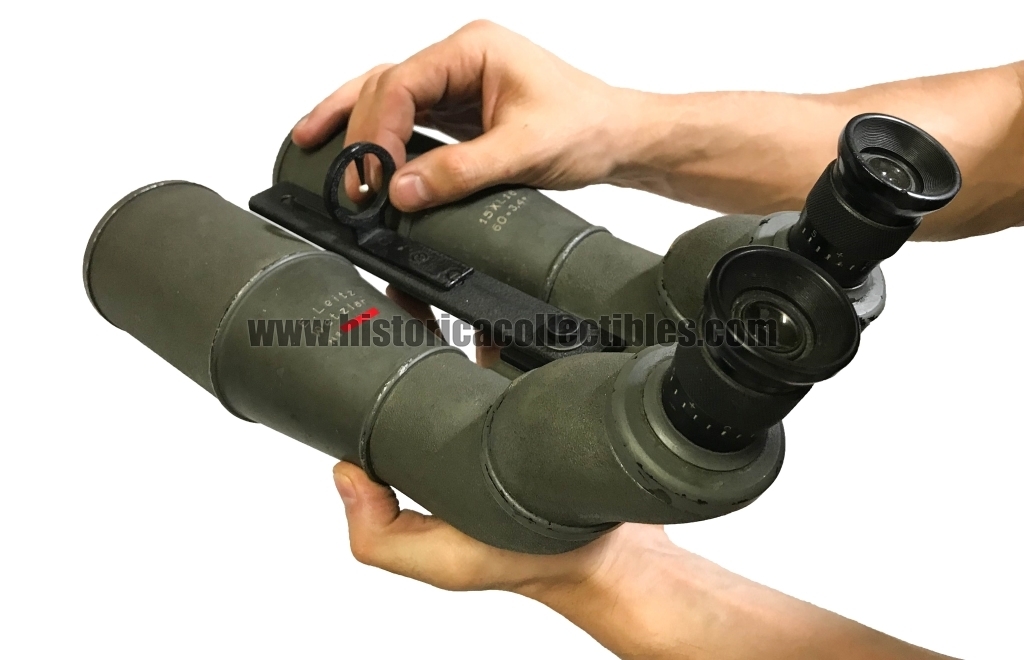

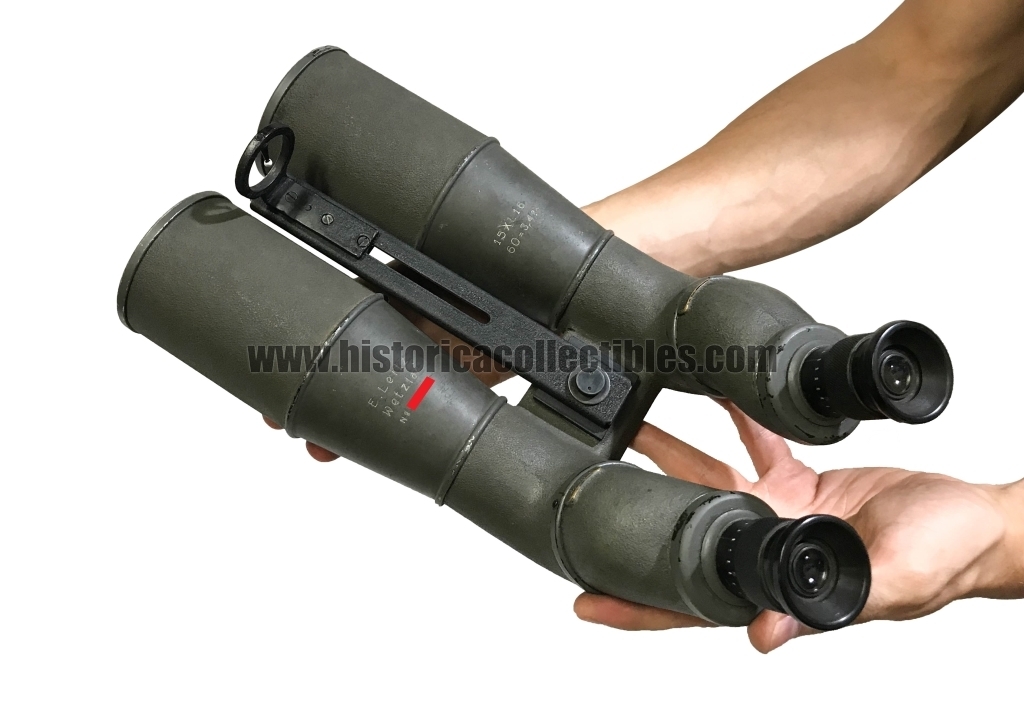
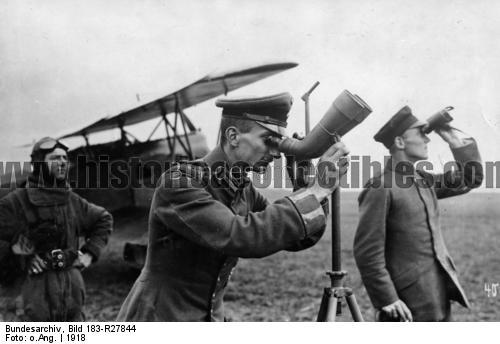
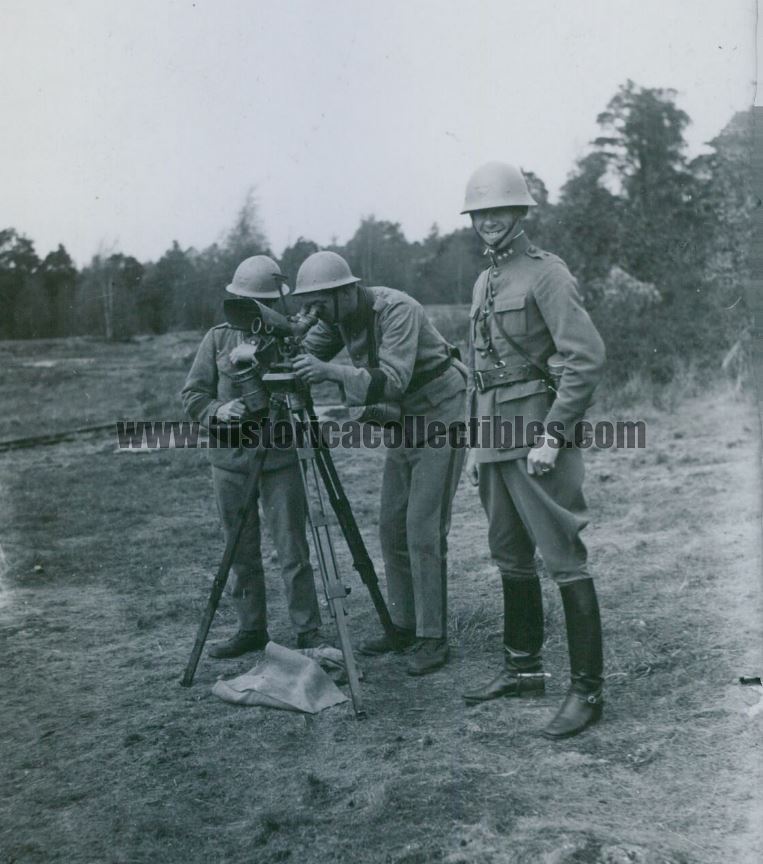
Doppelfernrohr or Beobachtungsfernrohr 15x60, produced by Ernst Leitz in around 1909, to be used for sighting, signaling and optical/light transmission positions during the First World War.
In fact, this optical apparatus was equipped with particular and innovative "Ocular Tubes" rotating 360° which allowed the binoculars to be used simultaneously by 2 distinct observers: it was probably considered appropriate for the information detected to be verified, a few times, by 2 soldiers.
The Germans and Austrians, in fact, were not new to this type of data acquisition and detection, an example of which is all the Feldtelefon Mod. 09 equipped, in addition to the handset, with a listener for a second operator.
It is equipped with a very particular circular viewfinder with a central pointer, which slides on a slide allowing you to best focus on a target with a 1:1 ratio.
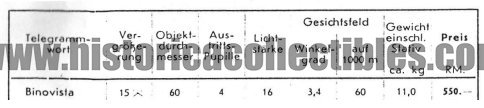
The 15x information, "L16 60=3.4°", indicates the available magnifications, brightness and detected field of view in meters and degrees, making it a truly unique Doppelfernrohr.
It was probably produced in a limited number of specimens also given the considerable cost of RM 550 at the time.
During the Second World War, this particular optical observation system was put back into production by some companies in the Japanese war optical industry.
View is clear and all mechanisms work perfectly.
The Leitz company is a company operating in the optics sector. It was founded in 1869 by Ernst Leitz, known as Ernst Leitz I (1843-1920), as an 1849 successor to Carl Kellner's company, the Optical Institute, in Wetzlar.