
Biboculars 7x50 Voigtländer Braunschweig, "screws on the bridge", Kaiserliche Marine, circa 1909
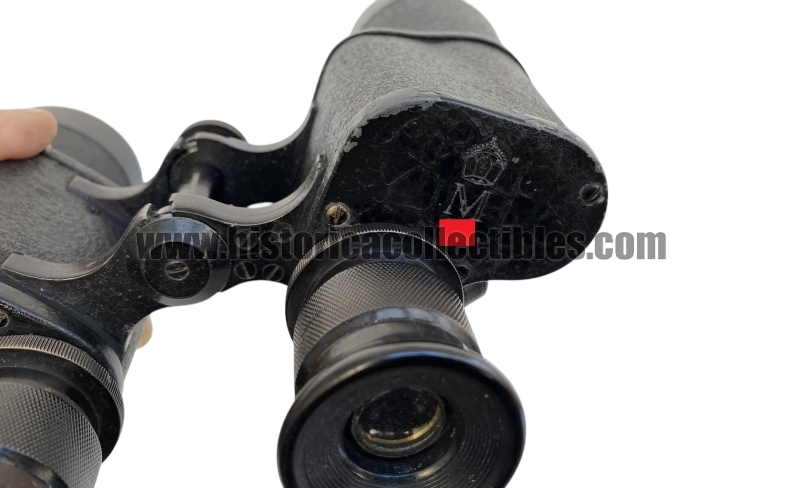
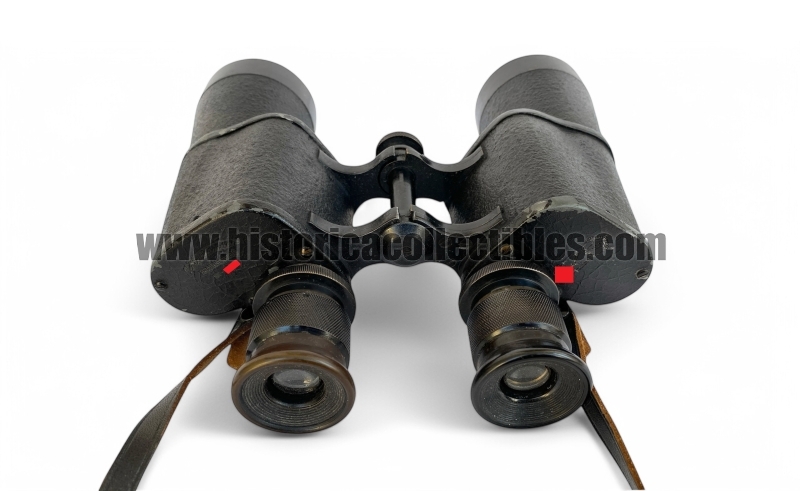
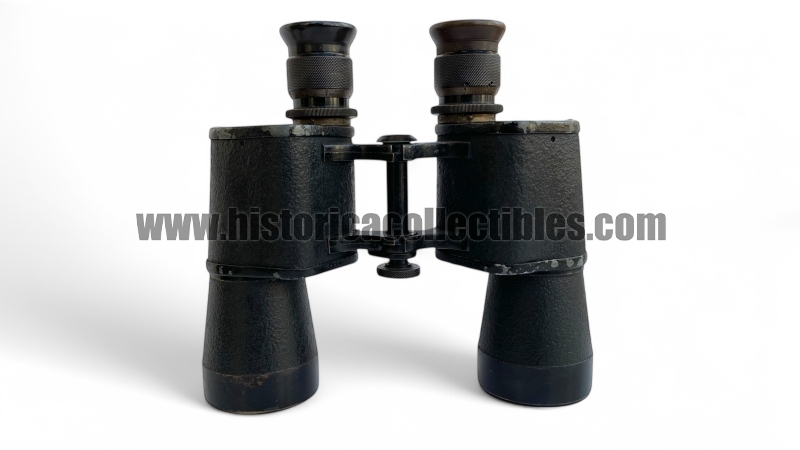
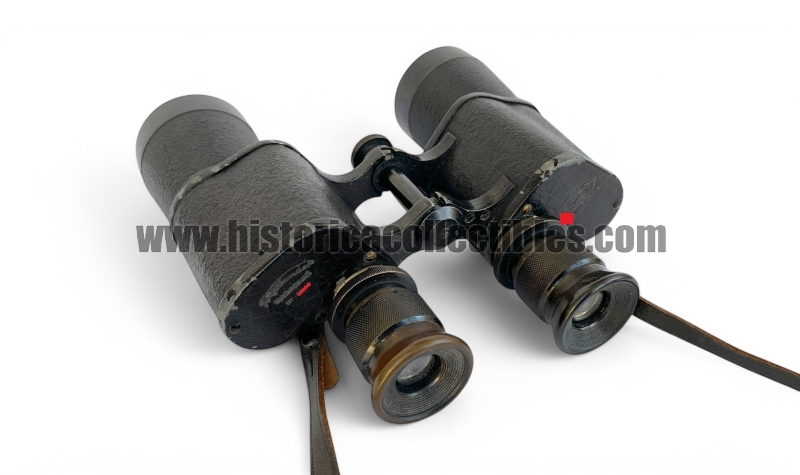
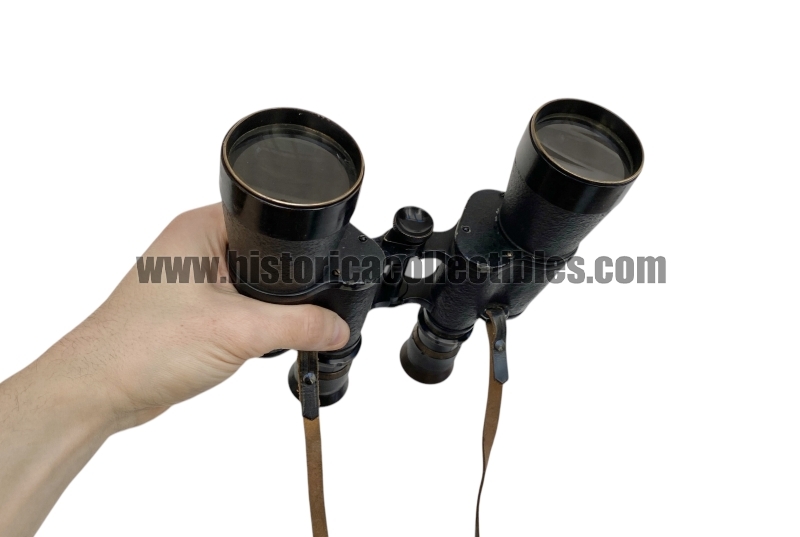
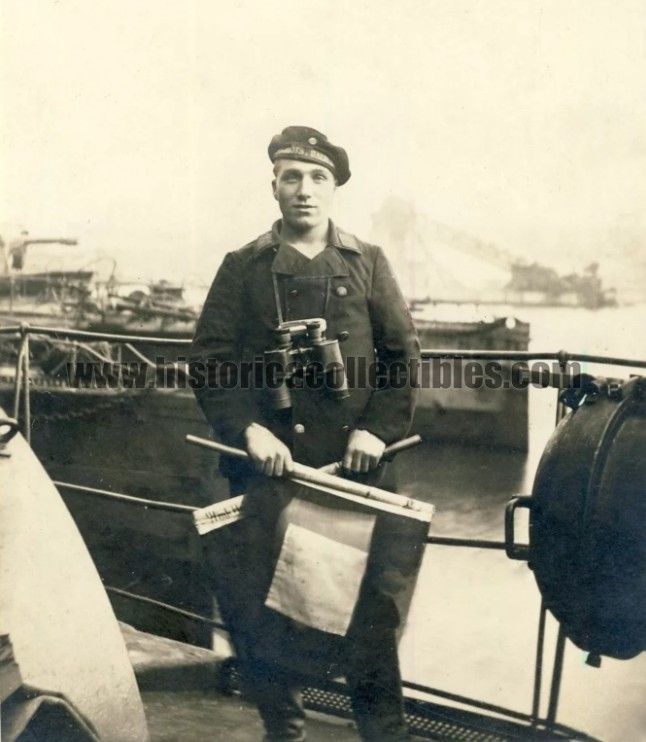
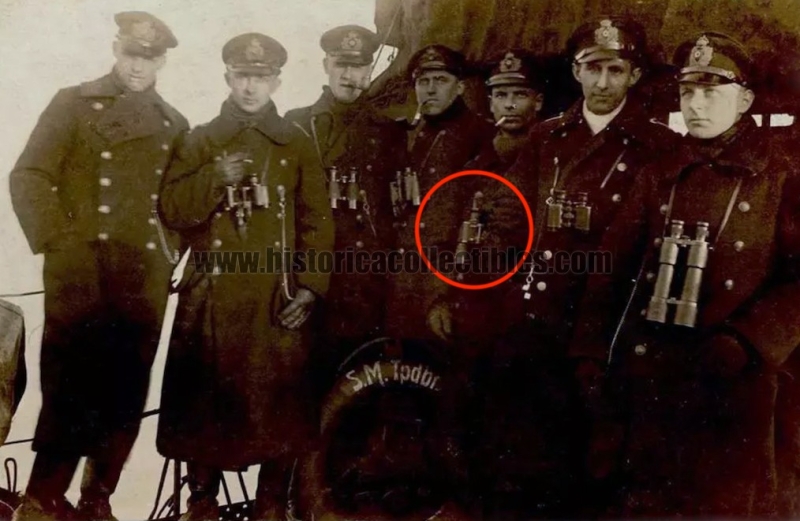
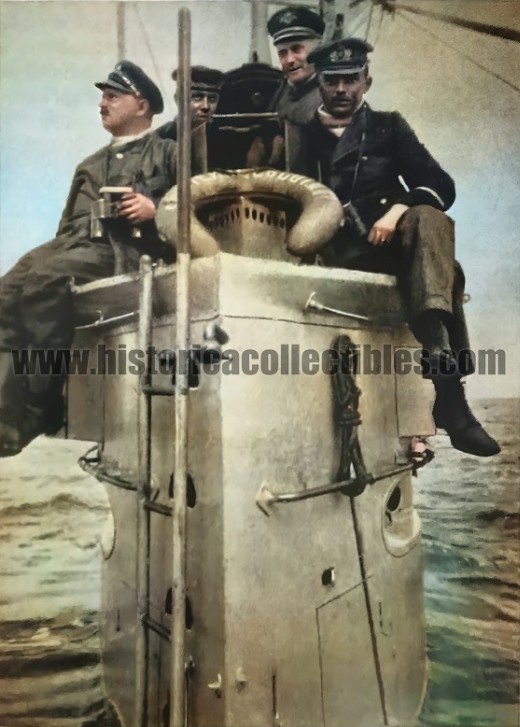
Binoculars 7x50, produced by Voigtländer Braunschweig around 1909, for the Imperial German Navy.
The right eyepiece plate bears the navy's acceptance marks: "Imperial Crown" and "M," while the left eyepiece plate the "Voigtländer Braunschweig" mark and serial number. Since they have no military assignment numbers to specific units or areas, it is likely that a limited number was produced to equip officers not assigned to naval bases.
This binoculars has a special feature (Ocular Locking System) that distinguishes it from other binoculars used during the First World War: it is equipped with a focal length memory and locking system for each individual eyepiece. Therefore, once the focal length has been found, simply rotate the knurled ring on the eyepiece tube to "0." Furthermore, this example, unlike similar examples, features four screws on the right eyepiece bridge, the purpose of which remains unclear.
The binoculars are in good condition, with excellent field of view and collimation.
Voigtländer Braunschweig was founded in Vienna (Austria), in 1756. The company took its name from its founder, Johann Christoph Voigtländer, initially produced optical instruments, particularly for microscopes and other scientific equipment.
Among its first products were the Petzval-type lenses, along with others that would become famous, such as the Collinear and the Heliar. In 1840, it built the first camera lens, and in 1841, the first all-metal daguerreotype was developed. It later produced plate cameras, built almost entirely by hand.
In 1849, the headquarters moved to Braunschweig, Germany, where Voigtländer & Sohn was founded shortly thereafter. In 1925, it was acquired by Schering AG. Voigtländer subsequently shifted its production to cameras accessible to all, allowing it to remain a market leader until after World War II.
In 1958, it was purchased by the Carl Zeiss Foundation and in 1972, renamed "Zeiss Ikon Voigtländer." In 1973, the brand became the property of Rollei until the 1982 crisis. At this point, the brand was purchased first by "Plus Foto," which from 1980 onwards marketed Voigtländer cameras manufactured by Ricoh and Chinon, and then in 1995 by "Ringfoto," but this was more of a long period of darkness. Finally, in 1999, the brand was reborn with its acquisition by the Japanese company Cosina.