Binoculars 7x50 San Giorgio "Lugenico", Artillery Royal Italian Navy, circa 1940
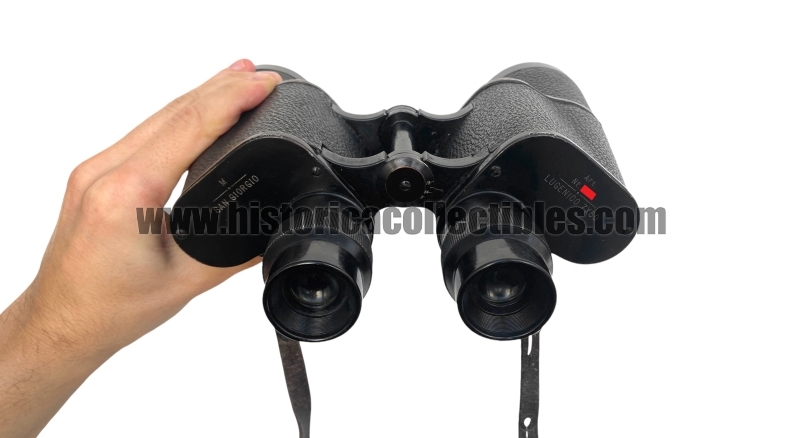
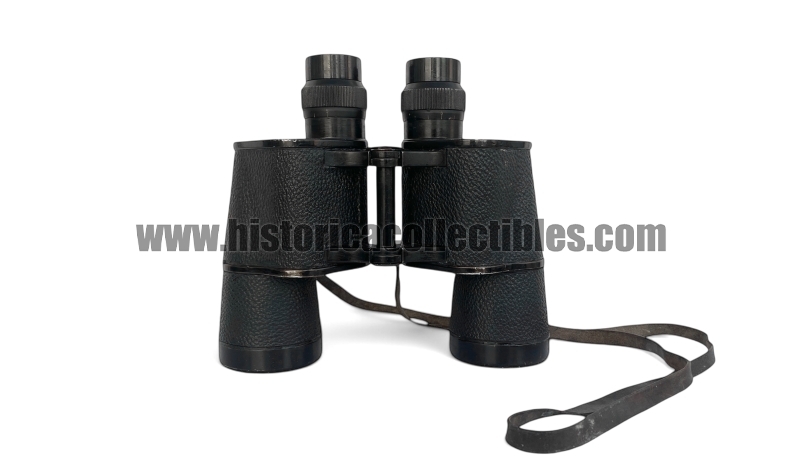
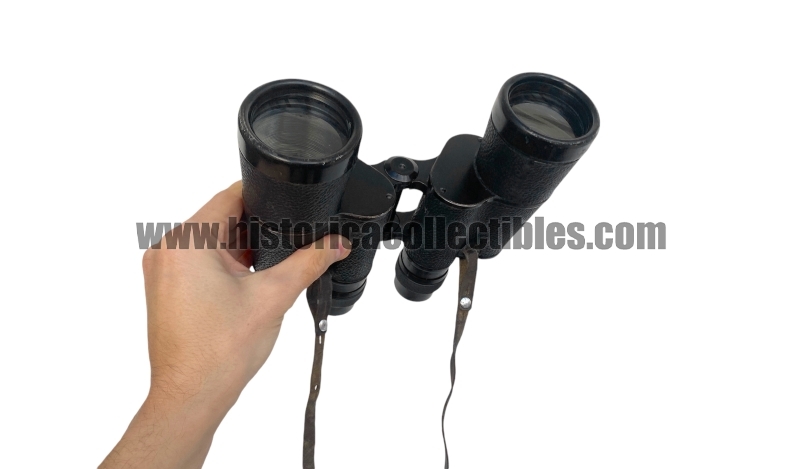

7x50 binoculars, "Lugenico" model, produced by San Giorgio, around 1940, to be used by the Royal Navy's Artillery departments. On the left eyepiece plate, it shows the manufacturer's mark "San Giorgio" with an "M" above it, a mark referring to acceptance by the Royal Navy (the absence of "Genova-Sestri" under the manufacturer's mark indicates that, most likely, these binoculars were made during the war decentralization, 1942-1943). On the right eyepiece plate, in addition to the military assignment number, there is the initials "Art." which refers to the assignment to the Navy's Artillery departments. Below are the "Lugenico" model and "7x50" magnifications. Looking through the right eyepiece, there is the reticle useful for artillery shooting.
All the mechanisms work correctly and the view is clear and collimated.
History of San Giorgio:
The San Giorgio – Genova company was founded in 1905 in Genova Sestri Ponente as San Giorgio, an anonymous company for the construction of land and sea automobiles. The automotive industry is in its infancy in Italy and attracts the interest of several entrepreneurs. Attilio Odero, owner of an important shipyard and majority shareholder of Terni, participated in the establishment of the new Genoese company, while Arturo Bocciardo has been its CEO since 1907.
Precisely in that year, coinciding with a crisis (of growth) in the car sector, San Giorgio abandoned this production to focus on the repair and construction of railway carriages (in the Pistoia workshop) and on various mechanical works in Genova, where the production of electrical equipment for ships began in 1911-1912. The orders from the Navy are important, guaranteeing work for the workshops.
The First World War brought about strong growth for the company, which specialized in the production of rangefinders and aiming instruments for artillery. Taking advantage of the disappearance of fierce German competitors from the Italian market, San Giorgio acquired considerable technological knowledge; its workers stand out for their high professionalism.
After the conflict it was necessary to carry out the conversion from war work to civilian production: San Giorgio carried out this successfully, then taking over, in 1923, the electromechanical workshops of Rivarolo (Genova) from the Piaggio group, which became a shareholder of San Giorgio.
In the 1920s, production was qualified and diversified: machinery for power plants, optical and measuring instruments left the company's factories. This represents a strength but also a weakness for the company, which is not able to achieve the appropriate economies of scale. The effects of the 1929 crisis also affected San Giorgio: although it did not end up under direct public control, since 1934 the company had IRI among its shareholders, alongside private Genoese entrepreneurs. In the second half of the 1930s military production resumed and with them the growth of the company: in 1937 there were 5,100 employees, in 1942 their number rose to 12,000.
War has catastrophic outcomes; in June 1944, 700 Genoese workers were deported by the Germans to Germany.