
Binoculars Military Revolver “Border Guard” WYJ 25-40x100, Long Range Observation, 1998
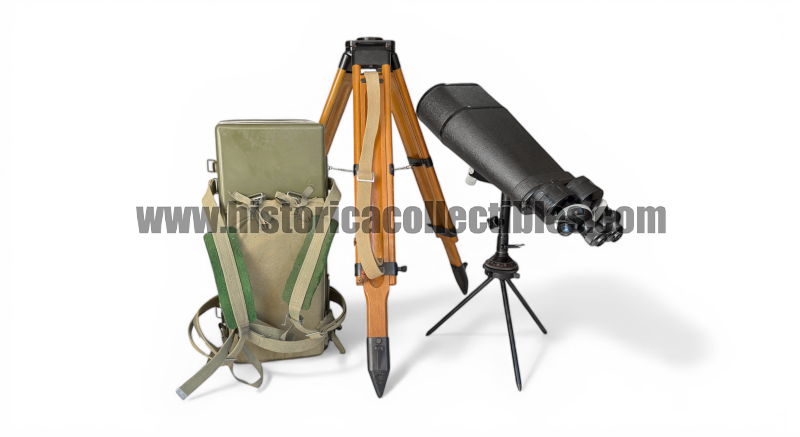

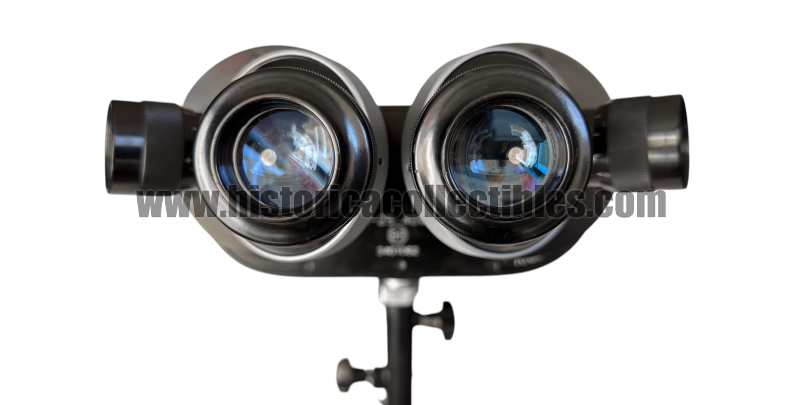
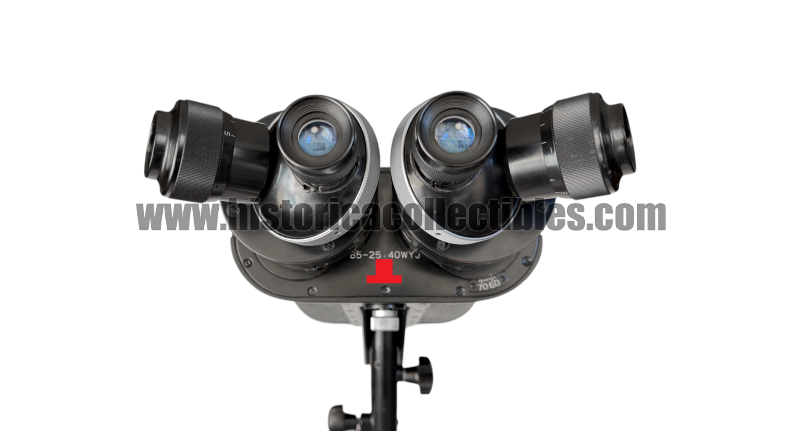
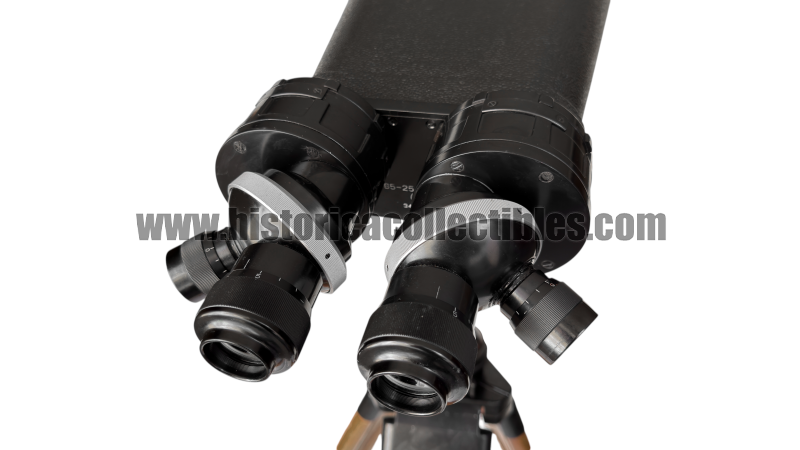
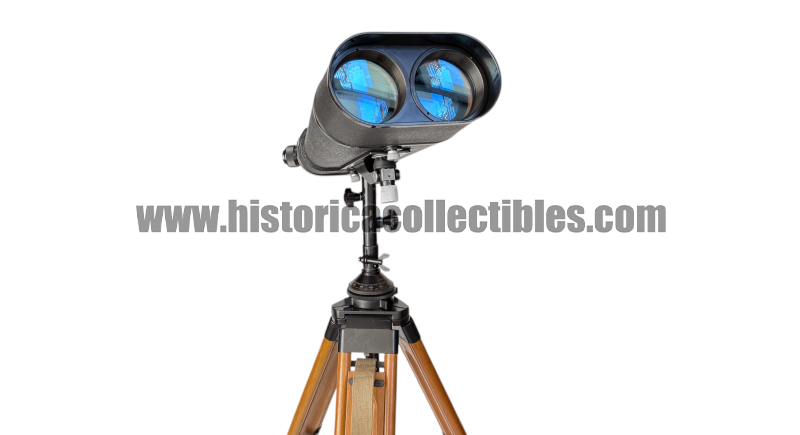
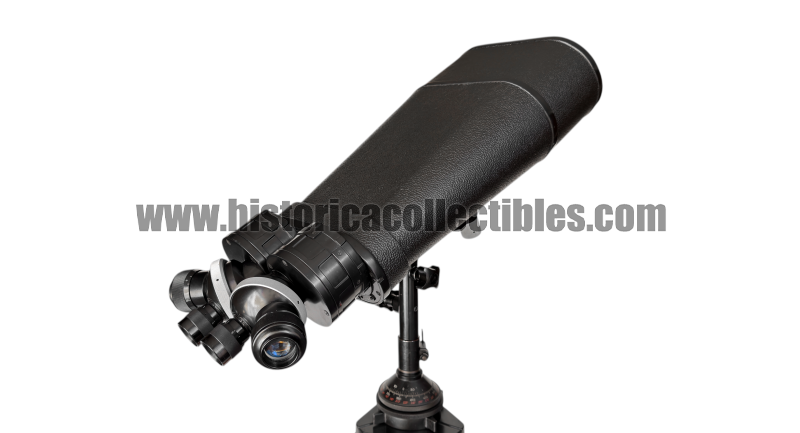
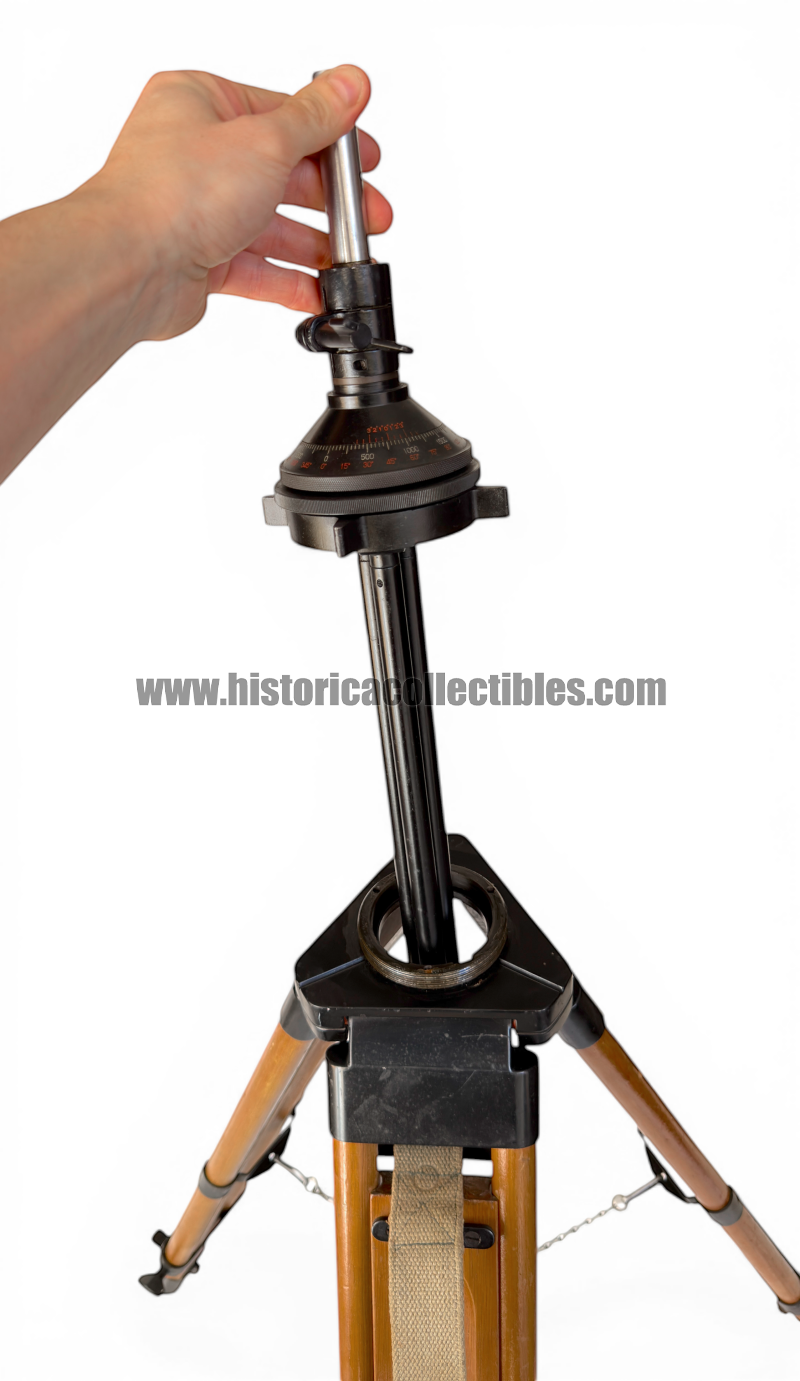
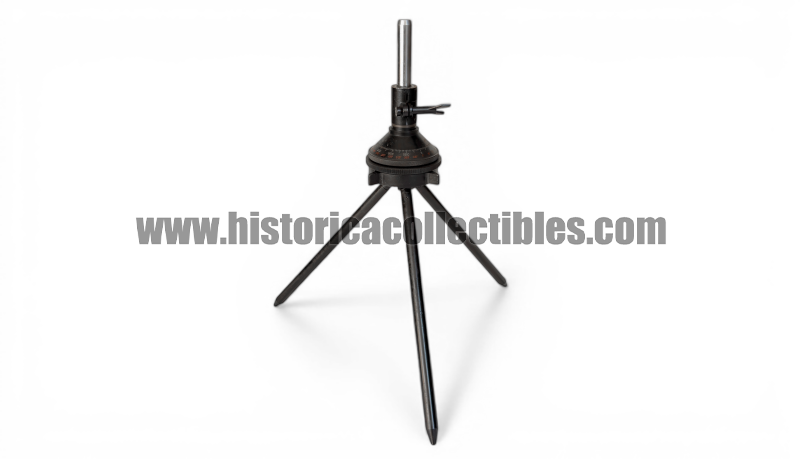
The WYJ Revolver military binoculars feature interchangeable eyepieces with 25x and 40x magnification and impressive 100mm objectives. Designed for extremely long-distance observation, they feature premium fully coated optics and a solid, rugged construction suitable for all-weather use. Nitrogen filling ensures excellent durability and high image quality, protecting the lenses from moisture and fogging.
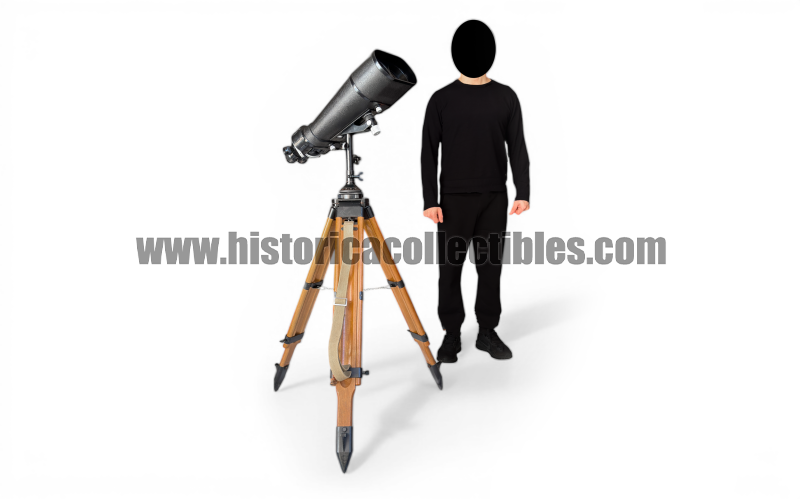
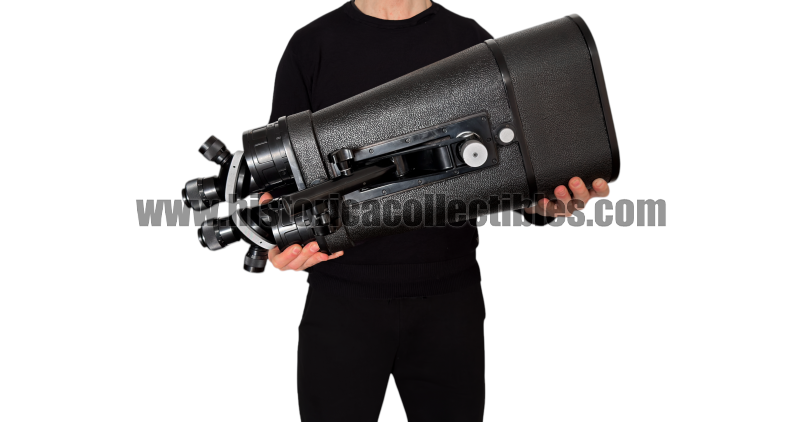
Known as the legendary "border guard" 25/40x100, this extraordinary instrument features 100mm triplet objectives and fully multicoated broadband optics. The rotating eyepieces allow for easy switching from wide-angle 25x viewing to high-magnification 40x observation, offering great operational versatility. This is a true observation giant: approximately 60 cm long and weighing over 11 kg, it immediately conveys the solidity of a professional instrument.
For decades, this model—designed by Carl Zeiss—was reserved for the armed forces of East Germany and China. Its design recalls the aesthetics of antique military equipment, yet its performance remains contemporary. It's more than just a pair of military-looking binoculars: it has actually been used in numerous operational contexts. The United States government and the United Nations have deployed hundreds of them in the Middle East, and they have also been used by the US Border Patrol.
Equipped with rangefinding reticles, it allows artillery observers to calculate the distance to the target with precision. This double telescope is a high-precision optical instrument, capable of varying magnification and operating effectively in a variety of weather conditions. It allows you to measure distance, height, and angle between two points, offering a clear, comfortable, and three-dimensional image.
Thanks to the adjustment mechanism for visual acuity and interpupillary distance, it easily adapts to the observer's different needs and various focusing distances. Due to these characteristics, it represents a valuable ally not only in the professional field, but also for activities such as nature observation, hunting, navigation, fishing, forest fire prevention and long-distance scientific observations.
Technical specifications:
| Objective size | 100 mm |
| Magnification | 25x e 40x |
| Ocular | Straight-through turrets |
| Body covering and color | Rubberized, black |
| Prism | Bak-4 * |
| Body length | 60 cm |
| Optic coating | Broadband fully multi-coated |
| Field of view at 1000m | 25x-44 m 40x-26 m |
| Exit pupil dia. | 25x-4 mm 40x-2.5 mm |
| Exit pupil distance | 25x-14 mm 40x-8.2 mm |
| Focal length | 597 mm |
| Inter-pupil distance | 58-80 mm |
| Telemetry reticles | Yes |
| N2 gas fill | Yes |
| Net weight of body | 13 kg |
| Gross weight of body (including metal case) | 26 kg |
| Packing | Metal case |
| Net weight of tripod | 7 kg |
| Gross weight of tripod | 8 kg |
| Tripod height | Adjustable 0.95-1.43 m |
| Gross weight for whole package (including wooden tripod, metal case) | 34 kg |
| Outside carton dimension | 68x31x30 cm |
*What are BAK-4 Prisms?
BaK 4 is a type of glass used in prism manufacturing. It stands for "Barium Krownate" or Crowned Barium and is a high-density glass with a refractive index of 1.568. BaK 4 prisms are made of higher-quality glass than the cheaper BaK 7 prisms sometimes used in binoculars. The higher-quality glass used in BaK 4 prisms results in a brighter, clearer, and more detailed image.
How do BaK 4 prisms affect binoculars?
When it comes to binoculars, image quality is crucial. BaK 4 prisms are known for their ability to transmit more light, resulting in a brighter image. This is especially important in low-light conditions, such as early morning or late evening.
In addition to brightness, BaK 4 prisms also help improve image sharpness and detail. When light enters the binoculars, it first passes through the objective lens and is focused onto the prism. The prism then reflects the light and sends it to the eyepiece lens, which magnifies the image. BaK 4 prisms offer higher light transmission and finer angular resolution, which helps reduce image distortion and improve overall image quality.
Exit pupil in binoculars
Another important factor to consider is the size of the exit pupil. The exit pupil is the circular area of light visible when looking through the eyepiece. The larger the exit pupil, the brighter the image, especially in low-light conditions. BaK 4 prisms help increase the size of the exit pupil, producing a brighter and sharper image.