Doppelfernrohr 25x105 Flak "KQC" Jos Schneider & Co. Optische Werke K-G, circa 1944
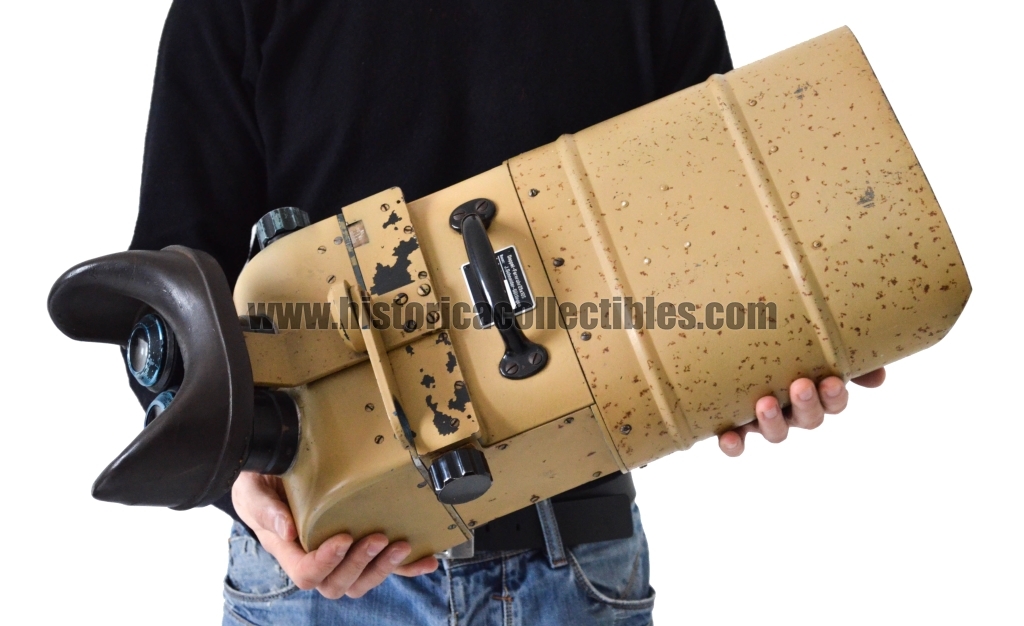
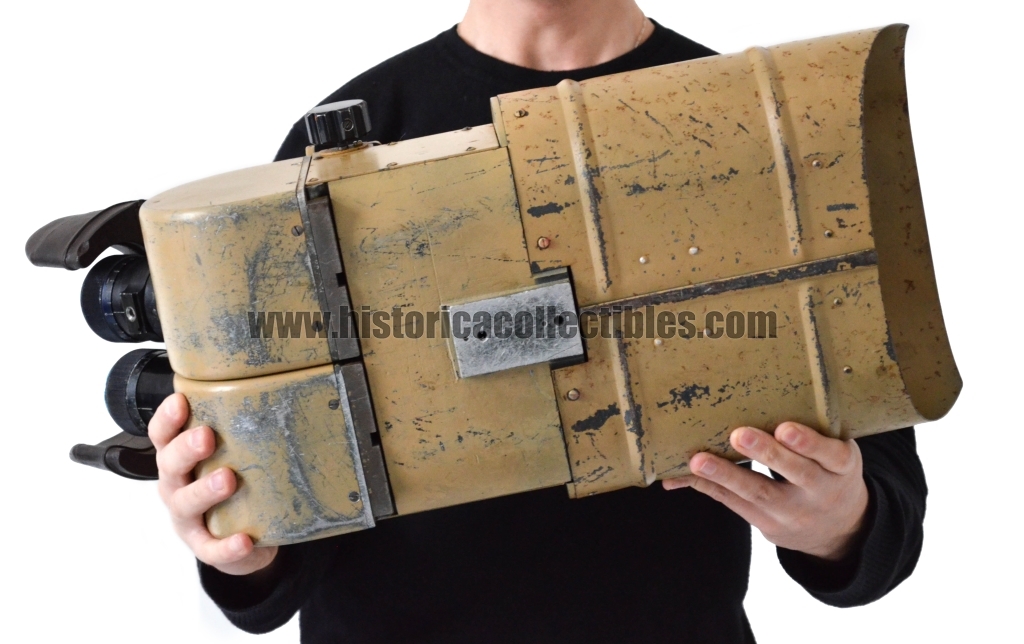
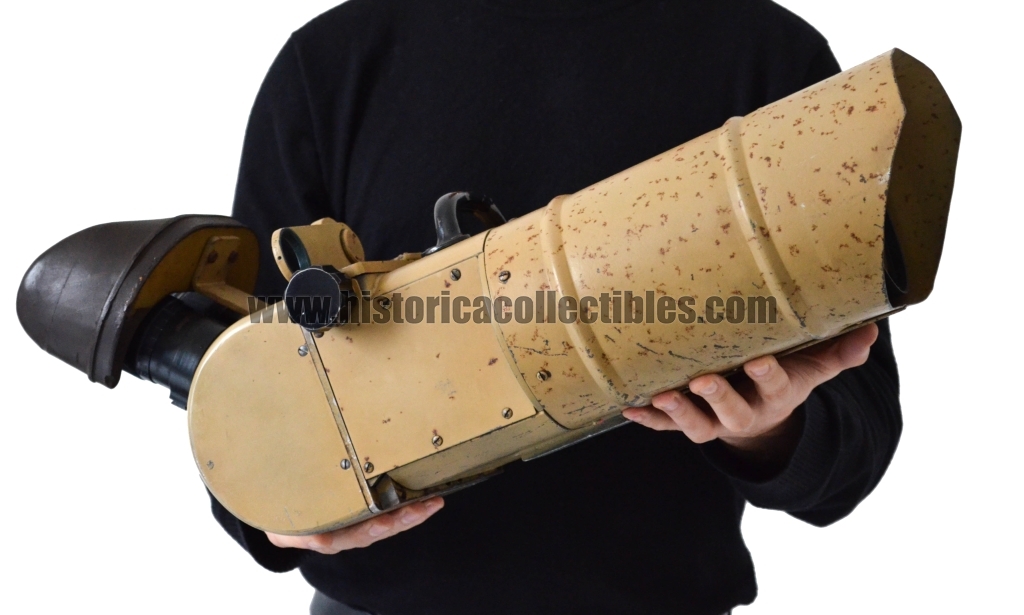
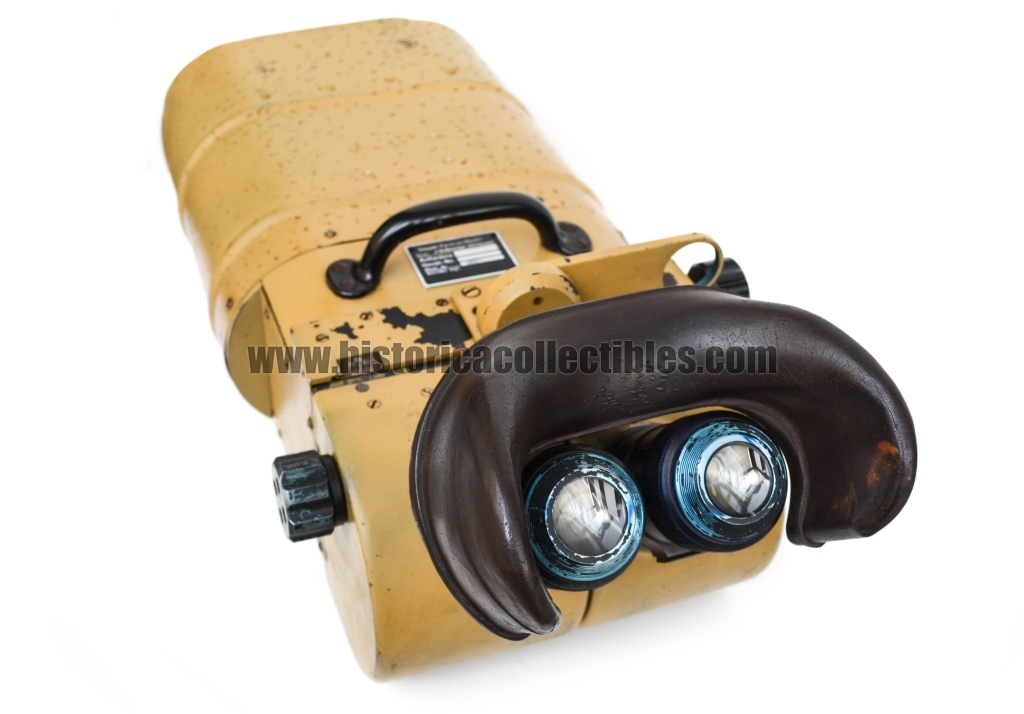


Doppelfernrohr Flakglas 25x105 (45°), made by "KQC" code name of "Jos Schneider & Co. Optische Werke K-G" (at the disposal of the Oberkommando der Wehrmacht) in the Göttingen factory, around 1944, in a limited number of examples . It was designed by Dr A.W. Tronnier, chief designer of Schneider.
Its powerful structure (14 kg) and its impressive visual capacity in terms of sharpness, brightness and magnification were born from the need on the part of the Reich to provide the departments responsible for anti-aircraft defense (Flak) with binoculars that had exceptional optical characteristics, designed to eliminate the usefulness limits found on other sighting binoculars made up to then, such as the Doppelfernrohr Flak 10x80.
Therefore: being able to have binoculars that had a greater field of vision at long distances, obtaining maximum image definition in any light condition and speeding up sighting times with immediate recognition of enemy planes in flight, was the primary design objective of this exceptional binoculars.
Another fundamental task for which this optic was intended was the observation of the trajectories and stability behavior in flight, even at night, of the weapon that Nazi Germany considered as a decisive turning point for the victory of the Second World War, namely the modernized "V1 ” and the brand new and deadly “V2” missiles.
On the right side, there is the knob with which we can adjust the interpupillary distance. On the left side another knob is also suitable for inserting the filters. It is therefore presumed, given that the war was now at the end and most of the manufacturing factories had been destroyed by the Allied bombings, it was not possible to meet the requests of all those parties that were going to complete these instruments. The generous size of the forehead rest made of soft rubber guarantees prolonged use of the binoculars in complete comfort.
It is today considered one of the best optics made during the 2nd World War. Excellent condition and exceptional view.
The J. Schneider - Göttingen company was founded in 1913 by Joseph Schneider (1855-1933). The Schneider family found themselves moving to Springfield, Ohio (USA) in 1877 where, having taken American citizenship, they built a factory for the production of beer under the name of "Schneider Brothers". After a few years the company merged with other local beer producers and Joseph Schneider took over the company and after the birth of his son Joseph August Schneider (1888-1950) he returned to Bad Kreuznach where he opened a wine wholesale company and in 1895 he requested and obtained Prussian citizenship.
The family later moved to "Villa Schneider" located on Stromberger Strasse. Joseph August Schneider studied in Frankfurt (Physics and Optics) and created his first patent in 1910 summarizing it in: "Einrichtung an einem Kinematographen mit stetig bewegtem Bild zum optischen Ausgleich der Bildwanderung mittels zweier gleichläufig und synchron bewegter polygonaler Trommeln".
Father Joseph, to encourage the patents of his talented son, founded "Optische Anstalt Jos. Schneider & Co" in Villa Schneider on 18 January 1913. Already in 1914, 3 of the first patents, which consisted in the production of particular cinematographic lenses saw the light, they were called "Symmar", "Componar" and "Isconar".
In 1918 there were 400 workers compared to 43 in 1914. During this period it was necessary to expand the factory up to Hofgarten Strasse.
The economic crisis of 1920 brought a sharp fluctuation in sales figures. In 1925 the 100,000th goal was completed just in time for his father Joseph's 70th birthday. Then, production slowly resumed and between 1928 and 1932 a total production of 500,000 objects was reached. The "Xenar" lens played a particular role.
Other new projection lens systems enriched the production assortment and 1930 saw the birth of the first "Angulon" 6.8/12 cm lens model.
In 1933, his father Joseph who resided in the city of Bad Kreuznach, died at the age of 78.
After the death of his father Joseph Schneider, Joseph August Schneider took over the company and called his son Hans Joseph Schneider (1926-1989) to join it. After Hitler's rise to power, Schneider was commissioned with optics intended for the military market. In 1936, lens production moved to the new factory in Göttingen. In 1938, the inauguration of the new building on Ring Strasse, it had 450 employees.
During the 2nd World War, J. Schneider - Göttingen, under pressing political obligations, was dedicated exclusively to the production of optics intended for military use. The company was assigned the encryption code "Kqc".
The end of the war showed the world, as happened to other large companies in the sector, a factory completely bombed and in ruins, but shortly thereafter the company would be resurrected again in the territories of West Germany.