Doppelfernrohr Delfort 18x50 (Carl Zeiss), Weimar Marine, circa 1924
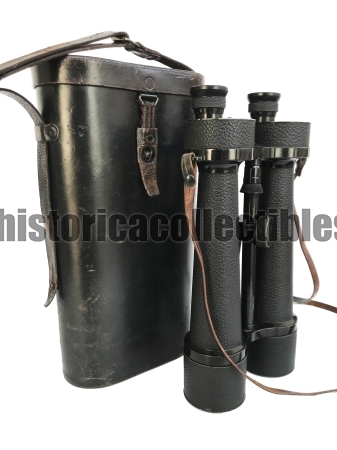
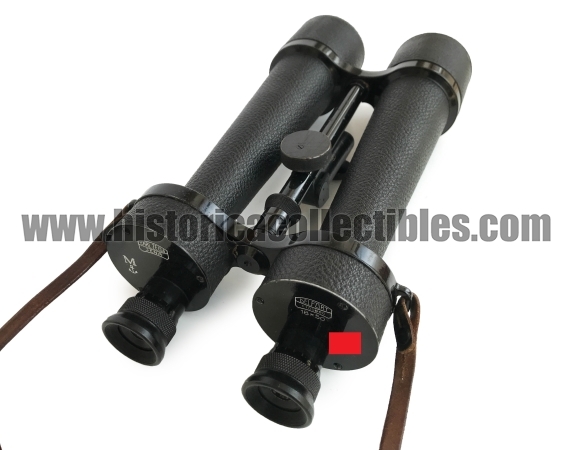
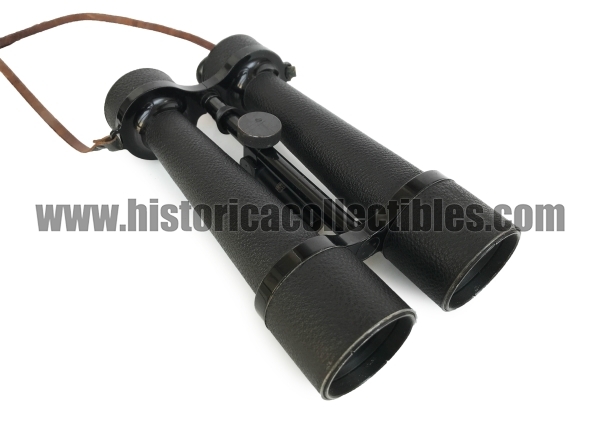
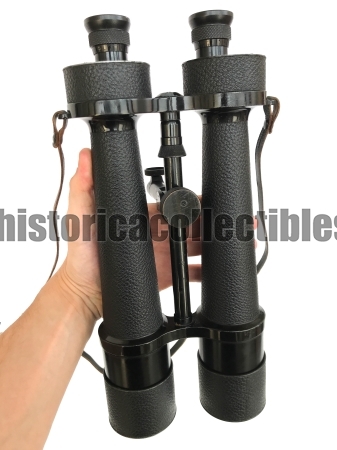
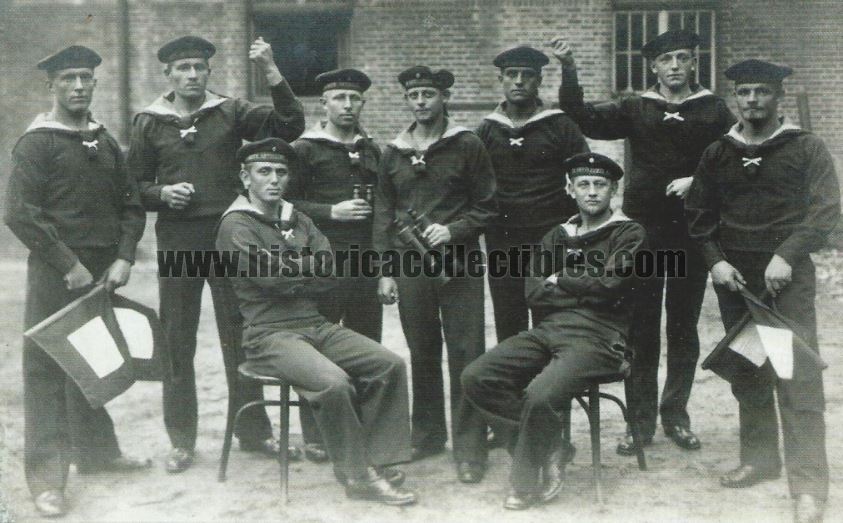
Doppelfernrohr 18x50, produced by Carl Zeiss around 1924 for the civilian market but, due to a series of historical events relating to the rearmament of the Navy of the Weimar Republic, it was destined for the German military naval force.
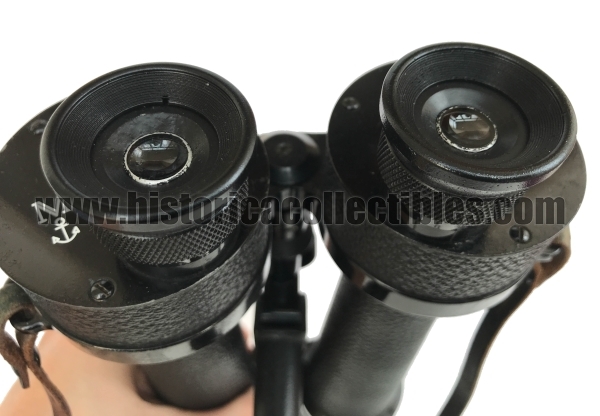
In fact, on the left eyepiece plate, in addition to the Carl Zeiss manufacturer logo, there is the military acceptance mark by the Weimar Marine and the assignment number "xx N" to identify a sea area of the "Nordsee" and the number "xx" which identifies a ship, a department or a naval base. Furthermore, inside the right eyepiece, there is a particular "a +" reticle useful for aiming the shot.
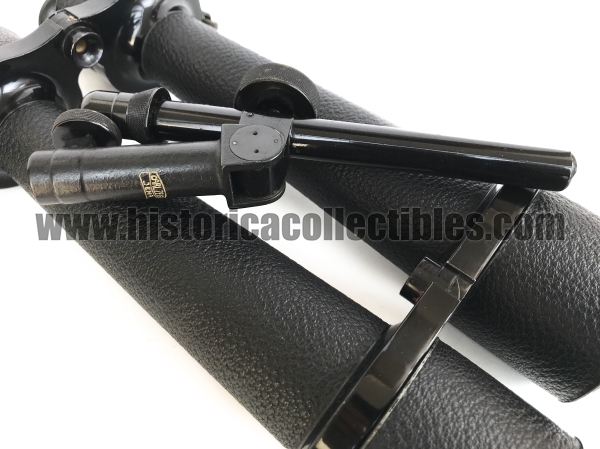
Furthermore, there is a removable central bar which allows you to place the binoculars on a tripod or on a special base.
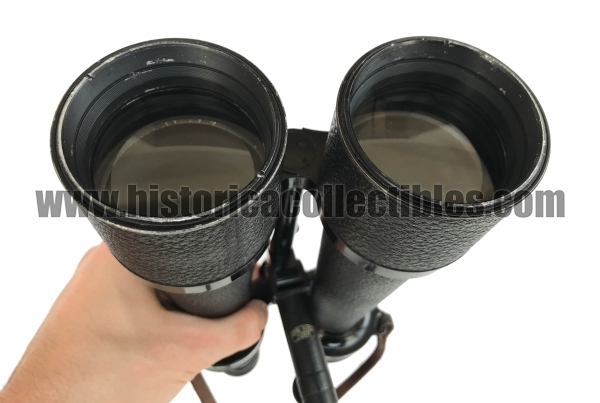
This is extremely easy to handle because it is a light binoculars, equipped with exceptional 50 mm lenses, which provide the observer with a very clear and bright view. Completely built in aluminium the binoculars weigh only 1,100 kg. The vision is sharp and collimated and the focus works smoothly.
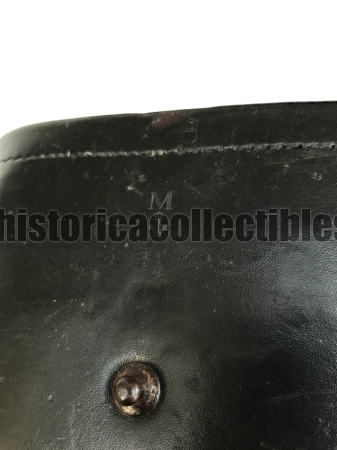
The binoculars is in excellent condition, complete with its original case which also bears the Weimar Marine military acceptance marks.
In fact, what must be taken into account is that, with the Treaty of Versailles of 1919, Germany was considered solely responsible for the war and therefore the victorious European states, Great Britain, Italy, but above all France, imposed harsh peace conditions.
The aim was to see the German nation destroyed morally, as well as politically and economically and condemned to pay an enormous reparation sum. It was also forced to maintain a Navy and an Army reduced to 100,000 units in addition to the drastic reduction of war material.
However, when Vice Admiral Hans Zenker, former Inspector of Artillery, was appointed to the Directorate of the Marineleitung in 1924, he managed to carry forward the modernization programs of the German fleet, also benefiting from Germany's economic recovery under the government of chancellors Gustav Stresemann and Wilhelm Marx.
The Army and the Navy were able to have the official production of the quantities of material although still subject to limitations, but at the same time, in parallel and secretly, a procedure was put in place aimed at circumventing the control of the bodies responsible for direct military supplies, making the flow from the civilian market significant quantities of technical, optical and anything else necessary material to then redirect it militarily, thus almost completely satisfying the need for reorganization and operation of its departments.
Carl Zeiss takes its name from its founder, Carl Zeiss, who on November 17, 1846 chose the small town of Jena, in Thuringia, as the location for his precision optical equipment factory.
Thanks to the severe quality control that Carl Zeiss imposed on his products, going so far as to personally destroy the microscopes that did not pass the tests, the newly formed Zeiss became the official supplier of the University of Jena and received the gold medal of the industrial exhibition in 1861 of Thuringia as the best research instrument produced in Germany, awarded to the Stand I microscope of 1857.
In 1866 the thousandth microscope was produced and the name Zeiss became known throughout European scientific circles. Thanks to studies on the Porro prism, in 1893 Abbe patented double prism binoculars, which accentuated the perception of depth.
The mass production of Zeiss binoculars began in 1894, already at the beginning of the twentieth century more than 30,000 were made, at the beginning of the First World War the quota had risen to 500,000 and, at the end of the Second World War, as many as 2,260,000 were produced binoculars for the civil and military market. Models were made starting from 4x11 mm to 12x40 mm, up to real giants such as the 80 mm and 100 mm.
Thanks to studies conducted on the perception of light in low light situations, it was demonstrated that the average dilation of the pupil in an adult is approximately 7 mm. For this reason, the 7x50 mm model was introduced in 1910 and remained on the market until 1917 with few changes to the materials used.
In 1926, following the post-war crisis of the First World War with the Treaty of Versailles which bankrupted many important German companies, Zeiss purchased "C.P. GOERZ" and founded Zeiss Ikon in 1926.
In 1937 Zeiss had commercial contacts and factories in more than 29 countries around the world. From '33 Zeiss acquired interest from the Nazi regime, which balanced production towards military instruments.
It successfully produced binoculars with wide-angle optics for military use, pressure-resistant optical systems for U-boats, periscope binoculars for targeting tanks. Furthermore, Zeiss cameras were mounted on the V2s for remote sensing operations of the English coasts.
On 1 November 1935, Zeiss, in the figure of Alexander Smakula, patented a process for the treatment of optical glass with extraordinary results in terms of light transmission. Remained a military secret until 1939, it was adopted on binoculars to reduce ghost images and internal reflections.
During the Second World War, there were numerous bombings against the Zeiss factories. Jena was bombed several times by the Allies starting in 1944. Stuttgart was razed to the ground, although the Contessa-Nettel factory suffered little damage. The bombing of Dresden, in addition to devastating the city, also caused considerable damage to the Zeiss Ikon headquarters.
On April 13, 1945, American military forces entered Jena, surprising themselves that the bombing had not caused any significant damage. The main planetarium was in ruins, while the factories remained operational.