
Doppelfernrohr Voigtländer 10x42, Kaiserliche Marine (T), about 1915
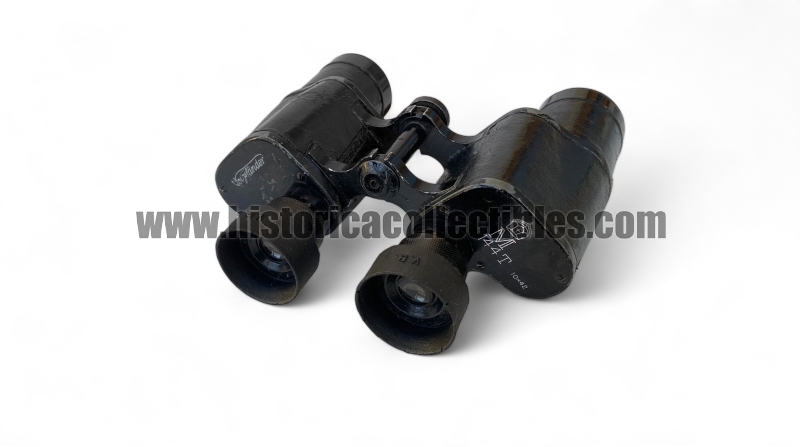
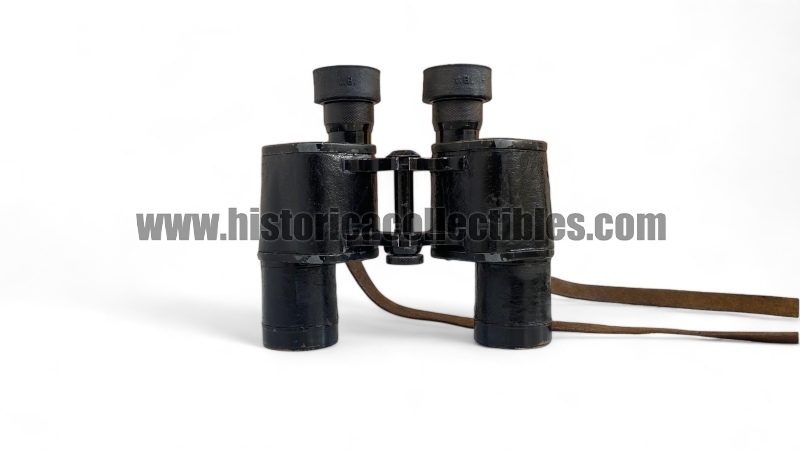
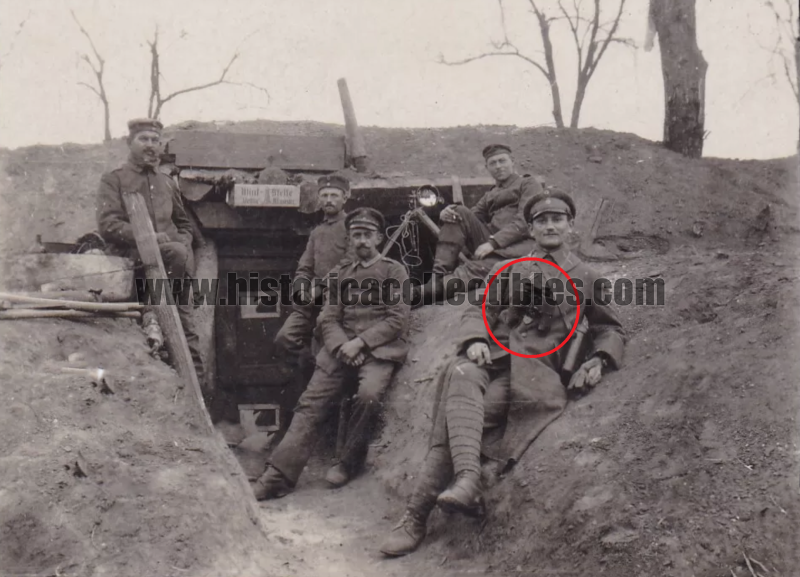
Doppelfernrohr 10x42, produced by Voigtländer, Braunschweig (Vienna) for the Kaiserliche Marine (Imperial German Navy) in around 1915, as can be seen from the marks impressed on the eye plates, which show on the left (Voigtländer Braunschweig), while on the right the German Imperial Crown with the M for Marine at the bottom and the assignment number with the letter (T) next to it, the meaning of which we are not aware of.
Next to it we also find the Lion, symbol of the city of Braunschweig, the 10x42 enlargements and the serial number canceled in a remote era.
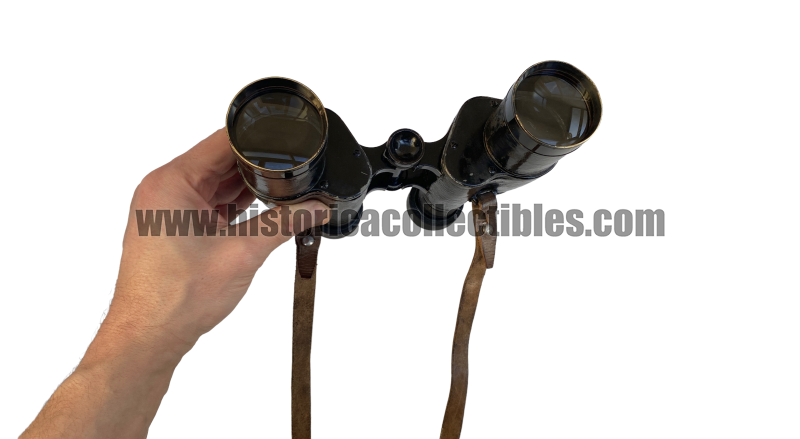
This binoculars, in addition to the rarity of the format of the 10x42 lenses, is equipped with rubber eyepieces with which it was possible to use the binoculars even with a gas mask or glasses, thus avoiding damaging or scratching the lenses. It is also believed that this model with rubber eyepieces, also marked V.B. (Voigtländer Braunschweig) preserved in excellent conditions, is currently considered the only known example.
The vision is perfectly sharp, clear and collimated and all the mechanisms work correctly.
Voigtländer Braunschweig was created in Vienna in 1756, the company took its name from its founder, Johann Christoph Voigtländer and initially produced optical instruments, intended in particular for microscopes and other scientific equipment. Among the first creations were the Petzval type lenses, and others destined to become famous, such as the Collinear and the Heliar.
In 1840 he built the first lens for cameras, while in 1841 the first entirely metal daguerreotype was developed. He subsequently produced plate machines, built in a practically artisanal way.
In 1849 the headquarters were moved to Braunschweig, Germany, where Voigtländer & Sohn was born shortly thereafter.
In 1925 it was purchased by Schering AG. Voigtländer later oriented its production towards photographic devices accessible to all, and this allowed it to remain among the market leaders until after the Second World War.
In 1958 it was bought by the Carl Zeiss Foundation and in 1972 it was renamed "Zeiss Ikon Voigtländer".
In 1973 the brand became the property of Rollei until the crisis of 1982.
At this point the brand was bought first by "Plus foto", which from 1980 marketed Voigtländer cameras produced by Ricoh and Chinon and then in 1995 by "Ringfoto", but this represents more than anything else a long period of darkness. Finally in 1999 the brand was reborn with the purchase by the Japanese Cosina.
In 1840 he built the first lens for cameras, while in 1841 the first entirely metal daguerreotype was developed. He subsequently produced plate machines, built in a practically artisanal way.
In 1849 the headquarters were moved to Braunschweig, Germany, where Voigtländer & Sohn was born shortly thereafter.
In 1925 it was purchased by Schering AG. Voigtländer later oriented its production towards photographic devices accessible to all, and this allowed it to remain among the market leaders until after the Second World War.
In 1958 it was bought by the Carl Zeiss Foundation and in 1972 it was renamed "Zeiss Ikon Voigtländer".
In 1973 the brand became the property of Rollei until the crisis of 1982.
At this point the brand was bought first by "Plus foto", which from 1980 marketed Voigtländer cameras produced by Ricoh and Chinon and then in 1995 by "Ringfoto", but this represents more than anything else a long period of darkness. Finally in 1999 the brand was reborn with the purchase by the Japanese Cosina.