
Ignazio Porro: first prism ever produced, France, 1848
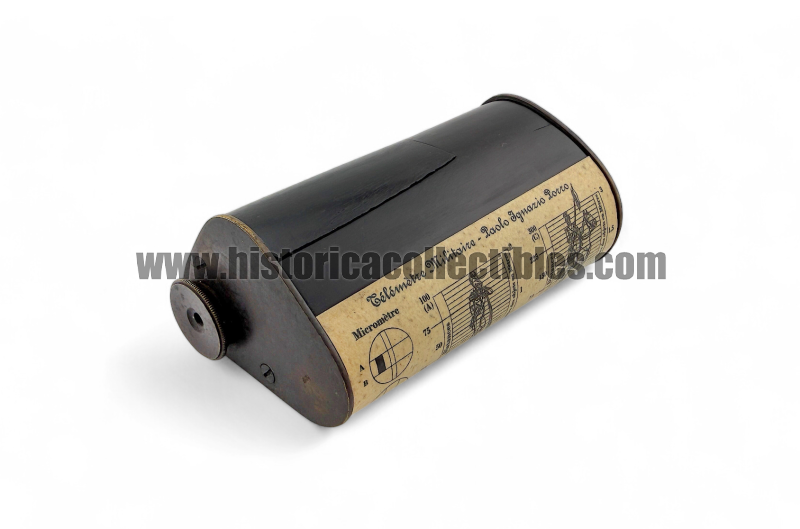
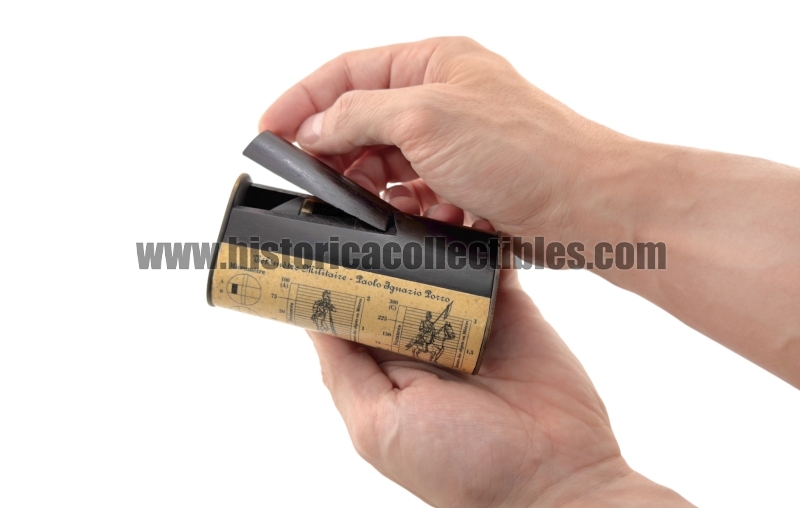
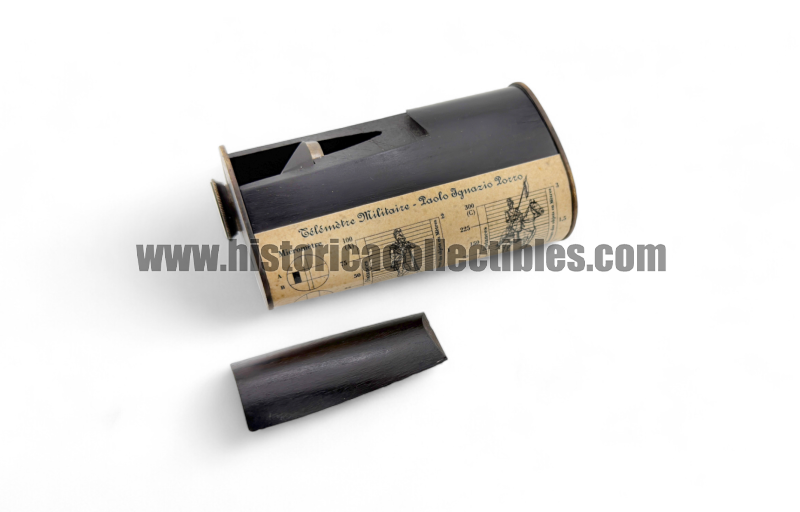
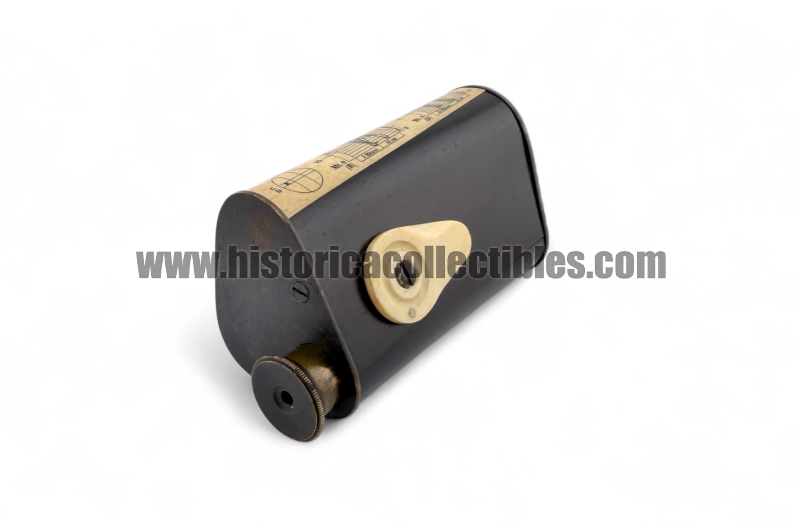
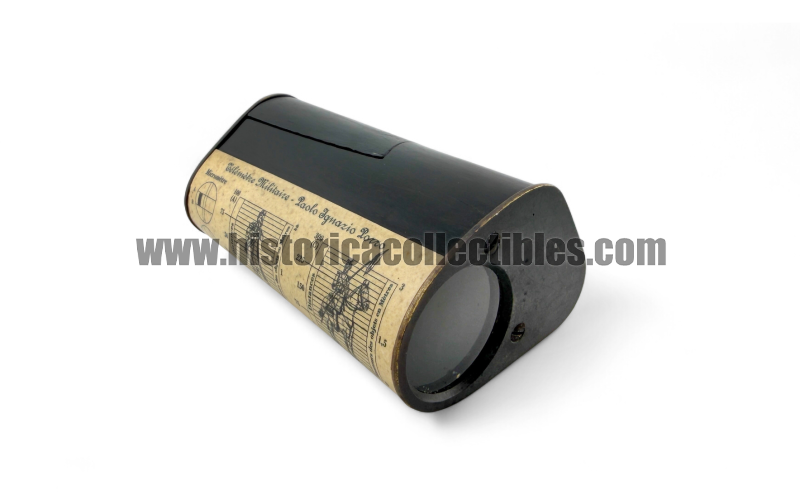

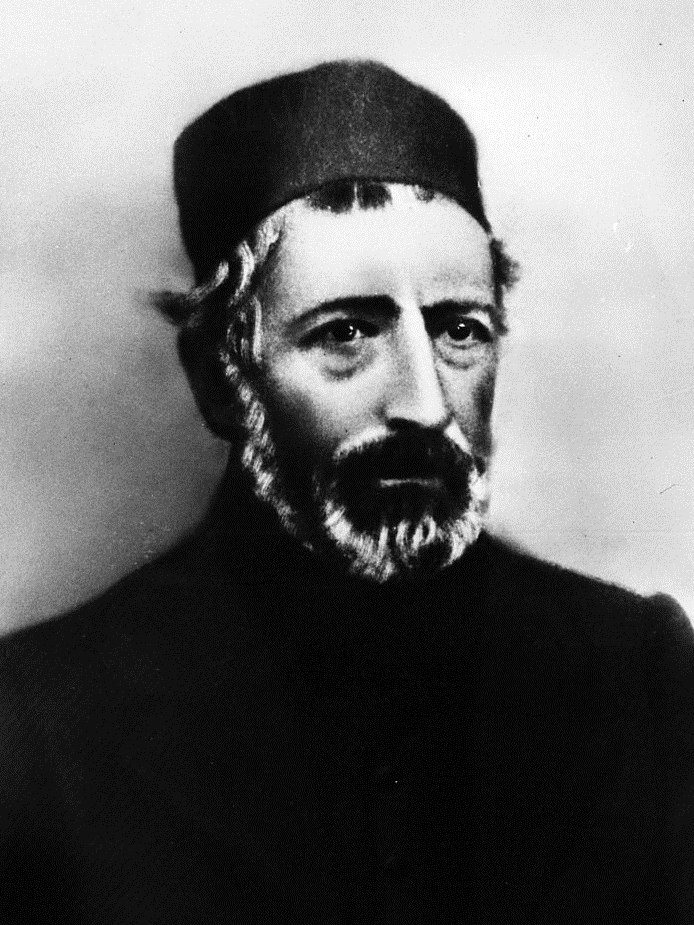
This is the world's first prototype optical instrument to feature a prism: it houses two of the first prisms created in 1848 by their inventor, Ignazio Paolo Porro.
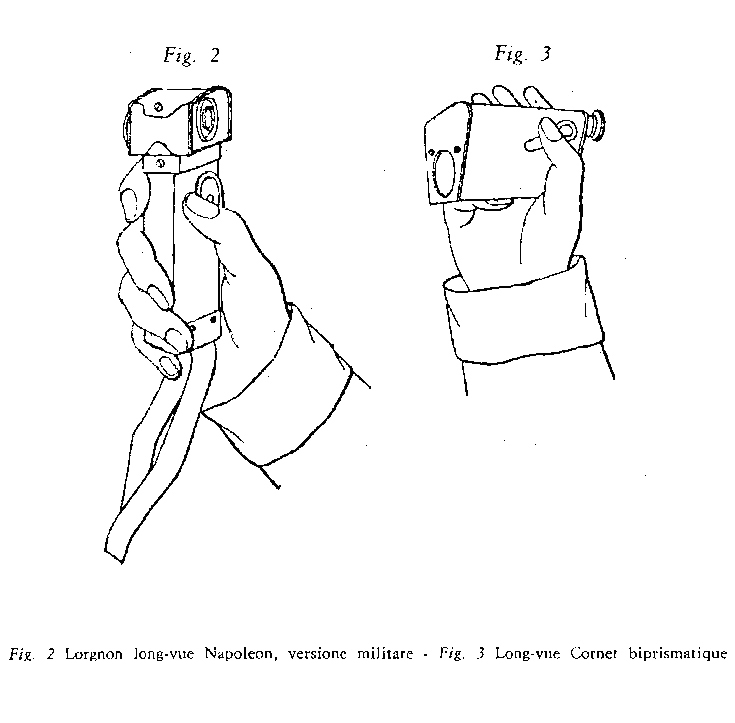
By using a prism for the first time on this instrument, which he also invented and named the Longue-Vue "Cornet" (for its similar shape to an ear trumpet), Ignazio Porro also created the world's first and smallest military telescope with a direct-view prism image erecting system, which could determine the estimated range between the observer and the target. Thus was born the first prototype of the "Military Biprismatic Anallactic Telemetric Telescope."
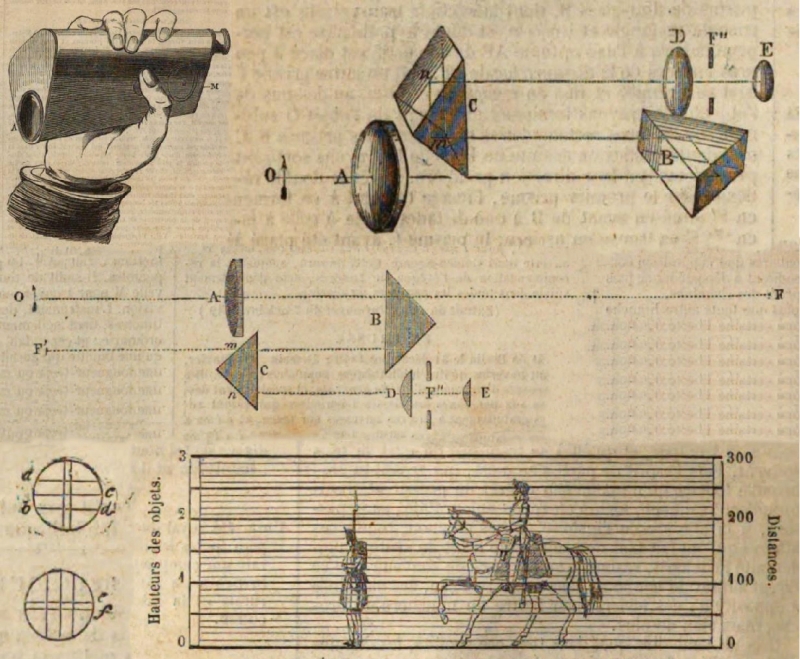
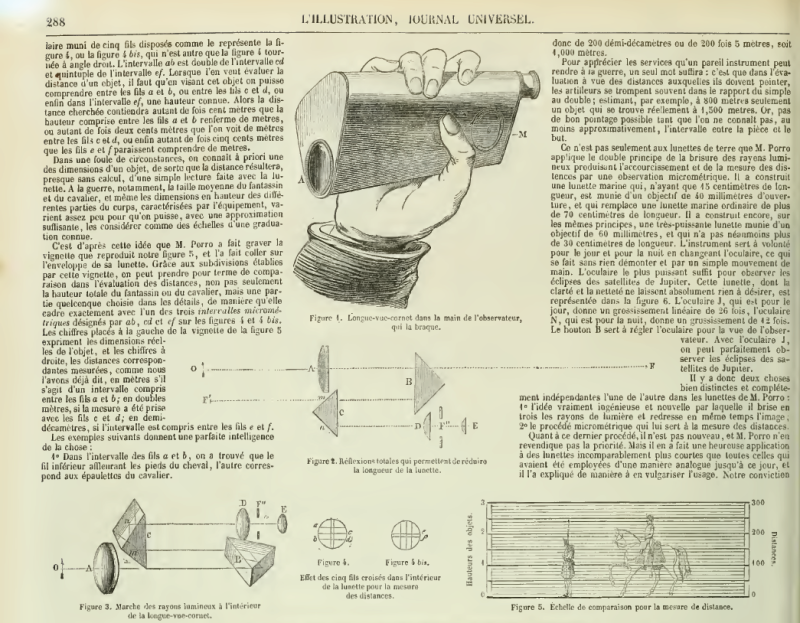
In fact, using the two "hair reticles" inside the eyepiece, it was possible to directly obtain, without additional calculations, measurements from "0" to "100" meters if considering the wider reticle, and from "0" to "300" meters if using the narrower reticle. To summarize the operating principle of the optical distance meter, Ignazio Porro applied a label to the body of the Longue Vue "Cornet" on which he carefully recorded clear graphic and numerical information useful for correctly reading heights and distances.
Evidence that this prototype was one of his first experiments is the lack of a third "hair reticle" element, interposed between the "0" and "100" measurement. Porro had the foresight to only later include this in the model officially produced and marketed starting in 1850 under the brand "Cabinet Technomathique," the name of his first company located at 48 Rue Babylon in Paris. This reticle further improved the precision in reading heights and distances and helps us understand why Porro continued to work on this project over the years: in fact, more than two years passed between the creation of the prism and the joint invention of this Longue Vue "Cornet" and its commercialization.
Indeed, it is crucial to consider that Ignazio Paolo Porro moved to Paris in 1847 and there, with the financial support of Count Eugène Panon Desbassayns de Richemont, opened his business called "Cabinet Technomathique" in 1848, located at 48 Rue Babylon. In his "Cabinet Technomathique," Ignazio Porro limited himself to producing extraordinary, innovative instruments almost exclusively at the prototype or archetype level. Among these was the prism, which he invented around 1848 and which he channeled into another of his brilliant creations, the "system for rectifying images with a direct-view prism," for which he obtained a "Patent" (in France in 1854 and in England in 1855), which granted him the exclusive right to exploit the invention for a limited period of 15 years.
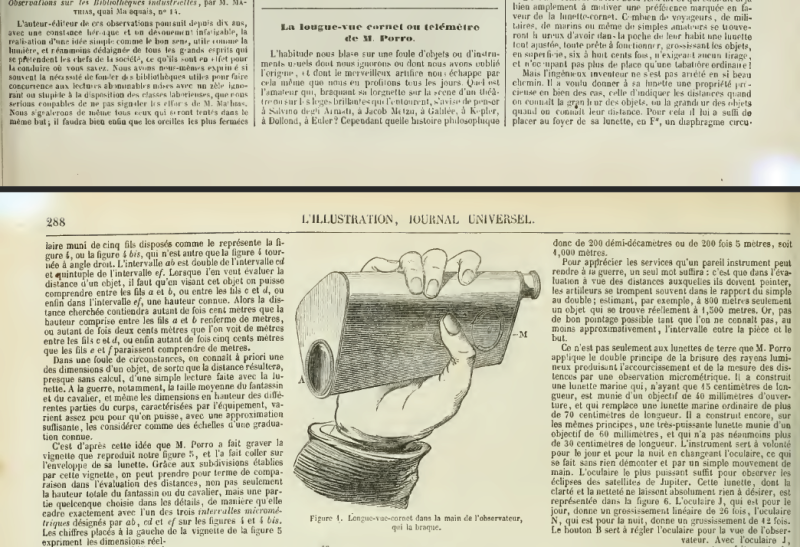
This procedure, also to protect his invention, was probably started by Ignazio Porro as early as 1849 since the functioning of the prism and the related system of rectifying images through 2 direct vision prisms used on the Longue Vue "Cornet" was published on May 4, 1850 in the French magazine "L'Illustration".
Unlike this prototype, all the "Cornet" Longue Vue chairs produced since 1850 and sold in his "Cabinet Technomathique" at 48 Rue de Babylone, also available for purchase from the retailer MM. Lerebours et Secretan at 13 Place du Port-Neuf for the exorbitant price of 150 francs, bear the words "Déposé" or "Deposited" on the "cartouche." This certification confers the "right of precedence" of the invention to Ignazio Porro and testifies that he initiated the process for protecting the invention by submitting an application to the competent office. Furthermore, in order to avail of the "Breveté" certification and obtain the "patent," the expected time frame of approximately 2-4 years required for the preliminary, technical, and bureaucratic procedures had not yet elapsed.
Furthermore, this Longue-Vue "Cornet" archetype, unlike the models produced and marketed by Porro starting in 1850 under the "Cabinet Technomatique" brand, is equipped with a small, removable wooden door with a recessed "claw" shape. Removing it allowed Ignazio Porro to extract one of the two prisms located in the appropriate housing. This feature, reserved by Porro only for this model, was certainly intended to demonstrate the significant construction features of his revolutionary invention applied to this small optical instrument.
Furthermore, this is the only surviving example of the Longue-Vue "Cornet" to have been made entirely of wood and to bear only the "mark" of his personal "punch signature," "P.I. Porro."
All examples produced and marketed from 1850 onward bear, in addition to the "punch signature," the "Cabinet Technomatique" mark, along with the name given to this model, Longue Vue "Cornet Porro."
Furthermore, they were all made entirely of brass, covered in leather, and did not allow access to the prisms unless all their parts were completely dismantled. Furthermore, no serial or production numbers are found on this example.
In 1854, after six years of business, Ignazio Porro changed the name of his company from "Cabinet Technomathique" to "Institut Technomatique Porro a Paris." It was then that he decided to create an evolutionary prototype of his "Cornet" longue-vue, which, in addition to being larger in size, was more refined and aimed more at the civilian market: https://historicacollectibles.com/binocoli-e-teles...
However, this project remained only at the archetype/prototype stage because, the constant need to perfect this instrument called "Longue Vue Cornet", led Ignazio Porro to create an even more advanced and exclusive version in ivory, called the "Lorgnon Longue Vue Napoleon III", which was presented to Napoleon III on February 22nd. The emperor greatly appreciated this version of the "Military Anallactic Biprismatic Telescope", so much so that Ignazio Porro continued to call it the "Lorgnon Longue Vue Napoleon III". In the same year, Ignazio Porro also received the second class medal at the International Exhibition held in Paris and began producing this new version called "Lorgnon Longue Vue Napoleon III", obviously using materials more suitable for continuous military use than ivory, which was widely used by the French Army Officers during the "Italian Campaign" of 1859 or better known as the "Second War of Independence": https://historicacollectibles.com/binocoli-e-teles...
Unlike the Longue Vue "Cornet", on the "Lorgnon Longue Vue Napoleon III" the wording "Déposé" was replaced by "Brevetè" or "patented", demonstrating that several years passed between the "filing of the application" and the "acceptance of the patent" for the prism and its system for erecting images using two prisms.
The combined importance of the invention of the prism, along with that of this "Longue Vue "Cornet", which is considered the world's first direct-view prism image erecting system, was so significant that it attracted the interest of another major manufacturer of the time: J. G. Hofmann. In fact, understanding the optical-scientific importance and economic potential of this instrument, Hofmann put into production in 1858, a full 8 years after the marketing of the "Longue Vue "Cornet" and a full 10 years after Ignazio Porro's creation of this prototype, a virtually identical instrument, calling it the "Distanzschätzer", which J.G. Hofmann also had published in one of his famous advertising posters.
Not only did J.G. Hofmann not deem it appropriate to make any aesthetic changes to the model invented by Ignazio Porro, but he also took advantage of his patent, as all his "Distanzschätzer" binoculars used the same dual-prism image-rectification system, and some even bore the "SGDC Breveté" trademark.
Furthermore, to better understand the greatness and brilliance of Ignazio Porro's intuition about the prism, which radically changed the optical industry, it should be noted that another leading figure in the field of optical science, Ernst Abbe, attempted to patent binoculars equipped with the prism-rectification system only in 1893, a full 55 years later. The German physicist was enormously surprised to discover that someone else had invented and patented the prism decades earlier. Despite his intense work in the field of optics, Abbe admitted he had never heard of the inventor Ignazio Porro. This provides us, in addition to the unfortunate events Porro encountered during his intense life, also a significant indication of the still limited and poorly managed systems of scientific communication and dissemination at the time for accessing information and new scientific discoveries.
It is estimated that Ignazio Porro produced very few "Cornet" Longue-Vues, which, to this day, are virtually nonexistent, with a few exceptions preserved in the world's most important museums.
Archetype/Prototype of the world's first prismatic optics.
References:
National Museum of America History -
ETH-Bibliothek Zürich - Rar 15069: (https://doi.org/10.3931/e-rara-107760)
Armeemuseum: (https://www.armeemuseum.ch/wp-content/uploads/2019...)
L’illustration: journal universel XV (4 May 1850) Pagina 288: (https://archive.org/details/lillustrationjou05pari...) oppure (https://dn790003.ca.archive.org/0/items/lillustrat...)