
Military Prototype E. Vion - Paris "Système Breveté S.G.D.G.", circa 1922
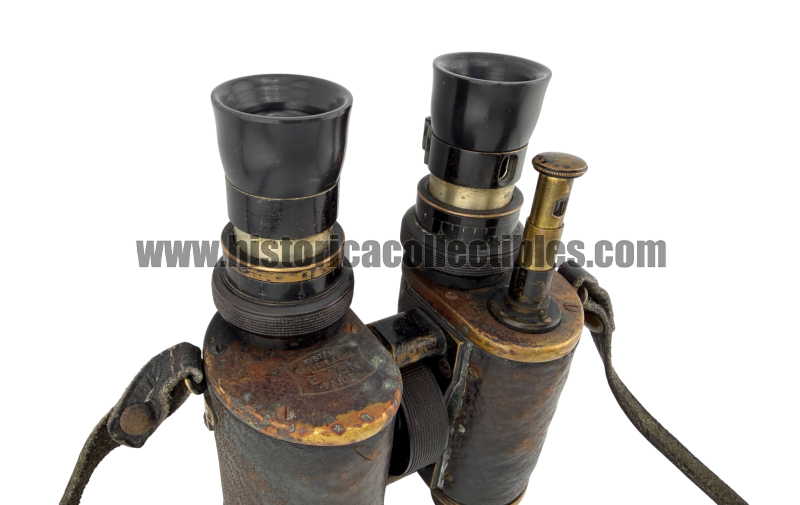
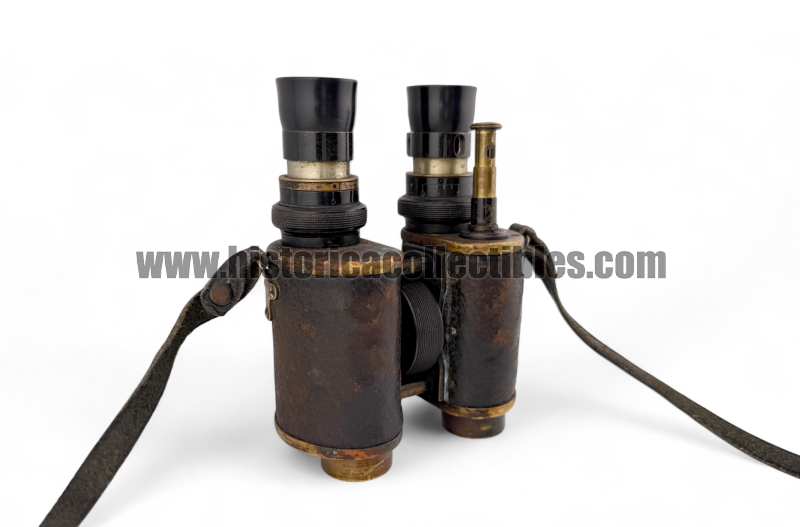
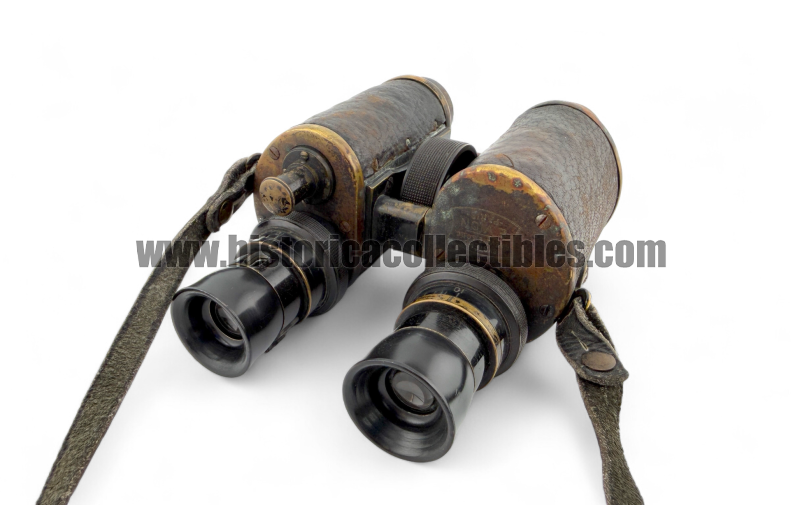
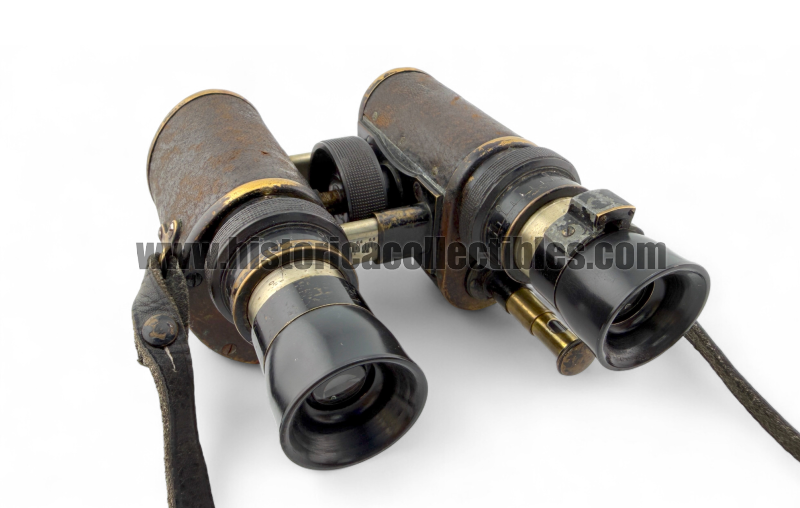
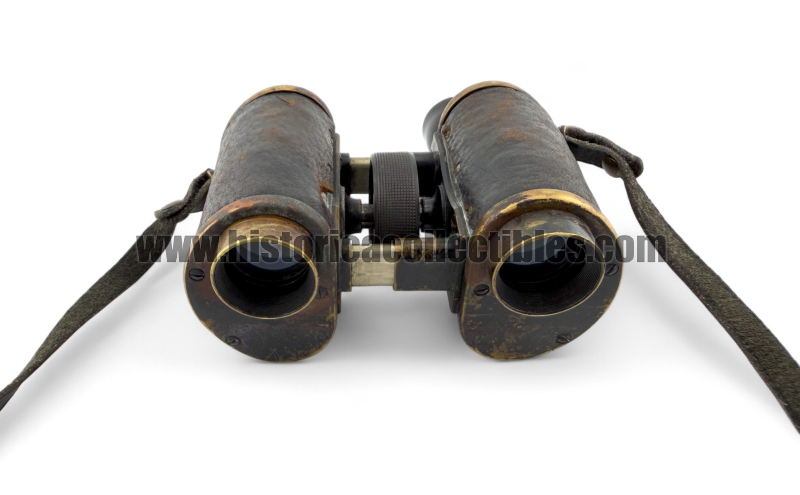
Prototype of military prismatic binoculars, made by E. Vion - Paris "Système Breveté S.G.D.G. - Sans Garantie du Gouvernement"*, circa 1922, believed to be the only prismatic binoculars produced by E. Vion Paris and the only example with unique technical and functional characteristics, remaining only in the experimental or prototype stage.
In addition to not bearing any serial or production number, the E. Vion-Paris company (Auguste Henri Eugène Vion) does not appear to have ever produced or marketed any binoculars since its founding, but only precision optical and scientific instruments such as microscopes, terrestrial telescopes, astronomical telescopes, Longue-Vue telescopes, high-precision microscopes, objectives, astrolabes, surveying instruments, etc.
This can be learned from the catalogues advertising these instruments, as well as the advertising posters regarding the range of their production, on which the definition indicating "binoculars" is never mentioned, i.e. "jumelle", "binoculaires" or "stereo-jumelle".
The body of the binoculars has an "upside-down" design compared to the commonly known models produced during the same period. The eyepieces are positioned on the upper part of the plates, while the objective lenses are located on the lower part.
This particular arrangement is due to the presence, on the right eyepiece plate, of a retractable "telescope-like" device, containing a liquid bubble: it can be extended and closed, but cannot rotate. The main eyepiece tube also has a slot in the lower part, while the upper part contains a support for an illuminator with a "reflective" prism mirror inside.
The illuminator, aiming its light at the prism, passes through the lower portion of the tube at the bubble device, allowing it to be viewed at night without being spotted by the enemy. It is possible that the bubble could also be visible inside the right eyepiece while sighting the horizon. This leads us to assume that these binoculars could have been installed on some aiming or shooting device. In fact, looking at the two elements attached to the body of the binoculars, to which the shoulder strap is attached, we notice a marked asymmetry between them, probably due to optical-technical design considerations or because these binoculars were also designed to be installed on a military device.
A knurled wheel located centrally on the body of the binoculars allows the interpupillary distance to be adjusted. Focusing is also performed independently on each eyepiece, and by turning the knurled wheel on the base, the eyepiece emerges vertically, rather than rotating like more common models.
The objective lenses are 22mm, while the magnification capacity is approximately 8x.
The binoculars are in excellent condition, and all their mechanical parts work perfectly. The vision is excellent.
*Système Breveté S.G.D.G. was a French patent that expired in 1968. The name was a common abbreviation for "Breveté Sans Garantie du Gouvernement" (patent without government guarantees). France and Belgium maintained a simple patent registration system. Patents registered in this way were believed to be exempt from any government liability.
In France, the 1844 law stipulates that patents are granted "without prior examination, at the applicant's risk, and without any guarantee of functionality, novelty, or merit of the invention, including in terms of precision or accuracy of the description."
E. Vion - Paris:
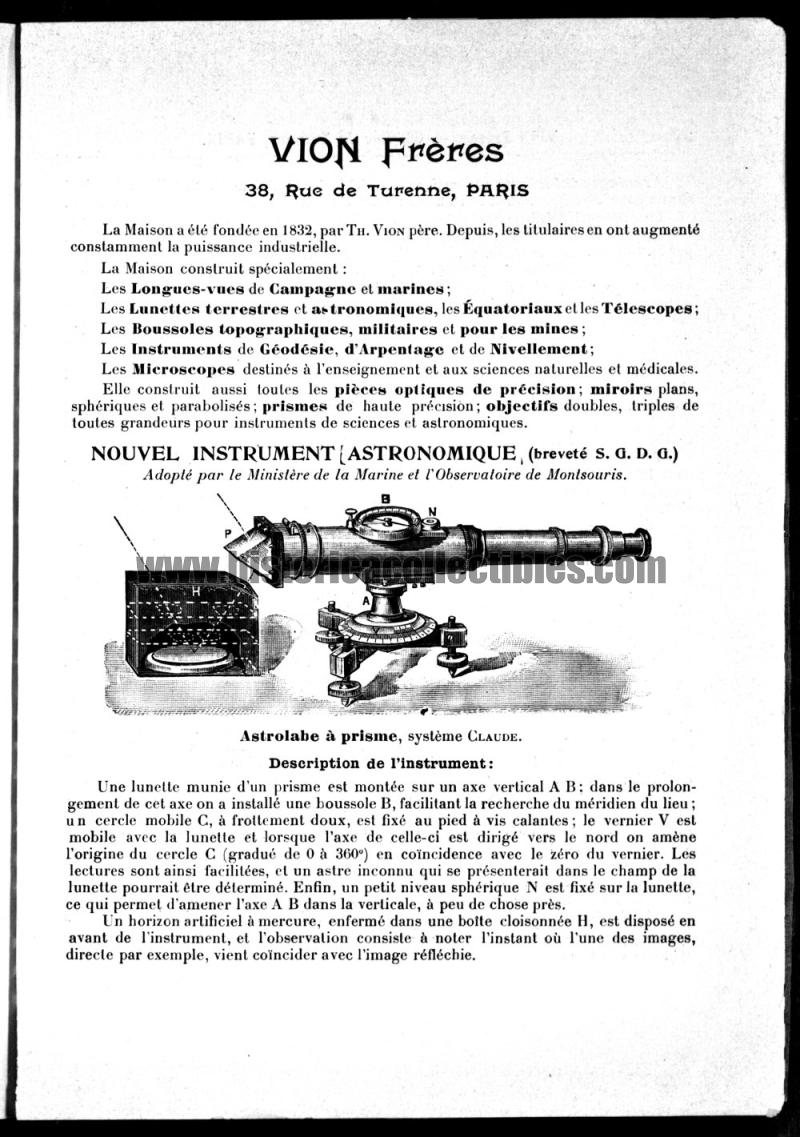
Theodor Vion founded the company in 1832 in Paris, calling it "Th. Vion Fréres-Paris." Initially, it produced precision optical instruments such as microscopes and surveying instruments. After the initial years, the company steadily expanded its business, starting to build large, specialized optics, specifically terrestrial and marine telescopes, astronomical lenses, and equatorial telescope lenses. Later, the company produced highly precise optical instruments such as spherical and parabolic mirrors, prisms, doublet and triplet objectives, and many others for science and astronomy teaching. Indeed, some details are provided for a "Nouvel Instrument Astronomique", that is, a prismatic astrolabe, for which the long description of its components and how they were assembled concludes with the statements that "A large number of astronomical problems are solved with the use of the astrolabe..."; and "fewer algebraic problems were possible..."; it concluded with the statement regarding the simplicity of use of the instrument and its possibility of being used by a person without any knowledge (of how to use such an instrument).
Vion Freres exhibited its products (optical and precision instruments) at the international exhibitions held in 1878, 1889, 1893, and 1900 in Paris.
Toward the end of the 19th century, the Vion brothers (Fréres) operated the business at 38 Rue de Turenne in Paris.
A three-page "catalog" exists with material from: "VION FRERES, 38, Rue de Turenne, Paris"; which was included in the "Catalogue of the French Precision Instrument Industry, Paris (1901-1902).
This information appears in the "Industrie Francaise des Instruments de Precision," a collective catalog published by the Syndicat des Constructeurs en Instruments Optique de Precision in Paris in 1901-02.
Eugène VION (Auguste Henri Eugène, known as Vion, 1869-), a Parisian, was the son of an optical instrument maker and founder of Maison Vion in 1832. He worked in the family business and succeeded his father upon his death in 1916. He became a member of the French Astronomical Society in 1887. In 1902, he built the school telescope under the direction of Flammarion.
Vion instruments are certainly rare. Outside France, the manufacturer is not well known or adequately documented, although the Vion company survived for over 100 years.
By 1922, the name had already changed to E. Vion, and an advertisement appeared in the Revue d'Optique, vol. 1, 1922 (for Etablt Vion, i.e., Etablissement Vion, meaning Vion & Co.). A Selsi - E. Vion catalog, 1928, listed products distributed by Palo Co., NYE Vion, 38 Rue de Turenne, Paris, which was still in operation in 1930; Vion was recommended in Flammarion, Astronomie Populaire, and in Rudaux, Manuel pratique d'Astronomie, 1952.