Zielfernrohr BLC (Carl Zeiss) 5-10x70 - B.Z. Schr. E C/1A L Kriegsmarine, circa 1943
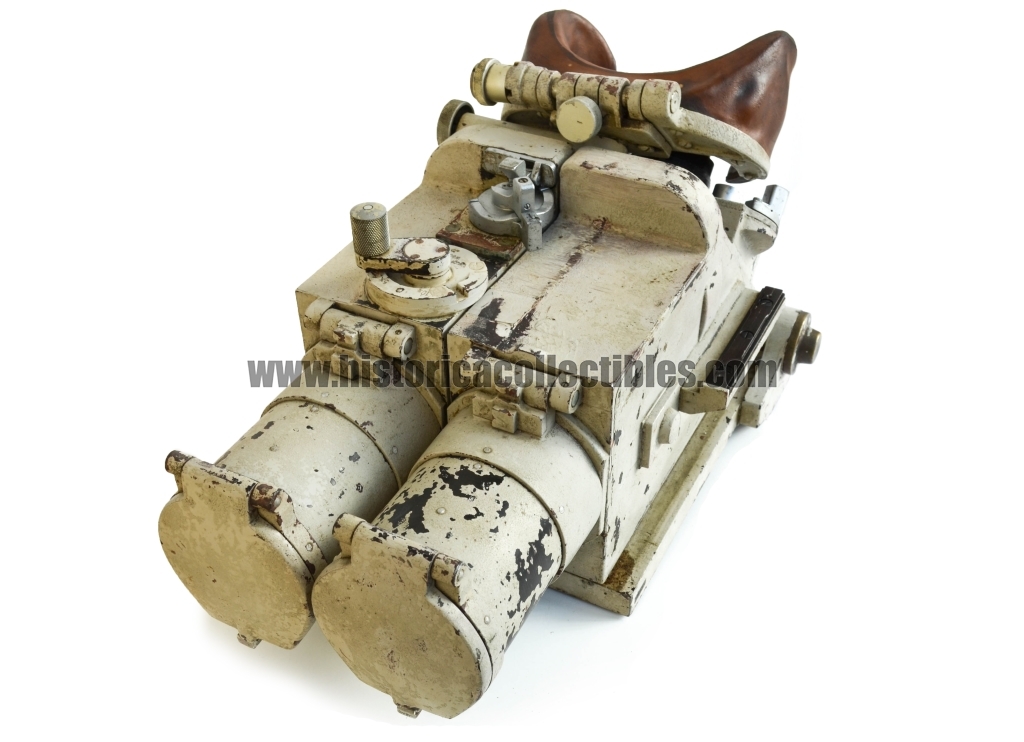
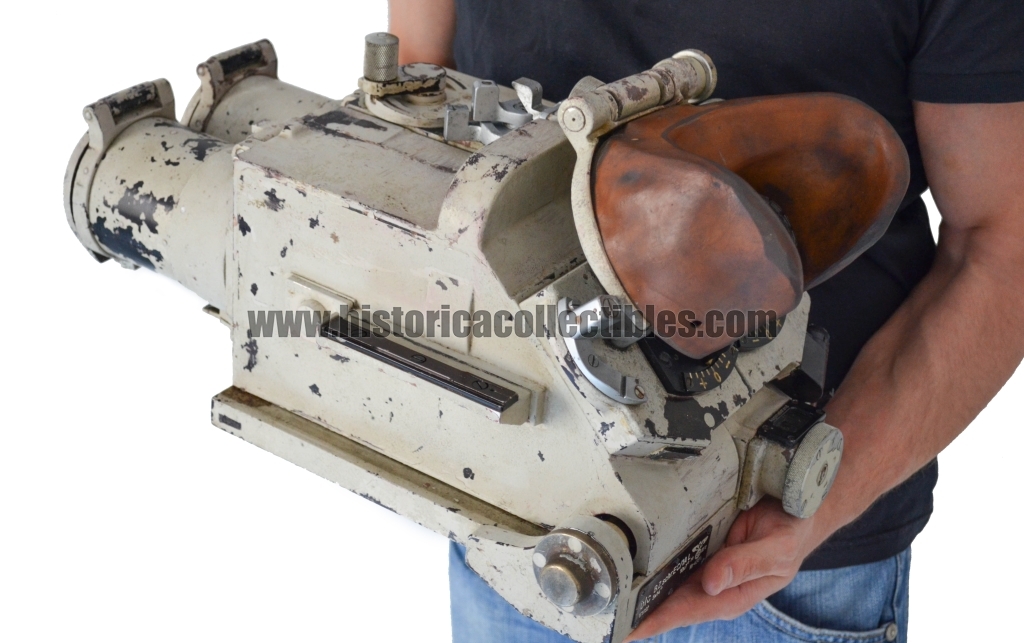
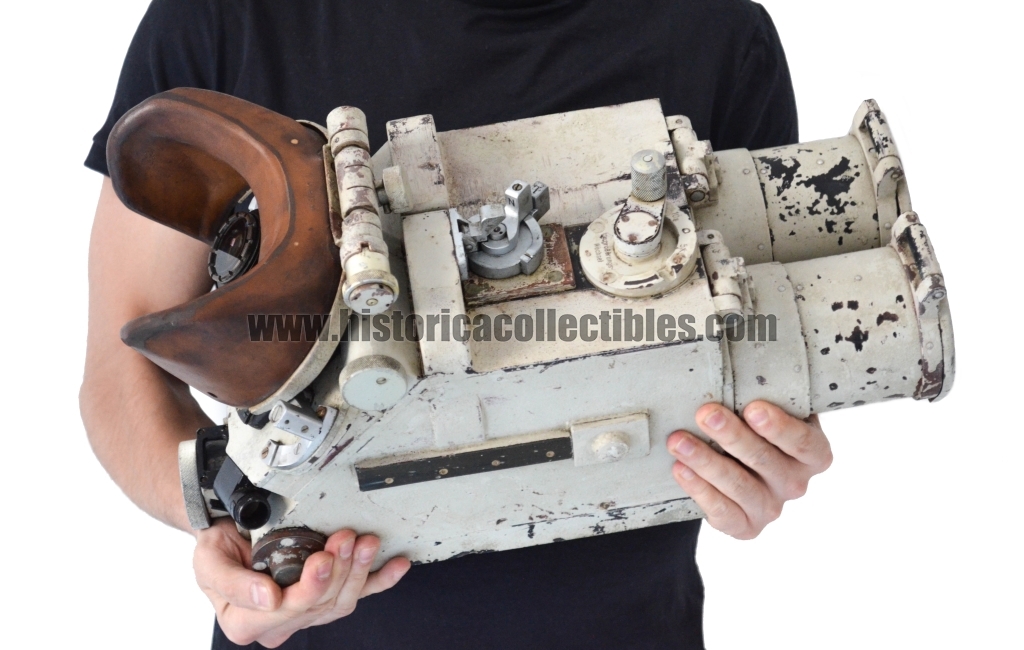
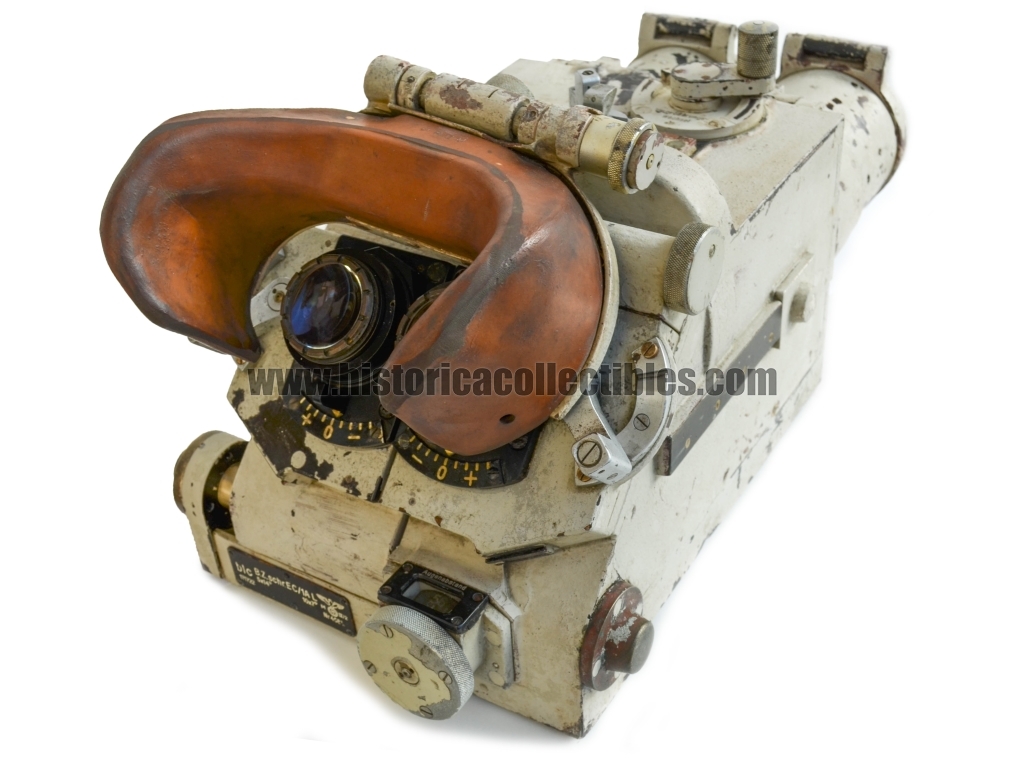
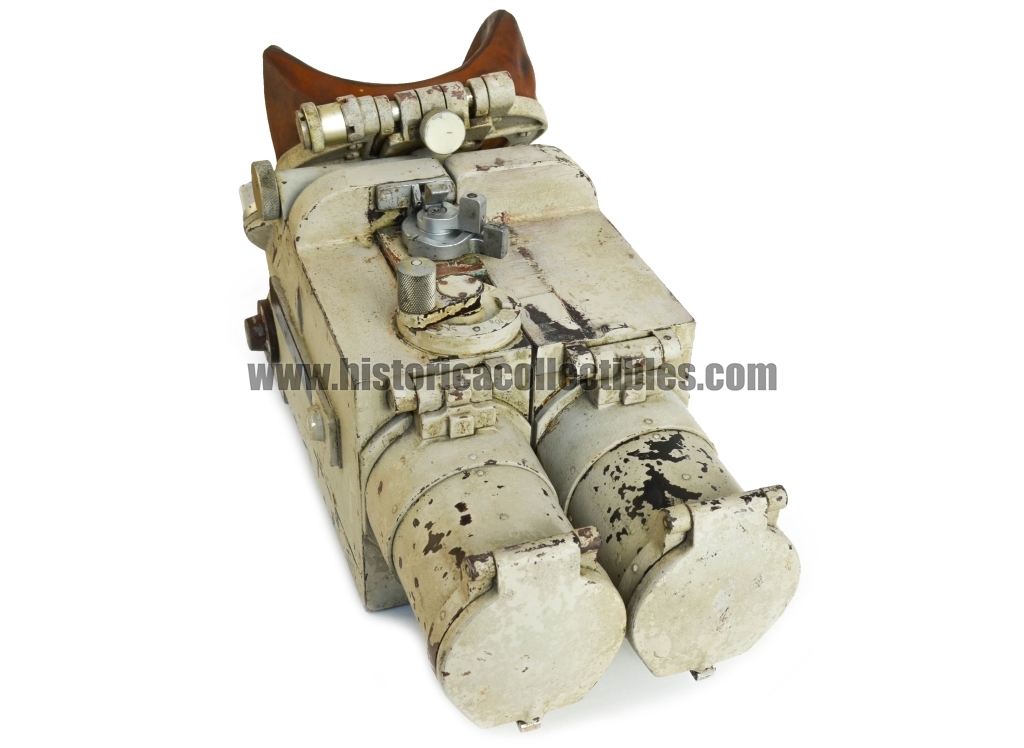
Nahbereichs-Zielfernrohr, rifle scope with variable magnification, with 45° eyepieces and roof prisms, Mod. B.Z. scr. E C/1A L, produced by BLC, cryptographic code by Carl Zeiss Jena (according to the disposition of Oberkommando der Wehrmacht) in only 150 specimens, around 1943, used for anti-ship and anti-aircraft aiming and firing of 105 mm guns installed on cruisers, destroyers and battleships of the Kriegsmarine, during the Second World War.
The scope was built with an extremely robust structure, in anodized aluminum, designed to protect lenses, prisms and relative mechanisms inside it, from the strong vibrations deriving from the recoil of the shot, as this optic was installed using a special seat, near the breech of the cannons, which were located inside special command and shooting cabins.
The plate affixed to the bottom left of the structure contains information and technical specifications, in fact, in addition to the manufacturer's brand "BLC" placed above the serial number "171722", there is also the model "B.Z. schr. E C/1A L" - "Binokulares Zielfernrohr mit schragem Einblick" or (pointing binoculars with independent reticles on each single eyepiece and inclined eyepieces), model "C/1A L" where "L" stands for "Links" (left), therefore optics placed on the side left side of the cannon (in fact the optics of these cannons were just 2, one installed on the right side and one on the left side).
In addition, the magnifications and degrees "5x14° - 10x7°" are indicated, which can be selected by turning the appropriate lever, located on the upper part of the structure, where the magnifications, "Vergrößerungs-Wechsel", are shown, therefore it is an optics with 5 and 10 magnifications, with objective lenses of 70 mm (5-10x70). To indicate acceptance by the Kriegsmarine, the Eagle with "M IV/2" and the assignment number "468L". Next to the plate we find the letter "T", in German "Transparenzbelag", which indicates that the lenses are coated with an anti-reflection treatment which improved the transmission of light in the lenses by 80%. This system was developed and patented on November 1, 1935 by Aleksander Smakula, a member of the Zeiss staff in Jena since 1934.
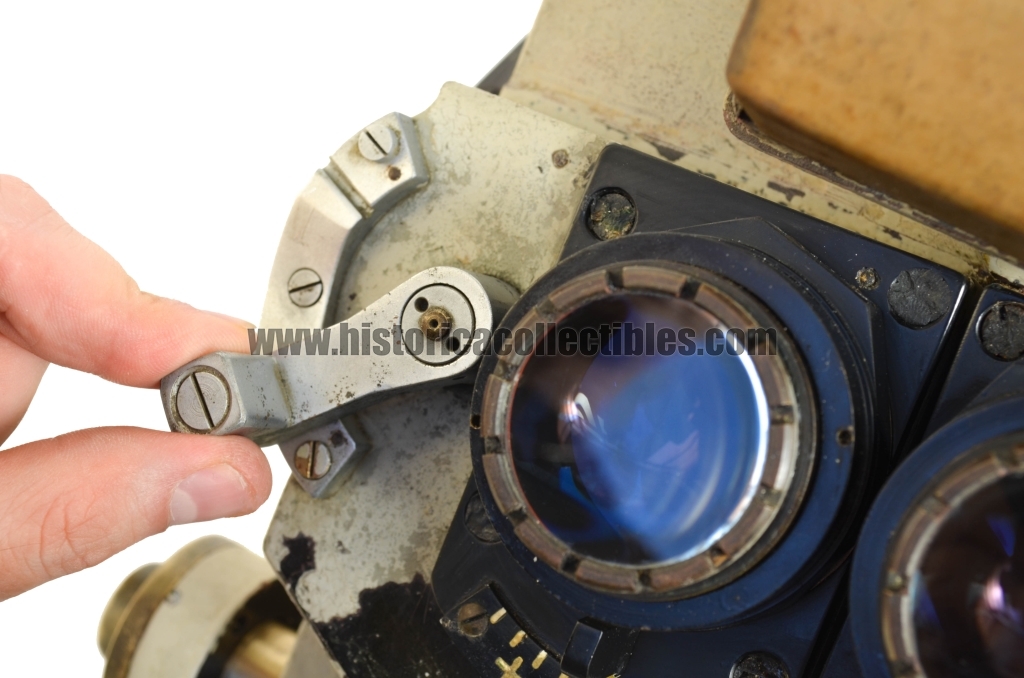
The "Augenabstand" interpupillary movements take place by rotating the knob at the bottom right. The two levers located at the ends of the eyepieces independently activate the insertion of the two relative reticles. On the upper part of the structure there are two levers useful for inserting the filters, "Farbglas Wechsel", "T" (Tag = day - yellow filter) and "N" (Nacht = night - gray filter).
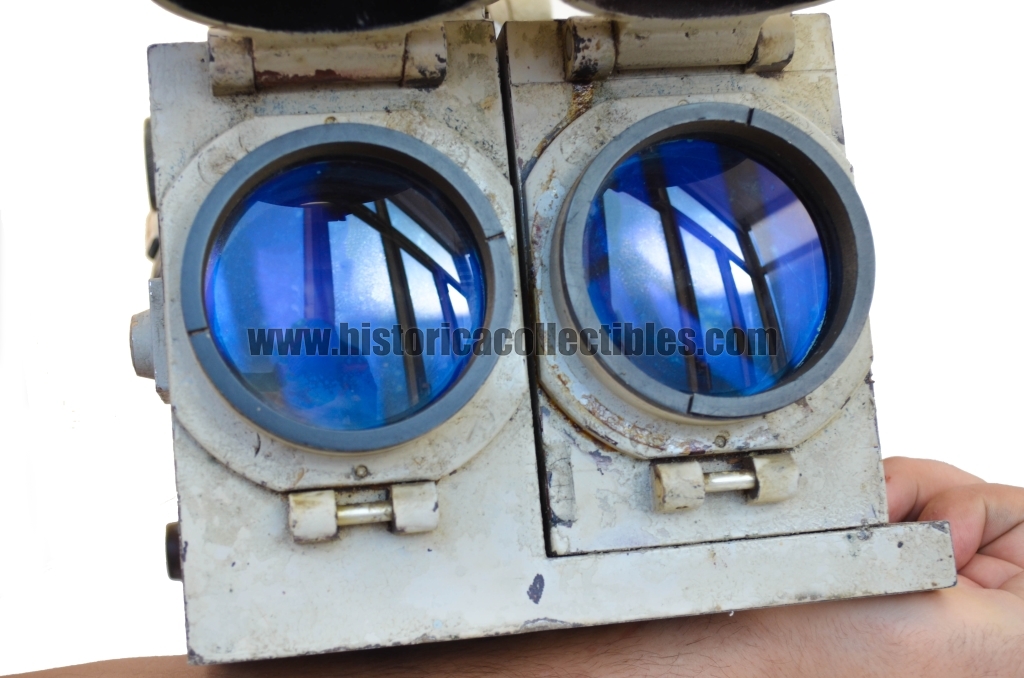
The view is excellent and very bright with both magnifications, and has a very wide field of view thanks to the large eyepieces and objective lenses of no less than 70 mm; collimated prisms and all mechanisms work smoothly. The presence of the original tubes with relative lids should be considered very rare, as it was customary to remove either the lids or even the tubes themselves, purely for a matter of practicality in use. This scope, thus complete, weighs 17.5 kg.
Carl Zeiss Archiv:
The binocular riflescope C/1 with oblique view is used for direct aiming of guns in the windage and elevation directions against sea and air targets. Due to its high optical performance, the rifle scope is suitable for use at dusk and at night. The oblique view allows the observer to maintain a comfortable position even at large elevation angles against aerial targets. For rough and quick alignment, an optical auxiliary sight is installed on the right and left of the rifle scope. The magnification can be switched to 5 and 10x, the field of view is 14° and 7°, the diameter of the exit pupil is 7 mm.
Carl Zeiss takes its name from its founder, Carl Zeiss, who on November 17, 1846 chose the small city of Jena, in Thuringia, as the location for his precision optical equipment factory. Thanks to the strict quality control that Carl Zeiss imposed on its products, going so far as to personally destroy the microscopes that did not pass the tests, the newborn Zeiss became the official supplier of the University of Jena and received the gold medal of the industrial exhibition in 1861 of Thuringia as the best research instrument manufactured in Germany, awarded to the microscope Stand I of 1857.
In 1866, the thousandth microscope was produced and the Zeiss name became known in all European scientific circles. Thanks to the studies on the Porro prism, in 1893 Abbe patented a double prism binoculars, which accentuated the perception of depth. The mass production of Zeiss binoculars began in 1894, already at the beginning of the twentieth century more than 30,000 were made, by the beginning of the First World War the figure had risen to 500,000 and, by the end of the Second World War, 2,260,000 were produced binoculars for the civilian and military market.
Models were made starting from 4x11 mm to 12x40 mm, up to real giants such as 80 mm and 100 mm. Thanks to studies conducted on the perception of light in low light situations, it was shown that the average dilation of the pupil in an adult is about 7 mm. For this reason, the 7x50 mm model was introduced in 1910 and remained on the market until 1917 with few changes to the materials used.
In 1926, following the post-war crisis of the First World War with the Treaty of Versailles which bankrupted many important German companies, Zeiss bought the "C.P. GOERZ" and founded the Zeiss Ikon in 1926. In 1937, Zeiss had commercial contacts and factories spread over 29 countries around the world. From 1933 Zeiss acquired interest from the Nazi regime, which balanced production towards military instruments. It successfully produced binoculars with wide-angle optics for military use, pressure resistant optical systems for U-boats, periscope binoculars for targeting tanks. Furthermore Zeiss cameras were mounted on the V2 for remote sensing operations of the English coasts.
On November 1, 1935, Zeiss, in the person of Alexander Smakula, patented a process for the treatment of optical glasses with extraordinary results in terms of light transmission. Remained a military secret until 1939, it was adopted on binoculars to reduce ghost images and internal reflections. During the Second World War, there were numerous bombings against the Zeiss factories. Jena was bombed several times by the Allies starting in 1944.
Stuttgart was razed to the ground, although the Contessa-Nettel factory suffered little damage. The bombing of Dresden, in addition to devastating the city, also caused considerable damage to the Zeiss Ikon headquarters. On April 13, 1945, American military forces entered Jena, surprising themselves as the bombings had not caused significant damage. The main planetarium was in ruins, while the factories remained operational.