Pocket Altimetric Recorder for Aircraft, Jules Richard-Paris, Eng. O. Pomilio, Pilot Mario de Bernardi, circa 1916
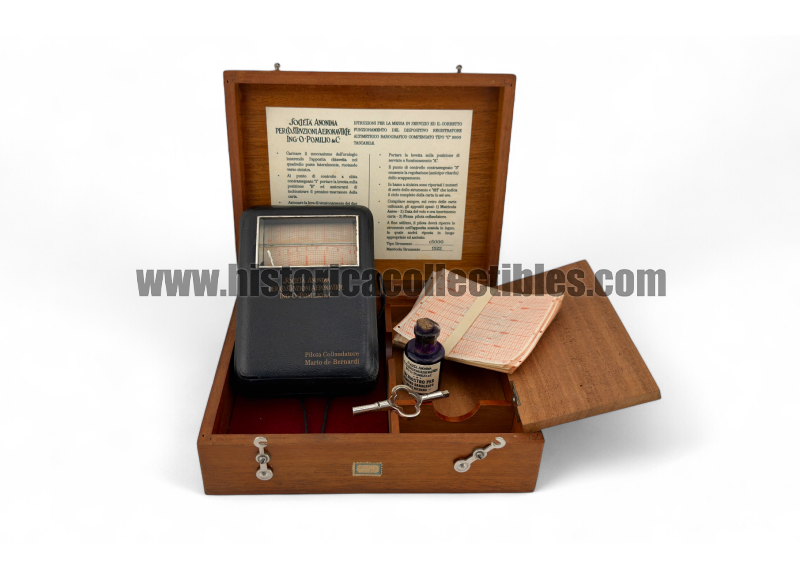

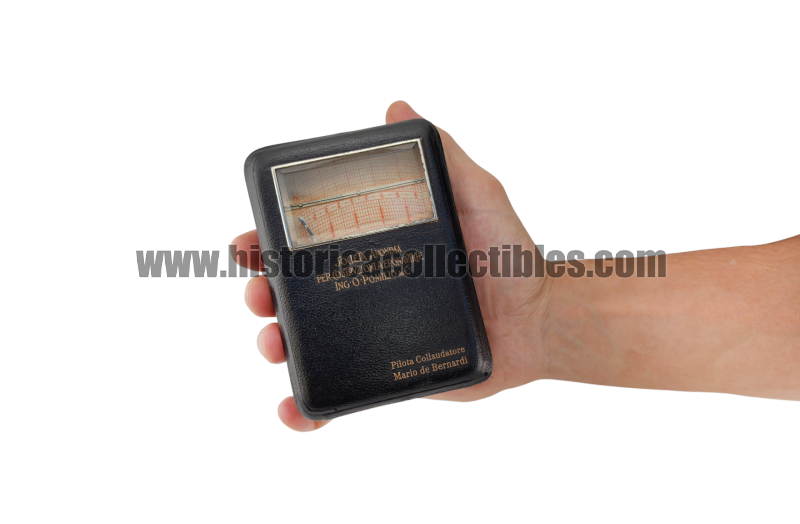
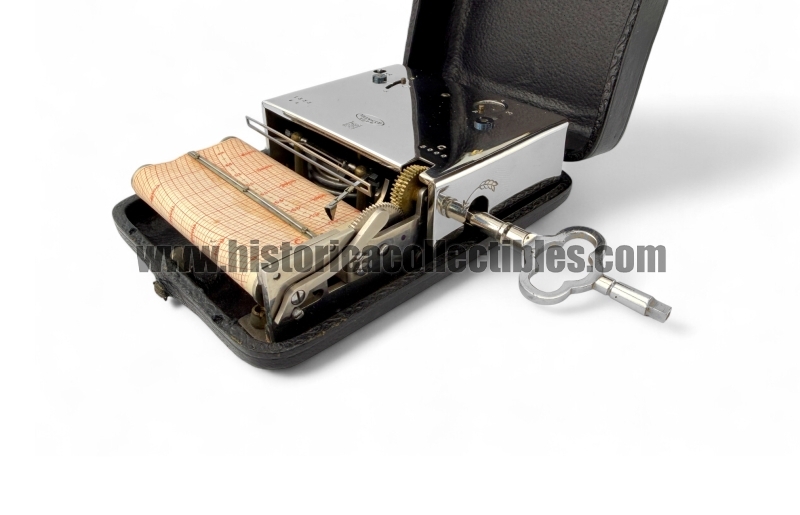
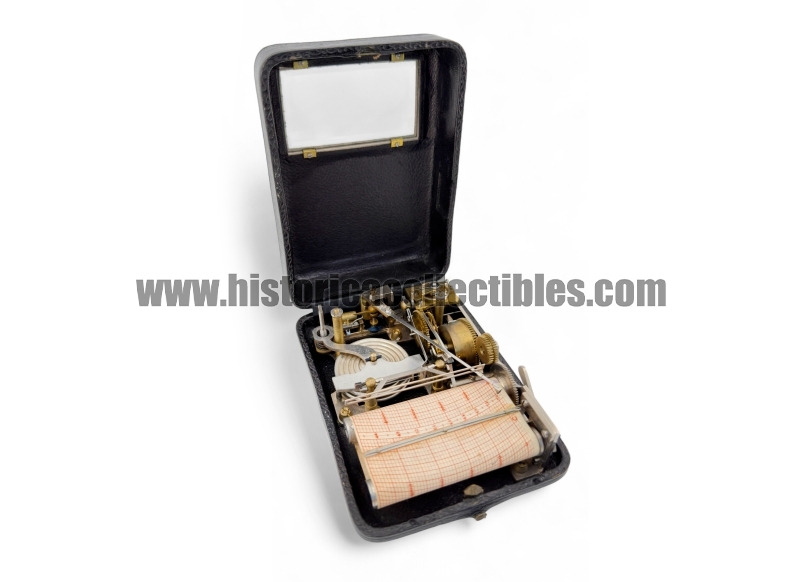
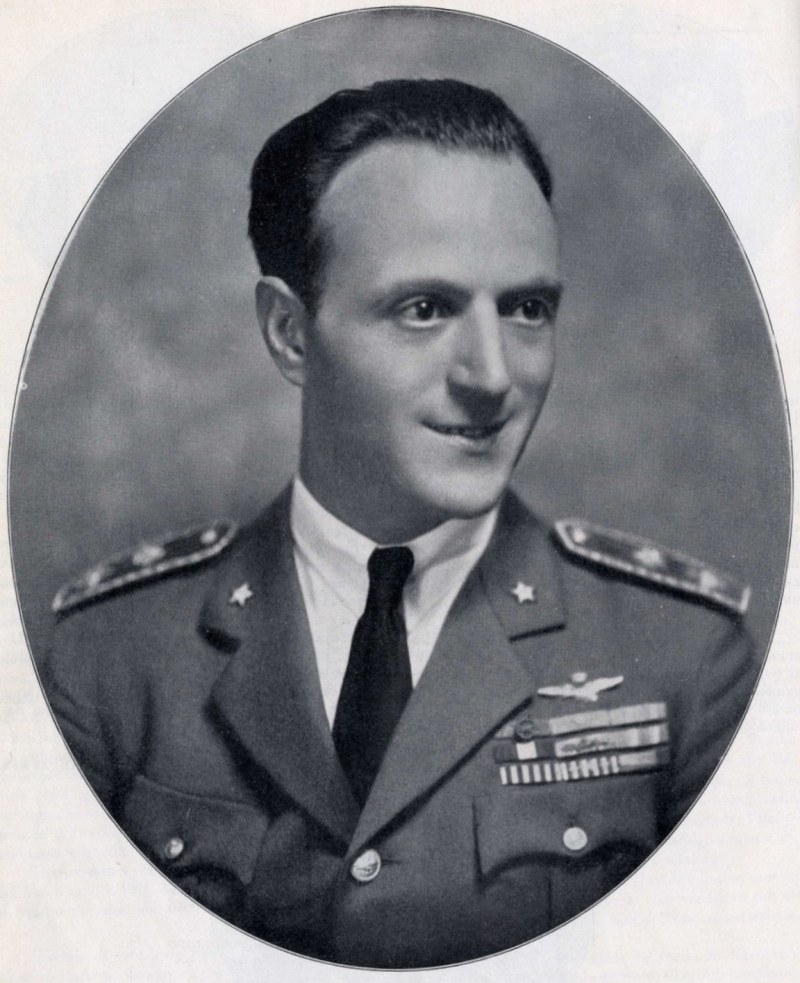
Pocket-sized, compensated barographic altimeter recorder, manufactured by "Jules Richard Paris" around 1916, for the legendary pilot Mario de Bernardi, a member of the 91st Fighter Squadron commanded by Francesco Baracca. He won the Silver Medal for shooting down four aircraft of the K.U.K. Luftfahrtruppen, and the Bronze Medal for Military Valor for shooting down one aircraft while serving with the 75th Fighter Squadron. He also won the legendary Schneider Cup aboard a Macchi M.39 flying boat, and held many other records and legendary achievements.
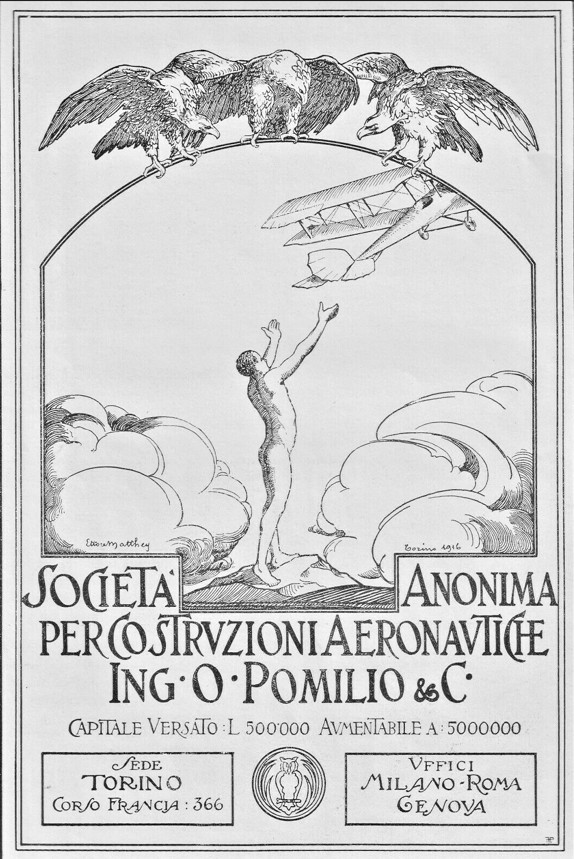
This instrument was acquired by the Ing. O. Pomilio Aeroplane Factory, or better known as the "Società Anonima per Costruzioni Aeronautiche Ing. O. Pomilio & C." based in Turin, and assigned to him starting in 1916, the year in which Engineer Pomilio chose him as Test Pilot for his newly founded military airplane company.
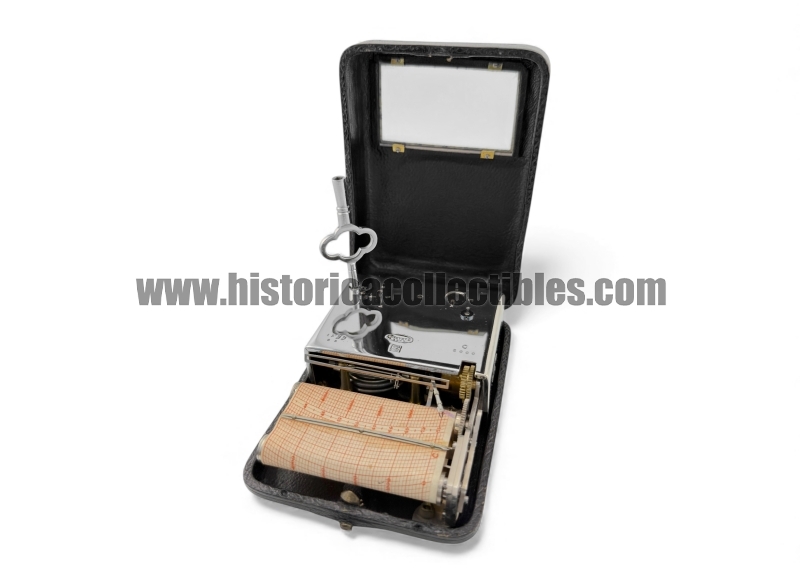
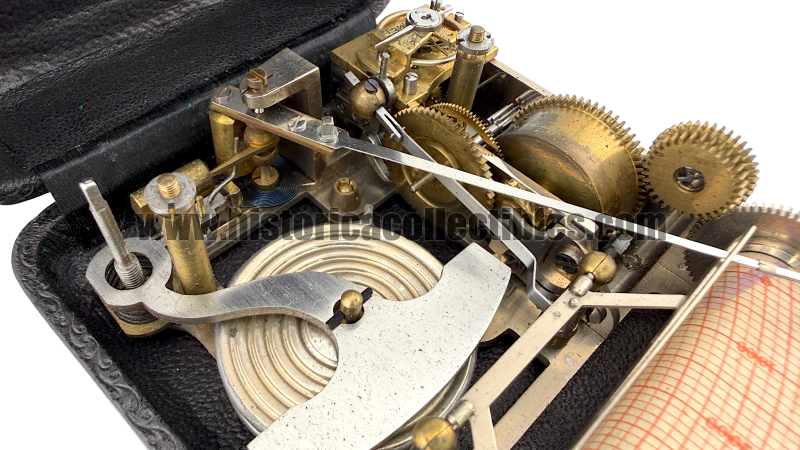
The Ing. O. Pomilio Airplane Factory's decision to purchase this instrument from a French company was based on its extraordinary utility: not only was this instrument writable, meaning it reported on the Cartesian diagram all the data needed to obtain the various altitudes reached by the test pilot "live," but it could also be worn in a jacket or flight jacket pocket. Indeed, unlike the Italian writing barographs intended for the Italian Air Force until then, such as the models produced by "Filotecnica" or "Agolini," which were so cumbersome that they had to be fixed to the aircraft's fuselage, this one could simply be worn thanks to its extremely small dimensions. Furthermore, in addition to making it a model of extreme utility, it ensured that the designers of this instrument created an extremely compact operating mechanism which made it, and still makes it today, a masterpiece of mechanical engineering: in fact, its entire extraordinary mechanism is enclosed in just a few centimetres.
This barograph-altimeter could function correctly for at least six hours, thanks to a complex clockwork barography mechanism. It could record, by writing on a special chart, the barometric and altimetric variations on an aircraft in flight up to an altitude of 5,000 meters, and then ink the data every two minutes on a dedicated Cartesian diagram inside the instrument. This allowed the design engineers at the Ing. O. Pomilio Aircraft Factory to take note of the data to monitor, improve, and fine-tune their aircraft.
The instrument comes with its original wooden case, which contains, in addition to the instructions in Italian for its correct operation, several spare Cartesian sheets, each stamped with the heading "Test Pilot Mario de Bernardi" and with open fields for "aircraft type," "flight date," and "test pilot's signature." These fields were to be filled out at the end of each flight and delivered to the technicians at the Ing. O. Pomilio Aircraft Factory. The original dual-function winding and register key is also included, as is the bottle containing the original ink, which is still present.
This instrument is of great historical and collector's importance, given that the company operated in Italy for only two years, from 1916 to 1918, when it was sold to Ansaldo, which became its "Cantiere No. 5."
The instrument is perfectly preserved and in working order.
The Società Anonima per Costruzioni Aeronautiche Ing. Ottorino Pomilio & C., also referred to as Fabbrica Aeroplani Ing. O. Pomilio or simply Pomilio, was an Italian aeronautical company founded by engineer Ottorino Pomilio in the 1910s and active in the production of biplanes for military use during the First World War.