Alpine Bowler Hat mod. 1883, Troop Graduate with Personal Booklet and Photograph, circa 1883
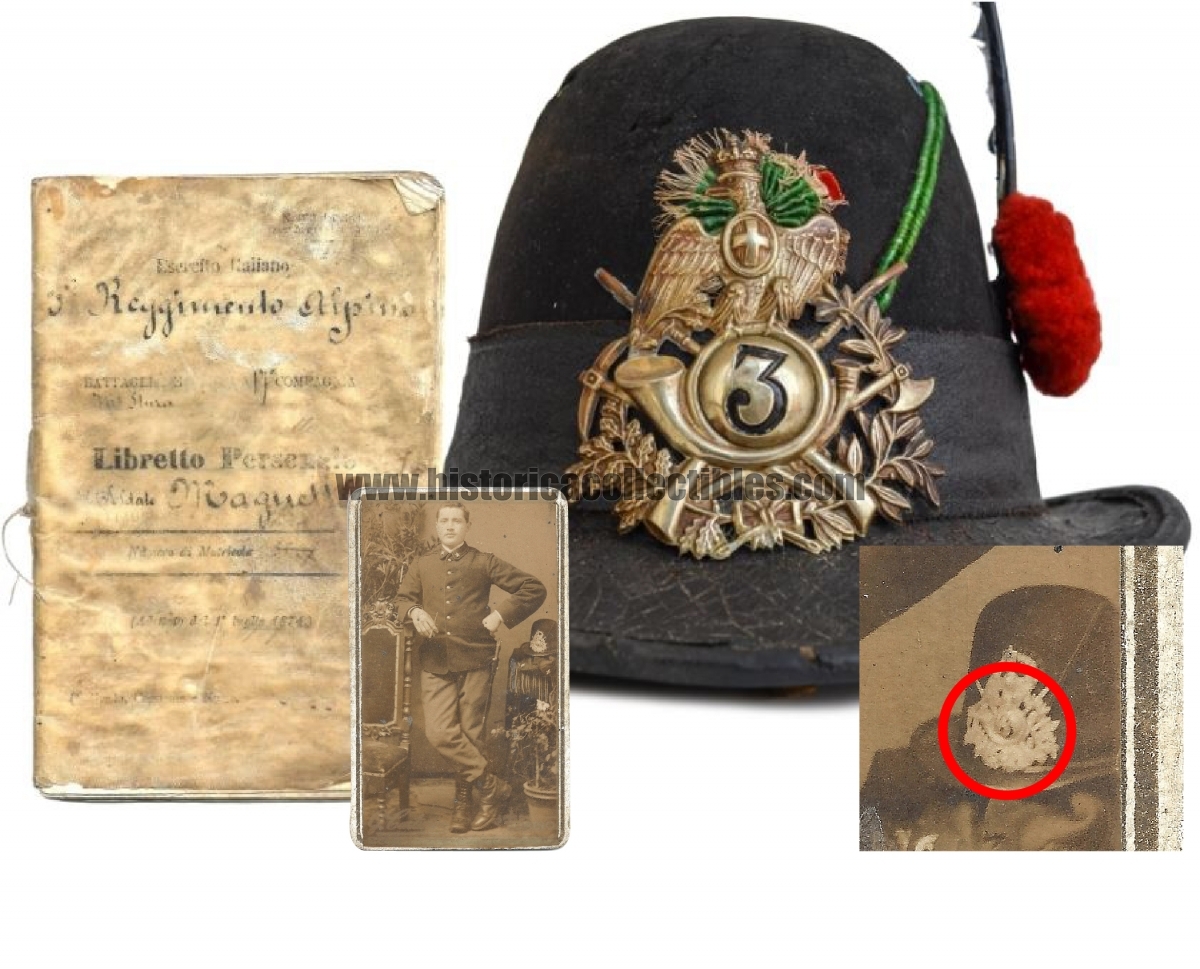
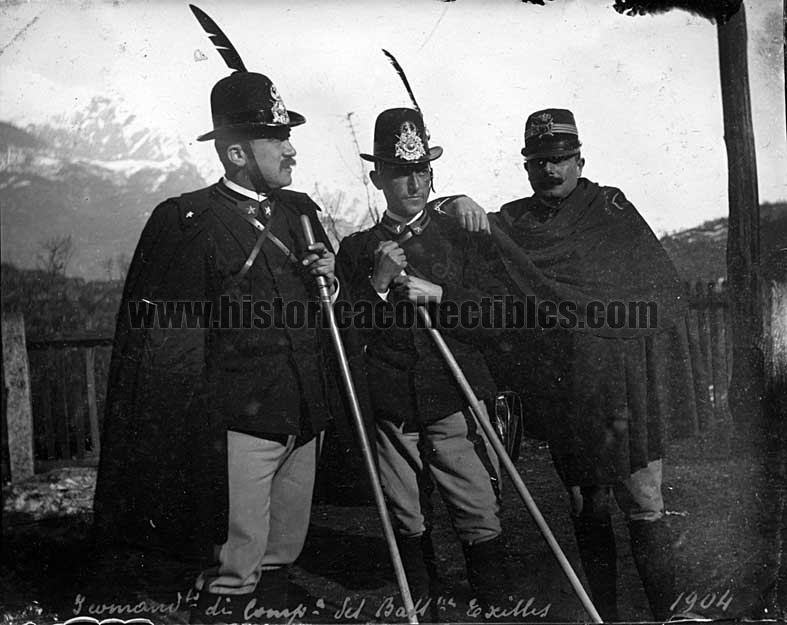
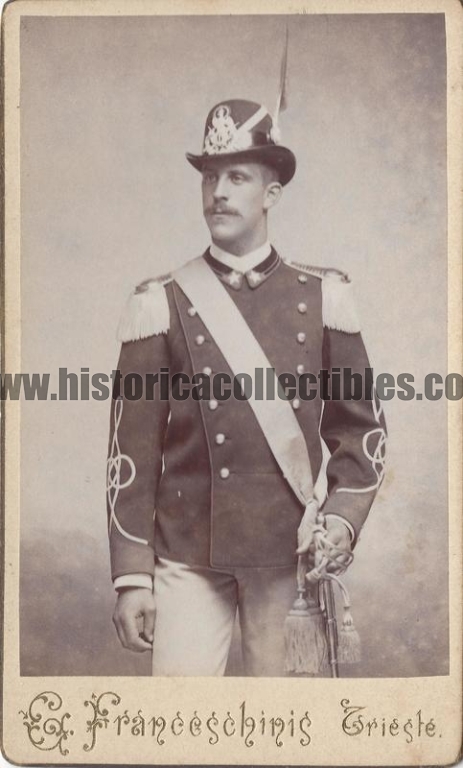
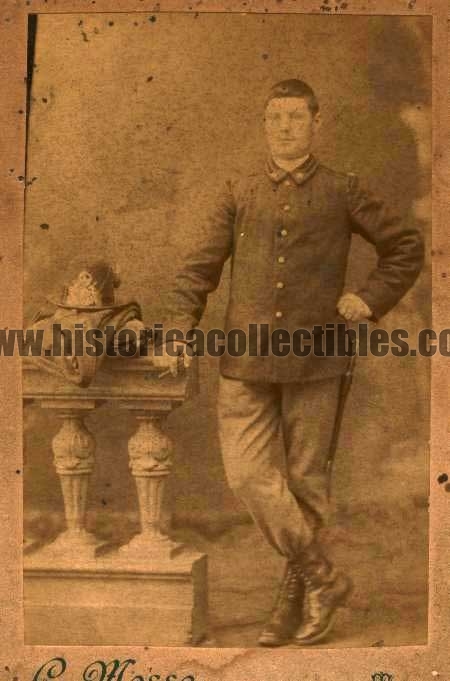
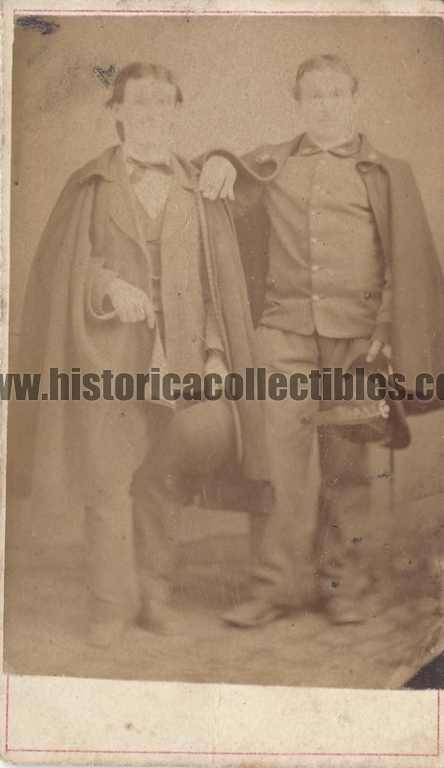
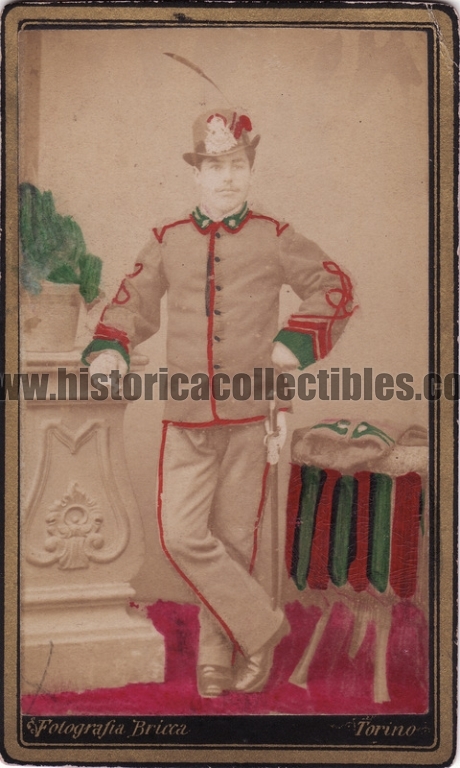

Alpine bowler hat mod. 1883, related personal booklet and photograph, all belonging to a graduate of the 3rd Alpine Regiment, 2nd Battalion Val Stura, 17th Company, born in 1863, from the District of Cuneo, enlisted on 14 December 1883, and placed on leave August 14, 1885.
History of the Bowler Hat: The hat for Alpine companies, better known as the bowler hat, was adopted with act no. 69 of 25 March 1873 for non-commissioned officers, soldiers and ranks and introduced with act no. 86 of 10 April of the same year.
The first bowler hat was made of black felt, with a truncated cone cap with a spherical top. The brim was raised on the sides and slightly curved on the front and back. This is a very important detail for dating the headdress as subsequently (with deed no. 76 of 1878) the brim was covered on the upper part with black oilcloth and had a greater curvature both at the front and at the back.
The height of the hat did not vary as the 8 available sizes varied, but the circumference at the base of the cap changed. At the base of the same there was an externally placed upper band of black painted leather with a height of 45mm. The end of the brim was also edged with black leather.
The padding of the bowler hat was made of black morocco alluda, jagged into 9 points which were closed at the top with a leather cord passed through them. Two slits located on the side of the padding allowed the passage of the black leather wimple which was fixed to the top of the dome via a leather loop. The wimple was closed with a black metal buckle and loop.
On the left side where the tassel was normally located, there was a tricolor wool cockade with a diameter of 5 cm bearing, sewn in the centre, a white alpaca button with a Savoyard cross in relief. On the same side, a braid of red wool was sewn in the shape of an inverted V, forming a slightly obtuse angle which from the black leather band above reached 3/4 of the height of the headdress. Below this braid the ranks for the ranks were sewn, always in an inverted V shape. A little higher up and further towards the front, on both sides, there was a hole surrounded by a black painted metal eyelet which allowed the bowler hat to be ventilated. Naturally the feather could not be missing, which was made of crow, approximately 14 cm high. It was tucked behind the cockade in a special black leather pocket.
In 1880 the tricolor cockade disappeared from the left side to make way for the red wool tassel with a black roundel and the company number embroidered in white thread in the centre. The tricolor cockade takes place under the new frieze introduced with act no. 158 of 17 November 1880 and was composed of a wreath of oak and laurel fronds that make up the base. On this are placed two crossed rifles equipped with bayonet, a pickaxe and an ax partially covered by a large cornet bearing in the center the very rounded rod complete with the battalion number. All this is surmounted by the crowned eagle, with half-spread wings and a Savoy shield on the chest.
For the troop insignia, the number of the Battalion or Regiment was printed and painted black on the rounded disk and fixed inside the cornet using two rear tabs which inserted into a horizontal slot in the cornet.
The officers, however, had the number perforated directly on the frieze and a piece of black leather was applied to the back to make it more visible.
The described frieze presents, with the passage of time, small differences that help to date it.
In 1882 the Alpine regiments were born. The red wool tassel with company number disappears and colored tassels make their appearance:
White for the 1st Battalion;
Red for the 2nd Battalion;
Green for the 3rd Battalion;
Blue for the 4th Battalion;
The yellow wool tassel distinguished the non-commissioned officers of the Regimental and Depot General Staff. The frieze changes and the number in the frieze is that of the regiment. We have no precise information on the year of introduction of the new and latest type of bowler hat decoration. We can say for sure that since 1891 some Alpine soldiers appear in some photos who boast of this banner.
In the summer of 1883 the uniform was characterized by the distinctive color compared to the other bodies, green, a color that two years later was extended to all the displays and finishes of the uniform: in fact the "green flames" with the star were adopted, better known as insignia, to identify the Alpine troops.
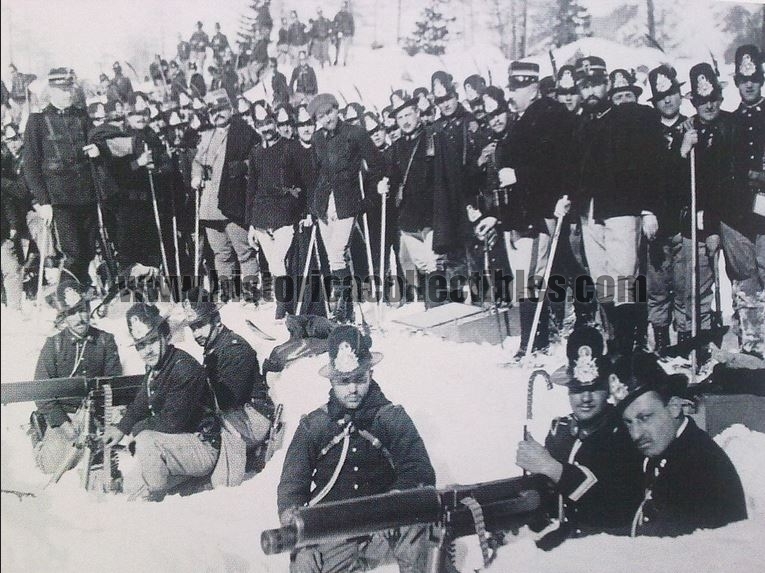
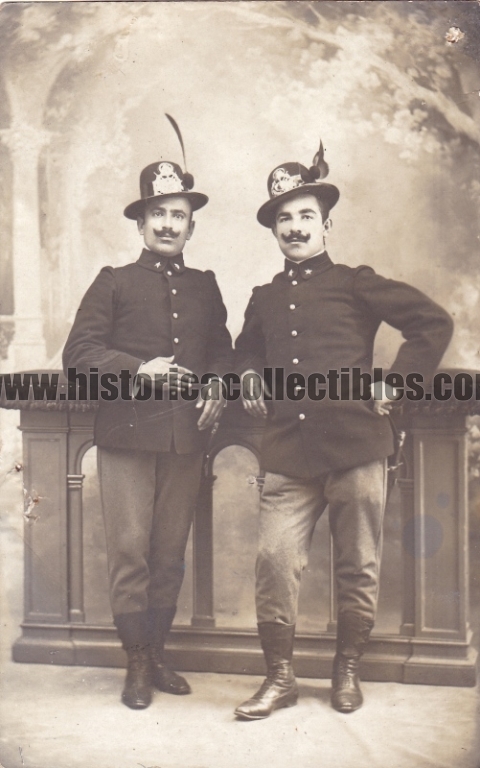
The characterizing element of the body, however, since 1873 was the "Calabrian" hat with the black feather, adorned with a frieze representing an eagle with spread wings surmounted by a royal crown. It is the famous uniform with the black bowler hat, worn until 1909.