
Bronze surgical scalpel with iron blade, Tuscany, 15th century
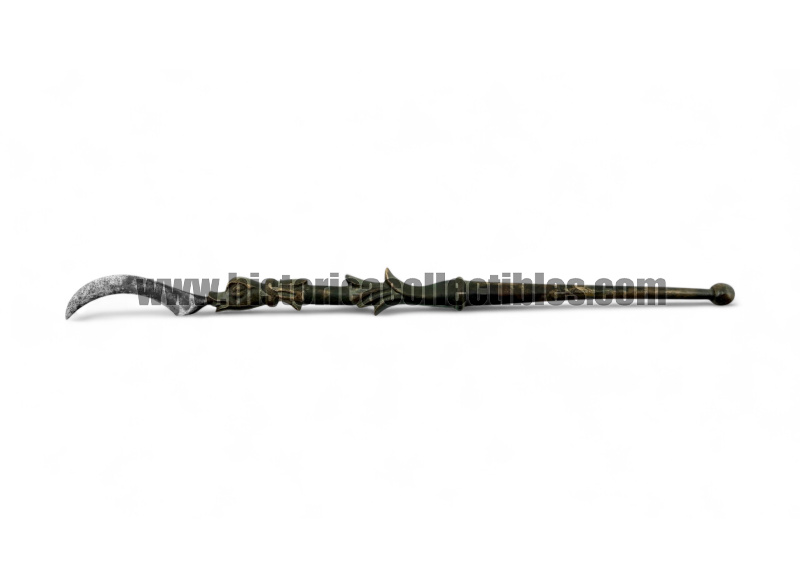
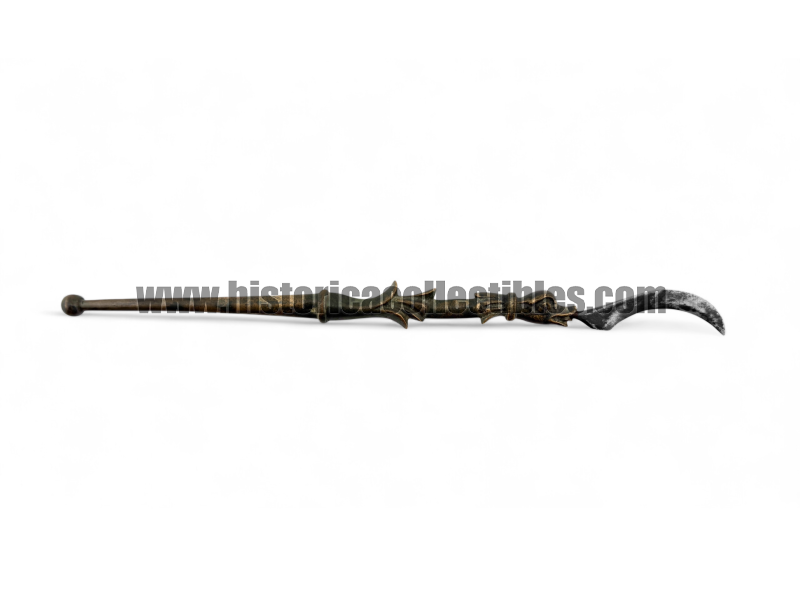
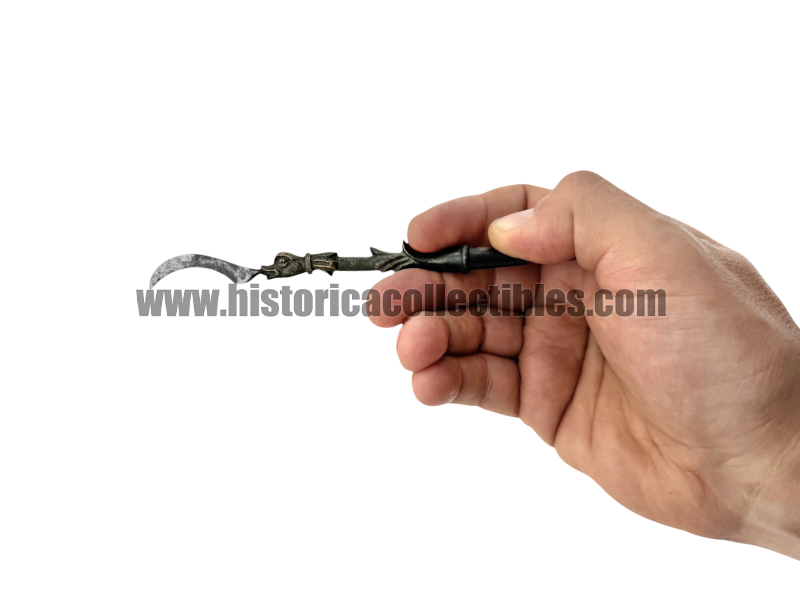
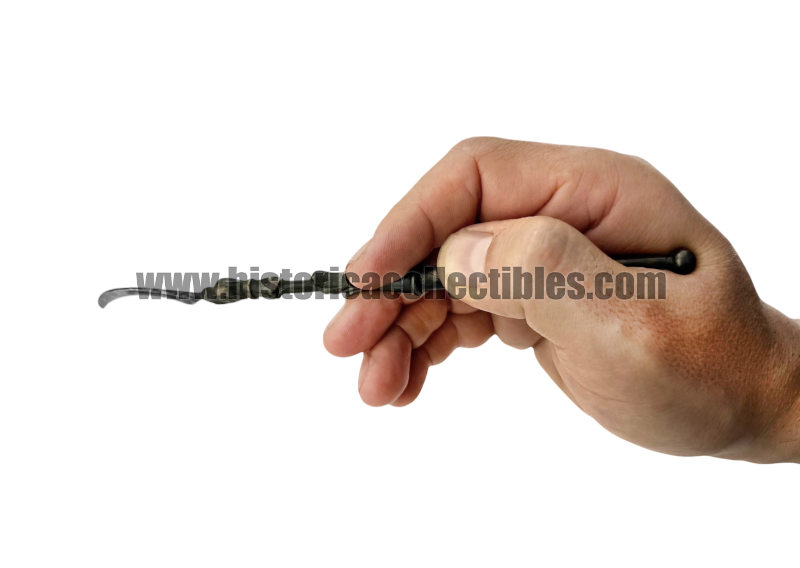
A surgical scalpel, consisting of a bronze handle crafted with a stylized dolphin motif, whose mouth holds a curved, sharp, forged iron blade. The "dorsal fin" provides a firm, ergonomic grip. The tail is a conical element with a small sphere at the end, which, as shown in the photo, allows the scalpel to be held correctly, exerting pressure, and facilitating maximum precision when making the cut.
These aesthetic features, in addition to their functional value, reveal the dictates of early Renaissance figurative art, whose unmistakable and refined style embraced even the smallest everyday objects.
Given the style and the fact that it depicts a stylized dolphin, a figure present in the coats of arms of two of the most important Florentine families, the Pazzi and the Pandolfini, as well as a recurring symbol in the Fountain of Neptune in Piazza della Signoria and in Andrea del Verrocchio's "Putto with Dolphin" placed on the fountain in the courtyard of Palazzo Vecchio, it can be assumed that he was a doctor belonging to the ancient guild of Physicians and Apothecaries of Florence, one of the seven major arts of Florence, which included doctors, surgeons, and apothecaries (pharmacists).
Furthermore, it cannot be ruled out that this highly refined scalpel was produced in the nearby province of Pistoia, as, starting in the 13th century, Pistoia became an important center for the production of weapons and cutting instruments. It was there that the "pistorienses gladii" were made, sharp, double-edged knives whose quality made them suitable for medical use. This artisanal tradition gave rise to the surgical instruments that over time evolved into the scalpel we know today. The etymology of the word "scalpel" is in fact linked to the city of Pistoia, whose Latin name was Pistorium.
Given its distinctive shape, it is believed that this scalpel was made by an illustrious surgeon, who served important and prestigious figures in the mid-15th century. He performed his work by favoring the use of unique instruments designed by himself or specially made for him, through which he expressed his "medical status."
Excellent state of preservation.