
Ivory Okimono sculpture of a fisherman with children and carp, Japan, Meiji period, 1868–1912, XIX century
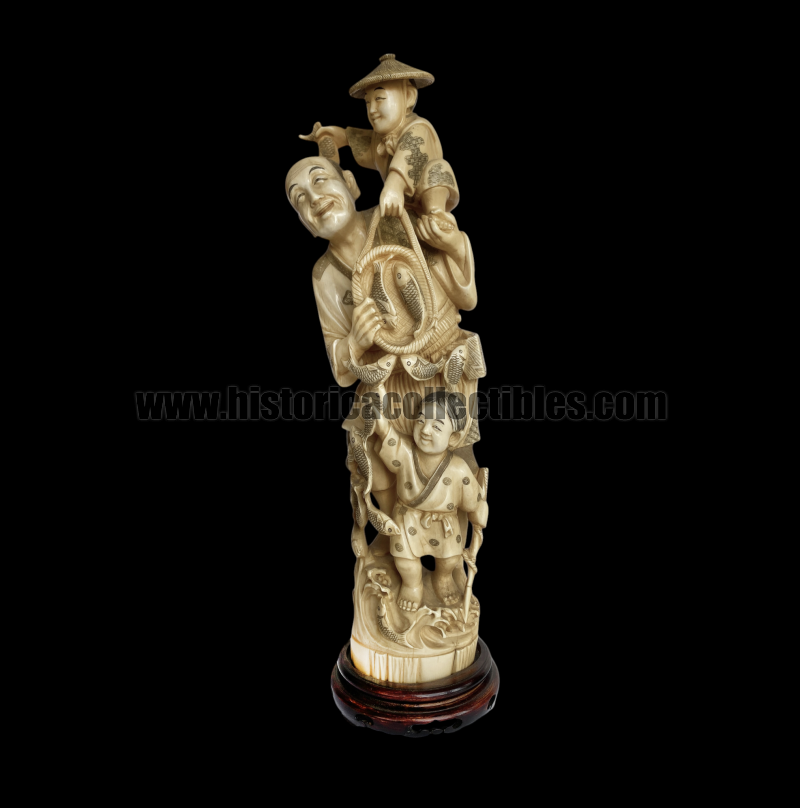
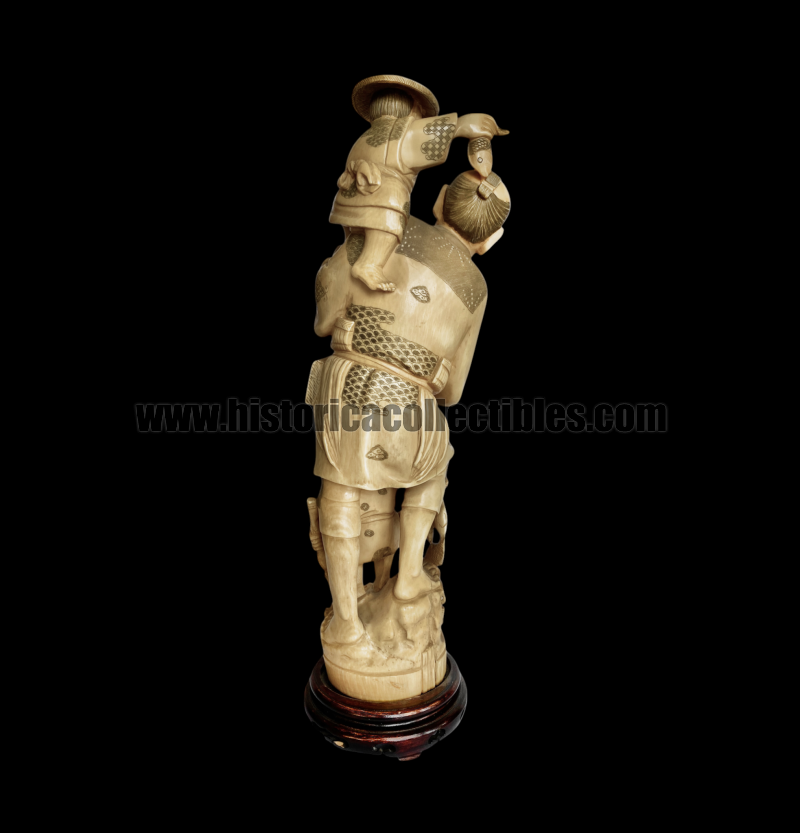
A large Okimono sculpture, crafted during the Meiji period (1868-1912) from a single block of ivory, depicting a fisherman with two "children" and "carp."
This Okimono, expertly carved down to the finest detail, likely depicts the God Ebisu or Yebisu (恵比寿), the Japanese god of fishing, abundance, trade, and manual labor, as well as the guardian of the health of "little children," which explains their festive presence near Ebisu.
The God Ebisu is one of the Seven Gods of Fortune (七福神, Shichifukujin) and the only one of the seven of Japanese origin. He is often depicted with "carp" (koi), which, in Japanese tradition, symbolize strength, perseverance, courage, love, and friendship. Their ability to swim against the current, even against waterfalls, makes them an emblem of determination to overcome adversity.
The sculpture, crafted from the finest ivory from "Elephas Maximus Indicus" (Asian elephant), is perfectly carved and engraved, with no cracks or breaks, even in the smallest details. It is considered a votive statue in Japanese tradition.
It comes with an expert's report and CITES certification year 2025.
Height 34.5 cm.
Weight 1344 Gr.