
Renato Brozzi, wrought iron sculpture of Dante Alighieri for Gabriele D'Annunzio, 1920
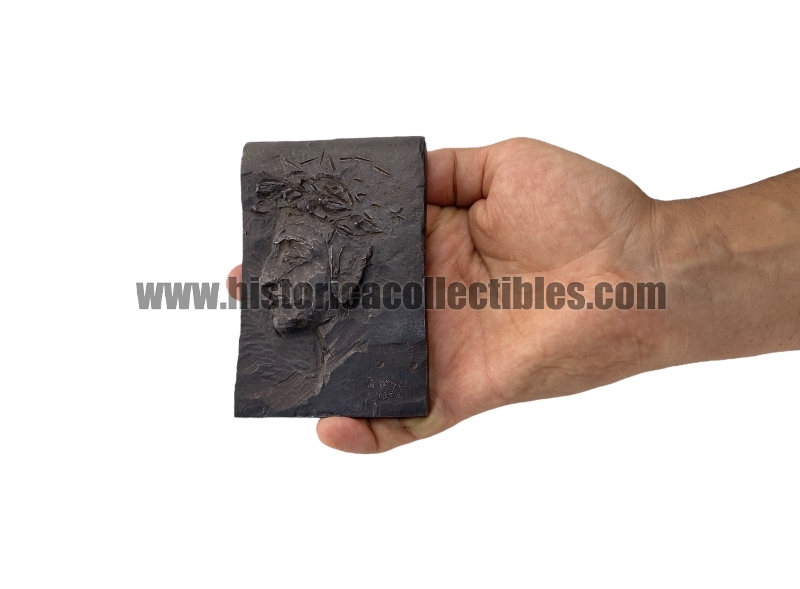
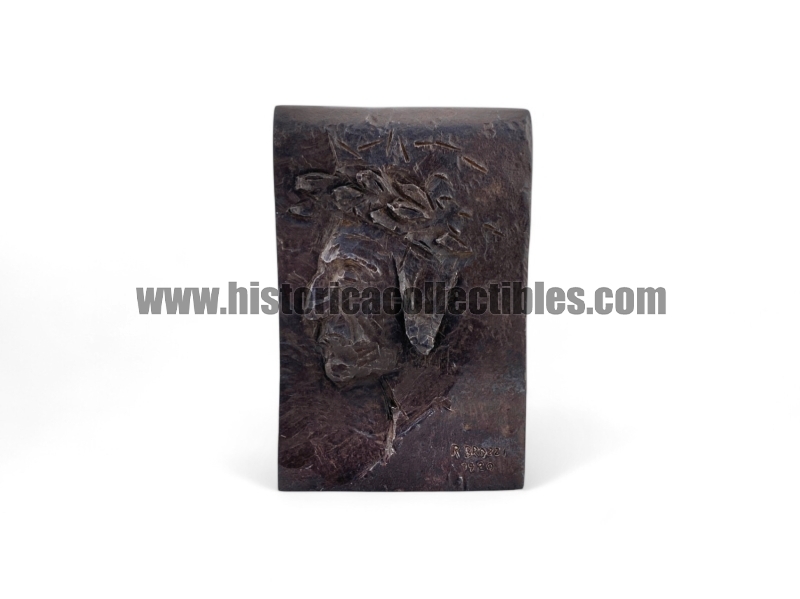
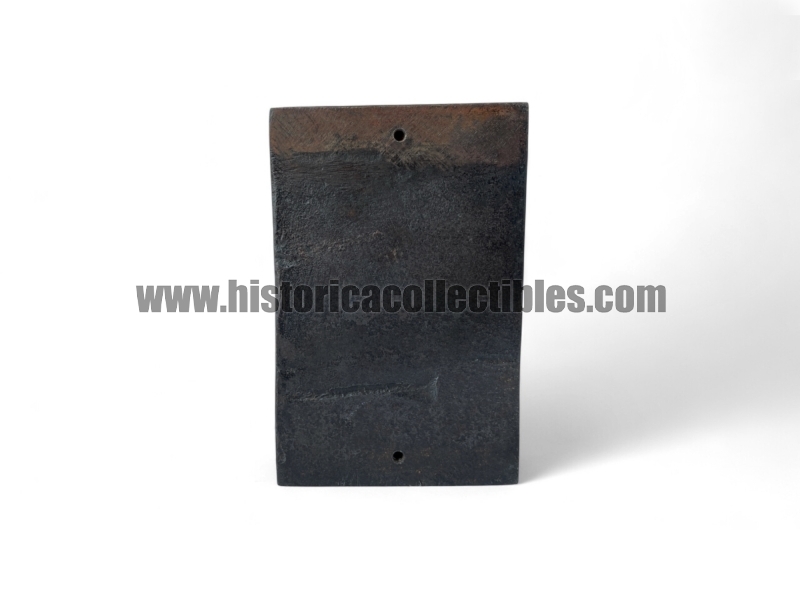
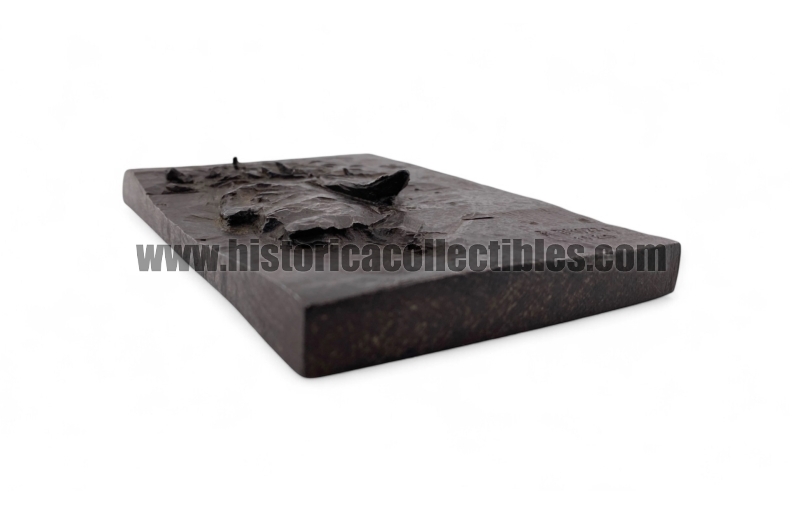
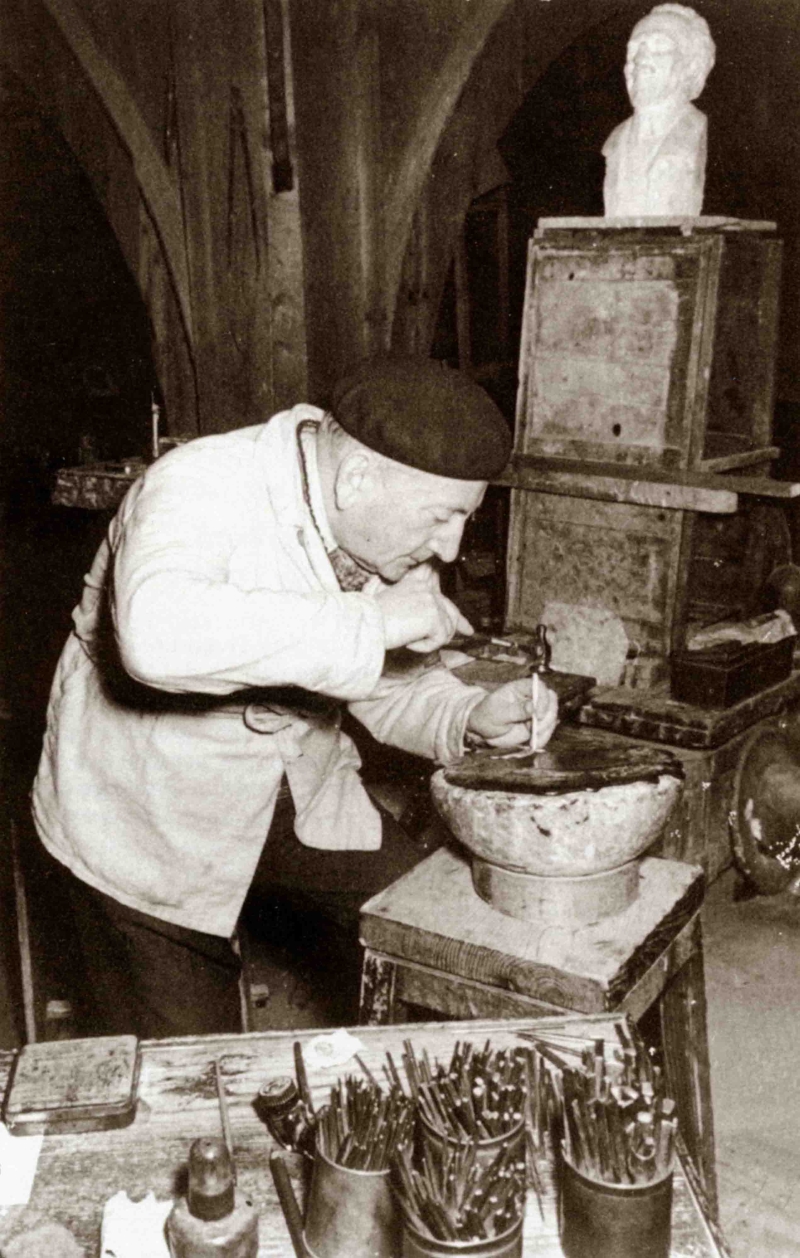
A unique bas-relief sculpture, carved from a single rectangular block of iron, entirely hand-carved, filed, and engraved. The sculpture, depicting the great poet Dante Alighieri in his most classical profile, was created and signed by Renato Brozzi, an Italian sculptor, engraver, and goldsmith, in 1920 for Gabriele d'Annunzio. Brozzi's work, in fact, caught the attention of Gabriele d'Annunzio, who, starting in 1920, the year this sculpture is dated, appointed him as his personal sculptor and goldsmith.
Gabriele d'Annunzio was a passionate and attentive reader of the Divine Comedy, but above all, a commentator on Dante's monumental poetic work.
Indisputable evidence of this D'Annunzio activity is evident from an examination of a copy of Dante's work itself, specifically the edition by Giovanni Andrea Scartazzini (1837-1901), a celebrated commentator on the Supreme Poet. This edition, filled with underlinings and annotations by d'Annunzio himself, is preserved in the Vittoriale library.
Further confirmation of d'Annunzio's profound interest in the Supreme Poet can be found in the various quotations in the margins of the three volumes of his Prose di ricerca and the equally detailed ones found in his "Taccuini" (Notebooks) as well as in several of his novels.
Gabriele d'Annunzio, in "Francesca da Rimini," draws inspiration from an episode of the tragedy in the Fifth Canto of Dante Alighieri's Inferno.
The clearest and most certain evidence of these moods and his approach to Dante is confirmed by the preface dictated by d'Annunzio to the Divine Comedy, commented by Giuseppe Lando Passerini (1858-1932), a librarian and Dante scholar, and especially by the glosses and underlinings added to the text of the work.
In any case, "il Vate"'s admiration for the greatness and genius of the Supreme Poet is entirely undeniable, even if one simply recalls a phrase he uttered in 1900 in Florence during a speech in praise of Dante, according to which "it is easier to overthrow the most arduous rock than to change a single verse of the Inferno".
Gabriele d'Annunzio's love for Dante Alighieri is beautifully depicted on the ceiling of the Leda Room, his bedroom at the Vittoriale, which features the first 18 verses of Dante's famous poem "Three women have come around my heart...", painted by Guido Marussig.
Also significant are the three jute sacks that d'Annunzio had decorated by Adolfo de Carolis with Dante's laurel wreath and the stars of the Bear. D'Annunzio sent these laurel-filled sacks to the city of Ravenna as a personal tribute to Dante Alighieri.
This artistic sculpture, which can probably be considered a desk paperweight or at least a decorative object, was undoubtedly among the very first works Brozzi created for Gabriele d'Annunzio, as it is signed and dated 1920, the year he was appointed as the poet's personal sculptor. What makes this work even more extraordinary, besides strengthening d'Annunzio's connection with Dante, is its iron carving, executed entirely by hand with a chisel. To date, no other works by Brozzi are known to have been made with this material or with this subject. Therefore, it must be considered a unique work, commissioned by an extremely demanding and precise client, Gabriele d'Annunzio himself.
Renato Brozzi (Traversetolo, August 7, 1885 – Traversetolo, June 21, 1963) was an Italian sculptor, engraver, and goldsmith.
He learned the craft of engraving at a very young age in a bronze foundry and later worked in an antiques shop. Supported and encouraged by the painter Daniele de Strobel, he attended the Academy of Fine Arts in Parma, where his teacher was Cecrope Barilli, graduating in just three years (a five-year course).
He moved to Rome in 1907, where he remained with his family for over 50 years. He attended the School of Medal Art at the State Mint, where he perfected his engraving technique. He was a close friend of his fellow countryman Amedeo Bocchi and lived with him in one of the studios of Villa Strohl Fern. He also shared a studio with him on the Via Flaminia and frequented the Tuscan wine shop on Via della Croce, a gathering place for artists and writers including Papini, Soffici, Ungaretti, and Cardarelli (the shop houses a plaque embossed by Brozzi).
In 1915, he won a gold medal at the San Francisco International Fine Arts Exhibition. In 1917, at the solo exhibitions organized by the Permanente in Milan (where he had already exhibited in 1910), he exhibited fifty-four works, including pastels, copper plates, and silver plates. In 1919, he designed the reverse of the 10-cent lira coin, depicting a bee perched on a poppy flower.
References:
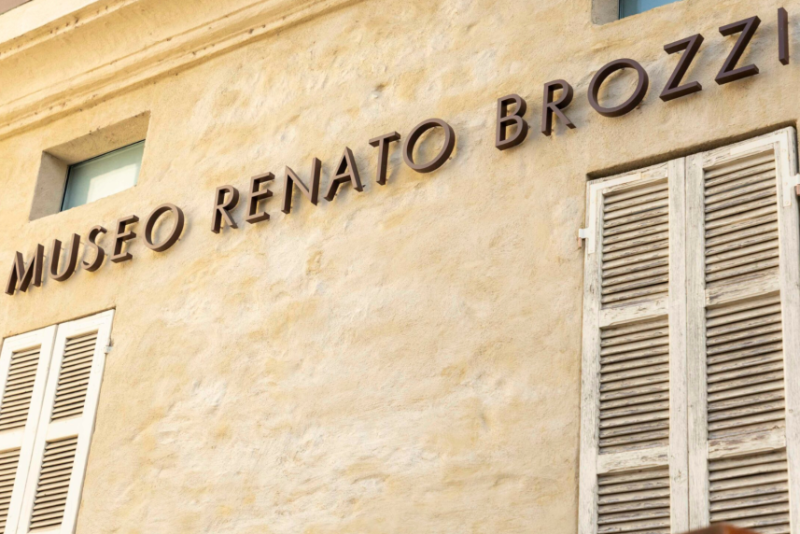
Biography of the Renato Brozzi Museum.
Adolfo De Carolis-G. d’Annunzio, votive bags with laurel leaves, 1921, Classense Library, Ravenna, Dante Collection (Dante Museum).
Gardone Riviera - 700 years since the death of the Supreme Poet and 100 years for the Vittoriale: 1321–1921. The exhibition on Dante and d’Annunzio opens at the Vittoriale. The inauguration is on Saturday, September 18th at 12:00 p.m., at the “d’Annunzio segreto” museum.