
Silver Medal for Military Valor, Col. Emilio FERRERO, Ancona Campaign, 1860
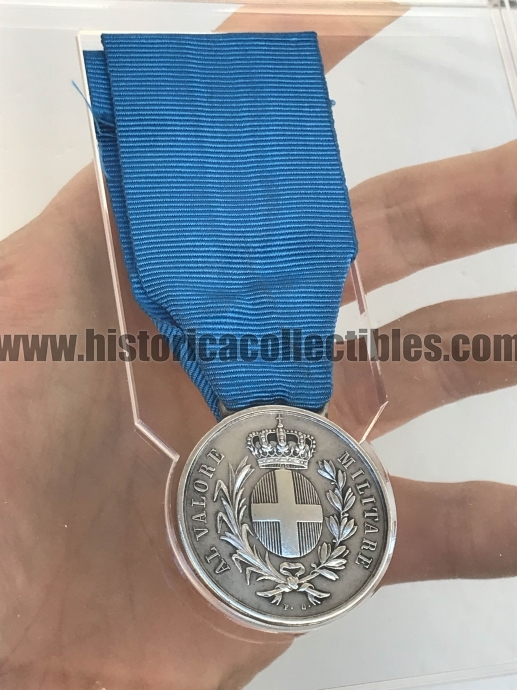
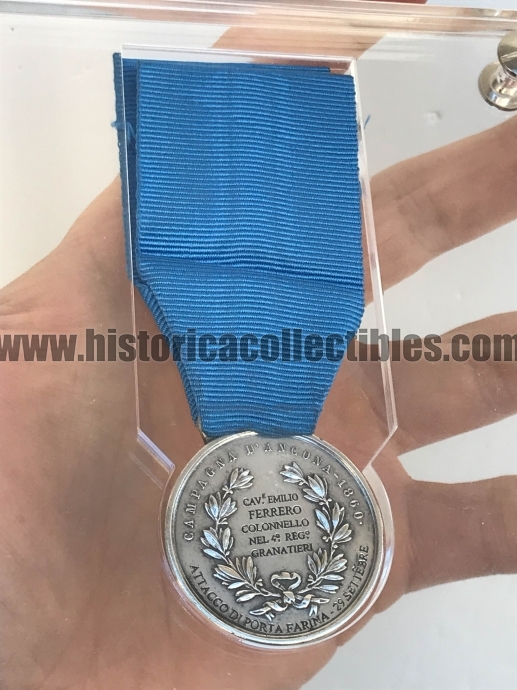
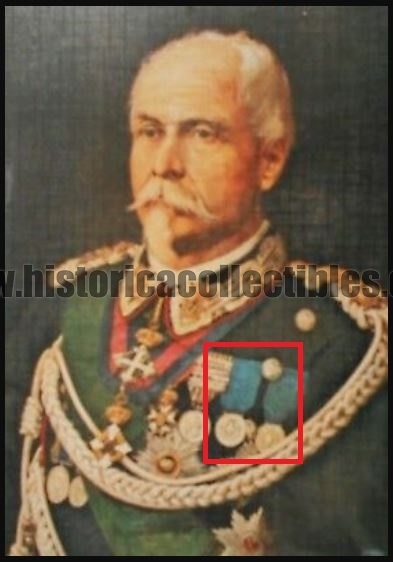
Silver Medal for Military Valor, Kingdom of Sardinia, stamped "FG" (initials of Giuseppe Ferraris, chief engraver of the mint from 1833), minted for the Battle of Ancona, which took place from September 23 to 29, 1860, in which the Piedmontese Army, commanded by General Fanti and Cialdini, faced the Papal Army commanded by General De La Moriciere.
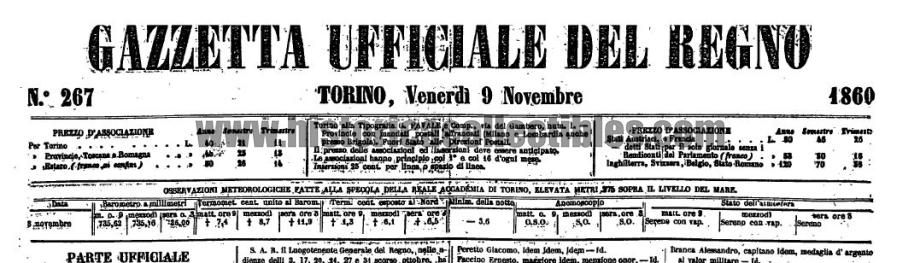
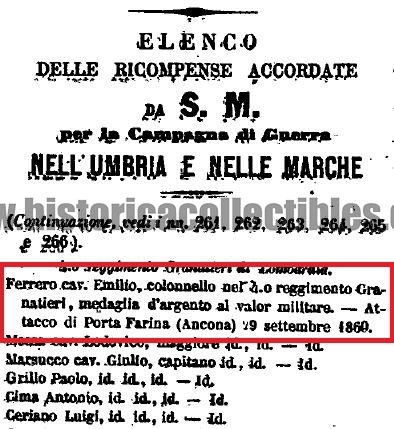
This medal was awarded, as the engraving on the back indicates, to "Cav. Emilio FERRERO, Colonel in the 4th GRANATIERI REGIMENT" for having taken part in the Attack on Porta Farina on September 29, 1860. This is confirmed by the publication in the "Gazzetta Ufficiale" No. 267 of November 9, 1860, where the awarding of the medal is mentioned in the list of awards granted for the War Campaign in Umbria and the Marches.
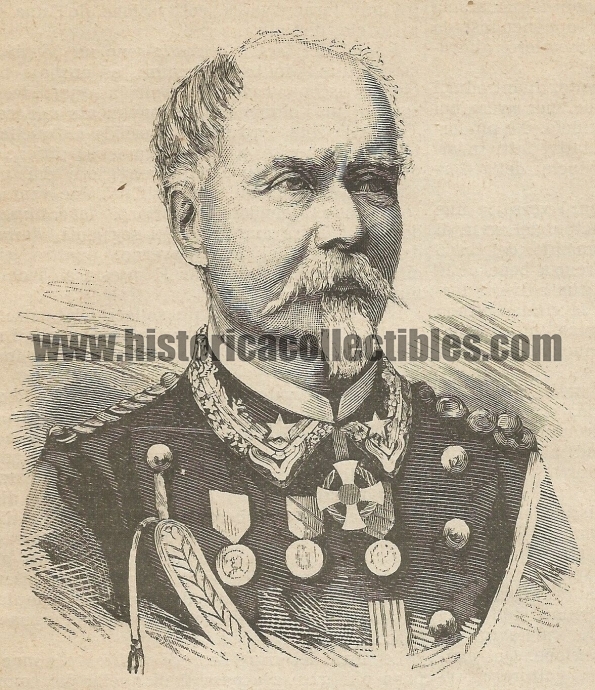
An Italian politician and general, he was a senator of the Kingdom of Italy in the 14th legislature, and was Minister of War of the Kingdom of Italy in the Cairoli III, Depretis IV, Depretis V, and Depretis VI governments.
It is also noted, as reported in multiple paper publications, that Emilio FERRERO was appointed Colonel of the 4th Grenadier Regiment of Lombardy on November 17, 1860, therefore It is assumed that this Silver Medal of Military Valor was awarded to him between November 9th, the date of its publication in the Official Gazette, and November 17th, 1860, the date of his appointment as Colonel.
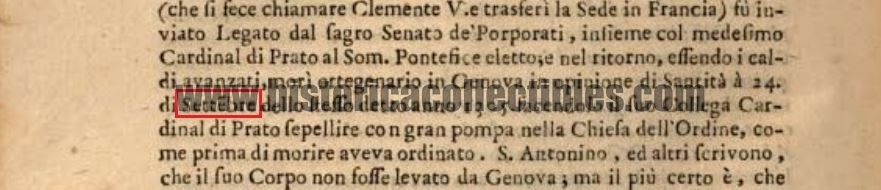
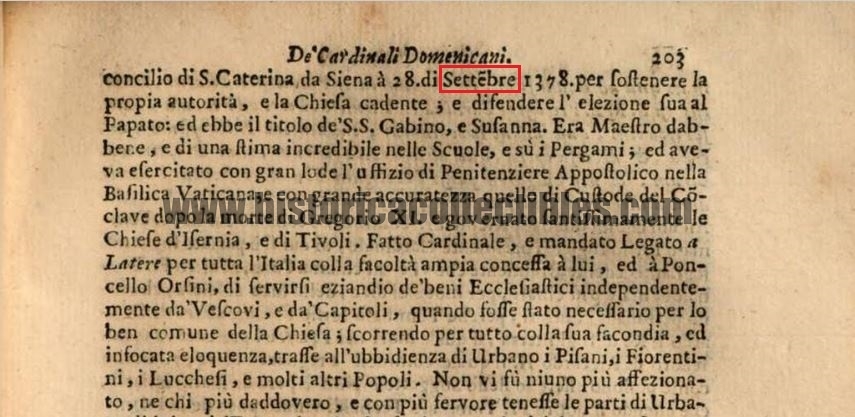
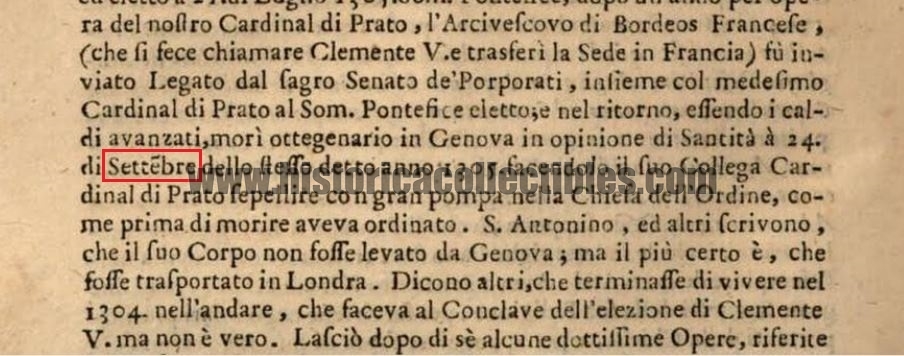
Another very interesting detail is the way "Settembre" was engraved: in fact, thanks to this medal, it is clear that the writing "Settèbre" was still in use at the time, a term that had always been used but soon fell into disuse.
Excellent condition.
FERRERO EMILIO - Born in Cuneo on January 13, 1819, to Filippo and Rosalia D'Arlor, he entered the Military Academy of Turin on April 4, 1829, where he completed his studies, achieving the rank of second lieutenant in 1837. Enlisted in the Engineer Corps, he continued his career until reaching the rank of captain. He participated in the First War of Independence, earning an honorable mention for the siege of Peschiera in 1848 and the Silver Medal for Military Valor for the Battle of Novara the following year. In 1855-56, he was part of the Sardinian expeditionary force in Crimea, where he earned another mention for the offensive march on the Cernaia. In 1859, he was awarded the rank of officer of the Military Order of Savoy for his conduct in the war against the Austrians. That same year, he transferred to the infantry and obtained command of the 4th Grenadier Regiment, which he led during the expedition to Umbria and the Marches, distinguishing himself in the Battle of Ancona for the attack on Porta Farina, where for this feat he was awarded another Silver Medal of Military Valor.
On November 17, 1860, he was appointed colonel and appointed secretary to the Selection Committee, established by the Minister of War, M. Fanti, and chaired by General E. Morozzo della Rocca. The Committee was tasked with evaluating the positions of Garibaldi's officers requesting transfer to the ranks of the newly formed Italian Army.
In 1862, he assumed command of the "Parma" Brigade; The following year, appointed major general, he became director of the Modena Military School, the training institute for infantry and cavalry officers established in 1859 to provide personnel for the army of the League of the Central Provinces, which later merged with the Sardinian army. He held the post for three years, returning to command of the Parma Brigade participating in the war at the time of the conflict with Austria in 1866. From 1867 to 1870, he remained at the disposal of the Ministry of War, which temporarily entrusted him with the territorial divisions of Perugia, then Brescia, and then Parma. In 1870, he commanded the 13th Division, which was part of the troops, led by General R. Cadorna, sent to conquer Rome. It was Cadorna's artillery that breached the Capitoline fortifications, but his units' contribution to the operations was undoubtedly marginal. Promoted to lieutenant general that same year, he joined the Committee of the Arms of the Line, the technical supervisory body tasked with assisting the minister. In 1875, he assumed command of the 2nd Division; five years later, in 1880, he led the IX Army Corps stationed in Bari.
Now at the top of the military hierarchy, in March 1881, F., who had previously shown no interest in political life, was approached to assume responsibility for military administration, replacing the former Minister General B. Milon. According to the Souvenirs by L. G. Pelloux, secretary general of the Ministry of War with F., the appointment was made by Prime Minister B. Cairoli, who had met F. in October of the previous year during a royal trip to Puglia. F.'s appointment, on April 4, was certainly due to the 1881, came after the candidacies of Generals T. Bocca and L. Mezzacapo had been dropped, as well as that of Pelloux himself, whose rank at the time was too low to avoid causing apprehension and perplexity in military circles.
Perceived in various political circles as a sort of royal "command," F.'s investiture interrupted a troubled period in the life of the military administration, characterized by frequent changes of ministers and plagued by controversies over fortifications, the strength of the army, and the budget. It was no coincidence that the candidacy of Mezzacapo, considered among the most prestigious military men, had fallen precisely over the issue of the budget, which the Neapolitan general deemed too meager.
Appointed senator for the 5th category on April 8, 1881, Ferrero, after declaring his intention to continue along the lines laid out by his predecessor and, above all, after being confirmed at the Pilotta in the new cabinet of A. Depretis formed at the end of May, launched a series of reform proposals that affected several sectors of the army. Between November and December, he presented bills on recruitment and organization, on military constituencies, and on extraordinary expenses. Regarding organization, he proposed increasing the number of army corps from ten to twelve, with an increase of 10,000 units in the annual conscription quota and the consequent increase in organic units. To contain the increased expenses resulting from this reform, he envisioned using the early discharge mechanism for significant portions of the conscription quota, limiting the strength of the companies in peacetime to ninety units and with a balanced force not exceeding 200,000 men.