
Winged Dragon, hand-forged iron, second half of the Edo period, 1603-1868
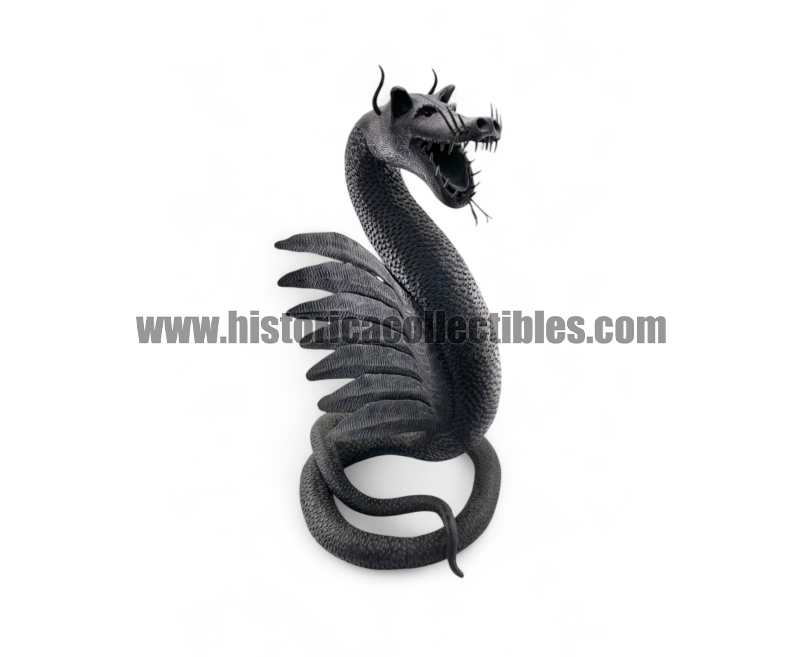
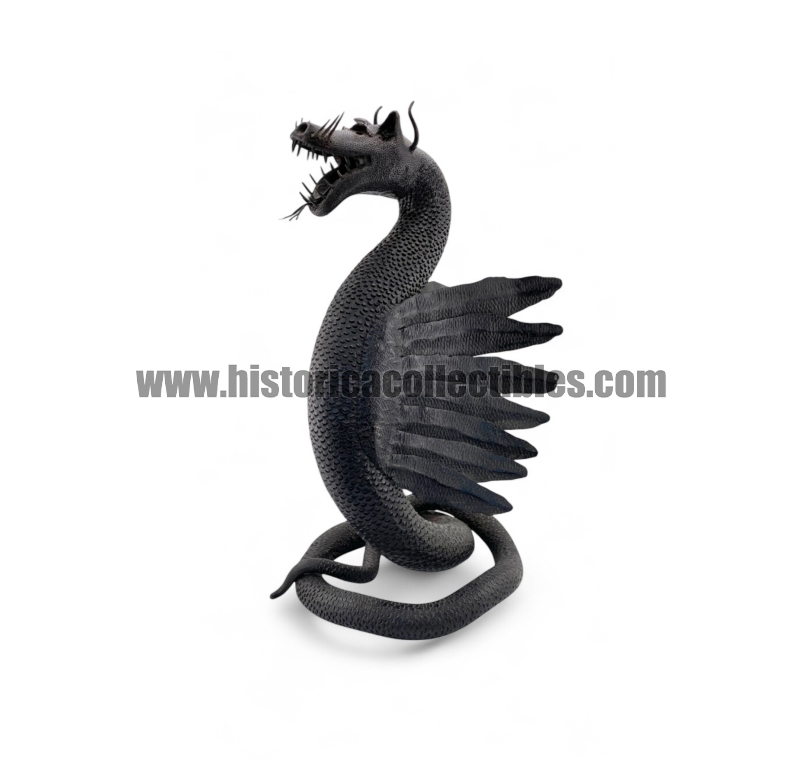
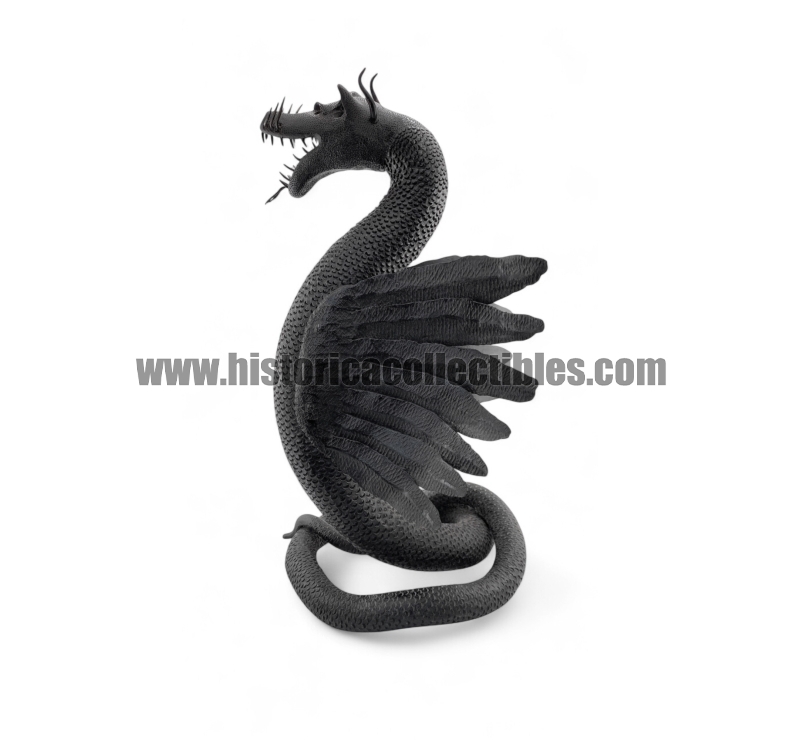
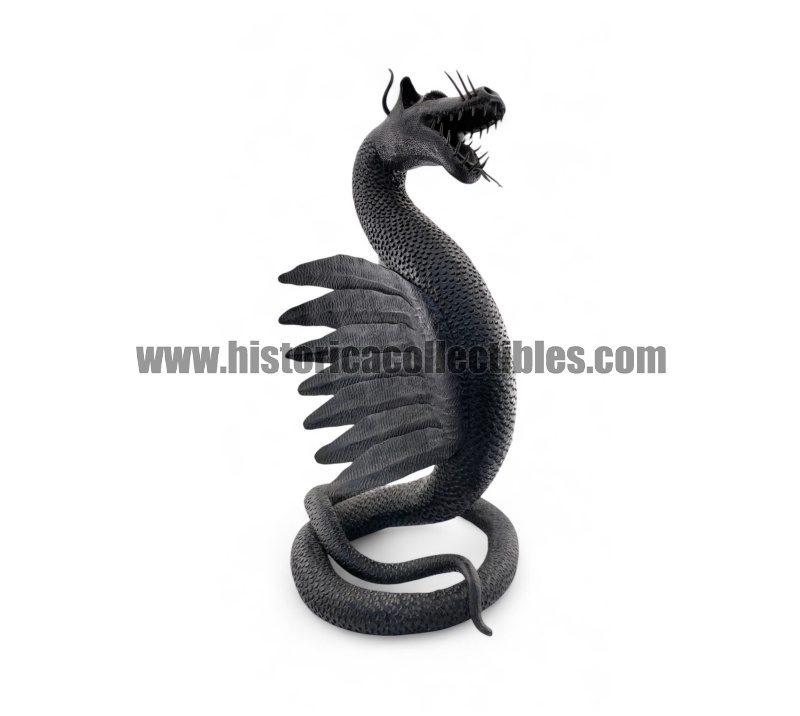
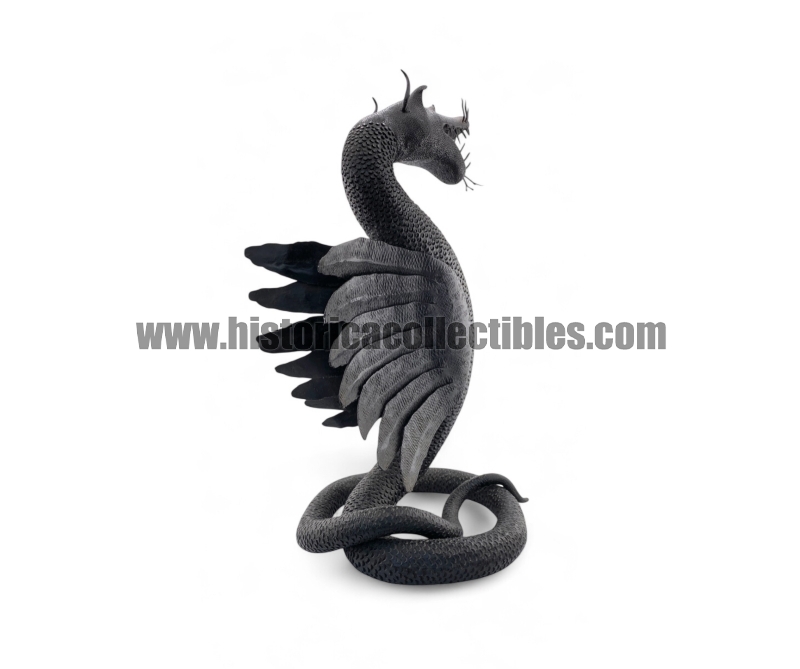
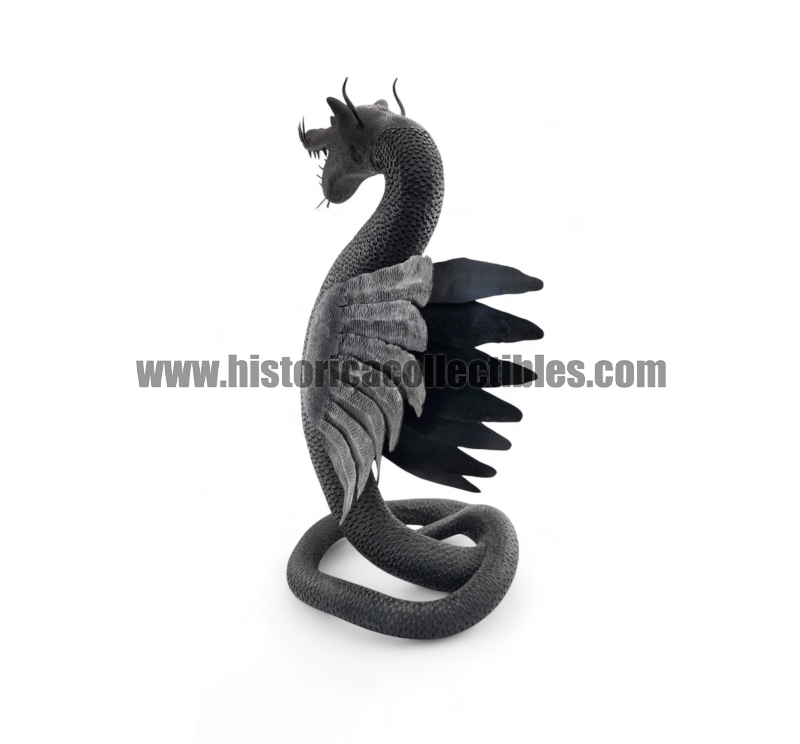
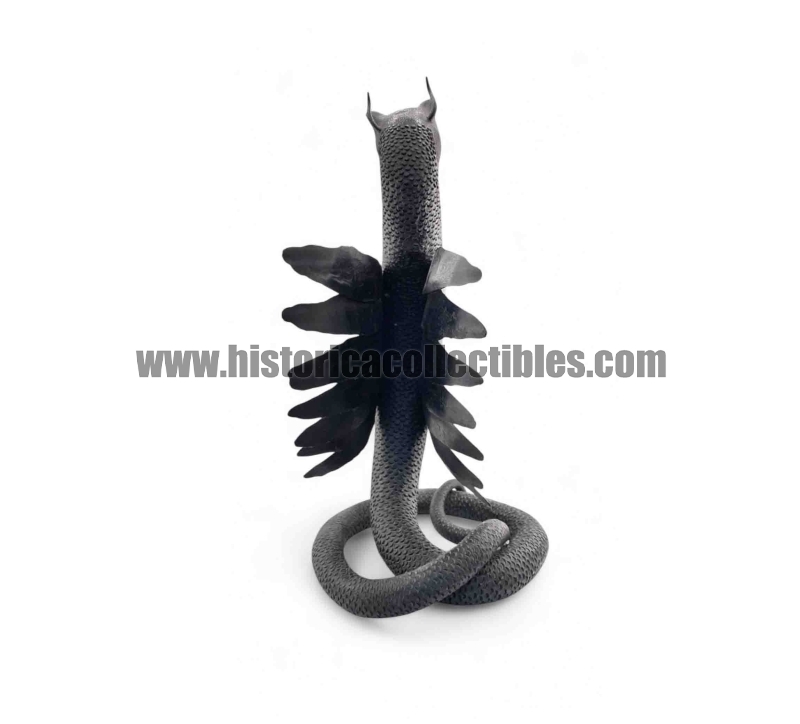
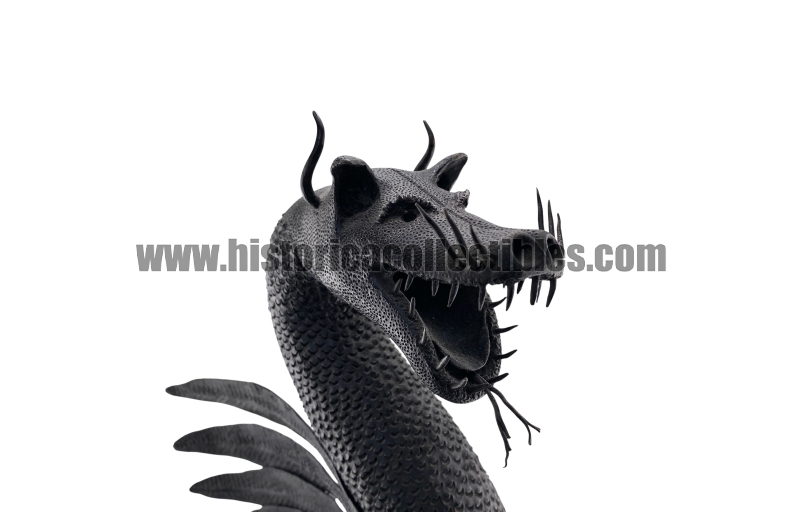
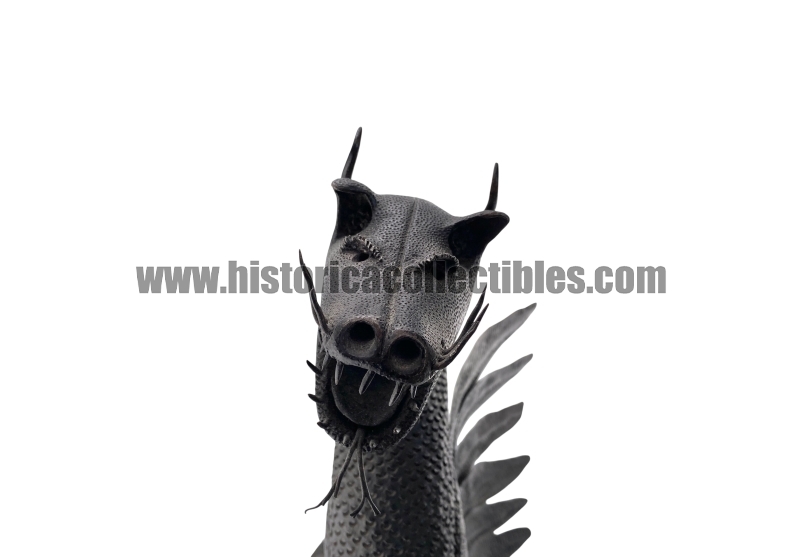
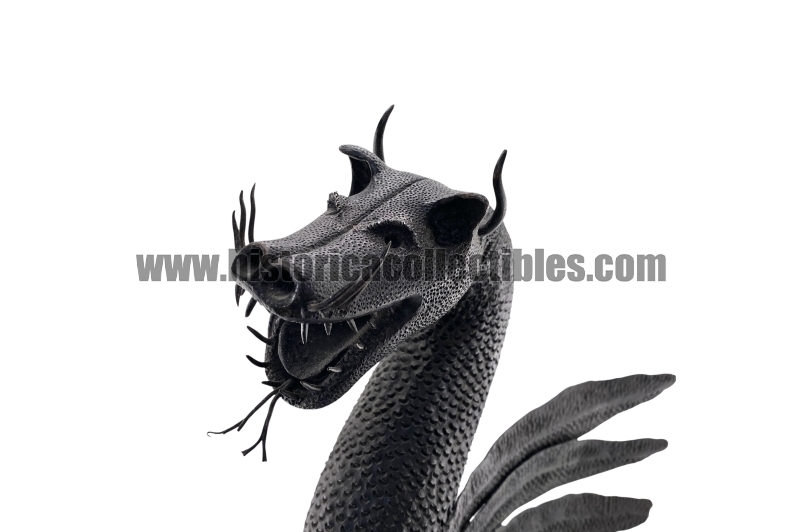
Singular sculptural execution of a mythical Winged Dragon, entirely made of hand-forged iron by a skilled Master Blacksmith, probably in Japan towards the middle of the Edo period (1603-1868).
This sculpture, modeled after the mythical figure of a Winged Dragon, was crafted from a substantial 9 kg block of iron and expertly hand-forged until the desired length of the body (when extended) was achieved, measuring over a meter, with a variable diameter from the head to the end of its tail.
The Master Blacksmith has carefully executed a multitude of relief carvings, thus making the body appear to be covered in scales. Continuing to observe the figure, the two large wings, each composed of seven individual engraved feathers, are striking, almost as if to lend an effect of lightness that facilitates flight. Furthermore, one cannot help but be fascinated by the shape of its head, well-proportioned and perfectly defined by the presence of all the external details executed with precision, but what makes it unique is the disturbing shape of its large mouth, full of sharp teeth and wide open as if it were about to hurl incandescent fireballs.
Finally, with the last (and certainly not the simplest) operation, the creative Master Blacksmith wanted to give that stretched and immobile body sinuous movements, almost bringing them to life, twisting and shaping the iron with strength and mastery, until he gave it that vigorous appearance that best represents a mythical and legendary Winged Dragon, a figure born of mythological tales and stories passed down through time but also an intrinsic symbol of power, grandeur, and magnificence.
The skill of the ingenious artist, expressed in the meticulous creation of this sculpture and the refinement applied in endowing it with sinuous movements, lead us to believe and maintain that it was produced on behalf of an influential family of high-ranking Japanese nobility, after the mid-Edo period (1603-1868).
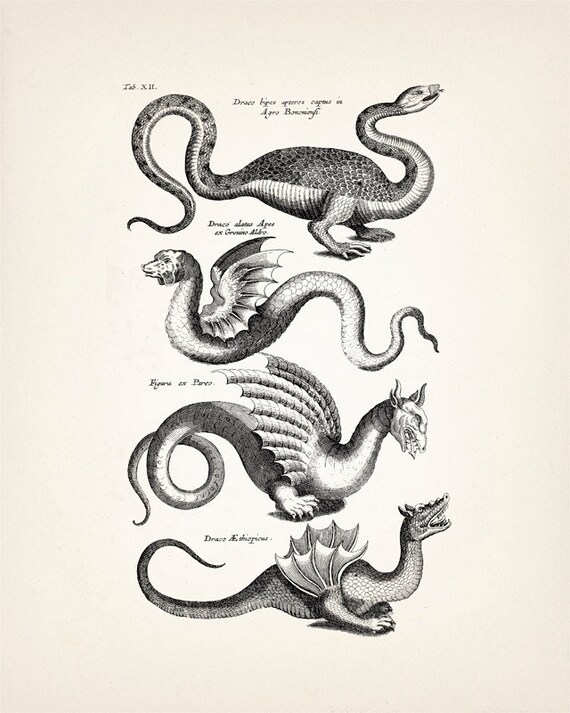
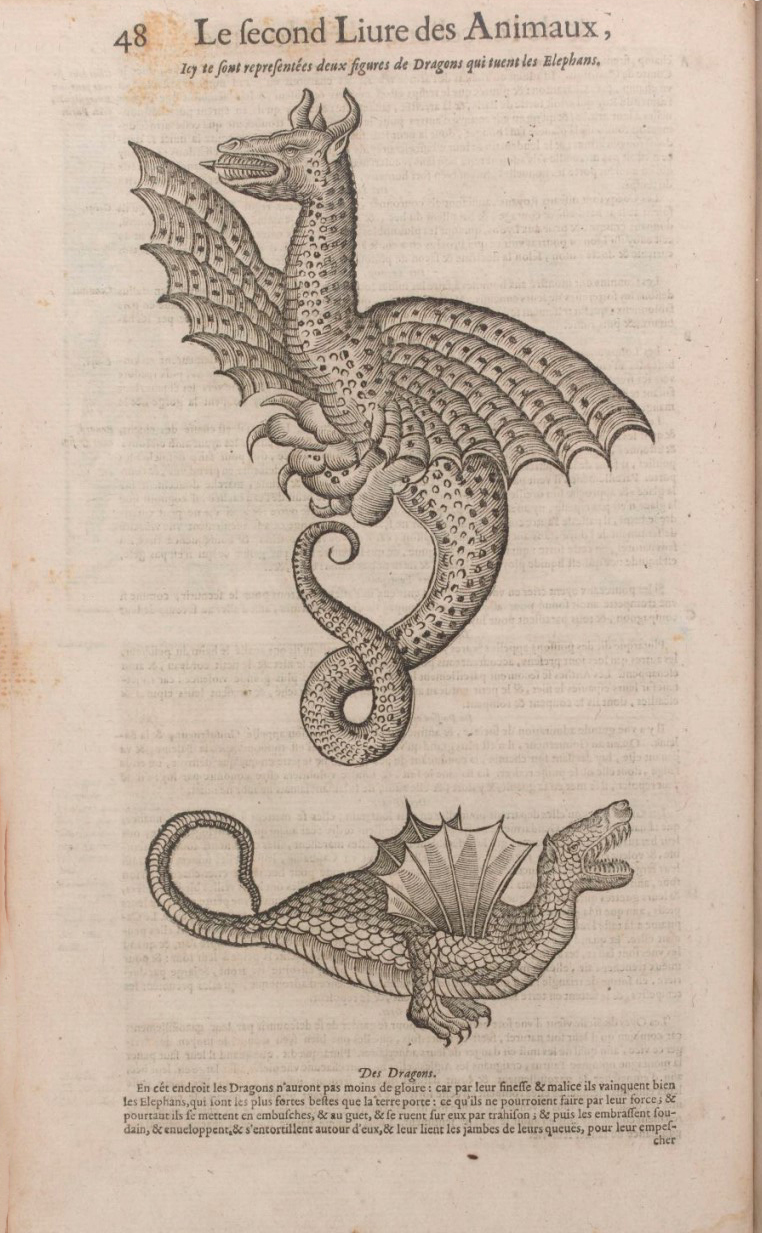
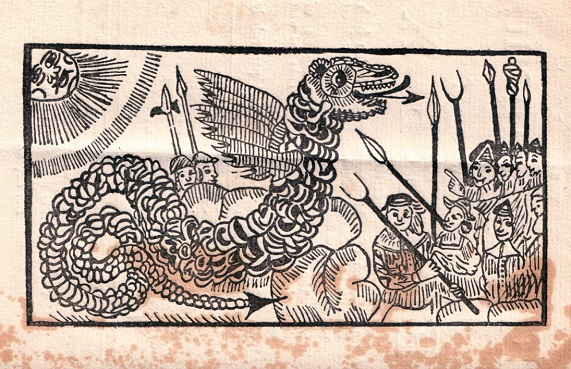
WINGED DRAGON, formerly called "Draco Alatus Apes ex Greuino Aldro," as evidenced by an engraved plate in the book: "Tablature di Jonston Jan, Merian Matthäus, Theatrum universale omnium animalium ecc., Heilbronn, Eckerbrecht, 1755" from the first edition "Merian, Matthäus (1593-1650) View of legendary dragons with serpent tails."