
Frame carved and gilded walnut with mirror, Pietro Giusti for "Casa Reale Savoia" Turin, circa 1875
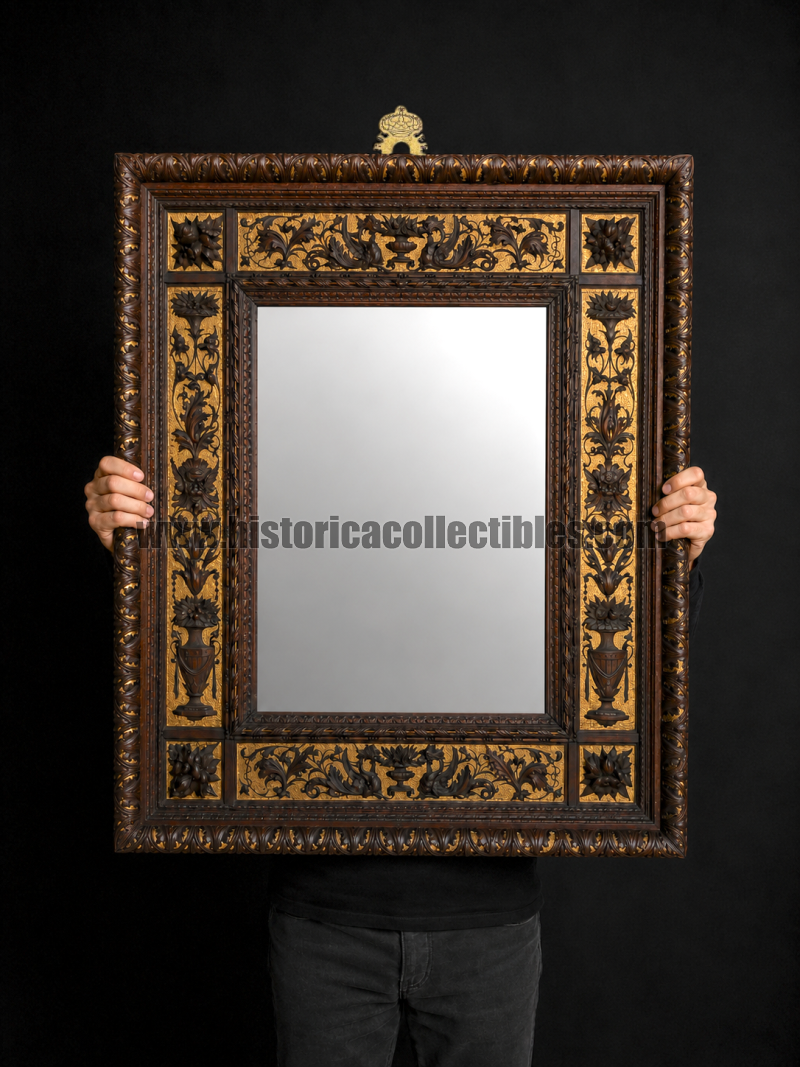
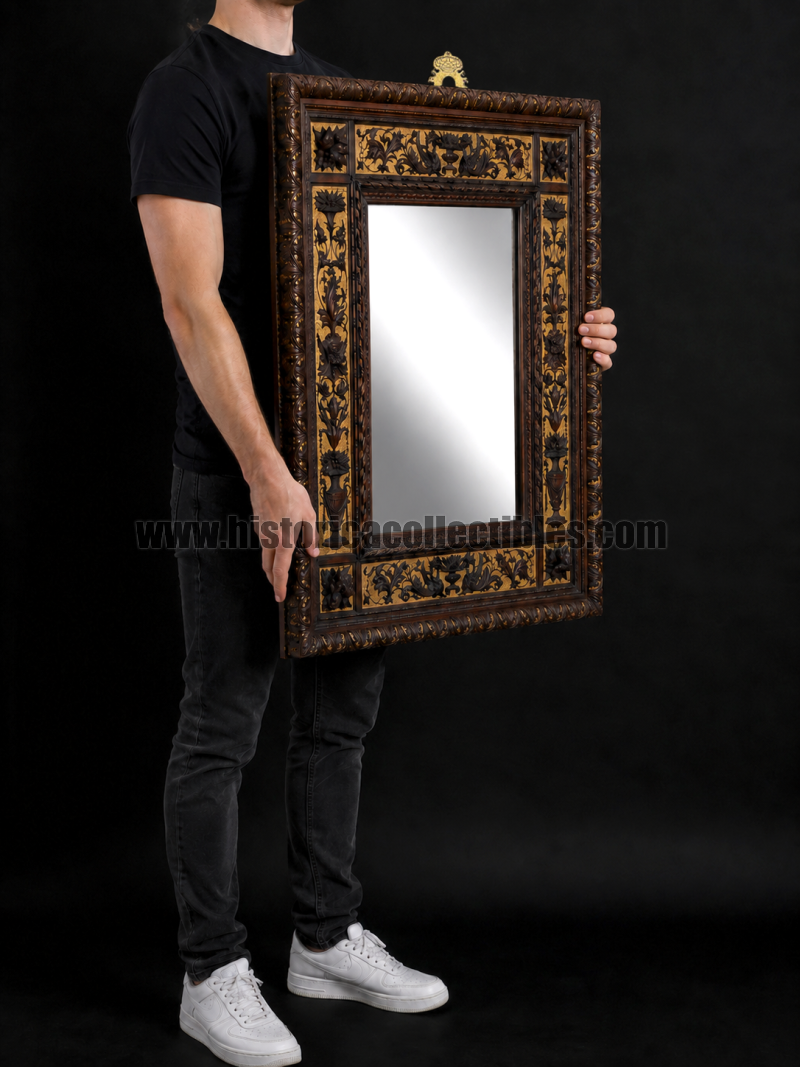
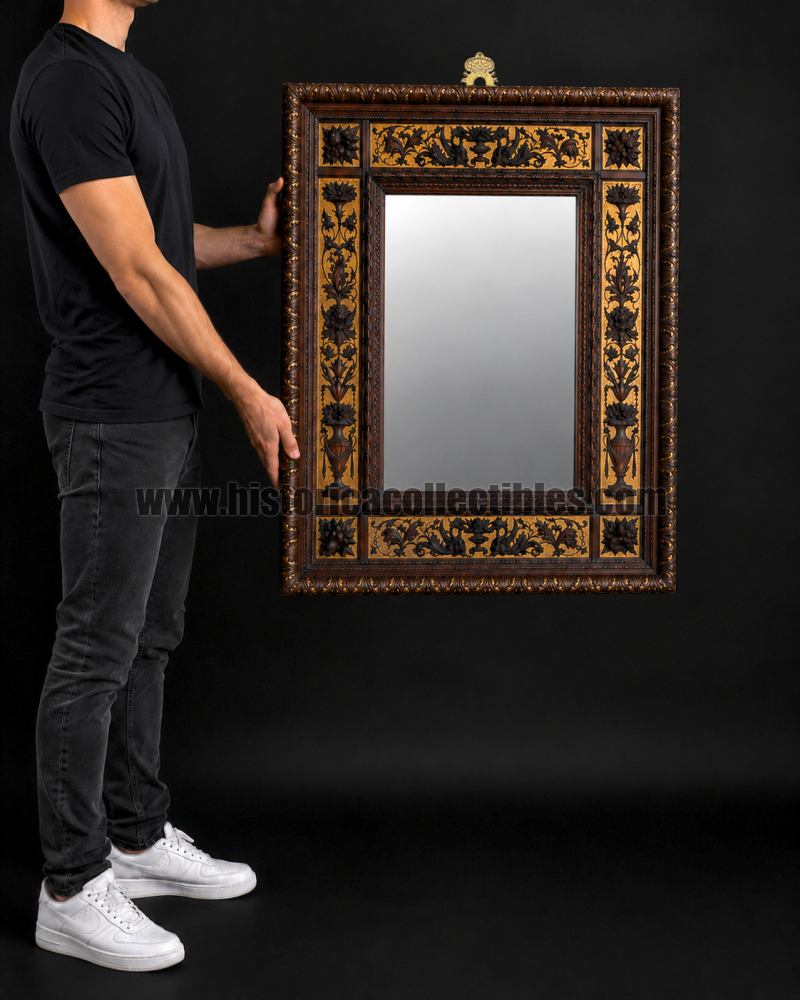
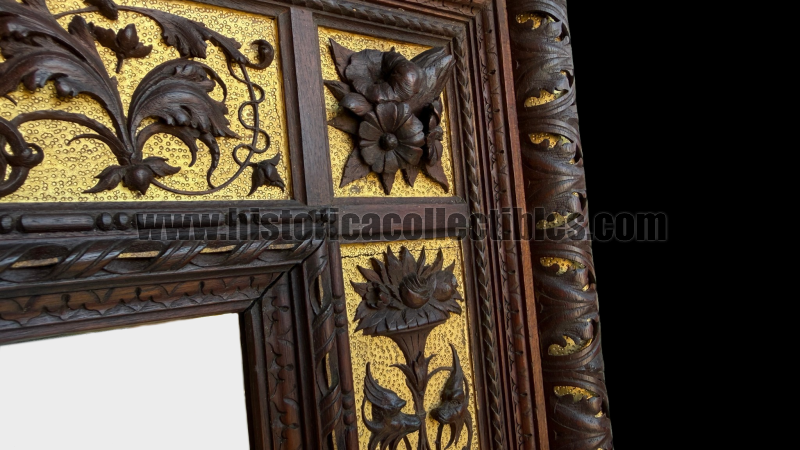
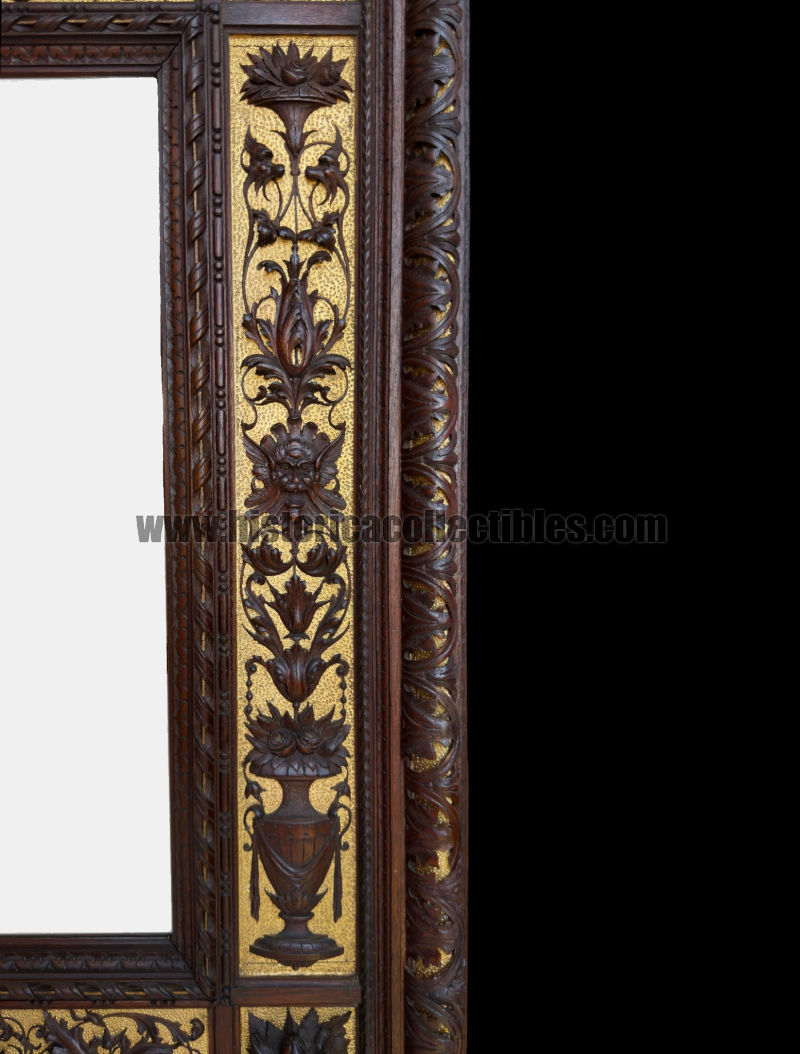
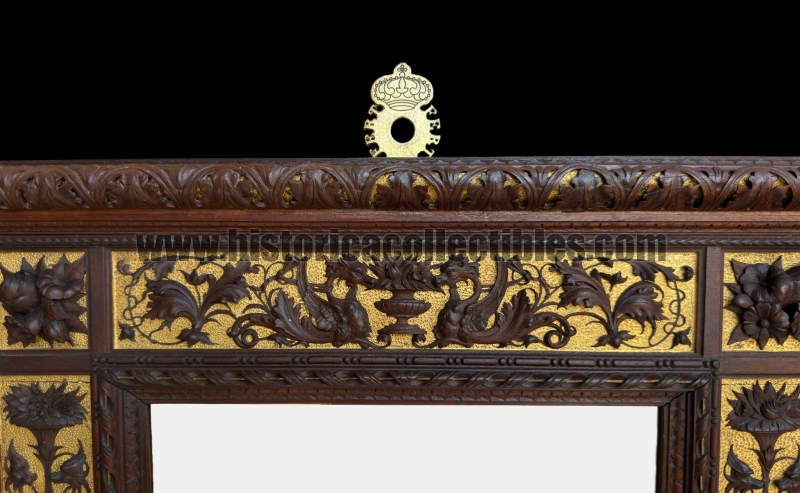
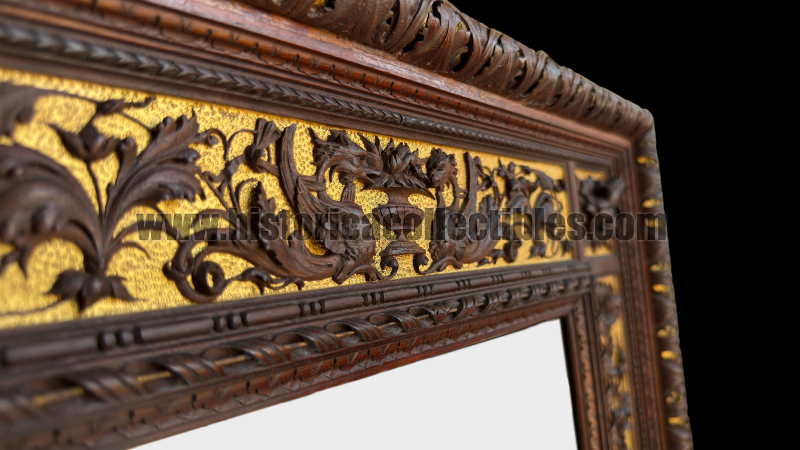
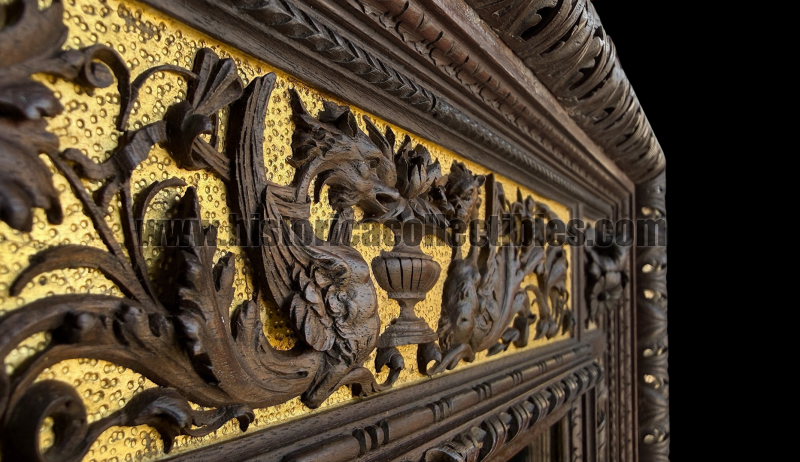
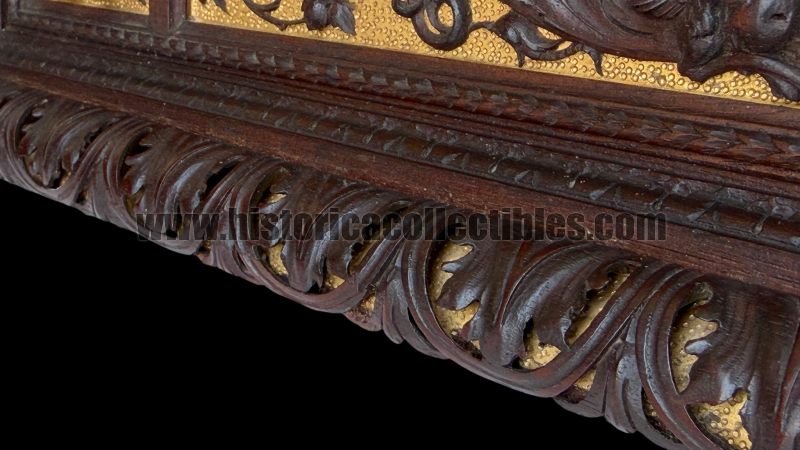
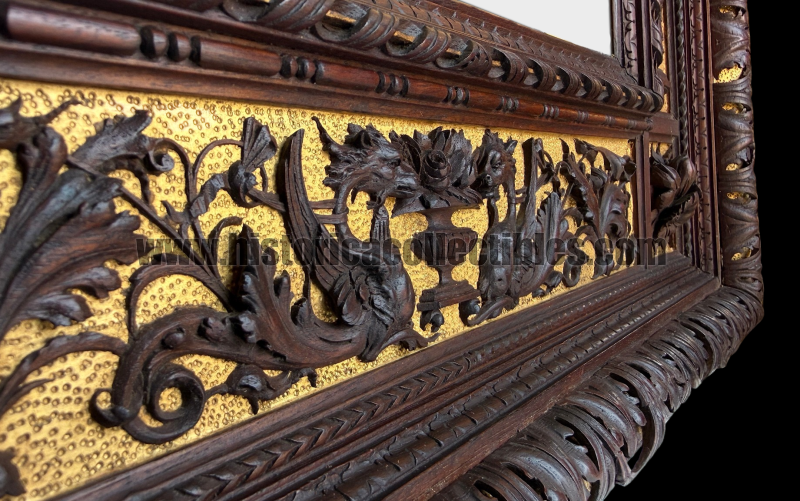
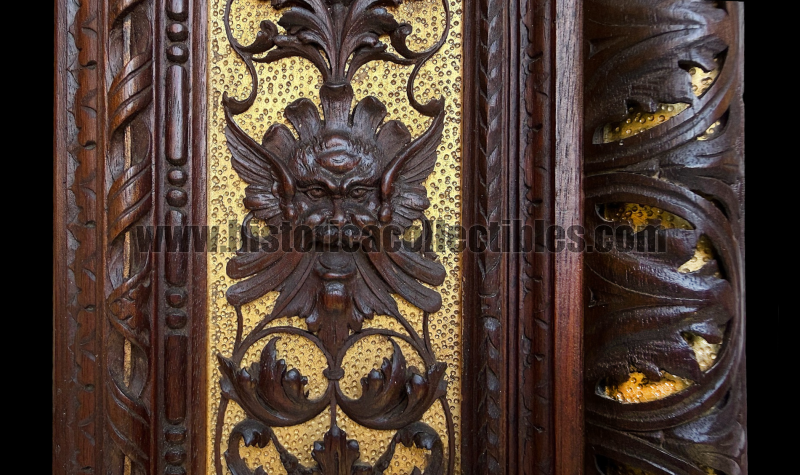
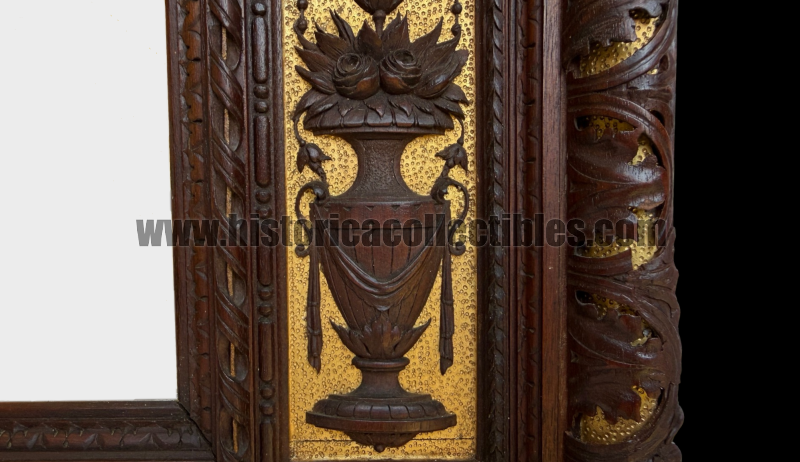
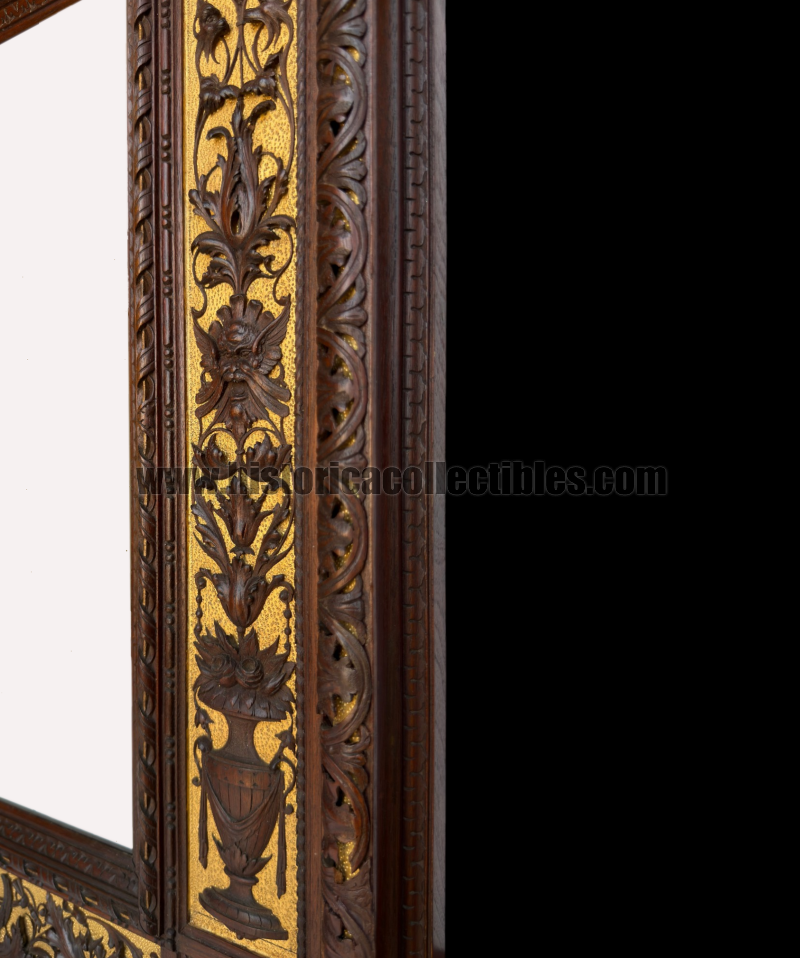
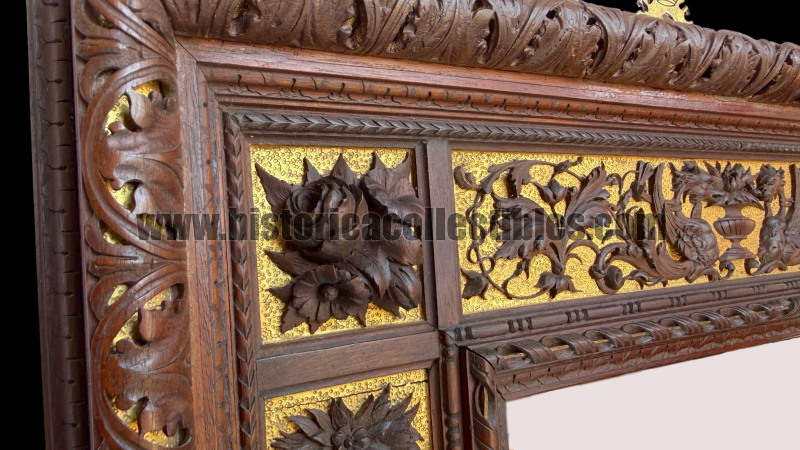
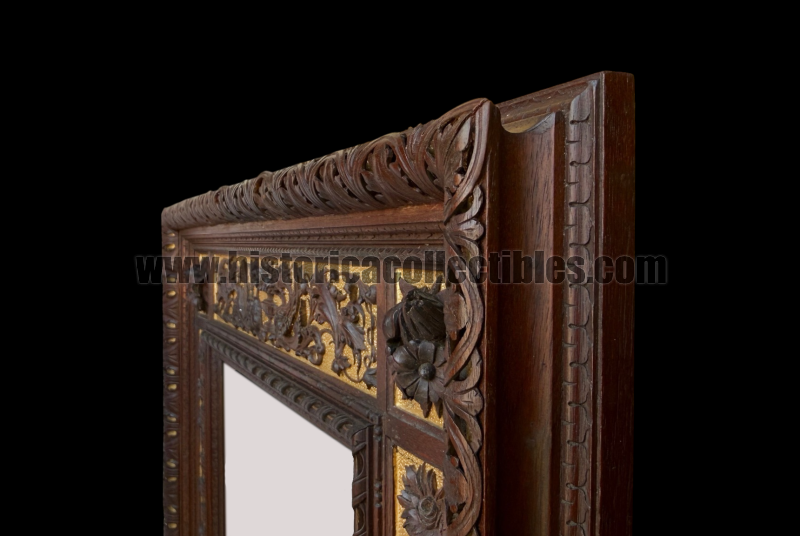
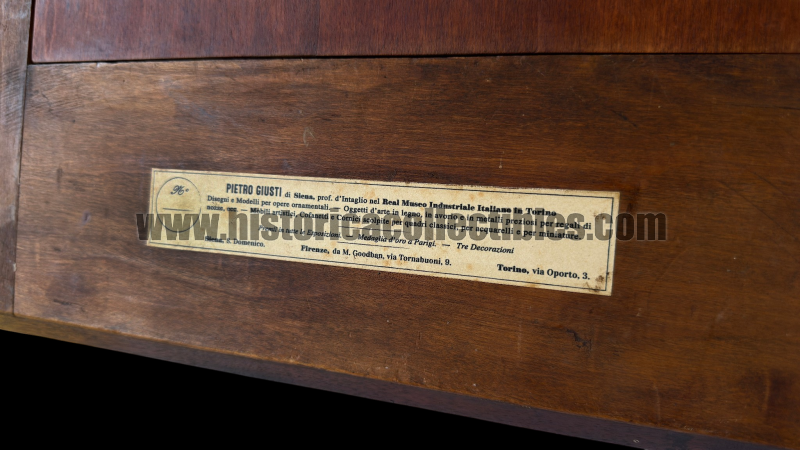
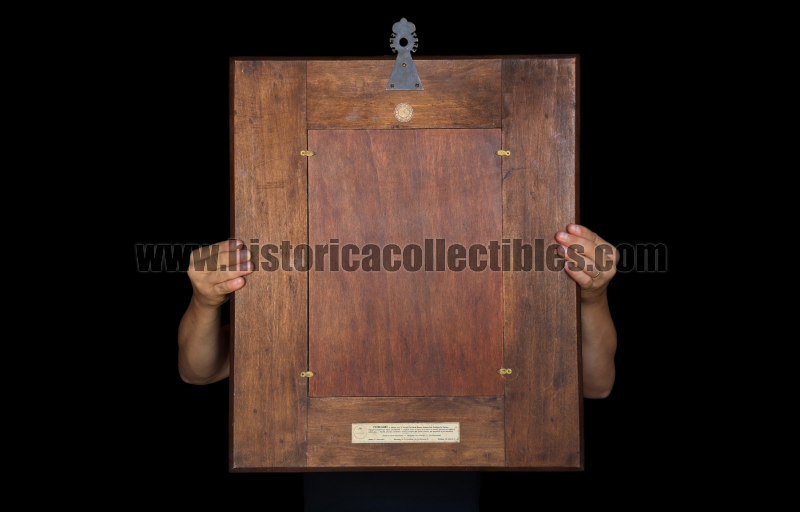
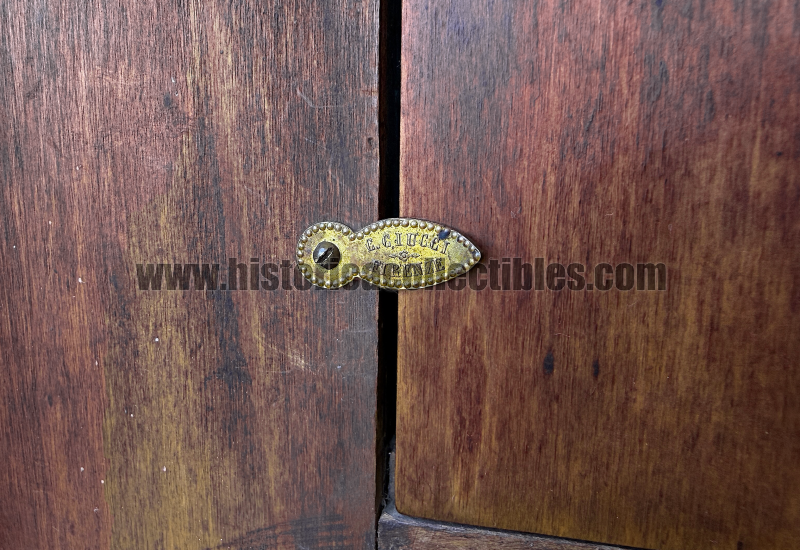
A carved and gilded walnut mirror frame, masterfully crafted and richly decorated with Raphaelesque carvings, engravings, and embossed floral motifs. The work was executed by Master Pietro Giusti, one of the most illustrious 19th-century Italian carvers and Professor of Carving at the Royal Italian Industrial Museum in Turin from 1866 to 1878, as attested by the original paper label on the back.
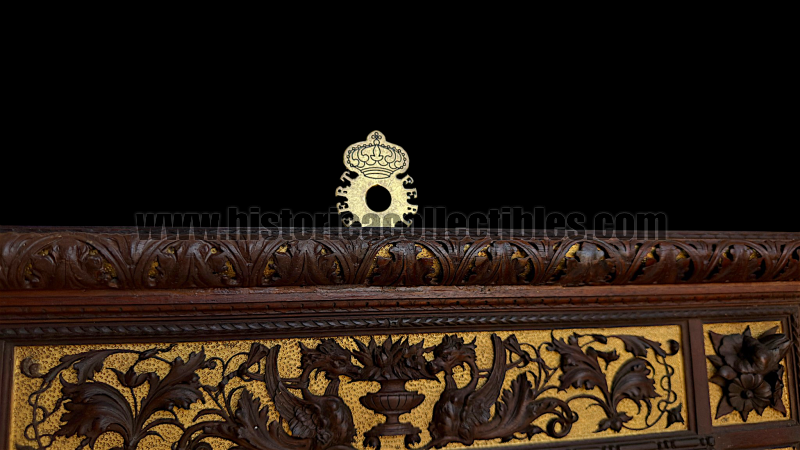
The exceptional craftsmanship is evident in the richness and refinement of the ornamental design, featuring sinuous plant motifs, elegant dragon figures, masks, acanthus leaves, and exquisite vases brimming with flowers, expertly carved into the gilded surface with extraordinary technical skill. The finely perforated perimeter frame reveals a precious internal gilding that lends the overall effect of depth and luminosity, enhancing its refined plasticity and extraordinary decorative richness.
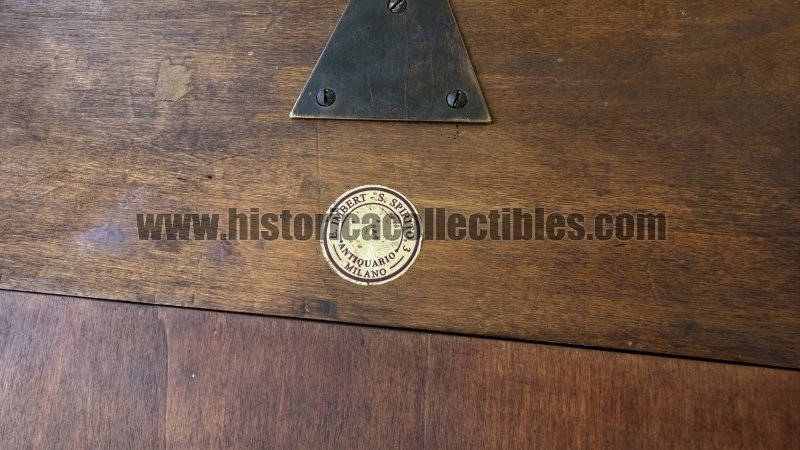
The extremely high artistic level and sumptuous execution suggest a very high-ranking commission, attributable to the Royal House of Savoy. This is supported by the original, still partially gilded bronze hanger, surmounted by the royal crown and bearing the motto "FERT," the historic emblem of the Savoy dynasty that ruled the Kingdom of Italy from 1861 to 1946.
Considering that Pietro Giusti worked between 1848 and 1878, and that his career coincided exactly with the reign of King Vittorio Emanuele II, and given the presence of the Savoy insignia and the exceptionally high quality of execution, it cannot be ruled out that such an exceptional work was created for a commission directly attributable to the Sovereign. Furthermore, Pietro Giustì died the same year as Vittorio Emanuele II, in 1878 to be precise, and therefore lived exclusively under the reign of Vittorio Emanuele II.
For its artistic quality, exceptional state of preservation, prestigious attribution, and historical and documentary significance, this frame represents an outstanding testimony to the excellence of Italian artistic woodcarving in the second half of the 19th century and is a work of extraordinary interest for collectors and museums.
Its dimensions are: Height 66.5 cm, + 6 cm of hanger - Width 56.5 cm - Depth 6 cm.
Pietro Giusti:
Pietro Giusti was born in Siena on July 29, 1822, to Gaetano, a tailor, and Margherita Cenni. Widowed when her son was only six months old, his mother worked hard to provide him with a basic education through private tutors. However, given financial difficulties, Pietro Giusti began working as a messenger in the workshop of the printer Guido Mucci in 1834.
This income provided him with the opportunity to study drawing at the Siena Institute of Fine Arts with the master of ornamental design Vincenzo Dei. Soon, given his aptitude for drawing, he began working, still as a messenger, in the workshop of the woodcarver Angiolo Barbetti—alternating as an assistant in the workshop of his father, Massimiliano Barbetti—until 1842, when Angiolo moved his school to Florence, leaving the workshop to his young student and another woodcarver, Antonio Rossi.
In 1845, Giusti founded his own carving workshop and began recruiting students who collaborated with him on various commissions. In 1848, like many other young Italians, he volunteered for the war against Austria; during the Battle of Curtatone and Montanara (May 29, 1848), he was taken prisoner by the Austrians and taken to Bohemia, where he was held prisoner in the Theresienstadt fortress from July 15 to August 29, and then in the military hospital in Prague from September 2 to 12. Thanks to a prisoner exchange, he was finally repatriated to Italy and arrived in Siena on October 25, 1848.
Despite the hardships of his imprisonment, Pietro Giusti recorded in his notebook that, during this period, he also enjoyed the opportunity to see many works by carvers in the cities he visited on his return journey to Italy, works that served as a source of inspiration for his future work. In 1855 he was appointed substitute master of ornamental design at the Siena Institute of Fine Arts, becoming the chair holder on 19 January 1856, after the death of his teacher and friend Enea Becheroni.
On January 30, 1866, he left Siena with his family for good and moved to Turin, where he was appointed professor of modeling and ornamental design at the Italian Industrial Museum. His notebook contains notes of dissatisfaction, reflecting his obligation to close his Turin workshop just a year after moving there and the change in the Museum's educational focus, which forced him to teach only theoretical subjects. Pietro Giusti died in Turin in 1878.
A prestigious commission and initial insights into Pietro Giusti's work in Turin (by Luca Giacomelli).
In 1868, in anticipation of the wedding of Margherita and Umberto of Savoy, the Turin City Council, already engaged in organizing the celebrations for the royal couple, was confronted with the task of selecting a prestigious gift for the bride-to-be. The commission appointed for this purpose chose a gold casket in which the princess could preserve the congratulatory letters sent from all over Italy, entrusting its execution to the jeweller Giuseppe Twerembold, to a design by the renowned Sienese woodcarver Pietro Giusti.
Giusti had been active in Turin since 1865, when he was appointed by the Ministry of Agriculture, Industry and Commerce as professor at the School of Industrial Ornamentation, established within the Royal Italian Industrial Museum. The artist had already completed several prestigious commissions for local patrons, including the commemorative monument for the daughter of the Marquises Della Valle and the two alla raffaellesca frames made for Prince Umberto of Savoy. His appointment to an institution that aspired to national prominence was therefore of particular significance, not least because of the exceptional manner in which it had been conferred.
The Royal Italian Industrial Museum in Turin was founded by Senator Giuseppe Devincenzi following the London International Exhibition of 1862, where he had served as Commissioner for the Kingdom of Italy. He envisioned the museum as a centre for excellence and coordination in technical, scientific, artistic, and industrial research, following the example of London's South Kensington Museum and the German polytechnic schools. However, the institution received decisive government support only in 1865, in response to the severe economic and social crisis that followed Turin's loss of its status as the national capital. As a form of compensation, the government sought to transform the city into the driving force behind Italy's industrial development, assigning the Museum a strategic role in this ambitious programme.
For an institution that aspired to occupy such a central position in the newly unified Kingdom of Italy, Giusti represented the ideal choice to embody artistic excellence on a national scale, extending far beyond the regional reputation that Sienese and Tuscan woodcarving had previously enjoyed.
Having volunteered in the First Italian War of Independence in 1848, Giusti was captured, imprisoned, and deported by the Austrians. After returning to Siena, enriched by the artistic experience gained during his travels throughout Europe, he continued to enjoy considerable success among both Italian and foreign patrons, particularly English collectors. His reputation is demonstrated by the numerous awards he received at national and international exhibitions, in which he participated continuously throughout his career—from the Regional Exhibition of Florence in 1847 to the Vienna Universal Exhibition of 1873, where the celebrated albums of drawings were displayed. Especially significant was his participation in the London International Exhibition of 1862, during which the South Kensington Museum acquired several of his works, including the monumental walnut frame that is still preserved today at the Victoria and Albert Museum.
Giusti's qualifications as a teacher were equally impressive, having taught at the Siena Institute of Fine Arts for ten years, between 1855 and 1865. His educational philosophy can be inferred from the agreements concluded with the Ministry upon accepting his appointment.
Giusti moved to Piedmont accompanied by several of his most talented collaborators, bringing with him a considerable body of artistic expertise. His most promising students would subsequently be employed on external commissions and receive regular remuneration, creating a close connection between instruction at the Museum and production in the workshop. This educational model, considered particularly progressive at the time, sought to establish Turin as a centre of excellence not only for teaching but also for artistic production.
Nevertheless, Turin already possessed a well-established tradition of cabinetmaking, exemplified by craftsmen such as Giuseppe Capello, known as Moncalvo, whose reputation, however distinguished, may have appeared too local in character to fulfil the broader national ambitions of the institution.
Within the Royal Industrial Museum, the School of Industrial Ornamentation occupied a rather unusual position. Although housed in the same building, it remained administratively linked to the Technical Institute attached to the Museum, which depended largely upon financial support from the Municipality and the Province. Tensions soon arose between the Museum's administration and these local authorities regarding the allocation of funds required for teaching materials.
Despite these difficulties, Giusti was welcomed in Turin as a celebrated artist and enjoyed widespread public esteem. He was immediately appointed to the governing committee of the recently established Civic Museum, inaugurated only three years earlier, and actively promoted its development as an industrial arts collection intended to serve local craftsmen.
At the same time, he sought to integrate himself into Turin's intellectual circles by dedicating a monographic study to the Asti-born engraver Giuseppe Maria Bonzanigo. The project received both scholarly collaboration and financial support from the Civic Museum and several local academics, although not without provoking a degree of dissatisfaction, as appears to emerge from a letter written by Giovan Battista Vico.
Furthermore, his appointment to one of Italy's leading educational institutions greatly increased his published writings on artistic education, leading to lively debates, including his well-known exchange with Marquis Pietro Selvatico concerning the teaching of drawing in public schools.
The most attractive aspect of the appointment for a craftsman such as Giusti was undoubtedly the opportunity to gain access to a new and prestigious clientele, a prospect that the Ministry had almost certainly presented as one of the principal advantages of relocating to Turin. This is evidenced by the important public commissions that appear to have followed his transfer to the city. Among them was the monumental frame for the Storia Metallica dei Savoia (Metallic History of the House of Savoy), a complex symbolic composition presented at the Paris Universal Exhibition of 1867 and now preserved at the Castello del Valentino in Turin. Despite its ambition, however, the work failed to win unanimous approval.
In his final report, the distinguished critic Demetrio Carlo Finocchietti, Italian Commissioner to the Paris Exposition, although openly committed to securing the gold medal for the woodcarver, expressed serious reservations about the work, criticizing what he described as its "different style" and the absence of the elegance and lightness that characterized Giusti's finest productions.
The Sienese artist promptly responded to these criticisms in a remarkable letter that offers valuable insight into the role that decoration played in his artistic conception. He first addressed the practical constraints: because of its monumental dimensions and intended function, the frame could not be executed with the refinement and delicacy that distinguished his smaller works. Secondly, the adoption of any single historical style would have been inappropriate, since the medals that the frame was intended to contain ranged chronologically from the year 1000 to the contemporary period—a span during which, as Giusti himself observed, "all styles of ornamentation have succeeded one another."
The only plausible solution, therefore, was to adopt what he described as an "eclectic style," in which every decorative element was conceived to convey a precise symbolic meaning directly related to the work it enclosed, without compromising either elegance or the overall visual effect. Thus, the twelve coats of arms of the Italian cities represent the links of the Collar of the Order of the Most Holy Annunciation; the four helmets symbolize the successive ranks and historical phases of the House of Savoy; the lions crowning the composition represent the Italian people and the plebiscite; and so forth. In this way, the frame becomes inseparable from the work it contains, amplifying its meaning through a carefully conceived decorative programme, whose significance lies not merely in ornamentation but above all in its symbolic and communicative function.
The casket commissioned for Princess Margherita likewise appears to have formed part of this broader programme of official commissions. Although the object itself has unfortunately been lost, the surviving documentation is exceptionally rich. Giusti himself described the work in an illustrated pamphlet published in 1868, in which he also reconstructed the principal stages of its commission. Additional information is preserved in a dossier held in the Historical Archives of the City of Turin, which contains several particularly interesting documents.
These records reveal that Giusti once again obtained the commission directly from the City Council, bypassing established Turin goldsmiths such as Pietro Borani and Pietro Thermignon, both of whom were already working for the Royal Household. The archival file contains not only receipts and official correspondence—chiefly concerning the dispute between the City Council and the jeweller Giuseppe Twerembold over the cost of the materials—but also an exceptional full-scale pencil drawing of the casket, generally attributed to Giusti himself.
Mentioned in Giusti's own pamphlet, the drawing depicts the front elevation of the object and is complemented by several preparatory drawings preserved in the Siena albums. These studies pay particular attention to the decoration of the lid and to its opening mechanism, ultimately resolved through a double-hinged solution explored in several preliminary designs. Completing the iconographic documentation is a contemporary photograph that records the finished object, making it possible to compare the final work with both the Turin and Siena drawings as well as with the published description.
The casket's austere rectangular form, considerable in size (54 × 35 × 17 cm), is softened by its rounded corners—which appear as simple chamfers in the Turin drawing—and by elegantly scrolling feet that lend the object a subtle Rococo grace. Judging from the surviving drawing, Giusti may initially have intended to adopt a more austere Italian Cinquecento style.
Each side of the casket is centred on a panel framed by an arabesque ribbon ornament punctuated with pearls set in daisy-shaped mounts, probably conceived as a double tribute to the bride in view of the correspondence between her name, Margherita, and the Latin margarita, meaning "pearl."
At the centre of each panel appears the Savoy coat of arms, executed as a mosaic of rubies and pearls and surrounded by oak branches tied with ribbons and surmounted by a helmet. Each helmet symbolizes one of the successive ranks attained by the House of Savoy, from ducal dignity to the crown of the Kingdom of Italy, an iconographic device already employed in the monumental frame discussed above.
The Turin drawing of the front also includes Charles Albert's motto, J'attends mon astre, together with the inscription Re d'Italia. The lateral compartments beside the coat of arms are decorated with simple panels composed of lapis lazuli slabs. Giusti's drawing, however, presents two alternative solutions. The version on the right corresponds to the executed work, whereas the one on the left proposes a more elaborate arabesque composition incorporating a sphinx-like figure, a motif more characteristic of the artist's woodcarving but one that would have required considerably more time and painstaking chasing.
Although difficult to read in the Turin drawing, the lid is clearly represented in one of the Siena drawings. It is decorated with arabesque motifs in shallow relief framed by the customary beaded ribbon. Along the long sides, this decoration encloses two circular medallions bearing the coat of arms of Turin, a detail known only through Giusti's printed description. On the shorter sides, the arabesques frame two smaller panels inscribed with the motto "Be happy and dear to the homeland."
This arrangement of shallow-relief arabesques combined with framed plaques and panels recurs frequently in Giusti's work, as demonstrated, for example, by the walnut casket now preserved at the Metropolitan Museum of Art in New York.
Regarding the crowning element, Giusti records that its design was entrusted to the sculptor Alfonso Balzico, who created the allegorical figure of Aurora Rising over Italy. Nevertheless, Giusti's preliminary drawing explores two alternative proposals on the same sheet. The first, more elaborate, depicts two doves playing with a ribbon, an explicit allusion to marriage; the second, conceived in a more official spirit, features a crowned eagle bearing the Savoy coat of arms upon its breast, closely related to the eagle crowning the Storia Metallica dei Savoia. Although ultimately rejected, this emblematic figure nevertheless survives in miniature on the key to the casket's lock.
The decoration and proportions of the casket closely reflect the well-established Neo-Renaissance vocabulary for which the Sienese school was justly celebrated and which Giusti had already explored in numerous earlier works, as abundantly demonstrated by the preparatory drawings preserved in the Siena albums.
Because the commission involved a work of goldsmithing rather than woodcarving, and because of the limited time available, the design necessarily adopted simplified solutions, evident in the greater restraint of the ornament and the substantial reduction of chased decoration. Giusti himself described these as "modest ornaments"; although they lacked the rich symbolic complexity of his more ambitious creations, they nevertheless fulfilled the objective of producing an object that was, in his own words, "modestly artistic, yet splendid in value and richness."
Unfortunately, Giusti's hopes of receiving further prestigious commissions were not fulfilled. He was eventually forced to dismiss his collaborators and devote himself primarily to teaching, while his workshop concentrated on producing smaller, commercially successful works based on his designs, including the celebrated Neo-Renaissance frames with gilded and speckled backgrounds that enjoyed considerable popularity on both the Italian and the English markets.
Even his teaching career proved far from free of disappointment. Giusti soon encountered growing hostility within Turin's artistic circles, particularly from his colleague Giuseppe Antonio Boidi. As a result, he attracted relatively few students and was repeatedly compelled to defend himself against what he regarded as a defamatory press campaign.
Nevertheless, Giusti's final years in Turin and his teaching activity during the 1870s deserve to be reassessed, not as evidence of personal failure, but within the broader context of Turin's transformation into Italy's industrial capital and of the profound changes affecting artistic and industrial education throughout the country. The traditional workshop model, which continued to flourish in Tuscany, increasingly clashed with the demands of modern technical and industrial training, a transformation that Giusti was only partially able to embrace.
References:
- Metropolitan Museum New York: Accession Number: 1998.19
- Victoria & Albert Museum: Pietro Giusti (1822-78), Siena, carved & gilded walnut frame, International Exhibition, London, 1862; Accession Number V&A Museum 8053:1-1862
- Victoria & Albert Museum (Accession Number 7881-1861).
- Capolavori dell'arte decorativa del XIX secolo, Pipino Stampa , 2001, pp. 309, 342, 343."
- Circle of Raphael, The Holy Family with the infant St. John in a landscape, ‘The Kingston Lacy Raphael’, c.1516-17, o/panel, 30 x 21 in (76 x 53.3 cm), carved walnut frame by Pietro Giusti of Siena, 1853-6, Kingston Lacy, Dorset, NT 1257083.
Bibliography:
- E. Nencioni, "Di un cofano commesso dal Conte Augusto de' Gori all'artista Pietro Giusti e da lui scolpito in avorio", Siena, Mucci, 1859
- M. Lessona, "Volere è potere", Firenze, Barbèra, 1869, pp. 198-202
- C. Sisi, E. Spalletti (a cura di), "La cultura artistica a Siena nell'Ottocento", Siena, Monte dei paschi di Siena, 1994, p. 341
- A. Grifoni, "La vita e la produzione artistica di Pietro Giusti, Siena 1822-Torino 1878. Protagonista della fortunata stagione dell'intaglio ligneo senese", tesi di laurea, relatore prof. Giuseppe Cantelli Università degli studi di Siena, Facoltà di Lettere e Filosofia, a.a. 1993-1994
- S. Chiarugi, "Botteghe di mobilieri in Toscana", Firenze, SPES, 1994, pp. 483-491
- G. Borghini, "Risorgimento senese. Le opere e i giorni", in "E il vento del Risorgimento soffiò su Siena e il suo Palio", Siena, Contrada della Torre-Circolo culturale I Battilani, 2011, pp. 35-54
- P. Turrini-M. V. Ciampoli, "Siena e la Costituzione toscana del 1848. Una festa per Leopoldo II, in Dal Granducato al Regno, atti della giornata di studi. Siena, Archivio di Stato, 3 Marzo 2011", a cura di P. Turrini-E. Pellegrini, «Accademia dei Rozzi», XX, n. 38, pp. 5-27, in particolare p. 11.