
Umberto Bellotto, wrought iron sculpture, 14th Venice International Art Biennale, 1924
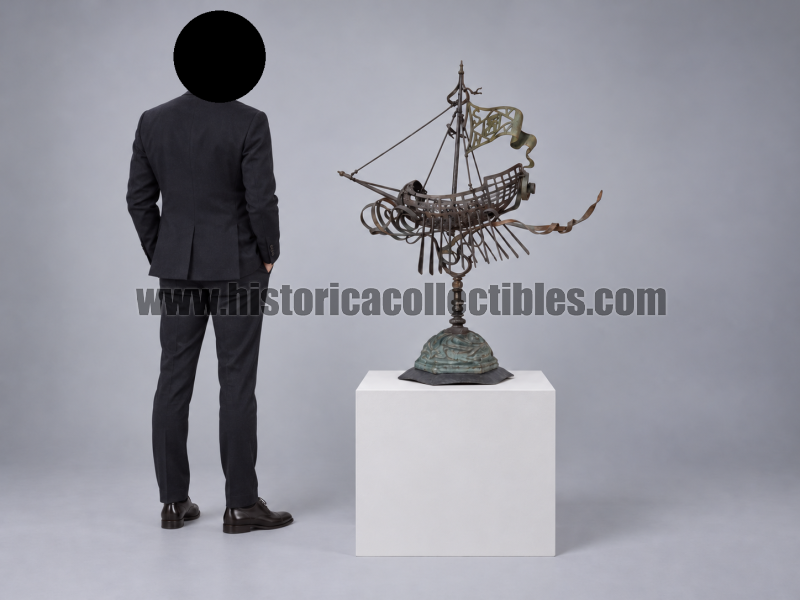

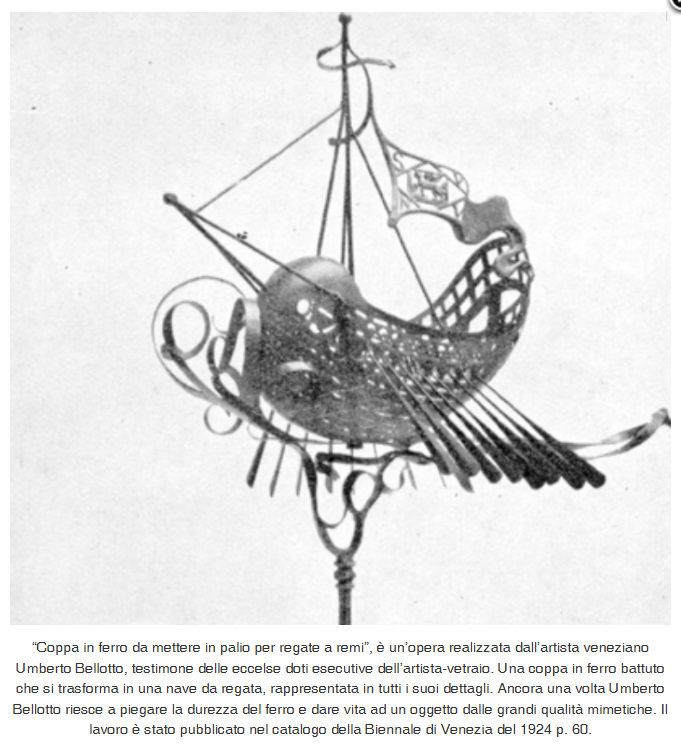
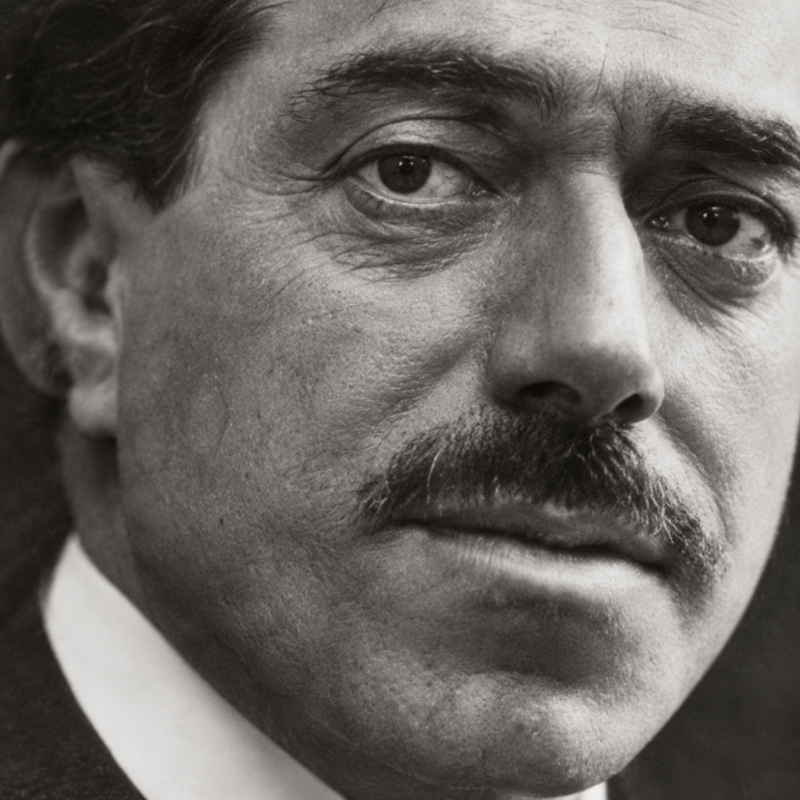
A refined and evocative sculpture in wrought iron and bronze, created in 1924 by Umberto Bellotto (1882–1940), one of the most extraordinary and original interpreters of wrought iron art of the early twentieth century, Bellotto represents one of the highest expressions of Venetian artistic creativity, capable of elevating a rough and severe material to the dignity of great sculpture. Bellotto was not simply a skilled master of wrought iron, but a true sculptor of the material, a visionary artist capable of combining the power of fire and metal with the aesthetic sensibility of Art Nouveau and the most daring decorative experiments of his time: among his other major works, the majestic gate at Dante Alighieri's tomb in Ravenna.
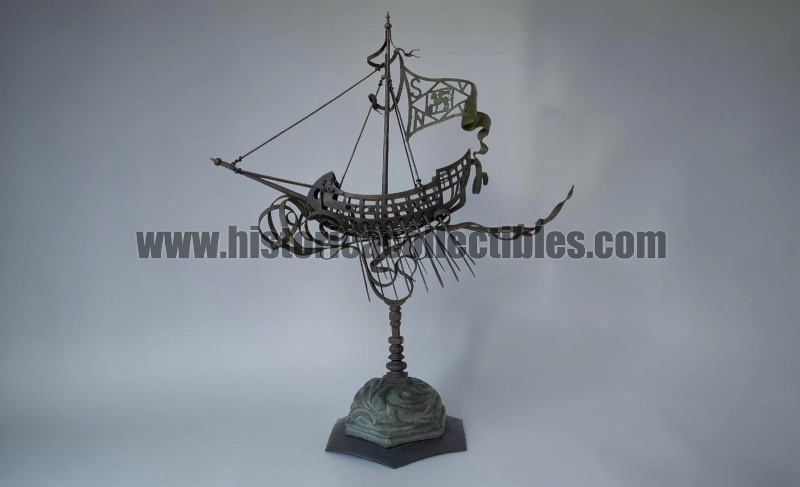
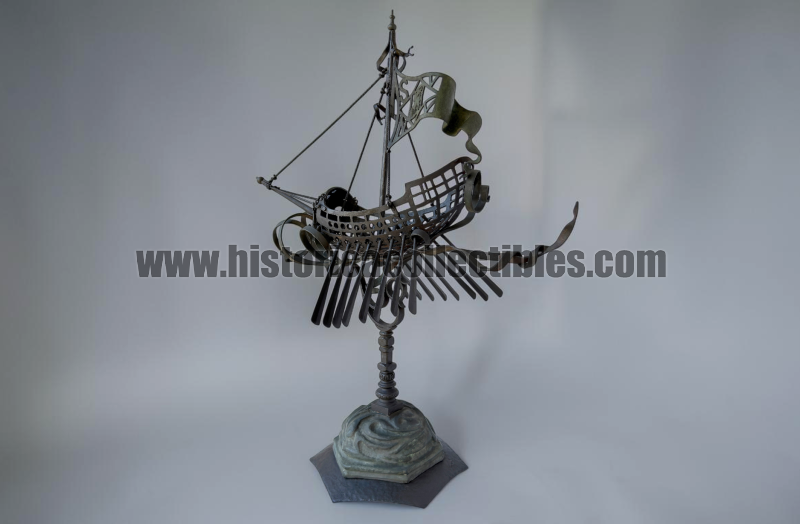
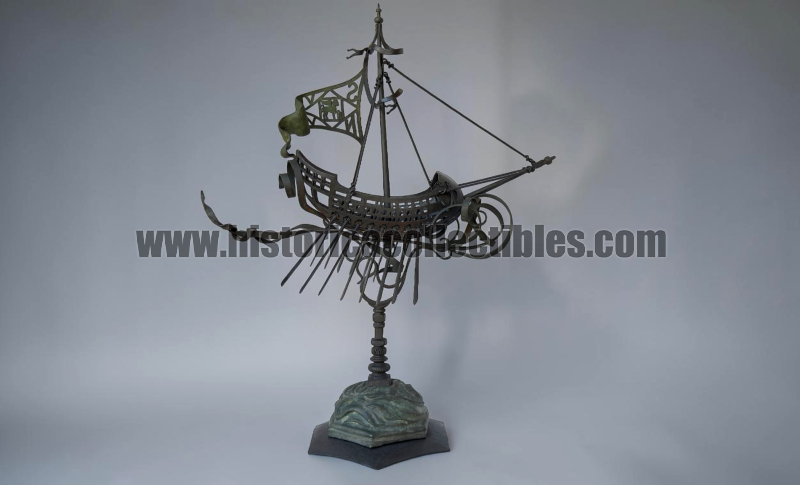
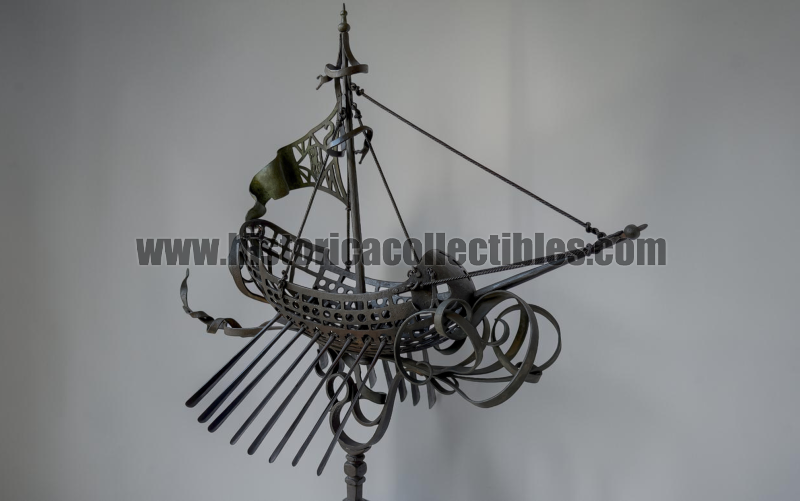
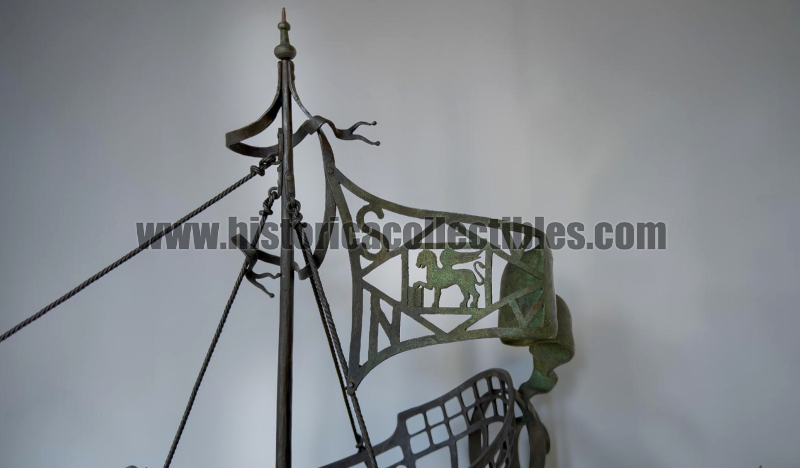
This work depicts a sailing ship with an elegant, slender structure, masterfully constructed through a skillful interweaving of metal elements, thin stays, and delicate fretwork. The hull, entirely in wrought iron, is defined by a dense geometric pattern, surmounted by the mainmast and the complex system of shrouds. Also of particular historical and documentary significance is the presence at the stern of the banner bearing the lion of St. Mark and the initials S.V.N.V. (Società Veneziana di Navigazione a Vapore). This, an integral part of the composition, identifies the commissioner of the work and constitutes a fundamental reference that sheds light on the commissioner of this work.
The Società Veneziana di Navigazione a Vapore (Venetian Steam Navigation Company) was a historic shipping company founded in Venice in 1905 and active until 1937. In the 1920s, this important company commissioned and sponsored water races, regattas, and motorboat events in St. Mark's Basin and the Lido, often relying on the finest local artists.
The absence of the winner's name or date engraved on the base is perfectly in line with the trophies and awards of institutional representation or those temporarily displayed at the venues of the organizing clubs.
The composition of the lower section is particularly refined, where elegant spirals and sinuous lines evoke the movement of the waves, ideally supporting the vessel in a balance of extraordinary visual lightness. The whole rests on a vertical support in wrought iron, embellished with a spiral-shaped motif, connected to a solid polygonal base.
The sculpture fully expresses Bellotto's artistic sensibility, transforming a severe material like iron—the quintessential medium of sculpture and artistic fusion—into an airy, dynamic, and profoundly ornamental composition. The formal language reveals a successful synthesis of the Venetian wrought iron tradition, the linear elegance of Art Nouveau, and the early geometric influences of Art Deco.
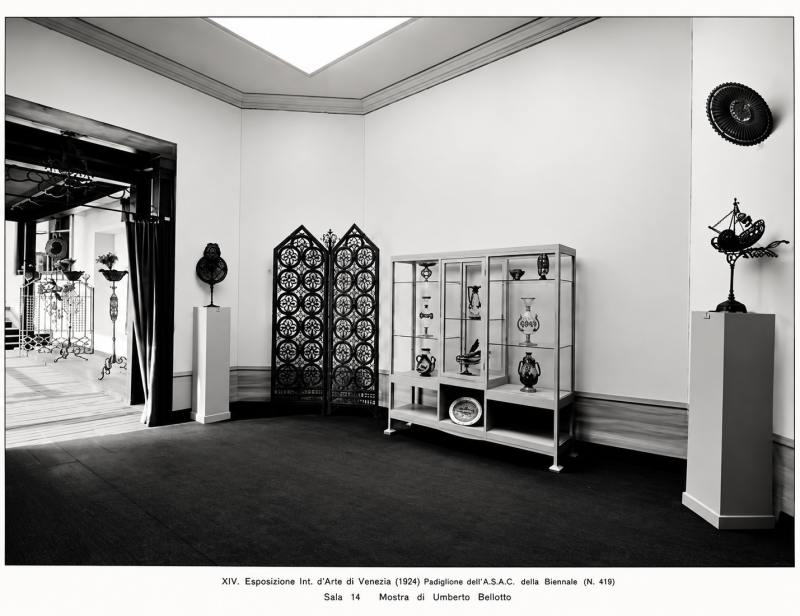
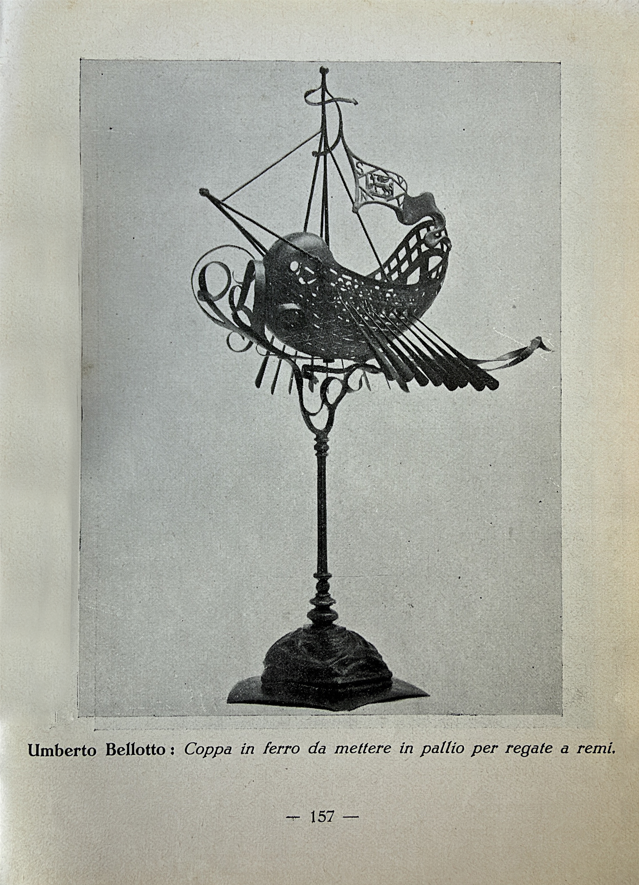
This sailing ship model was presented by the artist at the 14th Venice Biennale in 1924 (Room 14 and published on page 157 of the Biennale's Official Catalog), the year he participated, and the work constitutes a significant testament to his production of art objects and commemorative artifacts.
Of particular historical, artistic, and collectible interest, the sailing ship represents a precious example of Bellotto's ability to elevate artisanal ironwork to a form of authentic sculptural expression, combining technical virtuosity, decorative elegance, and the memory of Venetian tradition.
While the workshop's wall lamps and vessel-shaped chandeliers were replicated for various palaces, a monumental trophy commissioned by a major shipping company represents a unique piece or a very limited edition for the event, heightening its desirability.
Throughout his career, he participated in numerous exhibitions at the Venice Biennale and the Monza Triennale. In 1928, he was called to Rome by the then Minister of Public Works, as the official decorator of the capital's public buildings. A versatile artist in the use of metals, he also experimented with creating works in lost-wax cast bronze, glass, and majolica, creating ornamental vases with intricate shapes. Gabriele D'Annunzio was a great admirer of his work.
Dimensions:
Height: 86 cm
Length: 70 cm
Width (oar to oar): 32 cm
Width (base to hexagon tips): 31 cm
References:
Biennale di Venezia: https://asac.labiennale.org/collezioni/fototeca/49...
Biennale di Venezia:https://asac.labiennale.org/collezioni/fototeca/fa...
Biennale di Venezia: https://asac.labiennale.org/attivita/arti-visive/a...
http://www.catalogart.it/esposizioni/aut-1859.html
https://www.valutazionearte.it/artisti/umberto-bel...
Fondazione Rubinelli: https://fondazionerubelli.com/personaggi/#bellotto
Fondazione Rubinelli: https://fondazionerubelli.com/storia/scintille-dartista/#
Musei di Genova (Galleria Wolfsoniana): https://www.museidigenova.it/it/umberto-bellotto-e...
Works:
Corning Museum of Glass — Stati Uniti: Sculptural Vessel (Vaso scultoreo): Inventario: 95.3.36
Cooper Hewitt, Smithsonian Design Museum — New York: Hanging Lamp (Lampada a sospensione): Inventario: 2012-9-1-a/j
Museo del Vetro di Murano — Venezia: Vaso a murrine con sostegno in ferro battuto: Inventario: 2428
Ca’ Pesaro – Galleria Internazionale d’Arte Moderna — Venezia
Wolfsoniana – Musei di Nervi — Genova - Inv: GX1993.323
Musei Civici Veneziani: Fondazione Carraro
Ministero della Cultura — Archivio Bellotto alla Wolfsoniana
Galleria Giorgio Franchetti alla Ca’ d’Oro — Venezia
Museo Morando Bolognini — Castello Bolognini, Lodi
Beni Culturali Regione Lombardia:
- Daniela Balzaretti (a cura di), Umberto Bellotto. Ricami in ferro e vetro, Milano, 1992
- Giuseppina Dal Canton, Umberto Bellotto nell'ambiente artistico e artigianale veneziano, 1987
- Attilia Dorigato, Il «Connubio del ferro col vetro»: due opere di Umberto Bellotto al Museo Vetrario, 1990, pp. 63–66
- Marina Barovier, Rosa Barovier Mentasti, Attilia Dorigato (a cura di), Il vetro di Murano alle Biennali 1895–1972, Milano, 1995
- Franco Deboni, Murano '900. Vetri e vetrai, Milano, 1996
- Giuseppina Dal Canton, Umberto Bellotto nell'ambiente artistico e artigianale veneziano, in Anna Paola Zugni Tauro (a cura di), Carlo Rizzarda (1883-1931) e l'arte del ferro battuto in Italia, Feltre, Comune di Feltre, 1987, pp. 70-93.
- Giuseppe Cappa, Le génie verrier de l'Europe, Mardaga ed, 1998
- L'arte del vetro - silice e fuoco: vetri del XIX e XX secolo, Marsilio editore, Venezia 1992, catalogo dell'omonima mostra tenutasi in Roma, presso il Palazzo delle Esposizioni, dall'11 ottobre al 25 novembre 1992
- Isabella Campagnol, Umberto Bellotto e Guido Cadorin : tra arte e design tessile negli anni Venti, in Giuseppina Dal Canton e Babet Trevisan (a cura di), Donazione Eugenio Da Venezia, Venezia, Fondazione Querini Stampalia, 2014, pp. 37-43.
- Matteo Fochessati, Umberto Bellotto. Interventi pubblici e privati a Venezia e al Lido, in Ceramica e arti decorative del Novecento, n. 10, San Giovanni Lupatoto, Zerotre, 2022, pp. 41-62.