
Wrought iron polyptych altarpiece, France or Northern Italy, circa 1530–1560
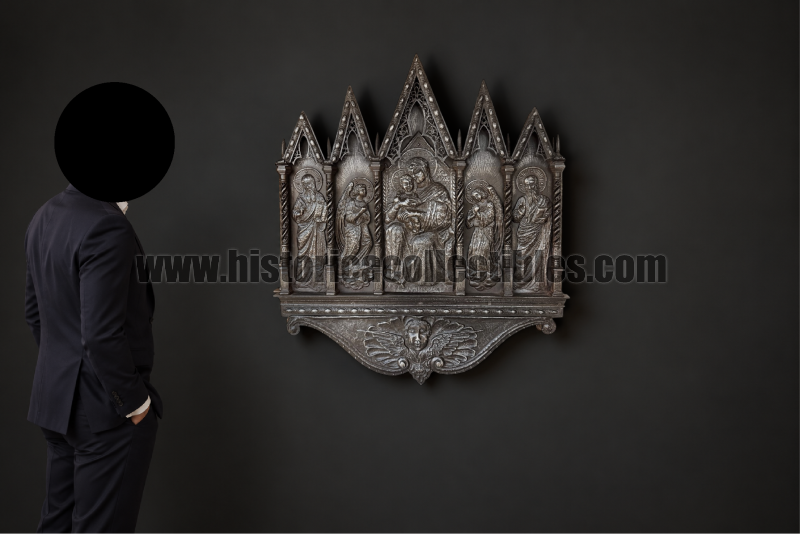
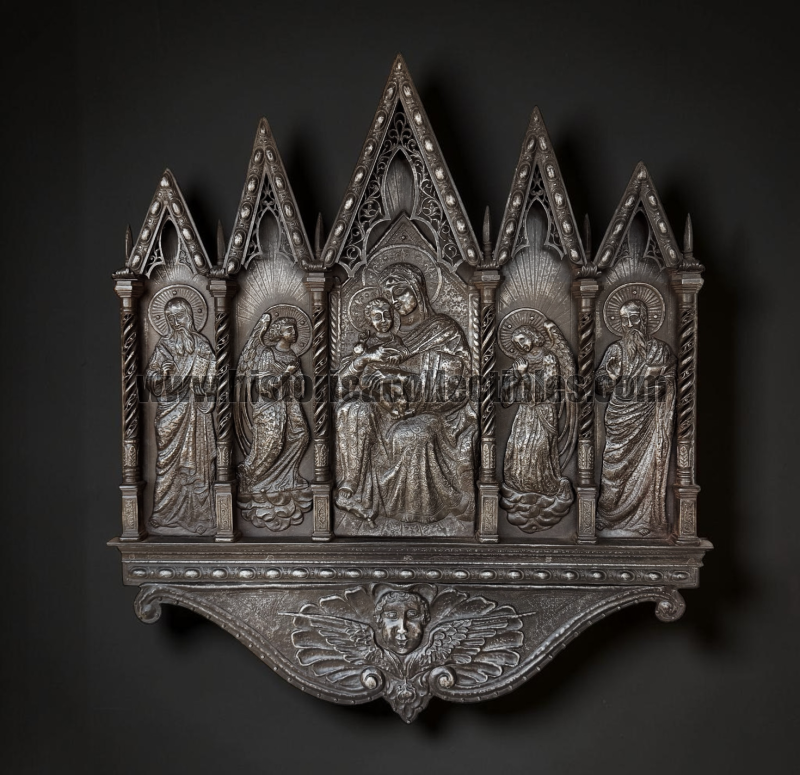
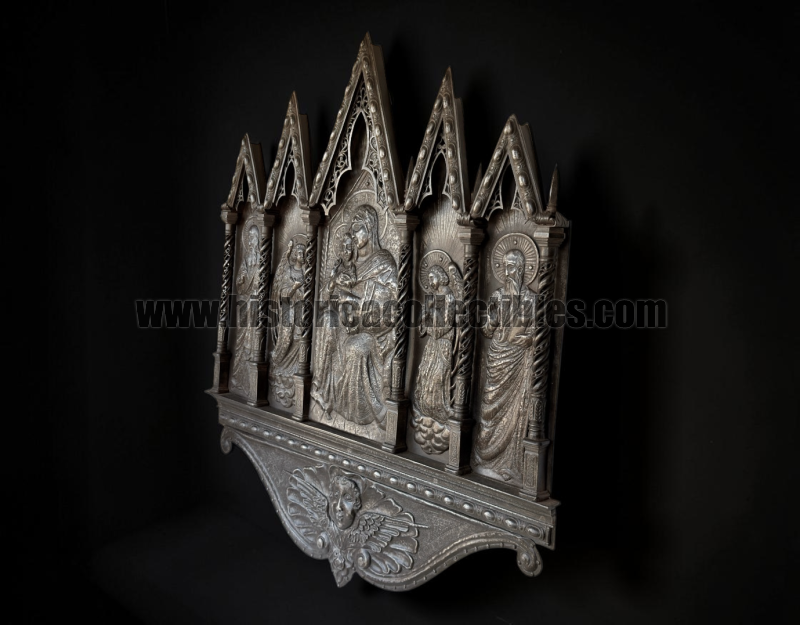
A five-part polyptych altarpiece, made of wrought iron shaped at the forge and finished with chasing, attributable to the French Flamboyant Gothic tradition and datable to the mid-sixteenth century, within the period between 1520 and 1550.
The work is distinguished by its complex architectural structure and the richness of its ornamental features, elements that demonstrate its full adherence to the formal principles of late Flamboyant Gothic. The severity and rigid verticality characteristic of the older Gothic tradition are replaced by a more elaborate and decorative language, marked by a pronounced exuberance of forms and a taste for openwork and minute ornamentation.
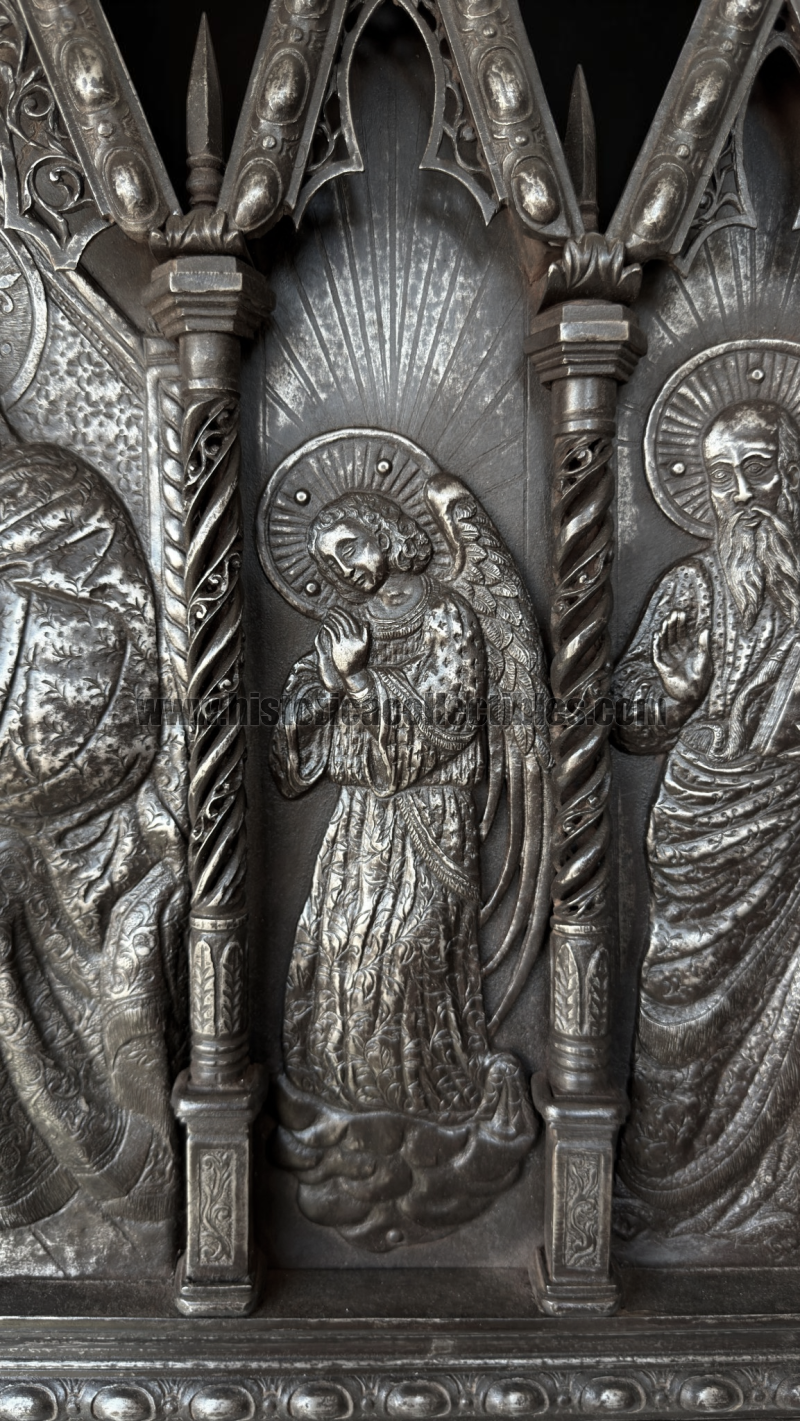
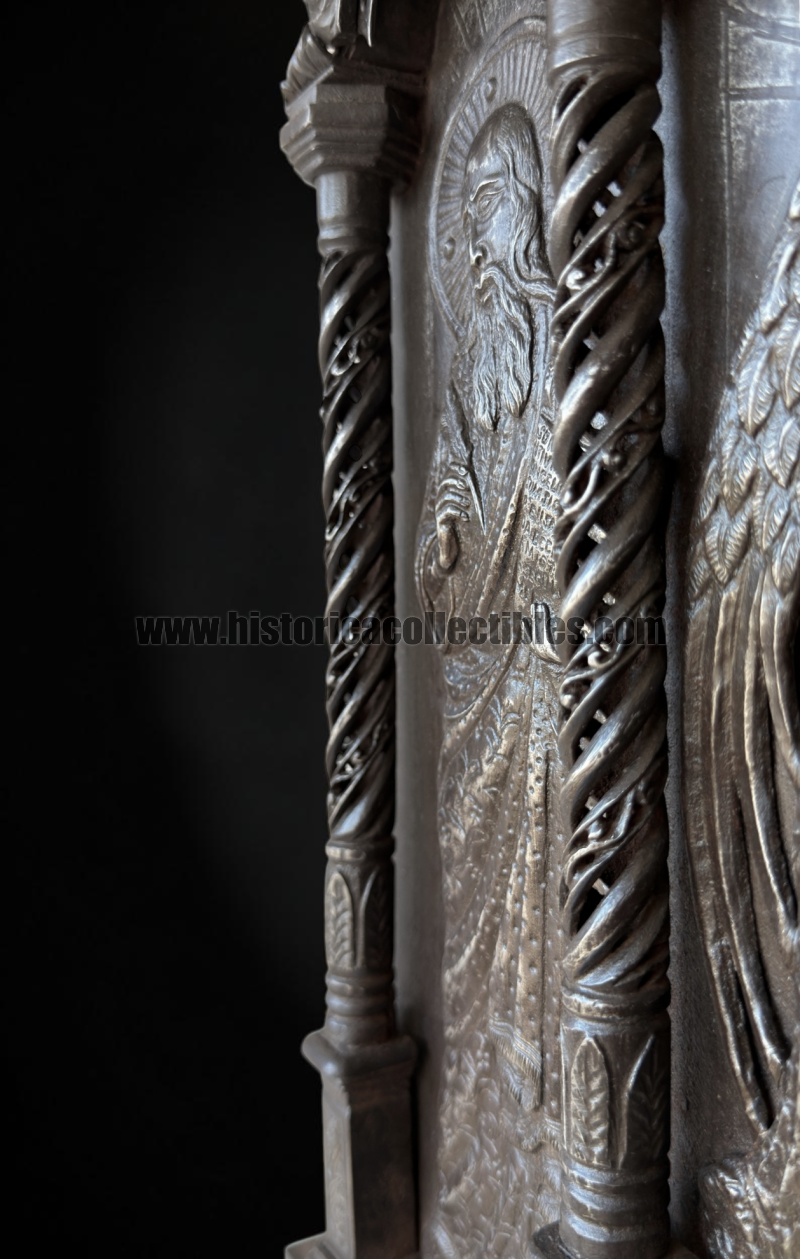
The façade is articulated by six twisted columns, finely crafted in openwork and enriched with dense decoration, which divide the composition into five distinct sections. In addition to fulfilling a structural function, the columns form an integral part of the ornamental scheme, translating into wrought iron the Flamboyant preference for animated forms, sinuous lines and architectural-style decoration.
The five sections, each defined by the twisted columns, are surmounted by slender, pointed gables, characterized by boss-like motifs and finely pierced and chased mouldings. The architectural ensemble creates a composition of considerable complexity, in which the virtuosity of the ironwork plays a predominant role, achievable only by a Magister Faber Ferrarius, who possessed mastery of this type of art.
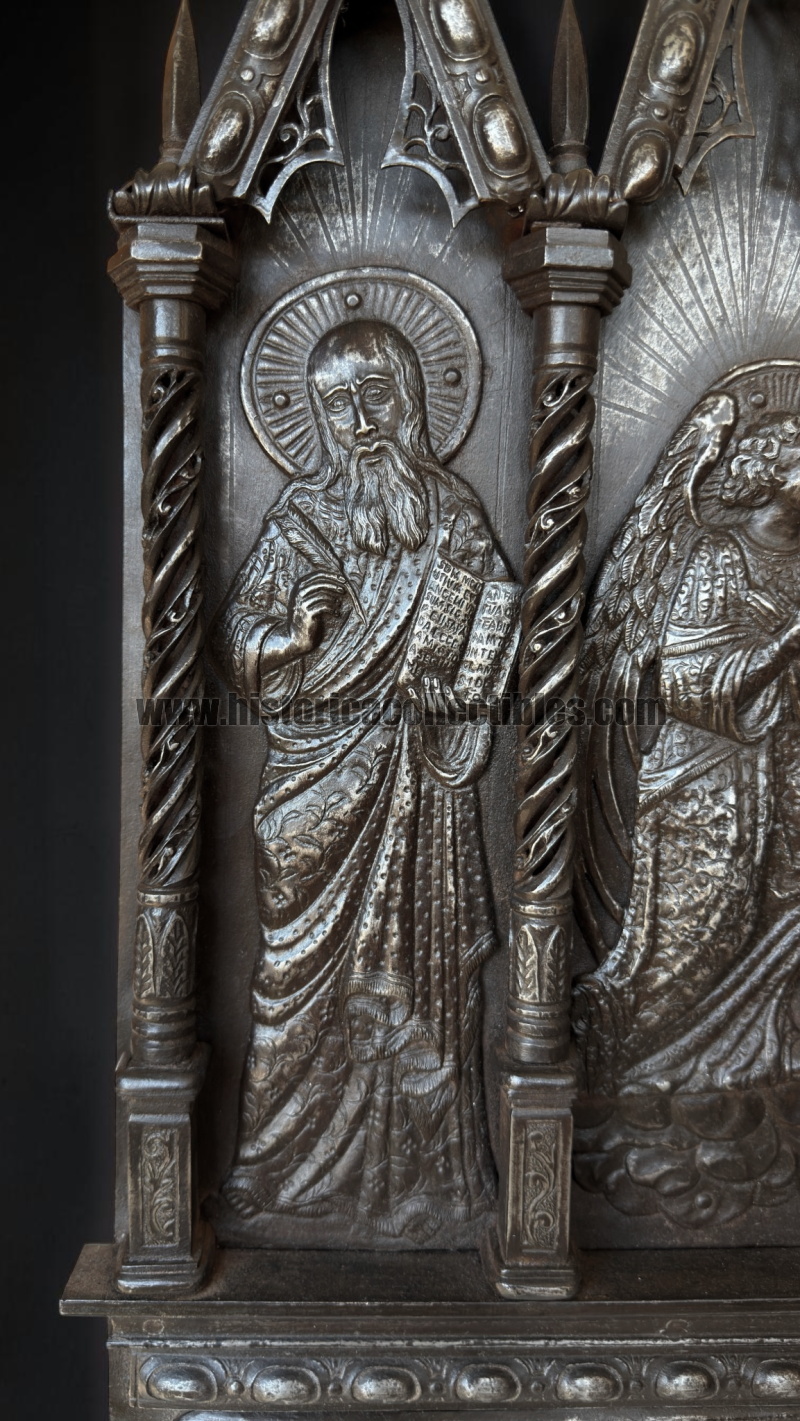
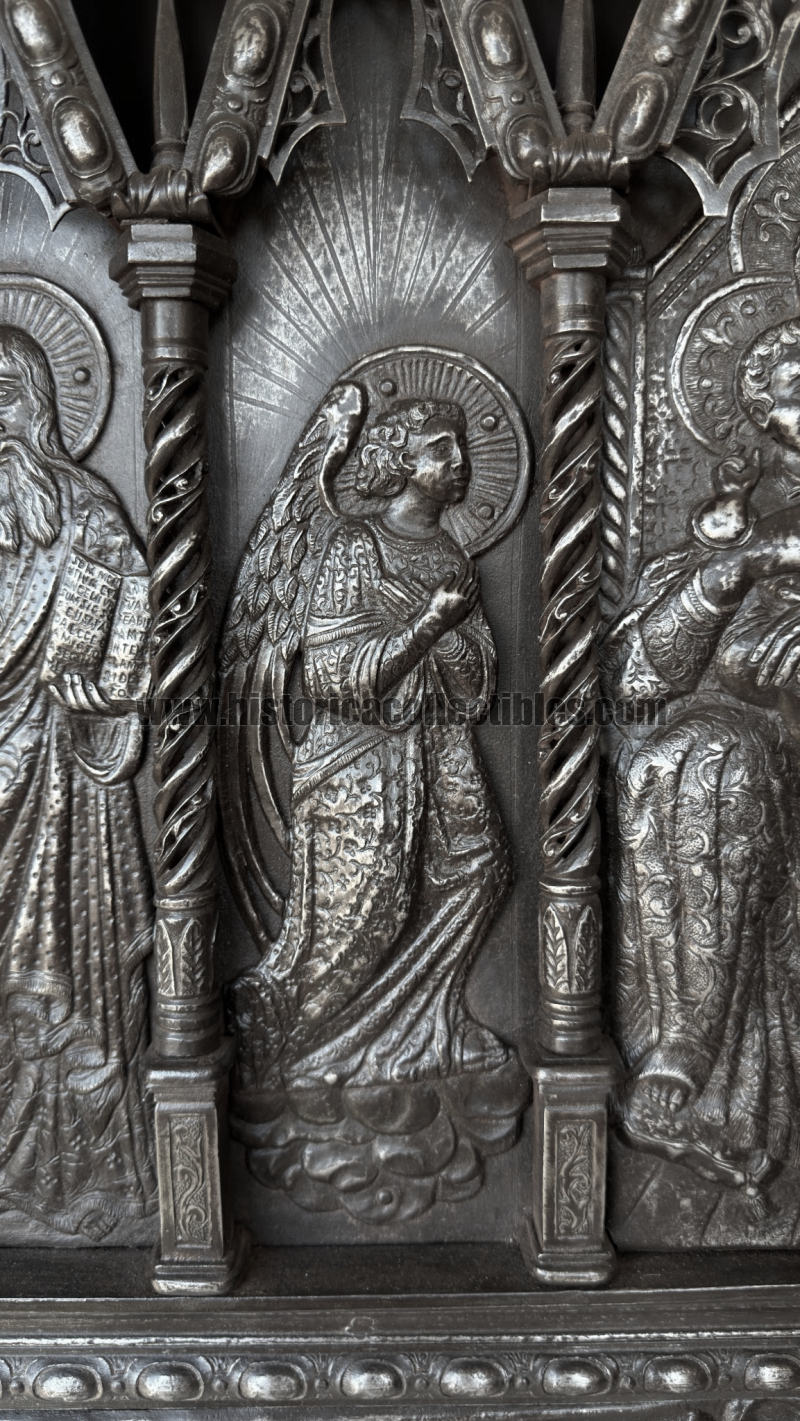
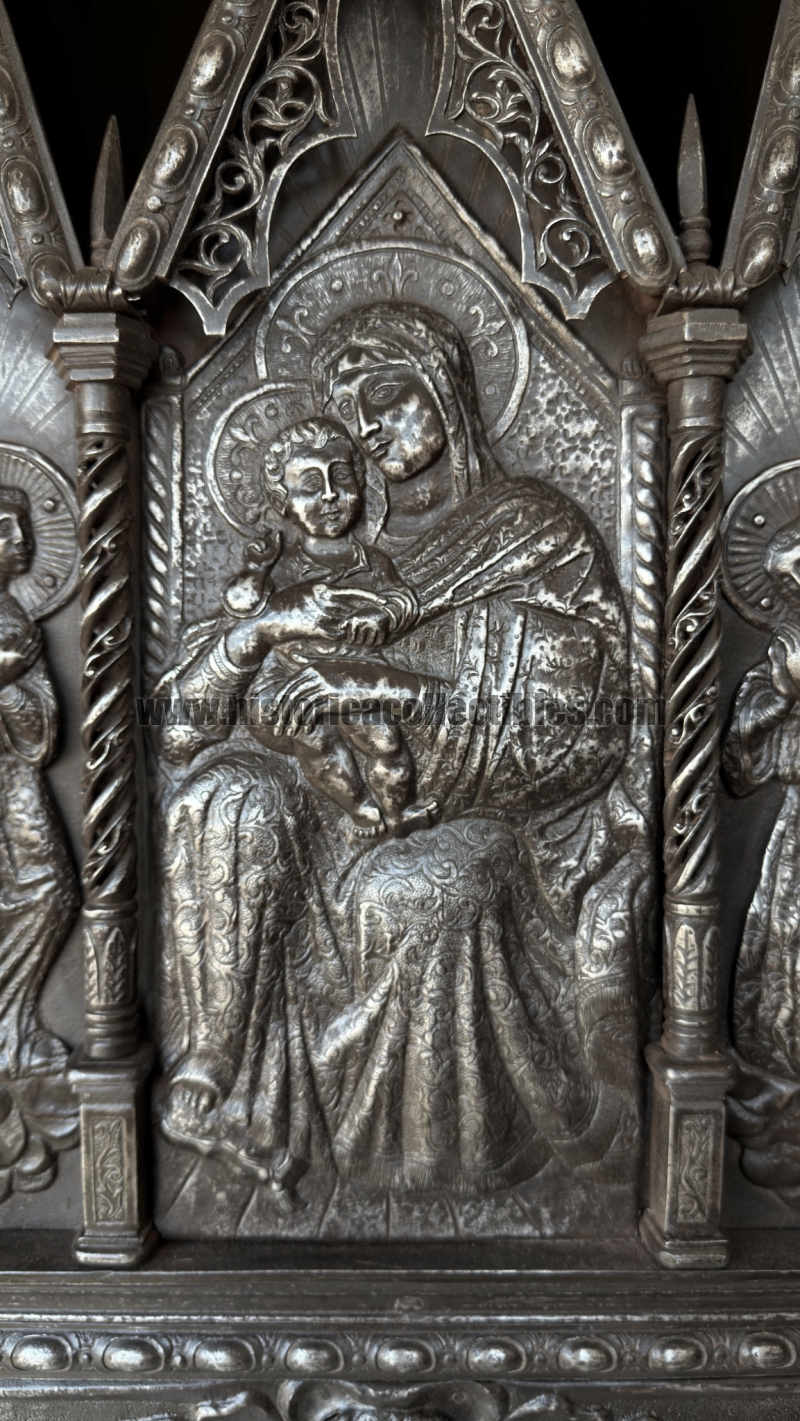
Particularly significant is also the treatment of the figures, each masterfully crafted as an independent element using the repoussé technique and attached to the panel with nails. Although made of iron, the garments are modelled with considerable sculptural emphasis, displaying broad, heavy and deeply rippled folds that give the figures pronounced volume. The decorative scheme is further embellished with phytomorphic motifs and floral details, which heighten the sumptuous character of the ensemble and fully express the artistic principles of the Flamboyant period.
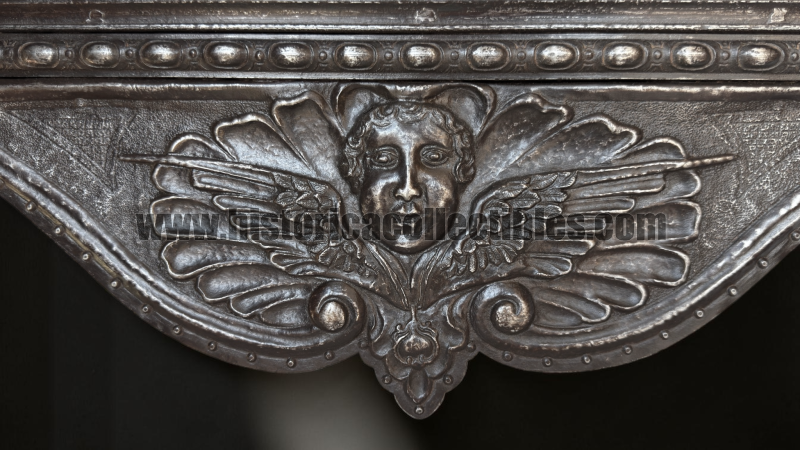
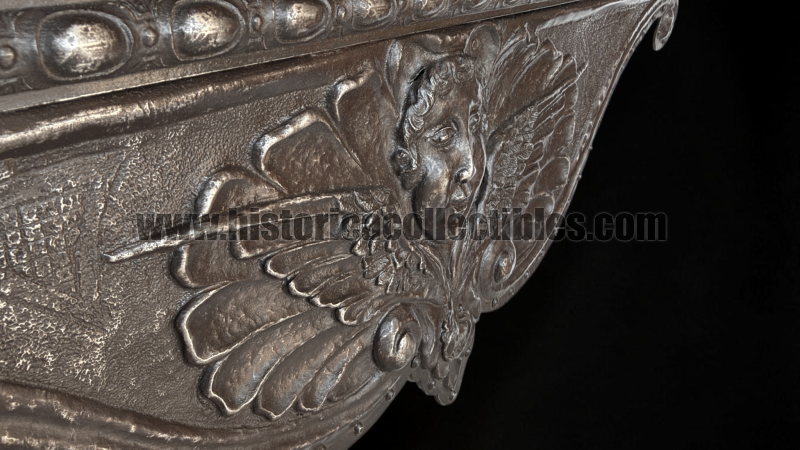
In the lower section there is a large horizontal predella, elaborated with opposing scrolls and decorated with boss-like forms and minute stippled details in chased work. At the centre, the composition is embellished with a large winged angelic figure, enclosed within a shell-and-foliage motif, also finely executed in repoussé.
The combination of architectural structure, ornamental richness and pronounced sculptural treatment gives the work a character of particular refinement in its execution, documenting the persistence of the Flamboyant taste in French visual culture during the sixteenth century and anticipating, in the exuberance of its ornament and its pursuit of sculptural effects, certain tendencies that would find full expression in the subsequent Baroque style.
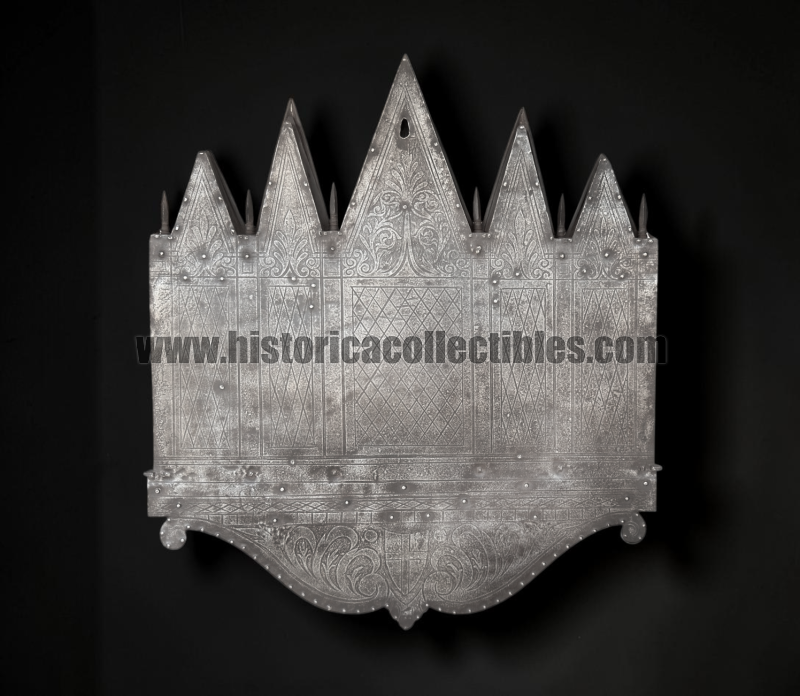
The rear panel is richly adorned with refined decoration executed in etching, arranged in an elegant pattern of diamond-shaped latticework, leafy scrolls and pointed motifs. The ensemble presents an ornamental repertoire of considerable interest which, in terms of its execution and the quality of the etching, can be traced to the tradition of sixteenth-century decoration applied to the surfaces of armour, helmets, small caskets and fine metal objects.
The character of the etching is particularly significant: it appears deliberately restrained and shallow, allowing the design to emerge in barely perceptible relief. This technical feature is consistent with the use of early etching, in which the design was protected by a thin layer of soft beeswax and subsequently exposed to the action of nitric acid. The considerable aggressiveness of the mordant required substantial dilution, so as to allow its gradual and controlled action on the metal surface, producing an engraved line without excessive depth.
The nature of the etching therefore constitutes an element of particular interest for the technical interpretation of the object, distinguishing it from the deeper and more strongly defined engravings that became established later, especially from the seventeenth century onwards, with the progressive spread of protective preparations based on mastic and bitumen, which were more resistant to the action of acid and therefore allowed for a more incisive etching.
At the centre of the lower portion of the surface stands an elegant heraldic shield bearing a central cross. Given its design, this motif may be associated with the iconography of the Cross of Saint George, or with a specific Christian, civic or noble coat of arms; in the absence of further documentary evidence, however, this interpretation must be regarded as purely hypothetical.
The shield is set within an elaborate ornamental scheme, characterized by scroll motifs and a decorative arrangement that seems to anticipate the early developments of the Baroque style.
Dimensions:
Width: 72 cm
Height: 64.5 cm
The architectural complexity, the exceptional quality of the repoussé, chasing and etching work, together with the ornamental richness, underscore its considerable historical and artistic value and the extremely high level of craftsmanship involved in its execution. It is a significant testimony to the art of wrought iron in sixteenth-century French Flamboyant Gothic.
The work is accompanied by a series of documents discussing its dating and technical and executive characteristics (Art Historical Study and Appraisal/Expertise).
Conclusions:
The convergence of stylistic features and methods of execution makes it possible to place the object in the mid-sixteenth century, within the context of the enduring French Flamboyant Gothic tradition. Its pronounced overall verticality, twisted columns, pinnacles, dense openwork and proliferation of ornament refer back to the late Gothic tradition. This chronology is further supported by the metalworking techniques, in which forging, repoussé, openwork and chasing are employed to achieve decoration still closely connected with the sixteenth-century repertoire of craftsmanship and ornament.
Particularly significant is the treatment of the rear surface using etching: the thin and shallow mordant, with its irregular and restrained mark, appears consistent with a sixteenth-century engraving method and with the use of a protective preparation based on soft wax. The technique should therefore not be considered in isolation, but read in conjunction with the structure and ornamental repertoire of the work, contributing to the definition of an artistic practice that remains fully rooted in the sixteenth century. The subsequent evolution of engraving practices, with more resistant preparations and the possibility of obtaining deeper and more pronounced etching, belongs instead to a later phase in metalworking.
The result is a substantial coherence between formal language, ornamental repertoire and techniques of execution: the elements that might suggest a sensibility closer to the Baroque therefore do not constitute sufficient evidence for a seventeenth-century date, but should be interpreted as an expression of the progressive elaboration and decorative evolution of Flamboyant Gothic during the mid-sixteenth century.
The work thus stands as a significant testimony to the persistence of the late Gothic language in sixteenth-century France, in which ornamental architecture, the virtuosity of ironworking and engraving techniques combine to define a coherent chronology, distinct from the subsequent Baroque culture.
Origins of the Object:
Of particular relevance in identifying the object's geographical connection with the French sphere is the presence of three fleurs-de-lis, recurring as an ornamental motif in the decoration of the haloes of the Virgin and the Christ Child.
Reference to this element, deeply rooted in the symbolic and heraldic tradition of the French monarchy, constitutes a particularly interesting clue in considering the possible provenance of the work. In Christian iconography, the lily traditionally refers to purity, the Virgin Mary and, in certain symbolic contexts, the Holy Trinity. Its repeated presence in the decoration of the haloes cannot, in itself, be regarded as conclusive proof of the object's geographical origin. It nevertheless acquires greater evidentiary significance when considered in relation to the stylistic features of the work, its structural and architectural conception, and the ironworking tradition characteristic of certain territories north of the Alps.
Over the centuries, the fleur-de-lis became the distinctive emblem of the French monarchy and was invested with complex political, dynastic and sacred significance. Indeed, the French monarchical tradition, founded on the principle of kingship by divine right, interpreted the lily as a sign of election and celestial protection. In works of art commissioned by the court or ecclesiastical institutions, or produced in territories subject to French and Angevin influence, the presence of the lily could therefore serve a dual devotional and allusive function, linking the sphere of Christian holiness with that of royalty and its transcendent legitimacy.
From this perspective, and with the caution required in any attribution proposal, the origin of the object could be traced to the area of the former Duchy of Burgundy, a territory of particular importance in the artistic geography of medieval and early modern Europe, as well as a privileged meeting point and crossroads for different visual and artisanal traditions.
In particular, locating the work in this area would be consistent with Burgundy's position as a historical crossroads between the artistic cultures north of the Alps and those of west-central Europe, within a complex system of exchanges which, through the circulation of models, craftsmen and techniques, connected the visual traditions of the Germanic sphere with those that developed in French territories and in northern Italy, as well as with the artistic tradition of the Italian peninsula.
This would therefore lead to a hypothesis concerning the object's geographical affiliation which should not be understood in terms of absolute certainty, but rather as an attribution proposal based on the convergence of iconographic, stylistic, structural and technical-executive elements, worthy of consideration within the broader context of the circulation of models and craftsmen among the Burgundian, French and Germanic territories and northern Italy.
Iconographic Identification of the Figures:
At the centre, in the largest niche, is the Madonna enthroned with the Christ Child. The iconography is the canonical one of the “Majesty of the Madonna and Child Enthroned”, known by the epithet Sedes Sapientiae (Seat of Wisdom), which has appeared in representations (icons, sculptures, manuscripts and paintings) since the twelfth century.
Both figures wear richly draped garments, and their proportions are larger than those of the figures at the sides in order to emphasize their theological importance.
In the two adjacent niches are two angels. From a purely compositional point of view, placing two identical, mirrored figures on either side of the throne allowed painters and sculptors to maintain axial symmetry. The Virgin at the centre serves as the vertical pivot (the axis of the world, or Sedes Sapientiae, Seat of Divine Wisdom), while the two angels perfectly balance the visual space to the right and left.
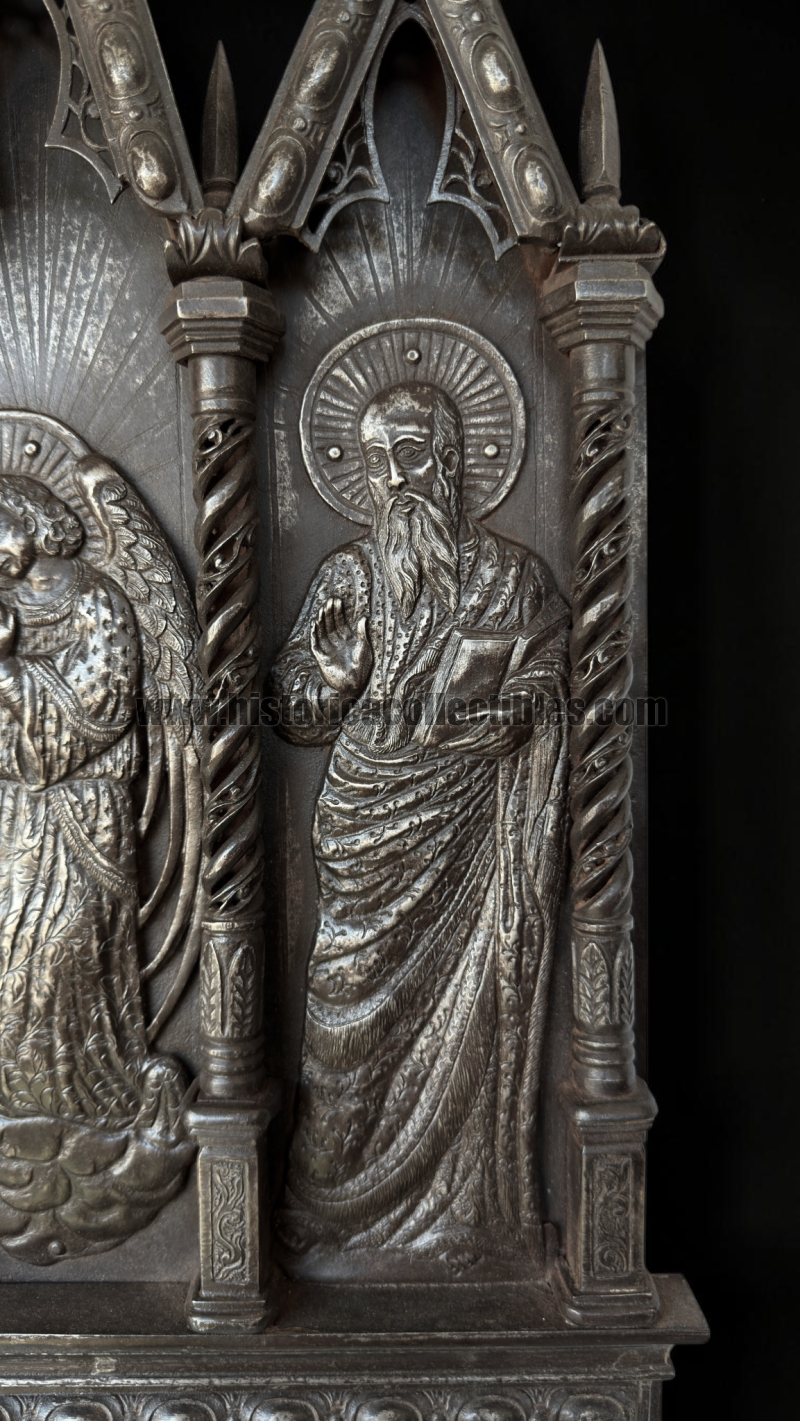
In the outermost niches are two depictions of the same saint, Saint Jerome, represented, however, with two different physiognomies and at two distinct moments in his life. The identification is suggested above all by the presence of the book, an attribute that assumes particular iconographic significance in the two panels: in the figure on the right, the volume is open, but its contents remain concealed from the viewer; in the figure on the left, the book is likewise open and clearly displays a text in Latin.
The transition from the “book not revealed” to the “open and translated book” may be interpreted symbolically as a reference to Saint Jerome's work in translating and revising the Holy Scriptures, which culminated in the Vulgate, destined to become the principal Latin-language biblical text of the Christian West. The gradual revelation of the book's contents therefore seems to allude to the transmission and dissemination of the sacred word, made accessible through the Latin translation to a broader Christian cultural context.
The variation in the physiognomy of the two figures also appears consistent with this interpretation in terms of time. On the right, the saint has short, neatly arranged hair, while on the left he is depicted with longer, flowing hair. The change in physical appearance may be read as a visual device intended to suggest the passage of time and, at the same time, the lengthy process of studying, translating and revising the sacred texts to which Saint Jerome devoted approximately 20 years of his life.
Further support for this hypothesis may also be found in the Latin lettering in the book held out towards the viewer by the figure on the left, which includes the form EIISAJA, whose graphic and phonetic configuration bears a significant resemblance to the name of the prophet Isaiah (Isaias). Although this correspondence does not in itself constitute conclusive evidence, it deserves consideration within the interpretative hypothesis proposed here. This detail may also be considered alongside the importance of the figure of Isaiah in the Latin exegetical tradition and, in particular, in the work of Saint Jerome, author of the Commentarii in Isaiam (Commentaries on Isaiah), an imposing exegesis of the prophetic book comprising eighteen books in total.