
Binoculars Leitz 7xL50,4 - 105=6°, Kaiserliche Marine, circa 1917
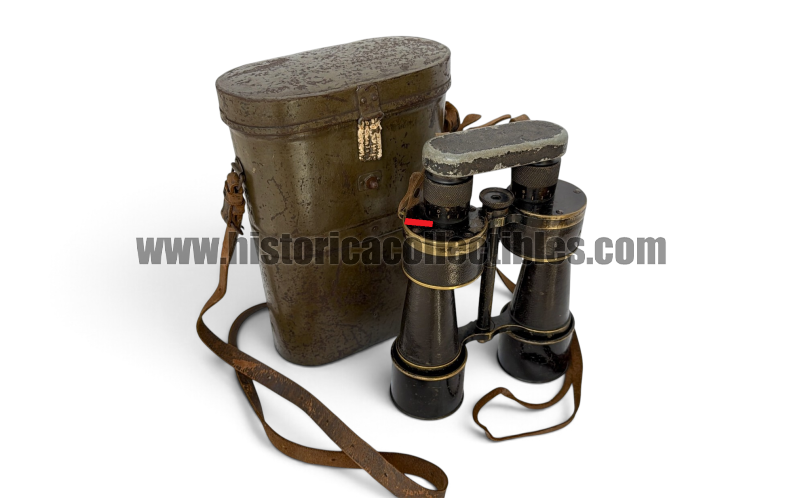
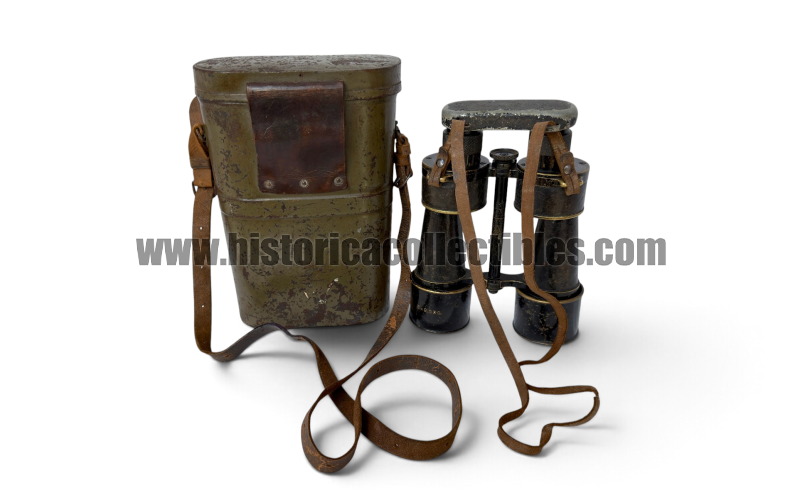
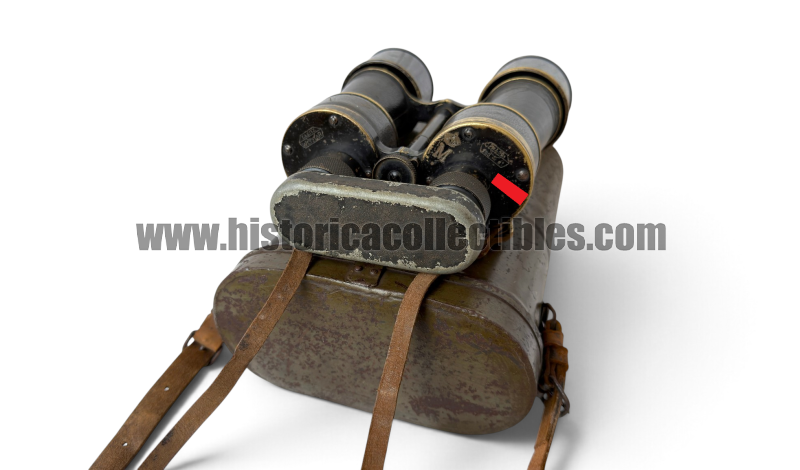
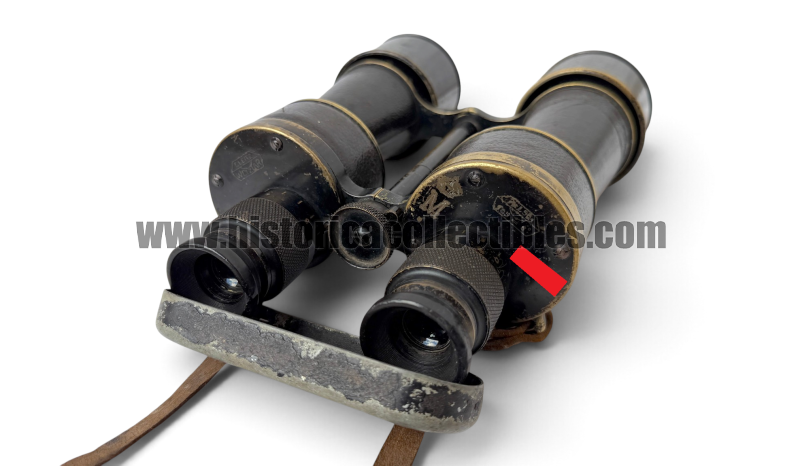
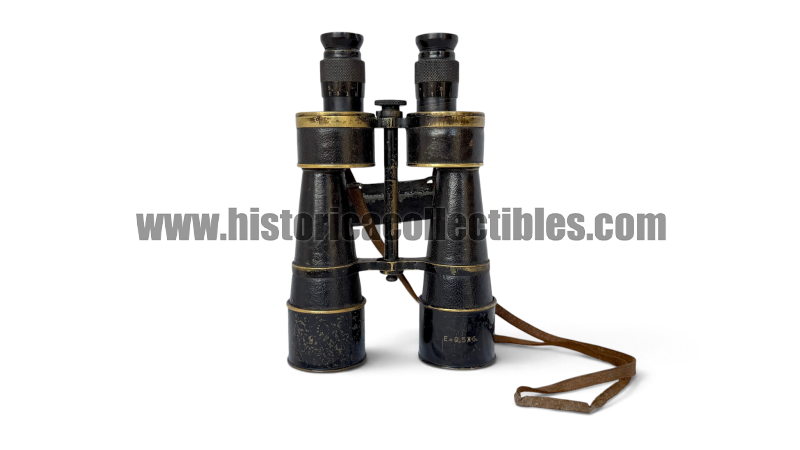
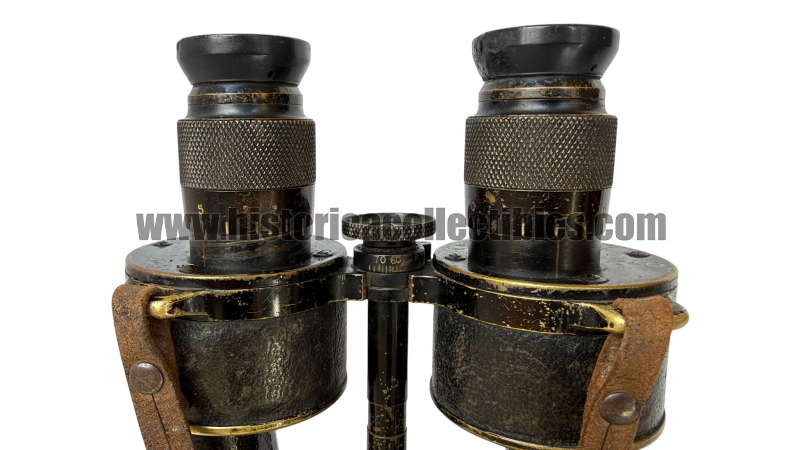
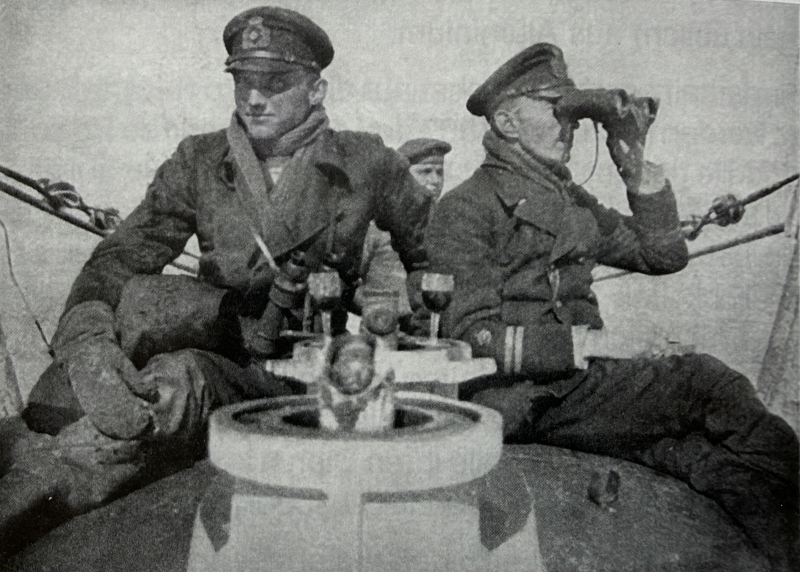

The Ernst Leitz Wetzlar 7×50 L50.4 binoculars are a rare and fascinating German military optical instrument dating back to the First World War. They were manufactured by the prestigious Ernst Leitz company of Wetzlar and were intended for naval use, serving as equipment for officers, observers, and commanders of the Imperial German Navy (Kaiserliche Marine).
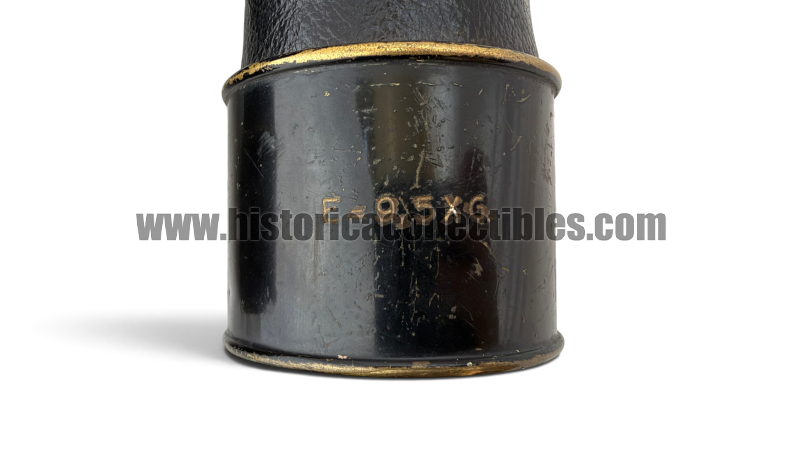
This model represents an important testament to the technological evolution of military optics in the early 20th century, distinguished by its quality of construction, mechanical robustness, and remarkable optical performance for the time. Featuring 7x magnification and a 50mm objective lens, it uses a Porro II prism optical system, designed to ensure bright images, good definition, and a wide field of view—features particularly appreciated for maritime observation and in low-light conditions, such as dawn, dusk, or during navigation. The generous exit pupil of approximately 7.1mm promotes image brightness, while the moderate magnification allows for relatively stable observation even aboard naval vessels. The original marking 7× L50.4 105=6°, present on some specimens, identifies a configuration with a field of view of approximately 105 meters at 1,000 meters away, corresponding to an angular width of approximately 6 degrees and a brightness of L50.4 (where L stands for Lichtstärke, light intensity), while on the extractable lens hood tube of the left objective lens, the abbreviation E = 9.5 X G. is present, although its meaning remains unknown even today. We can hypothesize that it may refer to a system for calculating distance, where "E" stands for Entfernung (distance in German), G = Gesichtsfeld (width of the field of view, expressed in meters at the distance of the object) and 9.5 is a coefficient derived from the field of view of the binoculars. The number in fact derives from 1,000 ÷ 105 ≈ 9.52, where 105 meters is the field of view at 1,000 meters. It would therefore be useful to estimate the distance of a ship by knowing its dimensions and evaluating how much space it occupies in the field of vision.
This explanation is mathematically consistent, but the exact historical significance of the engraving is still not definitively documented. Even some scholars and collectors of military optics have debated it.
The collimation system is complex in its design, to say the least, yet simple and ingenious in its operation. The prisms are supported and securely attached to a structure made entirely of aluminum alloy, equipped with adjustment screws with pivoted ends at each end, which rest on the base of the binoculars and the eyepiece plate. The unique feature of this system is the ability to directly adjust the collimation without having to disassemble the entire optical assembly. Simply remove the four small central screws, located near the main screws that secure the plate to the binocular body, to access the internal adjustment screws. By rotating these screws clockwise or counterclockwise, you can precisely adjust the inclination of the entire prism assembly, thus correcting the optical alignment of the binoculars. An extremely ingenious mechanical solution, combining structural solidity, precise adjustment, and surprisingly simple operation. However, this system was soon abandoned due to its technical complexity and high production costs. Indeed, it appears that this system was only used on one other model made by Leitz during the same period.
The construction features typical Leitz features of the era, with a robust metal frame, meticulously crafted components, and optical and mechanical solutions designed for professional use in hostile environments. Models intended for the Imperial Navy may feature special acceptance markings, including the imperial crown above the letter M, an element of considerable historical and collectible interest, and the military assignment number. The Leitz 7x50 from this period is now an important collector's item, sought after by enthusiasts of historical optics, militaria, and naval instruments for its rarity, the manufacturer's prestige, and its connection to German maritime history during the Great War. It is an instrument that combines historical value, optical quality, and mechanical refinement, an expression of the excellence achieved by the German optical industry in the early 20th century.
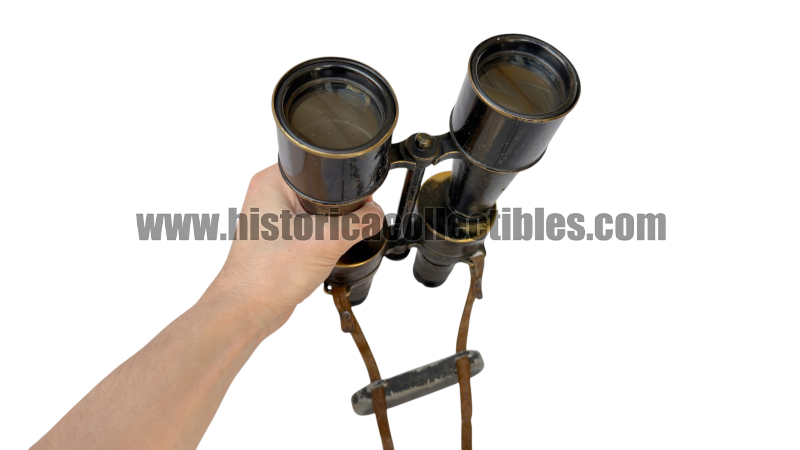
The model comes with all its leather shoulder straps, the original heavy metal Benutzer, and the green metal case, accessories that further enhance the ensemble from a historical and collectible perspective. The equipment also included the appropriate filters, which are unfortunately missing. The presence of the surviving accessories, particularly the metal case, is particularly noteworthy, considering how difficult it is to find military instruments from this era with such a comprehensive set of accessories today.
Everything is in excellent working order, and the view is excellent.