
Binoculars V.B. 6x30 Voigtländer Braunschweig Labyrinth, circa 1939
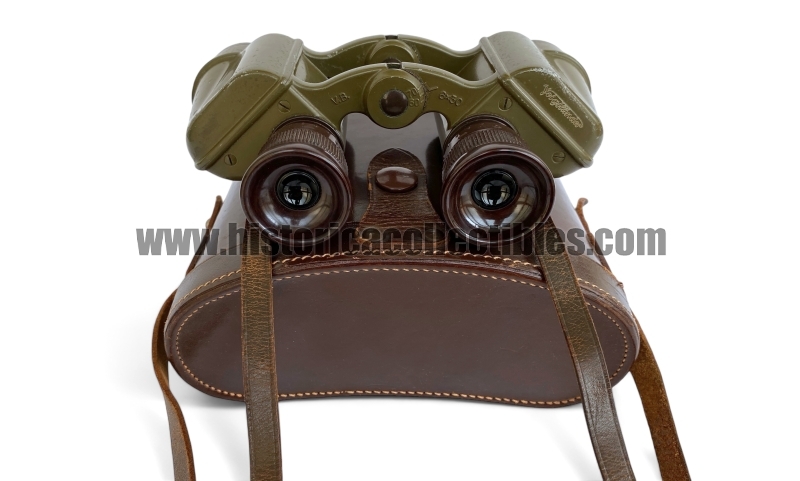
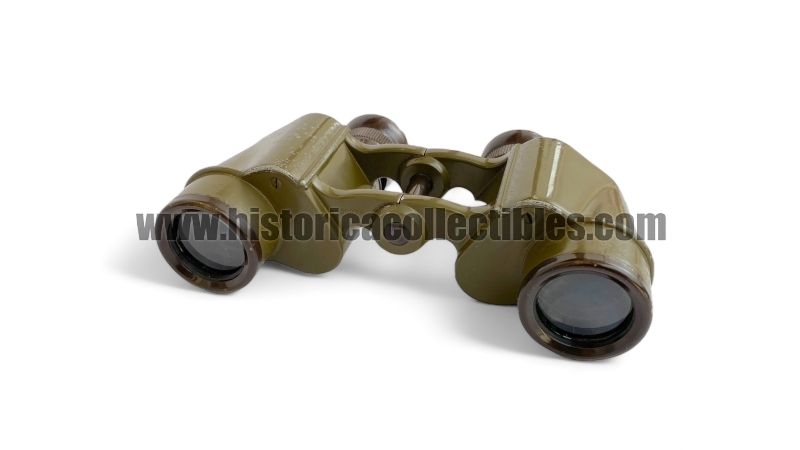
Voigtländer V.B. binoculars 6x30 Mod. Labyrinth, produced by Voigtländer Braunschweig around 1939, intended for military use.
The peculiarity of this model is that in addition to the military acronym "V.B." has the brand shown in full.
2 versions were produced in the colors "Black" and "Military Green", both made of 2 pieces of die-cast aluminium. The construction and assembly technique of the 2 parts forms a watertight seal that prevents dust and water from penetrating.
It has a field of view of 150m/1000m.
It comes complete with its original case with carrying strap, binoculars shoulder strap and bezel.
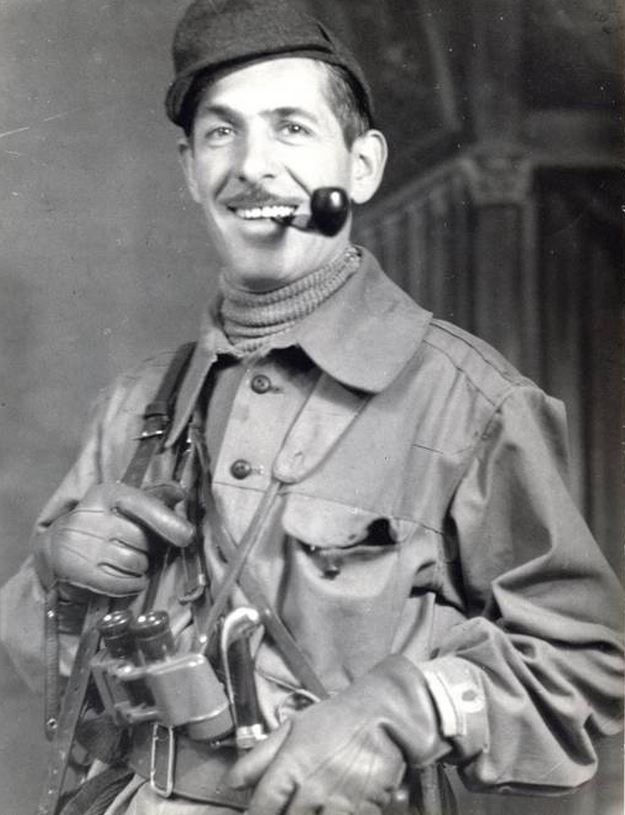
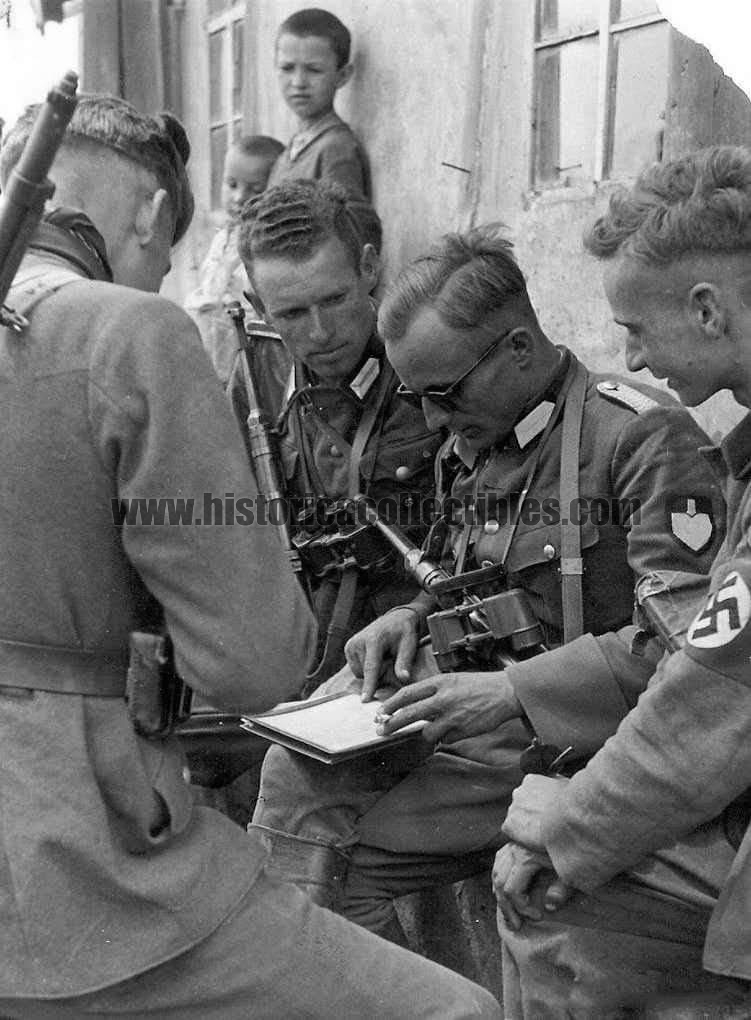
This exact model is worn in a period photo which immortalizes the captain of the Bersaglieri Paride Mori, of the "Mussolini Battalion", who died on 10 February 1944, deployed with the Salò departments on the border between Friuli and Slovenia to whom it was granted the Silver Medal for Military Valor.
Voigtländer Braunschweig was created in Vienna in 1756, the company took its name from its founder, Johann Christoph Voigtländer and initially produced optical instruments, intended in particular for microscopes and other scientific equipment. Among the first creations were the Petzval type lenses, and others destined to become famous, such as the Collinear and the Heliar.
In 1840 he built the first lens for cameras, while in 1841 the first entirely metal daguerreotype was developed. He subsequently produced plate machines, built in a practically artisanal way.
In 1849 the headquarters were moved to Braunschweig, Germany, where Voigtländer & Sohn was born shortly thereafter.
In 1925 it was purchased by Schering AG.
Voigtländer later oriented its production towards photographic devices accessible to all, and this allowed it to remain among the market leaders until after the Second World War.
In 1958 it was bought by the Carl Zeiss Foundation and in 1972 it was renamed "Zeiss Ikon Voigtländer".
In 1973 the brand became the property of Rollei until the crisis of 1982.
At this point the brand was bought first by "Plus foto", which from 1980 marketed Voigtländer cameras produced by Ricoh and Chinon and then in 1995 by "Ringfoto", but this represents more than anything else a long period of darkness.
Finally in 1999 the brand was reborn with the purchase by the Japanese Cosina.