D.F. 6x30 Busch, Prussisches Polizeidienstglas "Prussian Security Police", 1918-1932
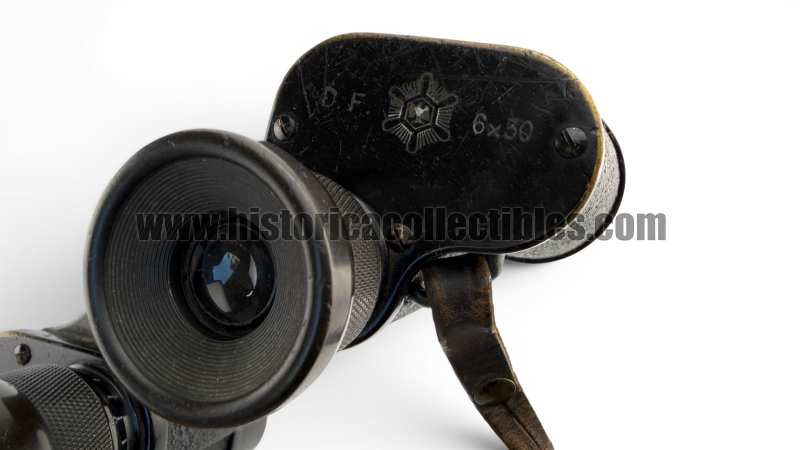
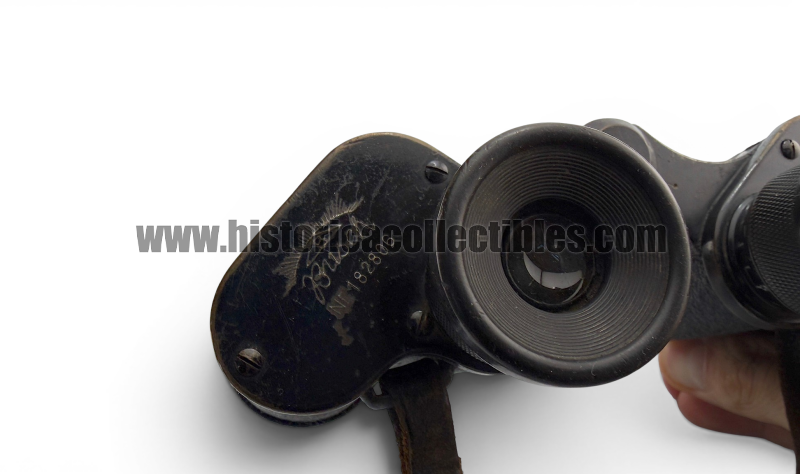
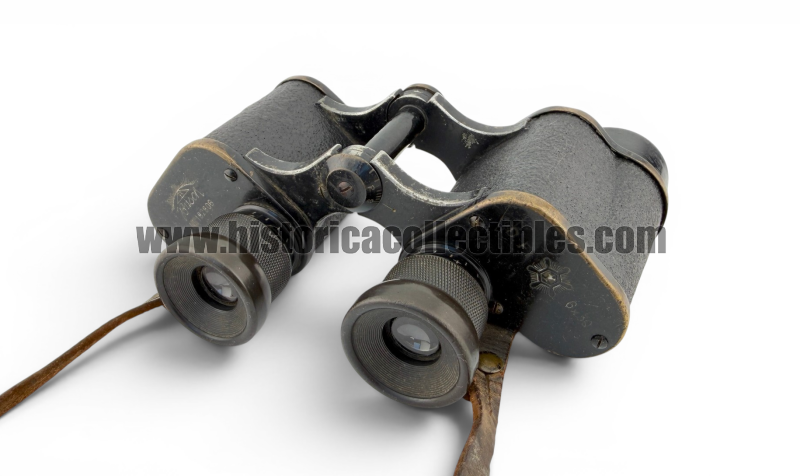
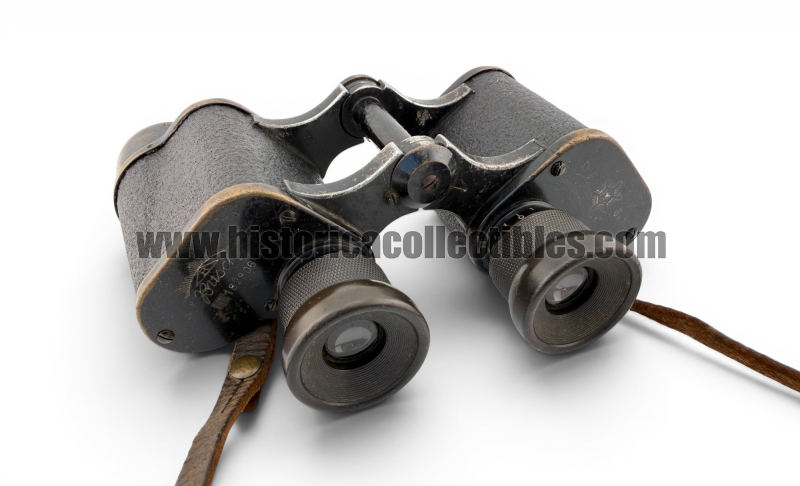
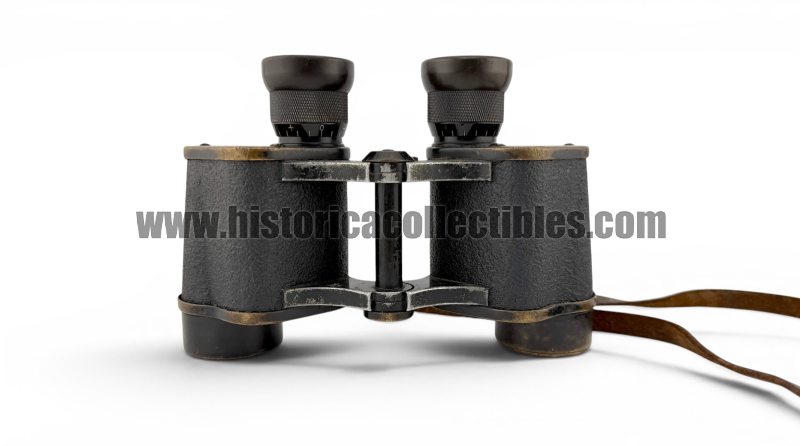
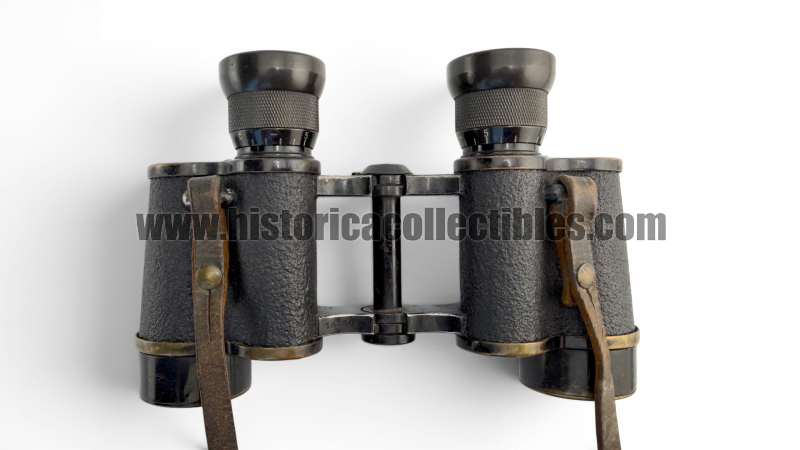
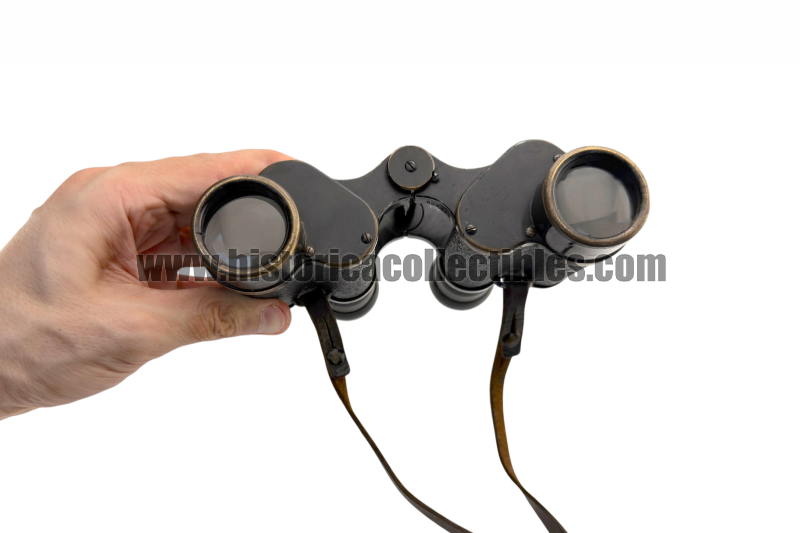
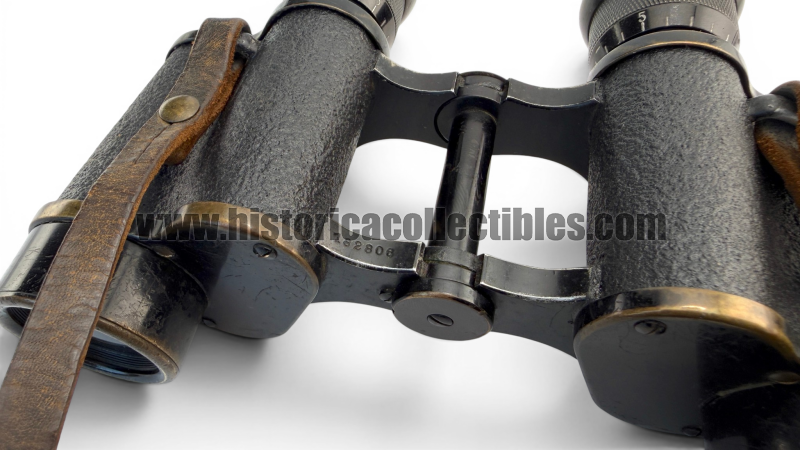
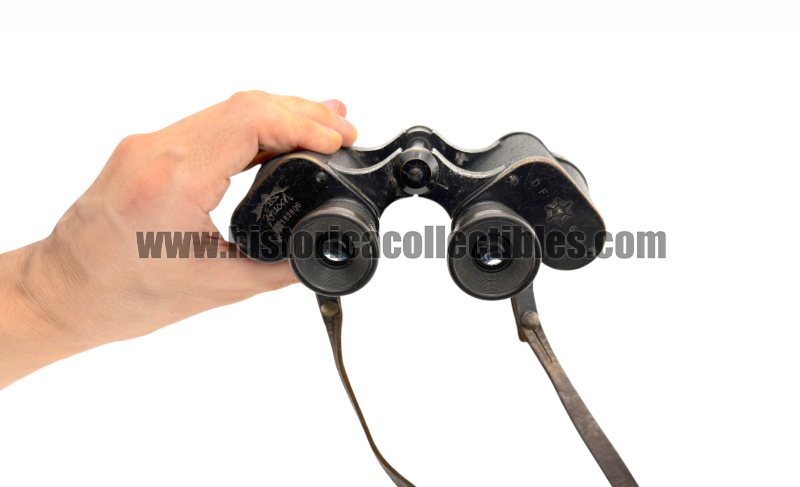
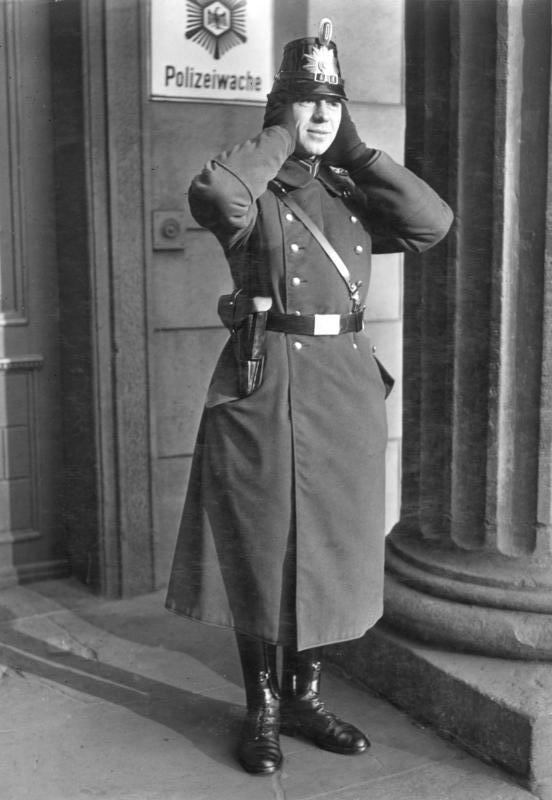
Busch D.F. 6×30 binoculars, designed and manufactured in Rathenow, were used by the Prussian Security Police (Schutzpolizei) between 1918 and 1932, the year before Prussia was incorporated into the Third Reich. These professional optical instruments were designed for observation, surveillance, and territorial control, and were manufactured to the high quality standards that made Busch one of Germany's three leading manufacturers of police binoculars, alongside Ruka and Hensoldt.
Technically, the binoculars feature a 6×30 configuration, providing six-power magnification with 30 mm objective lenses. This combination represented an excellent compromise between brightness, field of view, weight, and ease of handling. The relatively low magnification ensured a stable image even without support, while the 30 mm objective lenses provided good light-gathering capability, allowing effective observation even in suboptimal lighting conditions.
The instrument is built using the classic Porro prism optical design, which was the standard for military and service binoculars of the period due to its excellent image quality, good depth perception, and mechanical robustness. The individual-focus system, with diopter adjustment on each eyepiece, allowed the binoculars to be adapted to the user's eyesight.
The binoculars weigh approximately 700 grams, making them compact enough for everyday carry without sacrificing structural strength. The body is made of metal with a durable protective finish designed to withstand intensive field use.
From an identification standpoint, the Polizeidienstglas is easily recognizable by the official Prussian Police markings on the right prism plate, including the distinctive Schutzpolizei star bearing the eagle of the Free State of Prussia at its center. These markings allow the binoculars to be dated to a very narrow historical period, making them highly desirable to both historians and collectors today.
The Busch Polizeidienstglas 6×30 is therefore an excellent example of German optical engineering of the interwar period: a robust, precise, and reliable instrument designed to meet the operational requirements of police forces while delivering consistently high optical performance.
The optical and mechanical condition is excellent. The image is clear, bright, and properly collimated.
Emil Busch was born on 6 August 1820 in Berlin and died in Rathenow on 1 April 1888 and was one of the most important German industrialists in the field of optics and precision mechanics. He was one of the proponents of the invention of the wide angle.
He was the son of the Berlin merchant Friedrich Ludwig Busch and his wife Jeanette, daughter of the entrepreneur Johann Heinrich August Duncker. In 1836 he moved with his family from Berlin to Rathenow. In 1840 Emil Busch returned to Berlin as an apprentice optician and mechanic. In 1845 he acquired the Industry Institute Optical from his uncle Edward Duncker. He equipped the factory with new machinery that he had partly built in his own mechanical workshop. The use of the new machines led to a significant increase in production data also because, thanks to the machinery, he was able to limit production times compared to manual work alone.
In 1852 he began the study and production of photographic lenses and in 1865 his first wide-angle lens "Pantoscop" was released. The founder of architectural photogrammetry Albrecht Meydenbauer exchanged views on the technical implementation of a camera which was equipped with the "Pantoscop" lens in 1867.
In 1868 Busch was appointed "Königlichen Kommerzienrat" by the king for his services.
In 1872 he transformed the company into a joint stock company in order to facilitate the investments necessary for growth. This happened thanks to the help of Vereinsbank Quistorp & Co. which brought the company's share capital to $275,000. In the company since then called Rathenower Optical Istituto Industriale ex Emil Busch A.-G. Emil Busch, held the very important position of "Delegate of the Supervisory Board" and was its director.
The company achieved a dominant role in the following period. Thanks to unofficial agreements with Zeiss he limited free competition. The name Emil Busch has always been synonymous with extreme quality in the optical field.