
Dienstglas Bakelite CXN 6x30 Emil Busch A.G. - Rathenow, 1944-1945
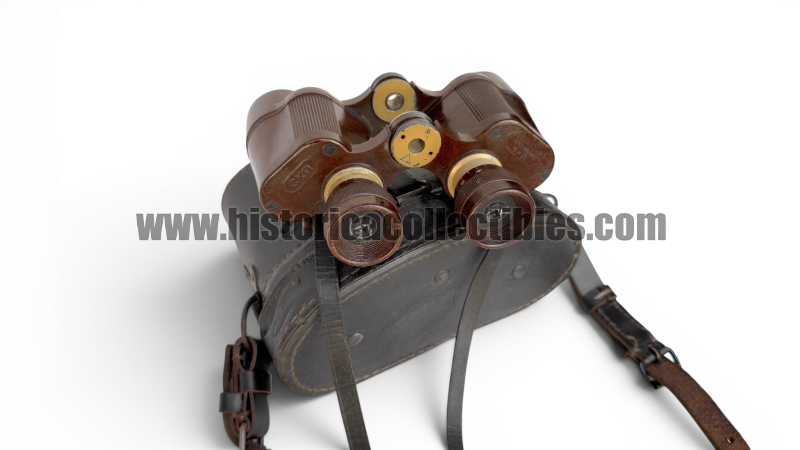
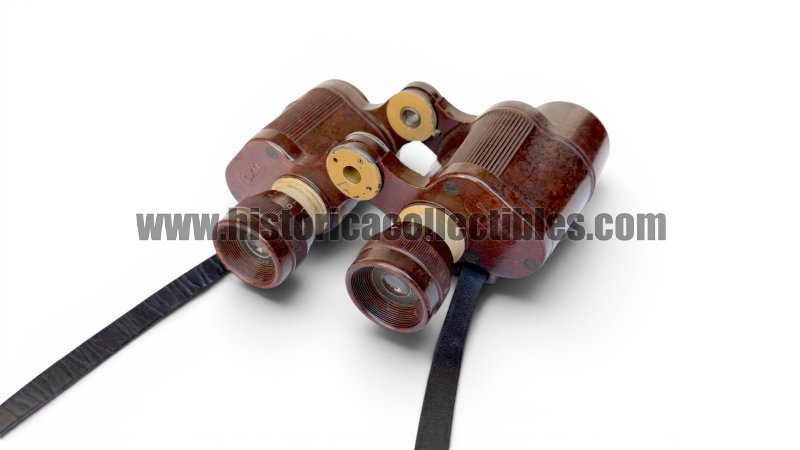
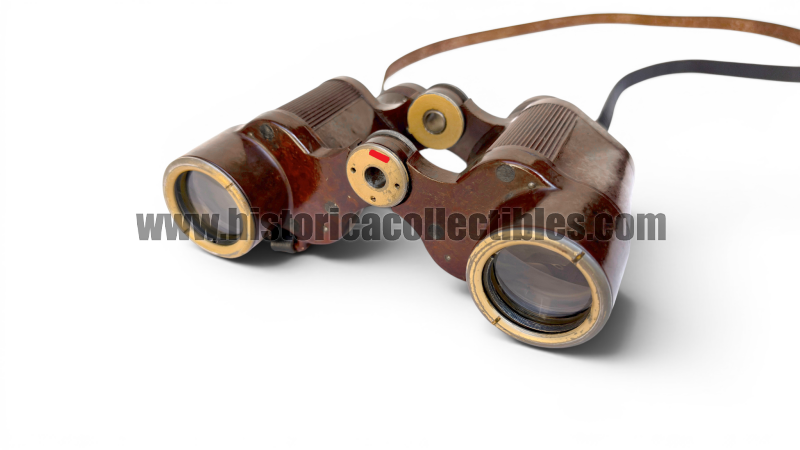
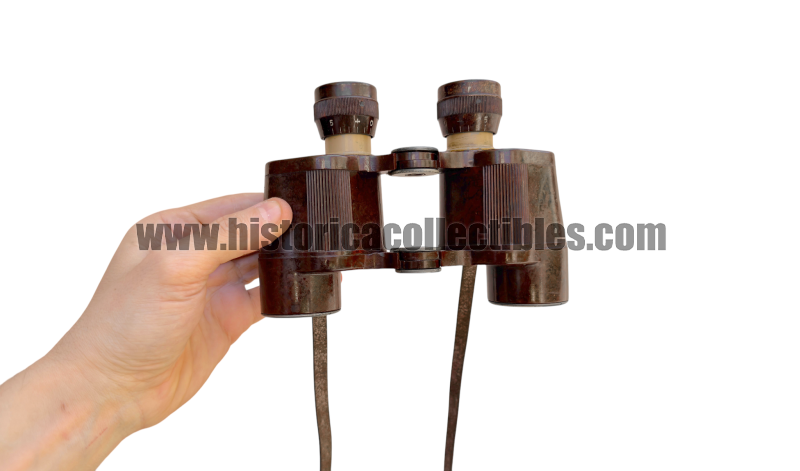
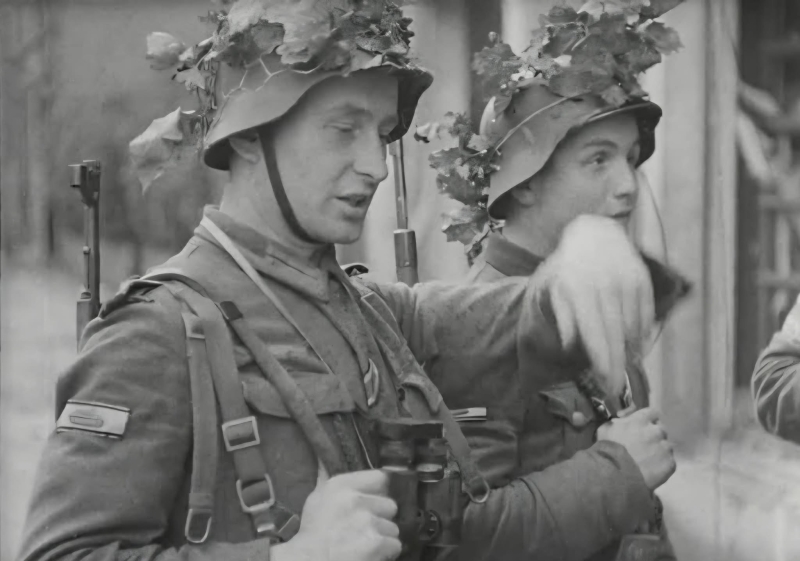
The Dienstglas 6x30 CXN produced by Emil Busch is a German military binoculars, and this Bakelite variant represents a late-war production (circa 1944–1945), created to conserve strategic metals and designed for robust and widespread use among Wehrmacht troops. The acronym "CXN" actually identifies the company Emil Busch A.G. of Rathenow, one of the leading German optical manufacturers of the time. In its Bakelite version, this instrument represented a typical solution during the final phase of the conflict, when the shortage of strategic metals led to the use of alternative materials such as "phenolic resin," better known as Bakelite, often red-brown in color, reinforced to ensure reasonable mechanical resistance while maintaining lightness and ease of production.
Technically, these binoculars feature 6x magnification and 30mm objectives, equipped with Porro prisms that ensure good brightness and a wide field of view, essential features for field observation. Despite the simplified construction required for wartime production, the optical quality remains excellent, with sharp and bright images by the standards of the time. Internally, the Bakelite model features ingenious solutions, such as prism supports made of the same material and metal inserts for adjustment and collimation, while focusing is achieved via threaded systems on the eyepieces, also made of Bakelite, and the only threaded support is made of aluminum alloy.
Another unique feature of these binoculars is the design decision to remove the central bar, a modification designed to significantly increase their lightness and ease of handling while maintaining stability and sturdiness. This is thanks to the ingenious system of two threaded rings that symmetrically join the two parts that form the binoculars. This solution allows for a more natural and comfortable grip, making them more practical to use even during prolonged observations.
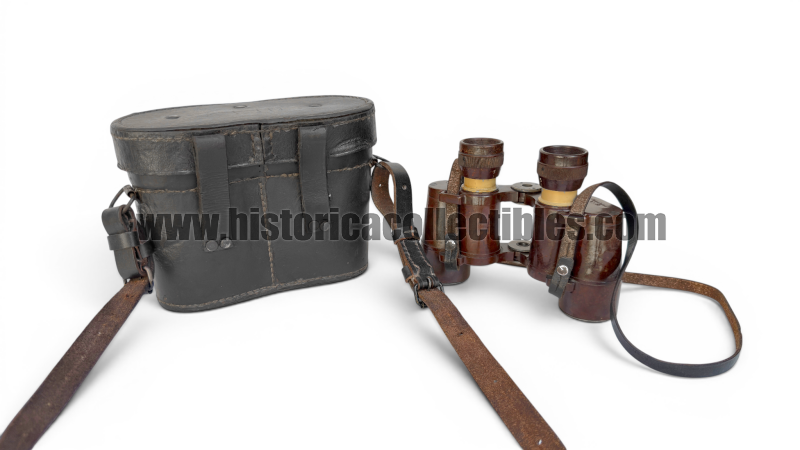
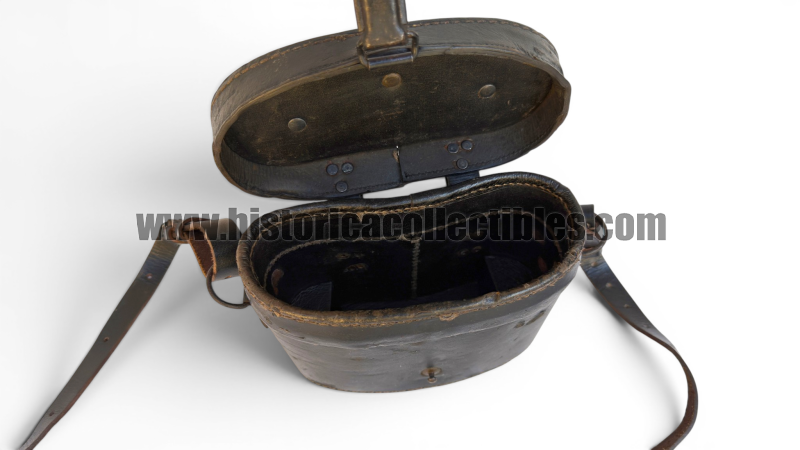
Markings are generally basic on this model and printed directly into the material, including the words "Dienstglas 6x30" on the right side, the code "CXN" on the left side, and the serial number in the central dial. Some examples may be equipped with a graduated reticle for distance estimation, increasing their military utility. The binoculars were usually accompanied by accessories such as a shoulder strap, eyepiece covers, and a case, sometimes also made of simpler materials and produced by the same Emil Busch company.
While functional, the Bakelite version is more fragile than previous metal models, with possible internal cracks or loosening. However, these very characteristics make it particularly attractive to collectors today, especially when, as in this case, it is in near-perfect and functional condition. In short, the Bakelite Dienstglas 6x30 CXN is not only an optical instrument, but also a tangible testament to the industrial solutions adopted in emergency situations during the war, combining practicality, adaptive engineering, and historical value.
The original case, complete with straps, bearing the manufacturer's markings, including "CXN," the Waffenamt WaA328 stamp (Emil Busch AG di Rathenow inspection group), and the number "4," likely referring to the case model. These markings are consistent with those found on all original cases for this specific binoculars model.
Emil Busch was born on 6 August 1820 in Berlin and died in Rathenow on 1 April 1888 and was one of the most important German industrialists in the field of optics and precision mechanics. He was one of the proponents of the invention of the wide angle.
He was the son of the Berlin merchant Friedrich Ludwig Busch and his wife Jeanette, daughter of the entrepreneur Johann Heinrich August Duncker. In 1836 he moved with his family from Berlin to Rathenow. In 1840 Emil Busch returned to Berlin as an apprentice optician and mechanic. In 1845 he acquired the Industry Institute Optical from his uncle Edward Duncker. He equipped the factory with new machinery that he had partly built in his own mechanical workshop. The use of the new machines led to a significant increase in production data also because, thanks to the machinery, he was able to limit production times compared to manual work alone.
In 1852 he began the study and production of photographic lenses and in 1865 his first wide-angle lens "Pantoscop" was released. The founder of architectural photogrammetry Albrecht Meydenbauer exchanged views on the technical implementation of a camera which was equipped with the "Pantoscop" lens in 1867.
In 1868 Busch was appointed "Königlichen Kommerzienrat" by the king for his services.
In 1872 he transformed the company into a joint stock company in order to facilitate the investments necessary for growth. This happened thanks to the help of Vereinsbank Quistorp & Co. which brought the company's share capital to $275,000. In the company since then called Rathenower Optical Istituto Industriale ex Emil Busch A.-G. Emil Busch, held the very important position of "Delegate of the Supervisory Board" and was its director.
The company achieved a dominant role in the following period. Thanks to unofficial agreements with Zeiss he limited free competition. The name Emil Busch has always been synonymous with extreme quality in the optical field.