Experimental Military Rangefinder Binoculars, Jakob Goldschmid – Zürich (Franco-Prussian War), circa 1870
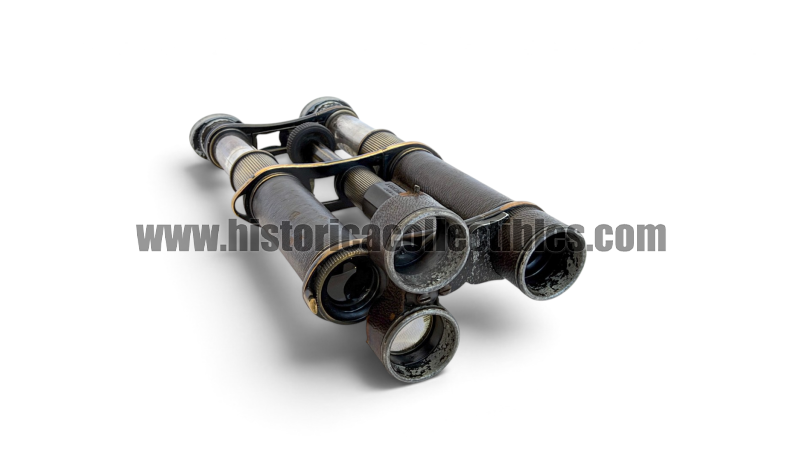
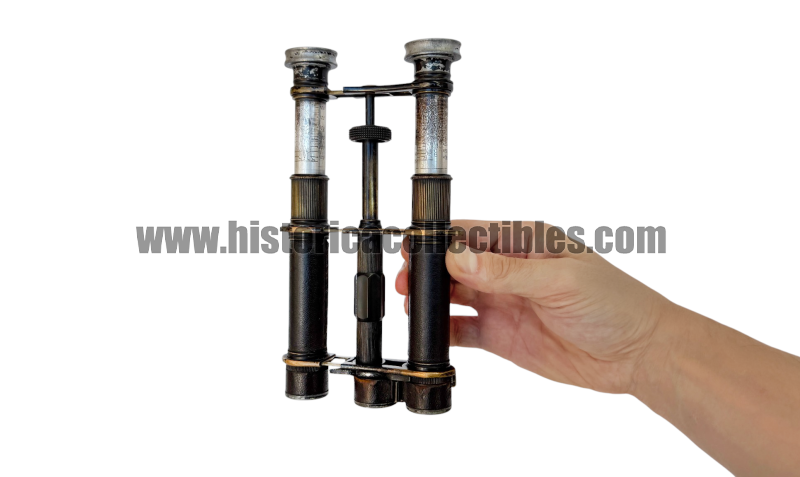
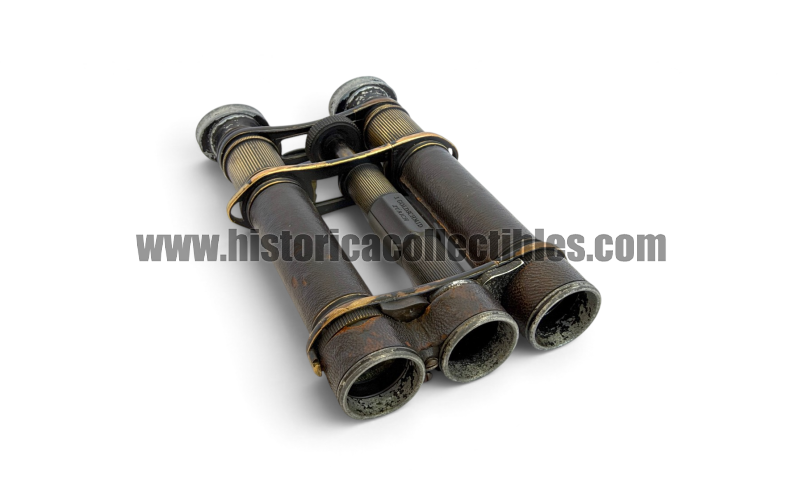
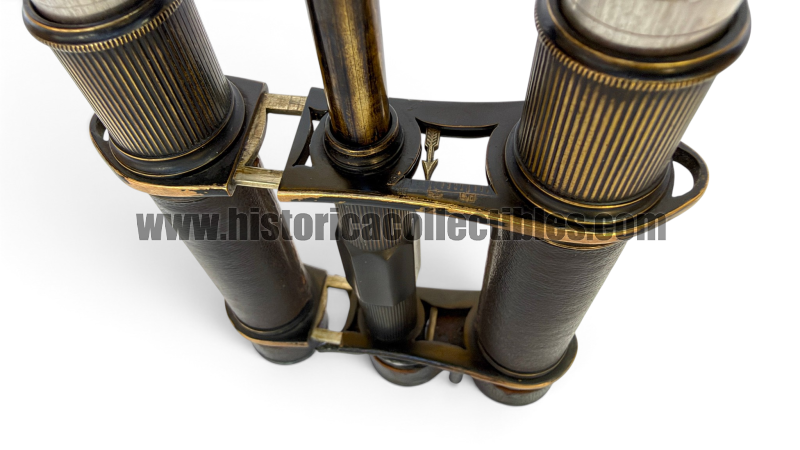
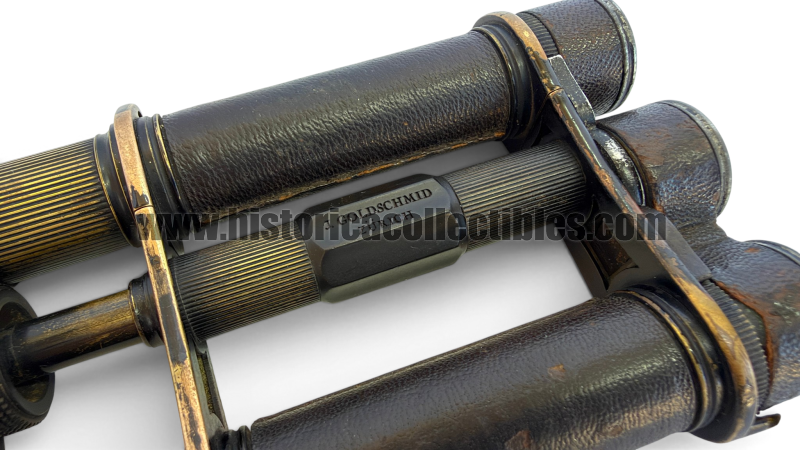
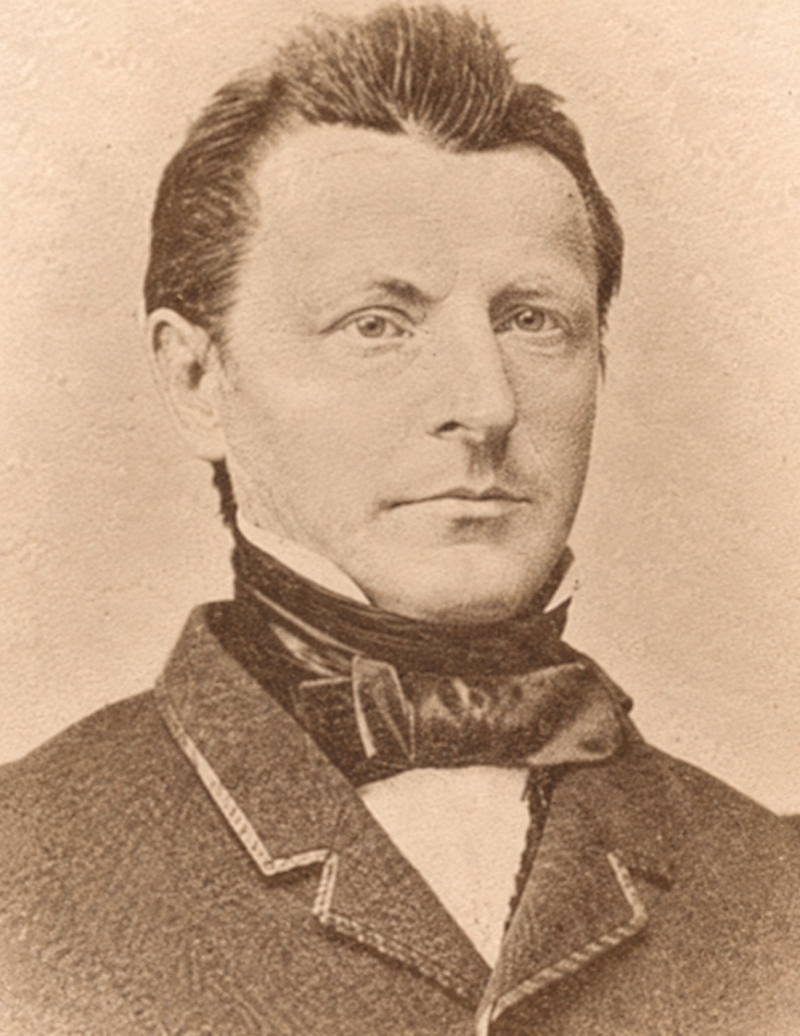
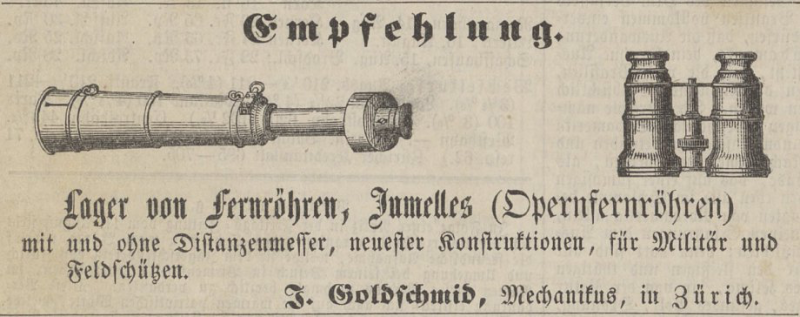
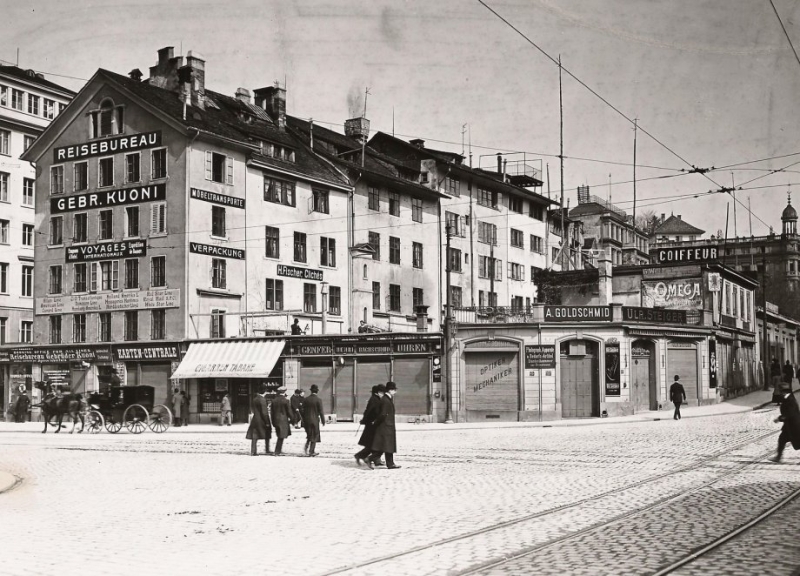
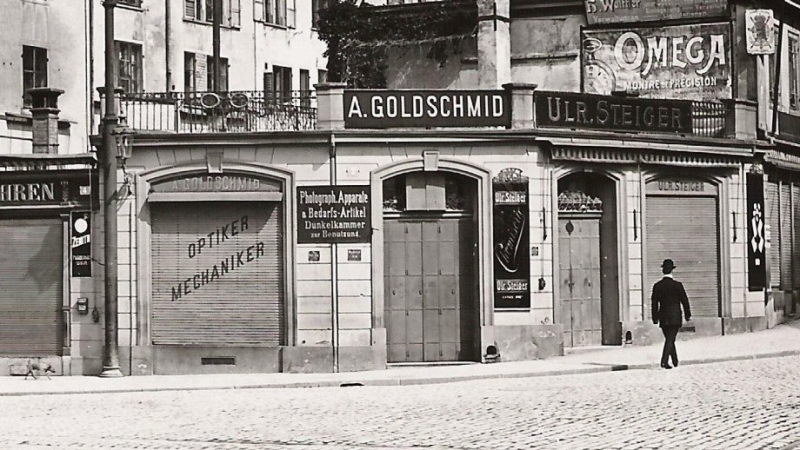
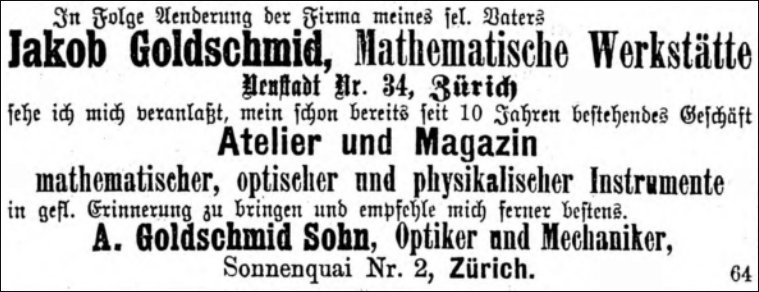
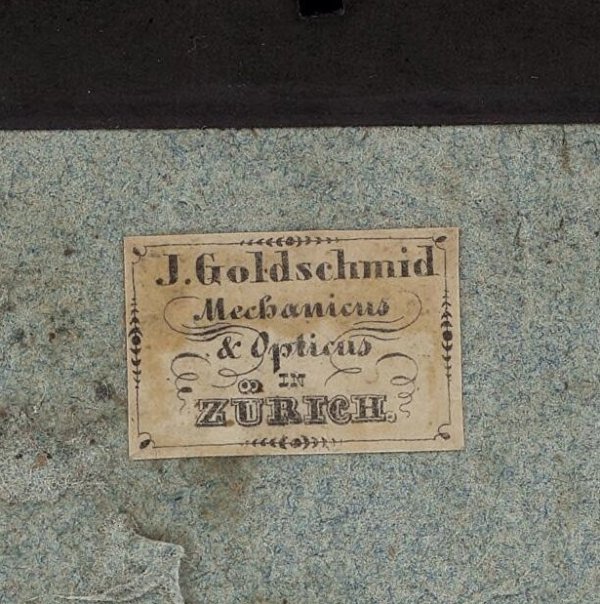
Experimental Military Rangefinder Binoculars, made by Jakob Goldschmid of Zürich (1815–1876), datable to around 1870 and probably conceived to be used during the Franco-Prussian War), an interesting example of the early phase of nineteenth-century optical experimentation aimed at the indirect measurement of distances through binocular instruments.
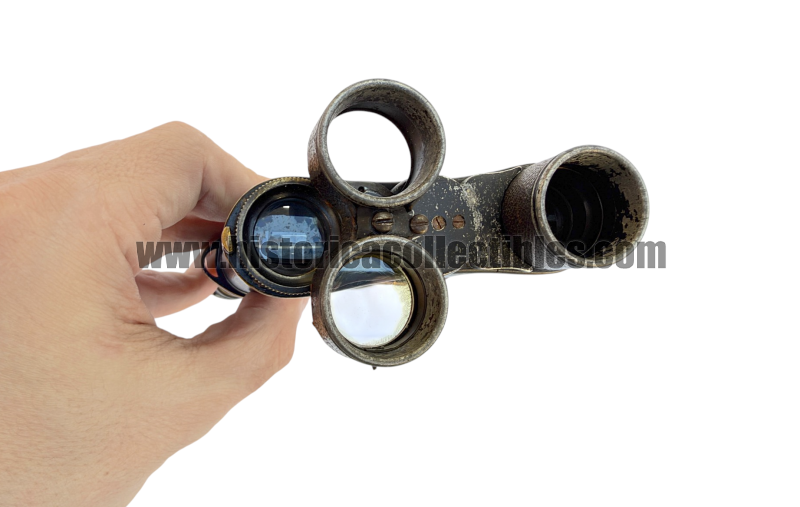
The instrument features a double-telescope configuration, enclosed in a compact-shaped metal body, with two optical systems intended for the simultaneous observation of the subject. The distinctive feature characterizing its experimental design is the rotating mobile rangefinder system, which acts on the right objective lens. Rotation of the optical element makes it possible to modify the path or the apparent position of the image, introducing a controlled variation of the optical axis and allowing the observer to seek a precise coincidence or superimposition of the images.
The principle can be traced back to the earliest attempts to apply the concept of coincidence rangefinding to portable optics, in which a specific adjustment of the optical apparatus is related to the distance of the observed object. Compared with the later, more advanced prism or double-image rangefinders, this solution bears witness to a still strongly experimental phase, in which the arrangement and function of the optical elements were the subject of continuous research.
On the right sunshade tube, corresponding to the particular rangefinder mechanism, there are two opposing stars, arranged symmetrically and deliberately visible both with the rangefinder lens inserted and when it is disengaged. Their placement therefore appears to have been conceived as an identifying element independently of the position assumed by the optical device, although to this day the instrument’s affiliation with a specific army is not yet known with certainty, nor is it possible to documentarily attribute the two stars to a specific administration or military corps. However, due to its construction characteristics, the configuration of the rangefinder system, and the particular nature of the markings, the specimen can be associated with a military context, and it was made or tested for the requirements of an army in the second half of the nineteenth century.
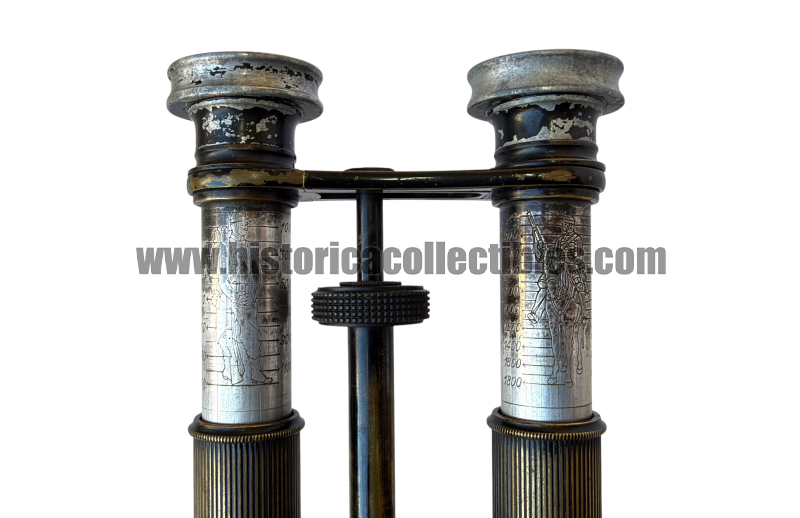
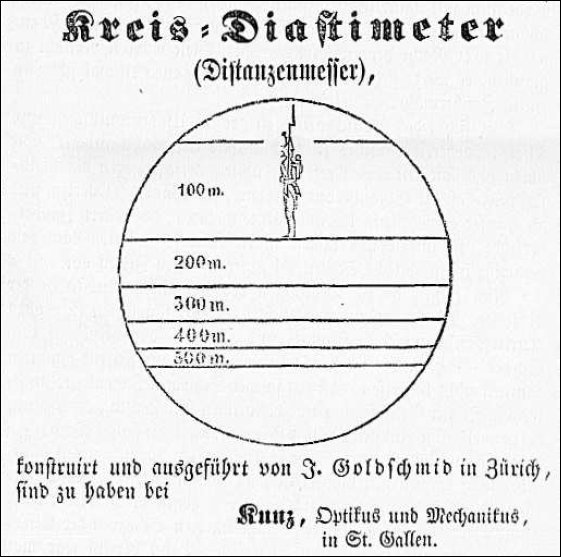
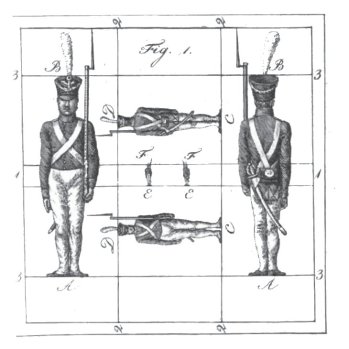
Supporting this hypothesis is the presence, on the extendable tubes of the binoculars, of two figures depicting French soldiers, one mounted and one on foot, marked with elevation graduations corresponding to specific distances indicated on the body. Such references were useful for facilitating the estimation of the distance between the observer and the target.
The presence of the two figures in French uniform, evidently identifiable as the “enemy”, leads to the instrument’s intended use being placed within the context of the German or Prussian army and suggests a possible manufacture in connection with the Franco-Prussian War, fought between July 1870 and May 1871.
The optical-mechanical principle underlying this distance-estimation system seems to have retained a certain degree of interest in the following decades as well. Around 1920, Zeiss Nedinsco Systeem ’s-Gravenhage produced the Turact 8×24 binoculars, in which a similar principle of telemetric calculation of the distance from the observation point was adopted.
In this model, a particular lens, operated by means of a rotating system located in the right eyepiece, was superimposed on the original lens, making it possible to obtain the optical reference necessary for determining the distance.
References: