Kraftfahrer-Fernrohr K.F.F.1 Panzerkampfwagen IV (Pz.Kpfw IV Ausf.G), bxx - Askania Werke A.G. Berlino, circa 1940
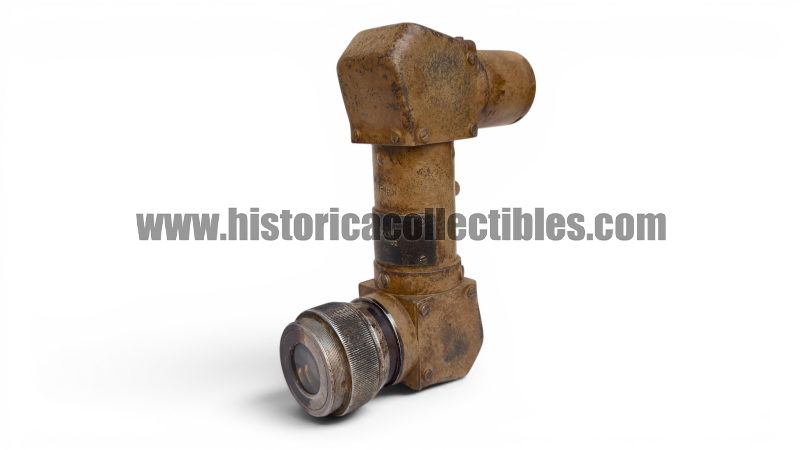
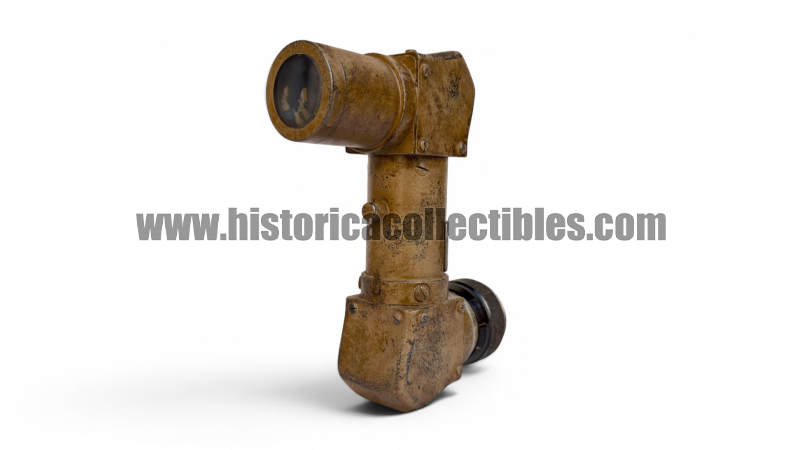
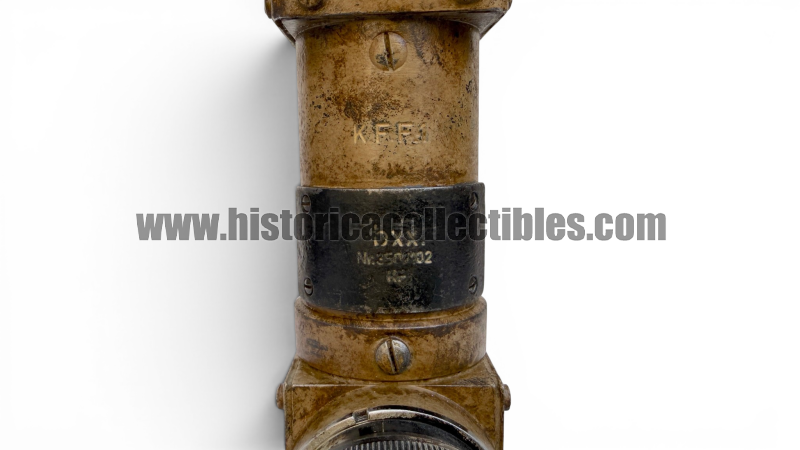


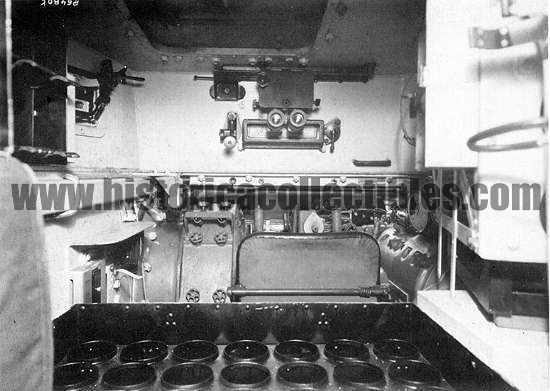
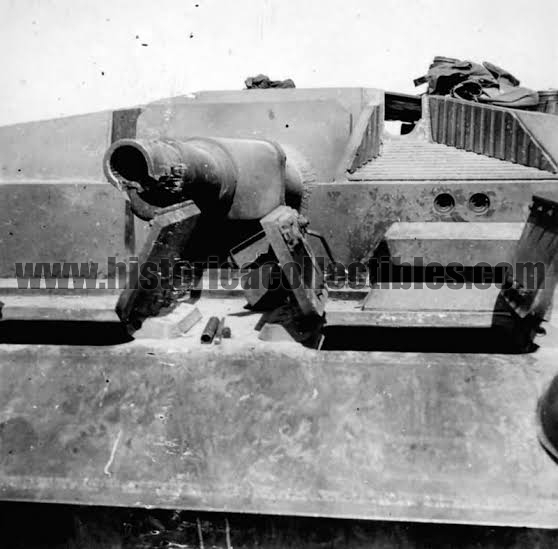

A periscopic optical device manufactured by BXX, under the manufacturer's code name of Askania Werke A.G. Berlin, was used by the Panzerkampfwagen IV driver. Installed in the front of the hull, it allowed the driver to observe the terrain and the surrounding environment while maintaining adequate protection inside the Panzer.
The system featured two periscopic optical units installed inside the hull, offering a superior field of view compared to simple observation ports. In many versions of the Panzer IV, the viewer was combined with a movable armored cover that protected the external aperture from the elements and damage in combat.
Thanks to the stereoscopic vision provided by the two eyepieces, the pilot could more accurately assess distances, obstacles, and terrain features, improving vehicle control both during movement and in tactical operations.
The view is good and the focus works.
The German company Askania-Werke AG of Berlin was one of the most important German manufacturers of optics, aeronautical instrumentation, and precision mechanics during World War II. The company traces its roots to the workshops founded in 1871 by Carl Bamberg, a former employee of Carl Zeiss, for the production of high-precision astronomical, nautical, and geodetic instruments. In 1921, the merger of several companies officially established Askania-Werke AG.
With German rearmament in 1935, Askania became a major supplier to the Luftwaffe and the Kriegsmarine, producing aircraft instruments, gyroscopes and autopilots, submarine periscopes, rangefinders and military optics, anti-aircraft targeting systems, and components for the V1 and V2 missile programs.
By 1944, the company employed over 24,000 people, including numerous forced laborers from occupied territories.