
Military Binoculars "41" MOM-Magyar Optikai Művek 8x40, Illuminated Reticle, circa 1970
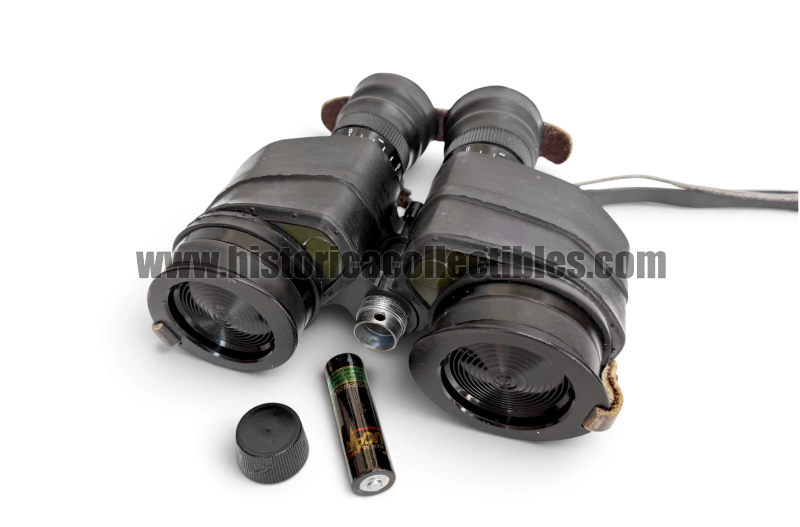
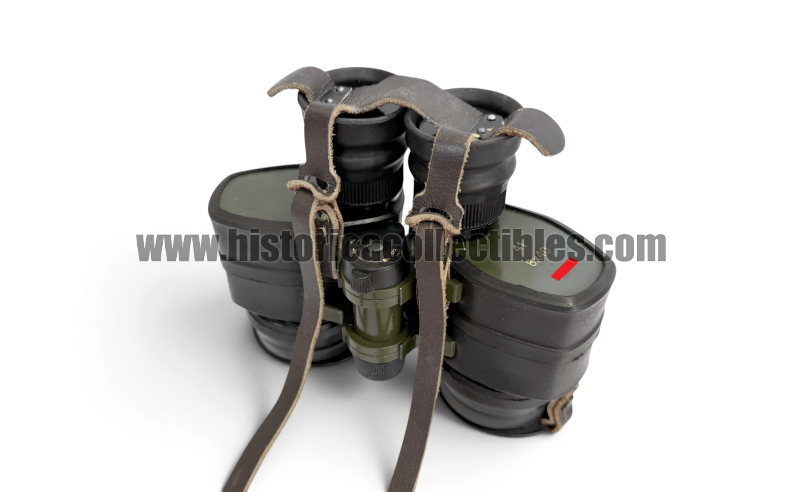
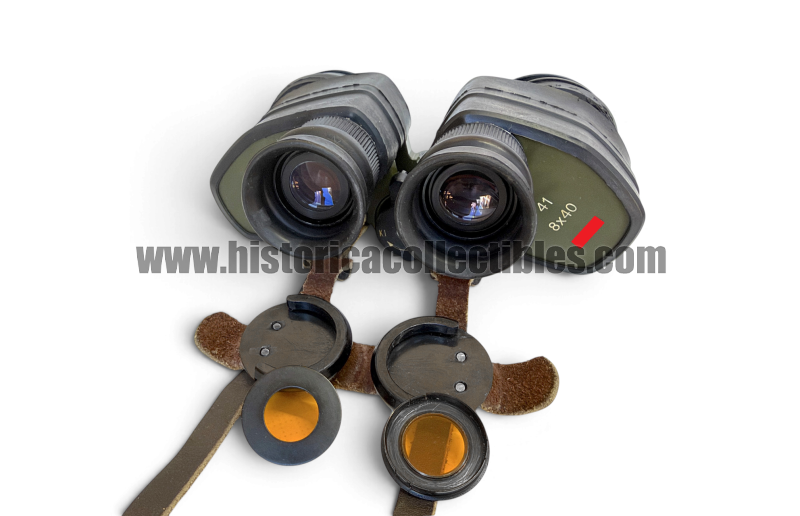
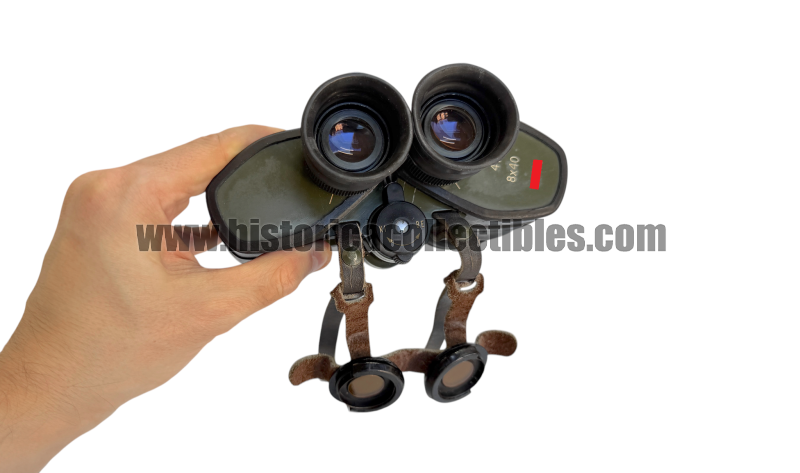
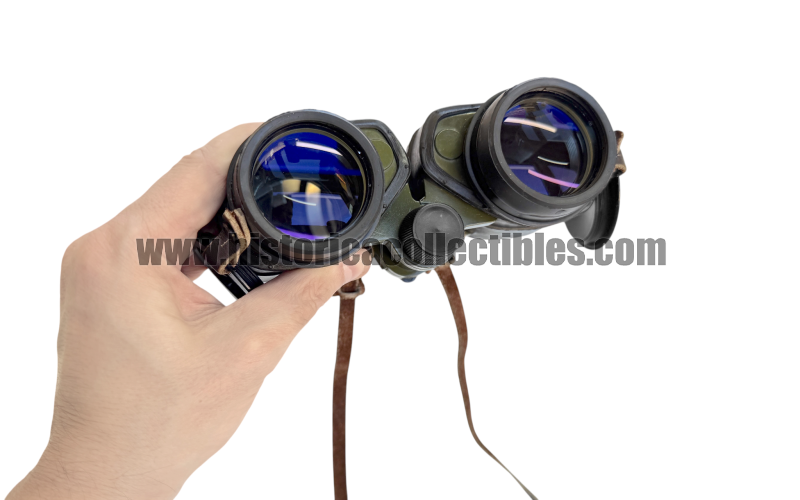
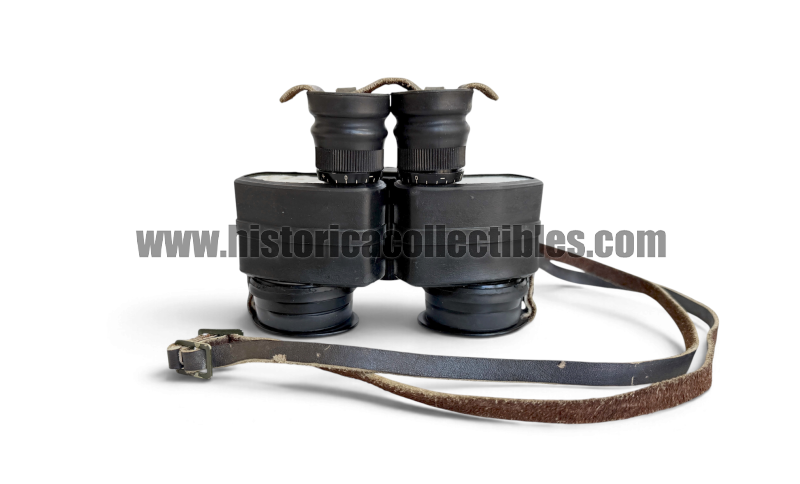
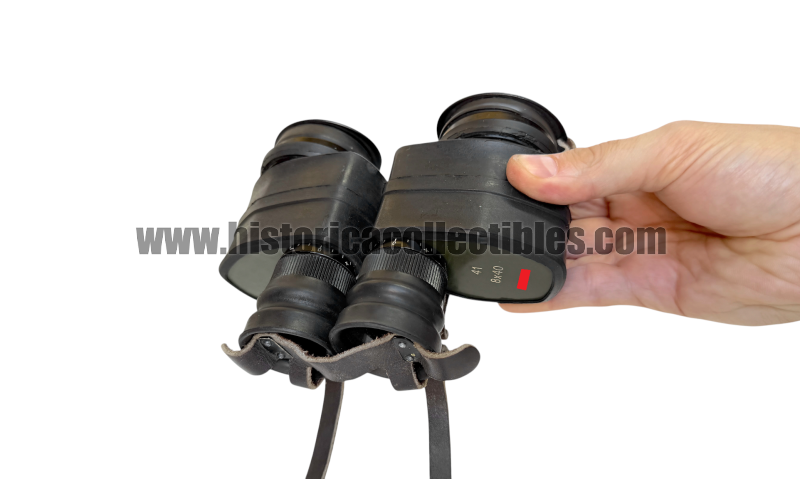

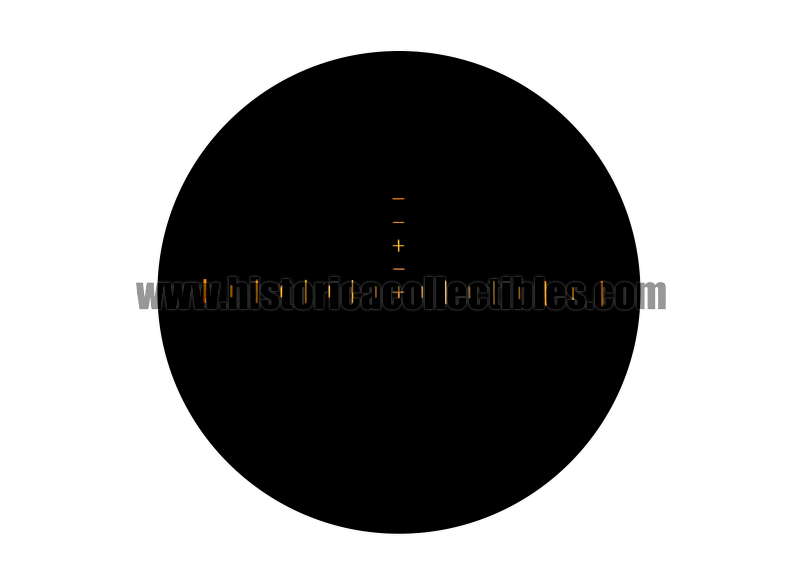
The MOM 8×40 is a particularly unusual and rare Hungarian Military binoculars, produced by MOM – Magyar Optikai Művek around the 1970s. This example features an illuminated line reticle (Strichplatte), as well as the original accessories, including straps, eyepiece caps, objective caps, and solar filters.
The binoculars feature an unusual optical construction, based on a rare roof prism system, consisting of a single roof prism and a flat mirror for image erection. The body of the instrument also bears the number "41," a designation frequently found on Hungarian military binoculars and associated with the MOM; the exact date when this designation began to be used is currently unknown.
One of the most interesting technical features is the reticle illumination system, powered by a 1.5V AA alkaline battery. It can be turned on and off normally using the lever located at the top of the central bridge, but in this case it remains permanently on and can only be deactivated by slightly rotating the battery compartment cover. To reactivate it, simply tighten it. It may be operating erratically or the model was modified for specific needs, but it is fully functional and usable. A 1.5V AA alkaline battery (obviously flat) is housed inside the bridge. It was originally installed in the binoculars and is marked: UCAR - Union Carbide Corporation, but has now been replaced with its namesake "Energizer" battery.
The illuminated reticle is visible through the observation system and is one of the distinctive features of this model.
The binoculars are completely sealed with silicone paste, and each prism and mirror housing contains a cartridge containing desiccant salts to absorb moisture. That's why there are two bumps on the outside of the binoculars, right next to the objective lenses.
The eyepieces feature flip-up rubber eyecups, allowing eyeglass wearers to use the binoculars. The instrument also comes with objective lens and eyepiece dust covers to protect the lenses. The eyepiece covers incorporate two solar filters that can be attached to the eyepieces, designed for protection and observation in bright conditions.
This model was most likely used by the Hungarian border troops and, once retired from service, were almost all destroyed. This circumstance explains the particular rarity of this model.
The binoculars are well collimated and provide excellent, sharp views. A few small black dots are visible on the left side, but they do not significantly affect the viewing experience. Overall, the binoculars are in excellent condition.
History of Magyar Optikai Művek (MOM):
Magyar Optikai Művek (MOM) was a historic Hungarian precision optical and mechanical engineering company, founded in Kolozsvár in 1876 by Nándor Süss.
Magyar Optikai Művek (MOM) was one of Hungary's leading optical, precision mechanical, and scientific instrument companies, headquartered in Budapest. Its history is closely linked to the development of the Hungarian precision industry between the 19th and 20th centuries.
The Origins: Süss Nándor
The story begins on July 1, 1876, when German mechanic Süss Nándor (Nándor Süss) was called to the University of Kolozsvár, now Cluj-Napoca, to organize a mechanical workshop for the construction of scientific instruments and the training of technicians. This date is traditionally considered the founding date of the future MOM.
In 1884, Süss moved to Budapest, where he directed the Mechanikai Tanműhely, a state-run workshop-school. The initial location was at Mozsár utca 8, and in 1891 the business moved to Alkotás utca 9, in Buda.
A fundamental aspect of Süss's philosophy was that production and professional training should go hand in hand: the factory was also intended to be a school to train the technicians needed for the nascent precision industry.
The Move to Csörsz utca
In 1900, the Süss Nándor-féle Precíziós Mechanikai Intézet (Small Nándor-féle Precision Mechanical Institute) was formally founded.
In 1905, the company moved to its new headquarters at Csörsz utca 39, in Budapest's 12th district. This location would become inextricably linked to the MOM. The move was also driven by the need for more suitable conditions for the manufacture and adjustment of precision instruments: the vibrations and interference from the tram line near Alkotás utca were problematic for the instruments.
From 1918 to the founding of MOM:
In 1918, the company became a joint-stock company:
1918 – Süss Nándor Precíziós Mechanikai Intézet Rt.
1922 – Süss Nándor Precíziós Mechanikai et Optikai Intézet Rt.
1939 – It finally changed its name to Magyar Optikai Művek Rt. (MOM).
In the 1920s and 1930s, production expanded dramatically. MOM produced geodetic and topographic instruments, scientific instruments, optical and mechanical devices, military instruments, aviation equipment, and components for the electrical industry; it also produced optical glass.
Among its most important products were geodetic instruments, a sector in which MOM would achieve a particular international reputation. Instruments associated with Eötvös Loránd's research, including the famous Eötvös pendulum/gravimeter, were also manufactured in the production environment developed by Süss.
The War and Postwar Period
During World War II, military production assumed considerable importance. A curious example is the production of mechanisms for timed fuzes intended for anti-aircraft use.
After 1945, the situation changed radically. Between 1945 and 1952, the company operated as a joint Hungarian-Soviet enterprise. In 1952, it became simply Magyar Optikai Művek, within the framework of the Hungarian socialist economy.