Stabiscope Fujinon 10×40 - S1040, "Space Shuttle Columbia", 1980
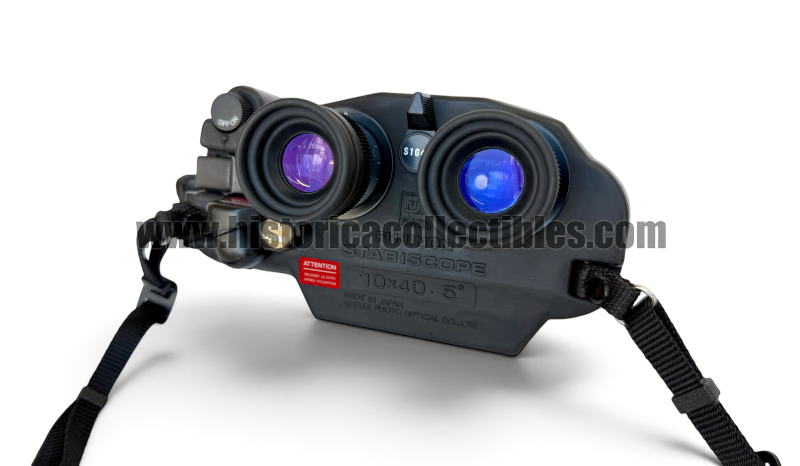
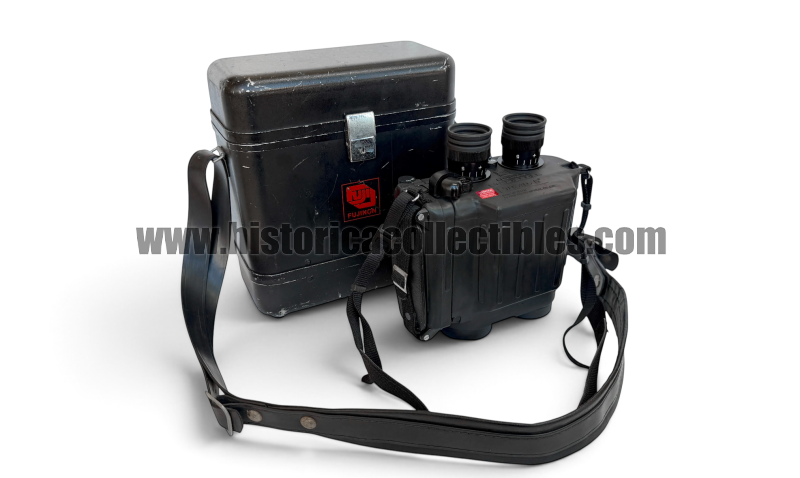
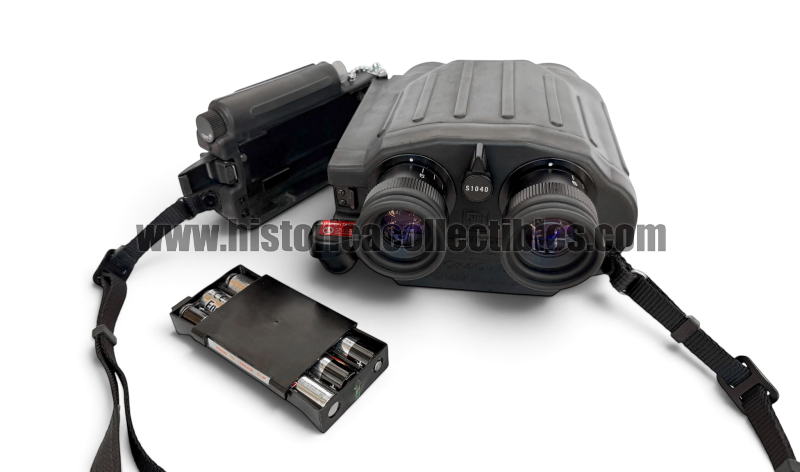
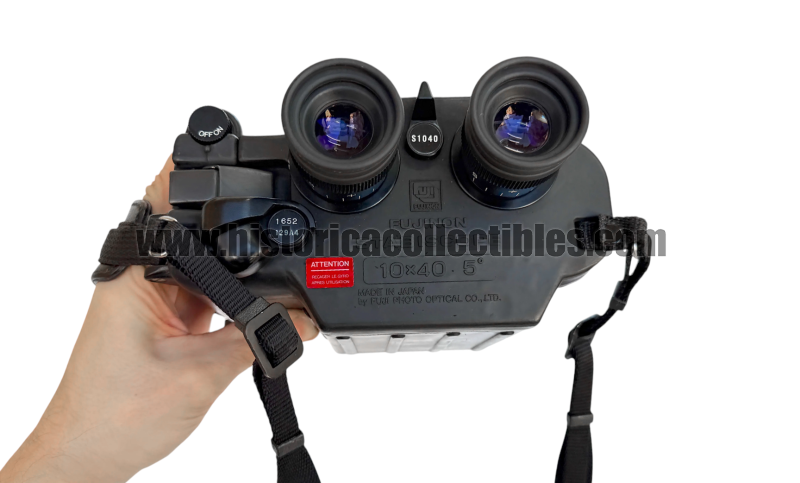
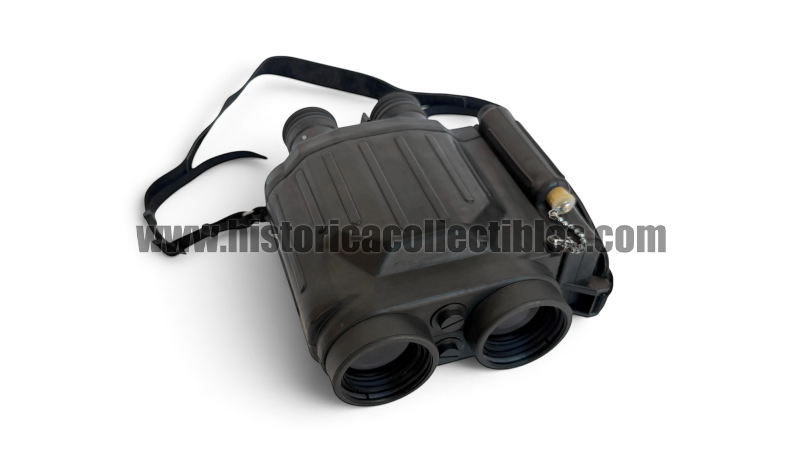
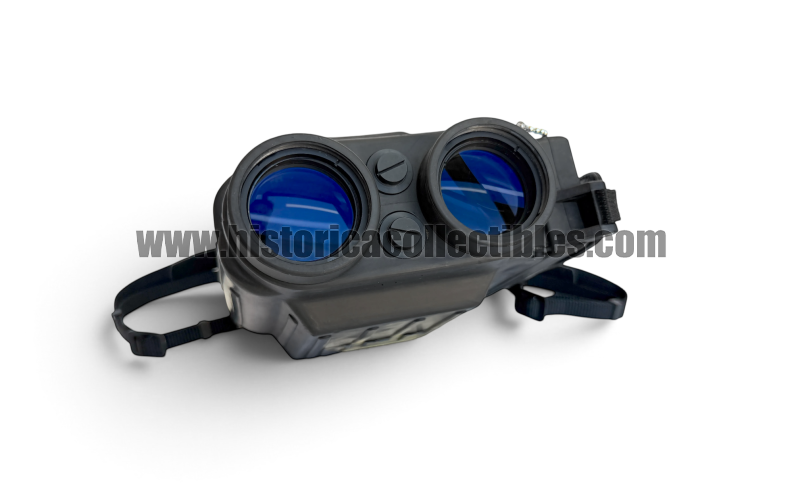
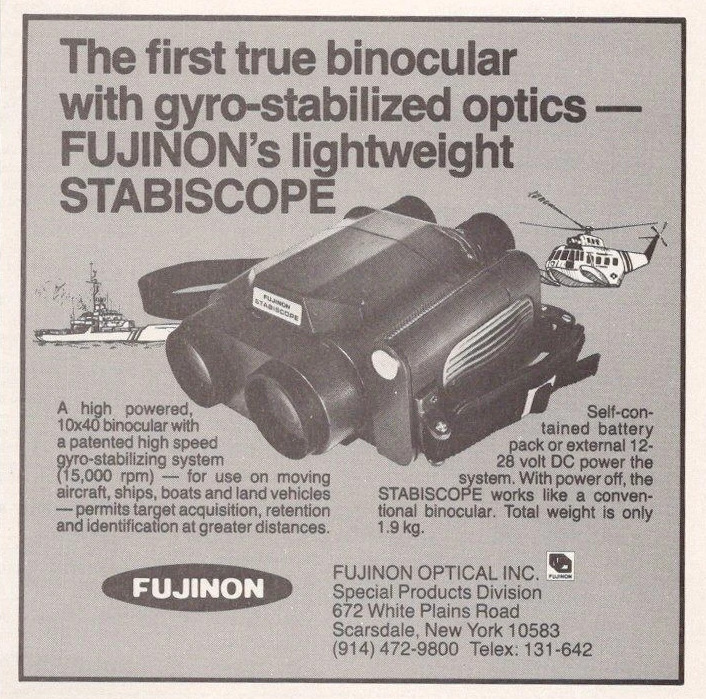
The Fujinon Stabiscope 10×40 - S1040 was manufactured by Fuji Photo Optical Co., Ltd. (Fuji Shashin Kōgaku), the optical division of Fuji Photo Film Co., Ltd., now known as FUJIFILM Corporation. It is one of the most unique and sophisticated stabilized binoculars ever made by Fujinon, designed for professional use in the maritime, aeronautical, military, and surveillance sectors.
The design and production were entrusted to Fuji Photo Optical Co., Ltd., a company specializing in the creation of photographic lenses, industrial optics, binoculars, and precision instruments. It was marketed under the FUJINON brand, the historic brand used by Fujifilm for all its high-quality optics.
The Stabiscope was introduced in 1980 and is considered the world's first binoculars with built-in gyroscopic image stabilization. Thanks to its innovative flywheel stabilization system, it was adopted by numerous military and civilian organizations, including navies, coast guards, rescue services, and surveillance units. Its use aboard the Space Shuttle Columbia for observation purposes is also documented.
The Fujinon Stabiscope S1040 was also used in the aerospace industry. One was carried aboard the Space Shuttle Columbia to allow astronauts to make observations with a stable image despite the shuttle's movements and vibrations. This application demonstrates the high level of technology achieved by the binoculars' gyroscopic system, designed primarily for professional use in extreme environments such as ships, helicopters, and moving vehicles.
The S1040 model (10x40, 5° field) is one of the first models in the Stabiscope family and was the starting point of a series that later evolved into the S1240 (12x40) and S1640 (16x40) models, still present in FUJIFILM's professional range today.
Unlike most modern stabilized binoculars, which use electronic systems with sensors and moving prisms, the Stabiscope uses a true mechanical gyroscopic stabilization system, a technology that allows it to maintain exceptionally stable images even in the presence of very intense vibrations, such as those generated by boats, vehicles, helicopters, or mobile platforms. This feature has made it, since its introduction in the 1980s, a benchmark among professional instruments designed for observation in extreme conditions.
Optically, the binoculars offer 10x magnification combined with 40 mm objectives, a configuration that represents an excellent compromise between light gathering power, image brightness, and observable detail. The effective field of view is 5 degrees, equivalent to approximately 87 meters at 1,000 meters, a value that prioritizes observation precision over panoramic breadth. The image is very sharp in the central part of the field, with high contrast rendition and natural colors thanks to the multi-layer anti-reflection coatings developed by Fujinon, a company also known for producing professional optics for astronomy and filmmaking.
The most remarkable feature of the Stabiscope is its stabilization system. Inside the instrument is a gyroscopic flywheel that, once started, rotates at high speed, generating a gyroscopic effect capable of counteracting the binoculars' movements. In practice, the gyroscope maintains the optical system's constant orientation, compensating for oscillations and allowing the observer to see a virtually immobile image even when the instrument's body is continuously shaken. This physical principle, based on the conservation of angular momentum, makes the Stabiscope very different from civilian electronic stabilization systems, offering superior performance, especially in the presence of large-amplitude vibrations.
From a construction standpoint, the binoculars are extremely rugged. The chassis is made of metal and designed to withstand harsh environments, with a waterproof, sealed structure filled with dry nitrogen to prevent internal condensation. They can operate over a wide temperature range and easily withstand use in the open sea, in the rain, or in particularly harsh weather conditions. They weigh significantly more than standard 40mm binoculars, precisely because they must accommodate the complex gyroscopic mechanism and its power system.
They are powered by batteries, which are only needed to rotate the gyroscope. After switching on, it takes a short time for the flywheel to reach operating speed; from that point, the image becomes surprisingly stable.
The Stabiscope is ideal for observation from moving vessels. On a ship, it allows you to clearly read the name of another vessel or distinguish details of the coastline despite the constant rolling. From a helicopter, it allows you to track targets or landmarks with a stability that would be impossible with traditional binoculars; on a moving vehicle, it makes it possible to observe distant details without the constant shaking caused by vehicle vibrations. Precisely for these qualities, it has been adopted by coast guards, navies, surveillance services, and professional operators who require a reliable instrument in extreme operating conditions.
The high production cost limited its use to the professional and military sectors.
Overall, the Fujinon Stabiscope 10×40-5° S1040 represents a true milestone in the history of stabilized binoculars. It is still remembered today as one of the most effective instruments ever built for observation from platforms subject to strong vibrations, thanks to the combination of high-quality Fujinon optics, extremely robust construction, and a true gyroscopic stabilization system capable of offering a level of stability that few other binoculars have matched.
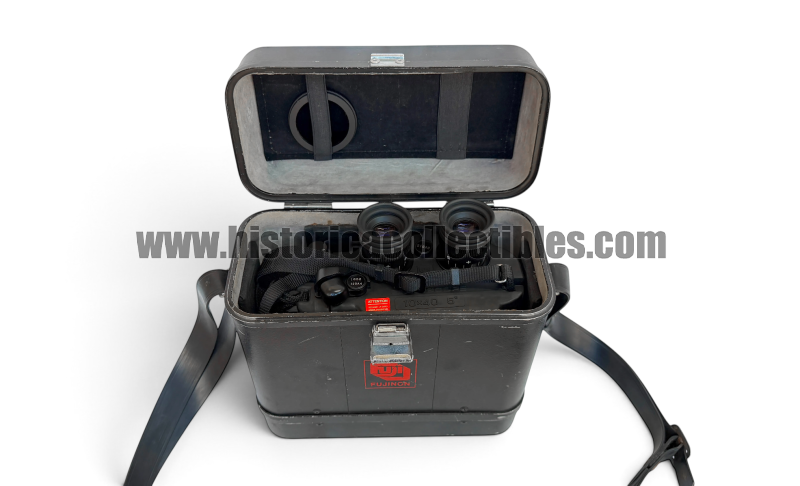
It comes complete with a hard case with a carrying strap and an original polarized dark filter that can be screwed onto an objective lens. The stabiscope is in exceptional condition and in excellent working order. The view is excellent despite a very light haze on the prisms.
Operating Notes:
To use the Fujinon Stabiscope 10×40 S1040, simply unhook the hinge on the left side to access the battery compartment and insert six AA batteries into the handle. Then, turn on the binoculars by turning the power switch to ON. After a few seconds (about 10-20), the internal gyroscope reaches the required rotation speed (15,000 rpm). To activate it, simply press the button on the underside of the left eyepiece. Then, adjust the interpupillary distance (IPD) using the lever in the center of the eyepieces, the focus, and, if necessary, the diopter compensation. Then, you can begin observing. During use, the gyroscope maintains a stable image even in the presence of vibrations or vehicle movement. When you're finished observing, first deactivate the gyroscope and then turn off the binoculars by turning the switch to OFF, which stops the gyroscope from functioning.