
Sextant "La Filotecnica" Royal Explorer LIBYA, Italian Royal Navy, 1924
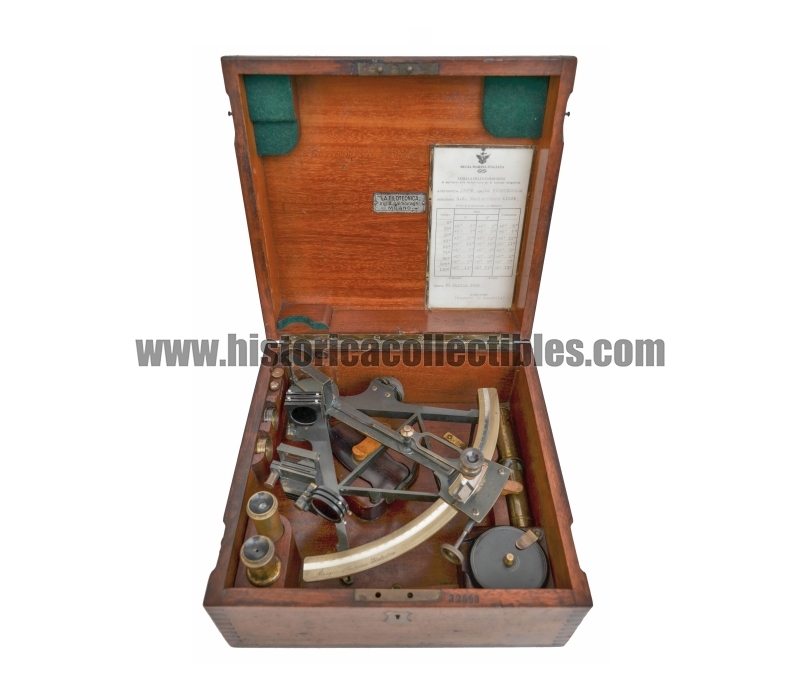
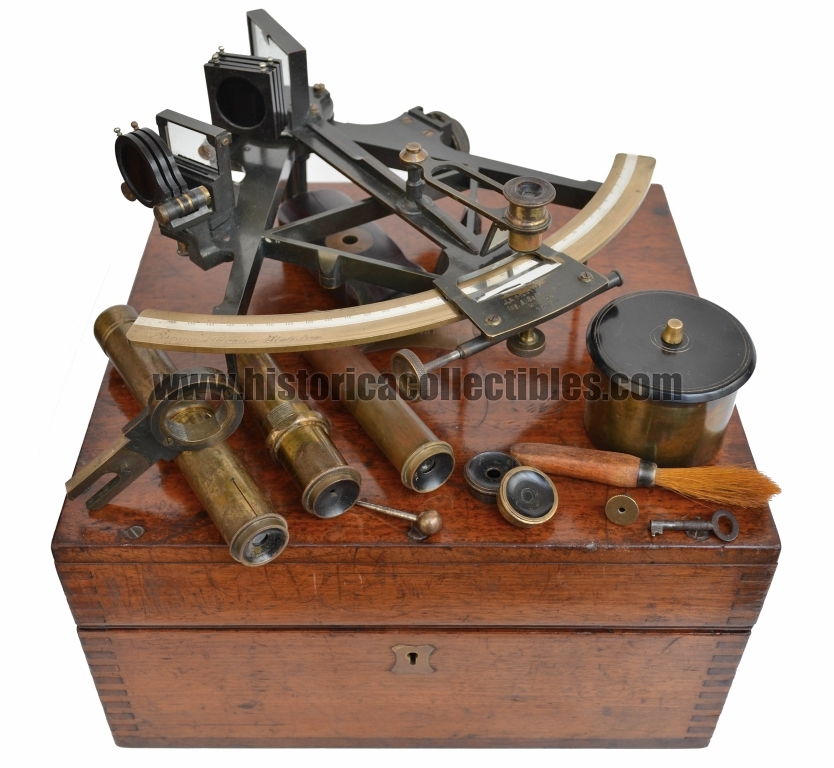
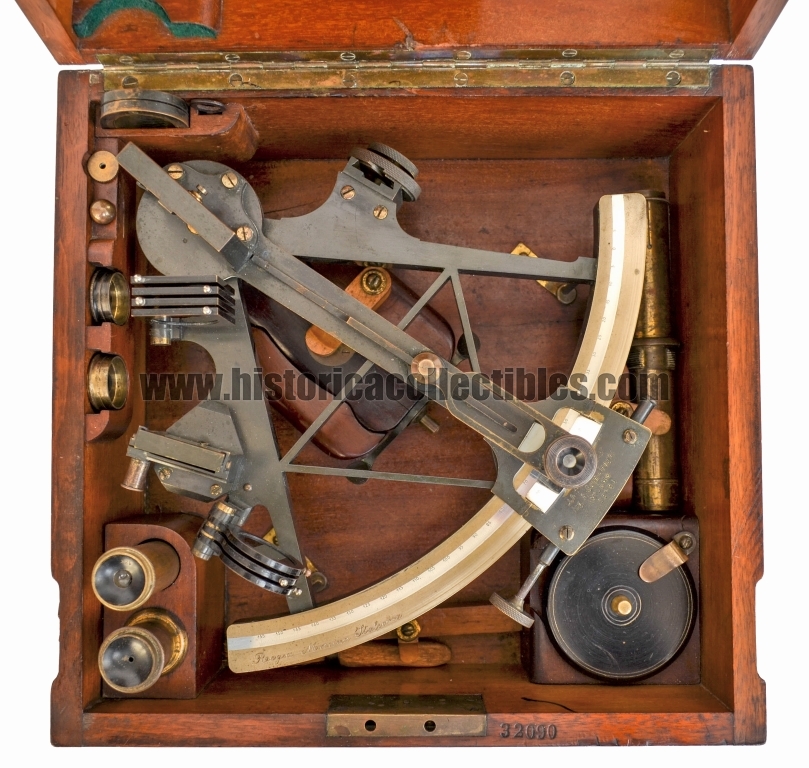
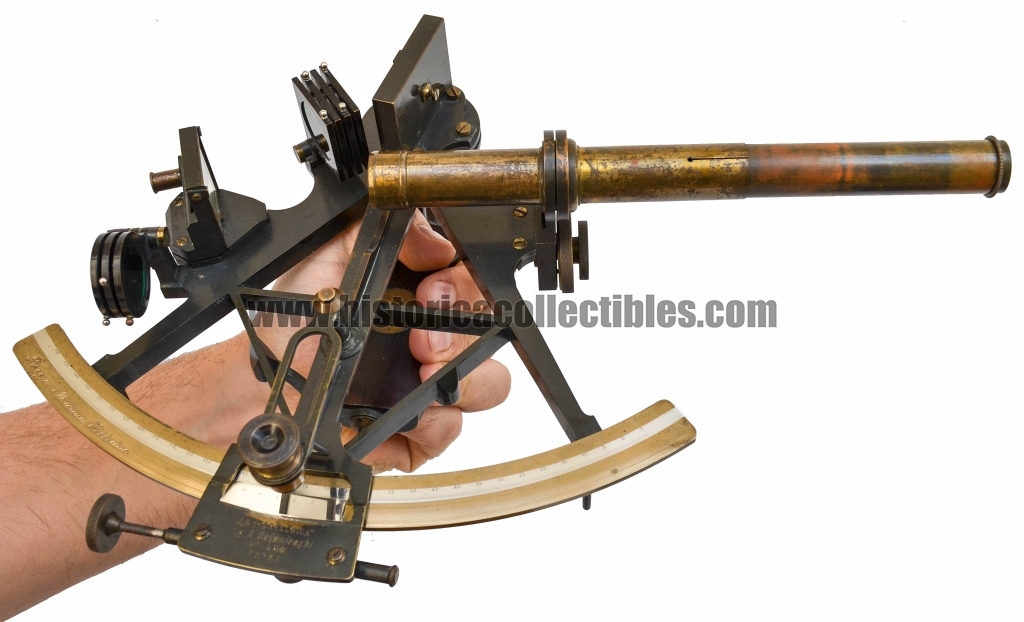
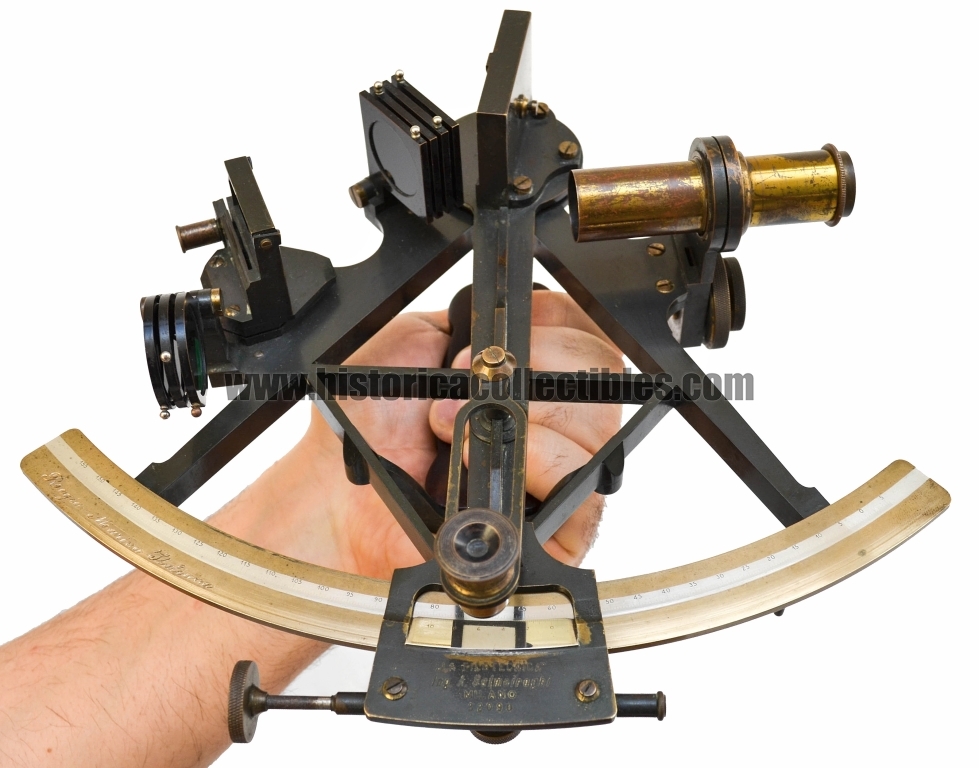
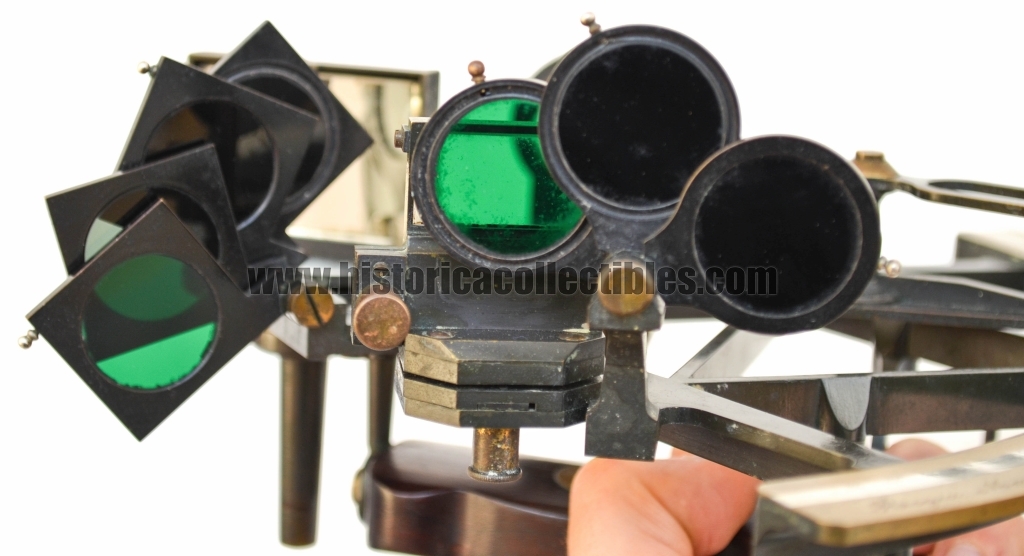
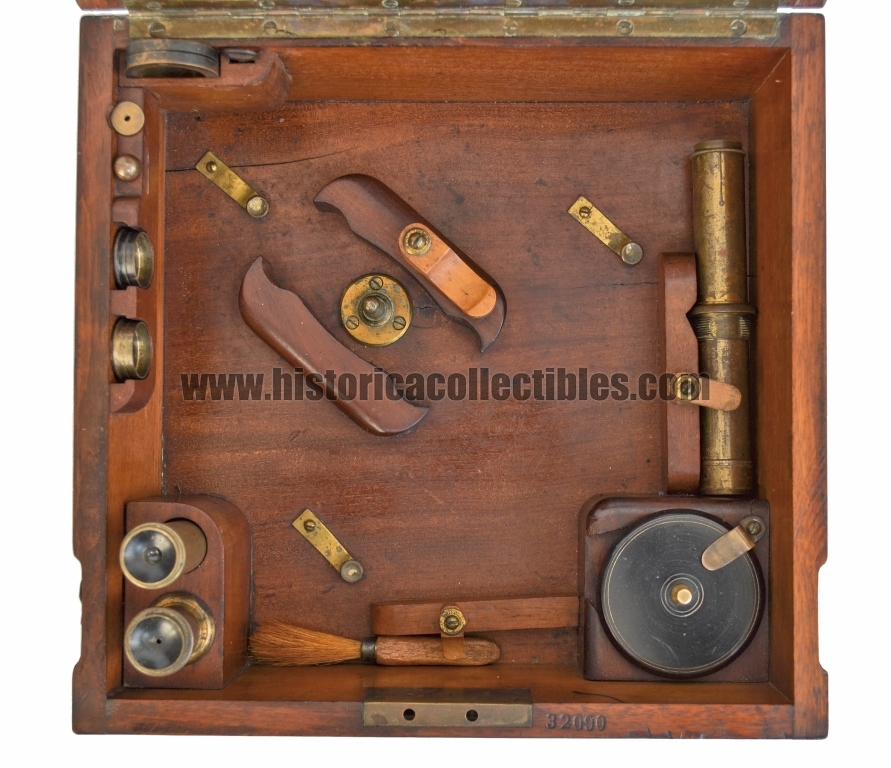
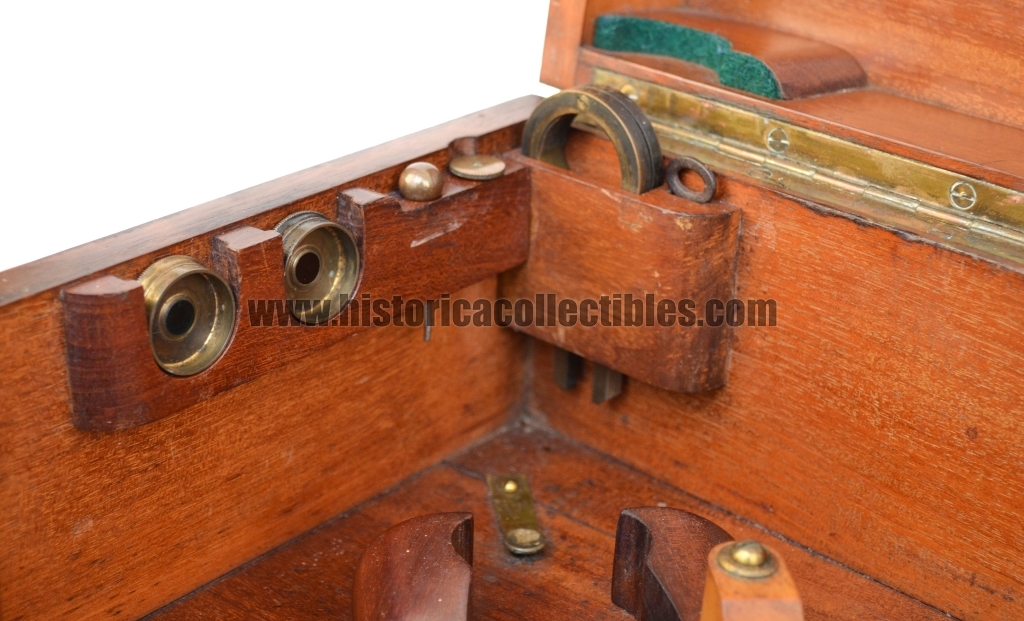
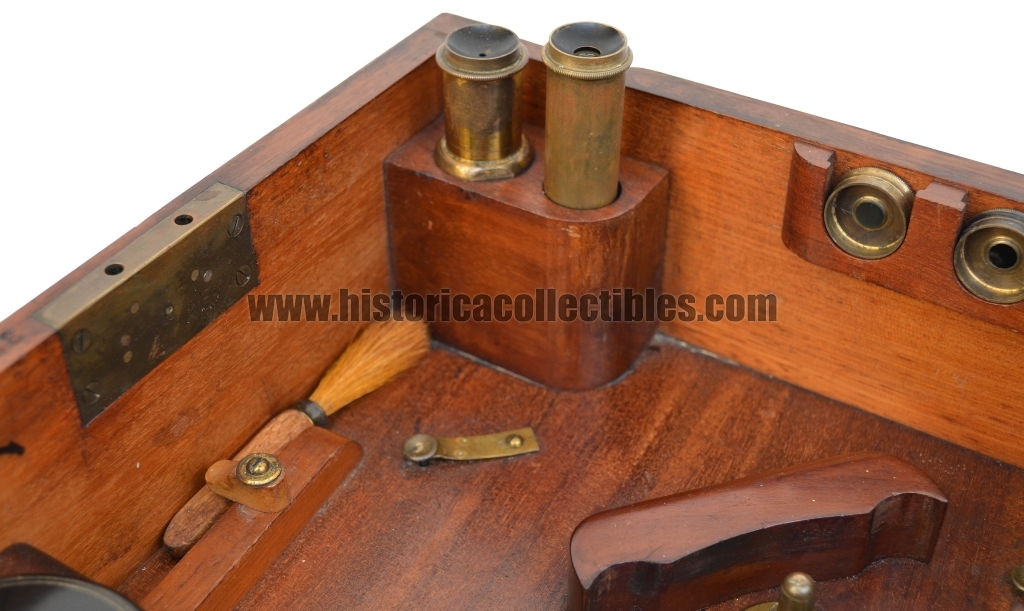
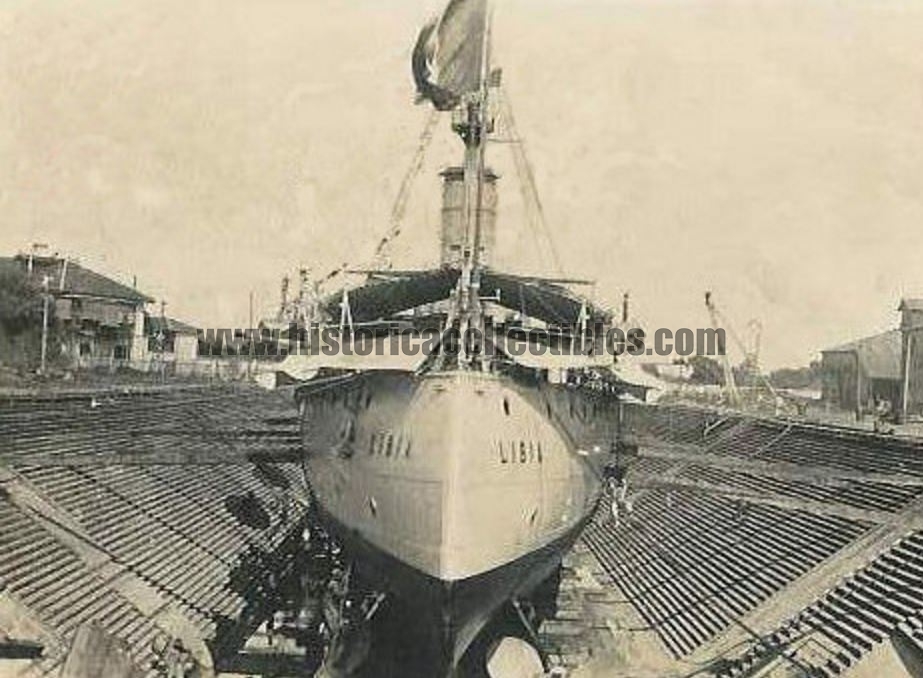
Nautical sextant, made by "La Filotecnica Ing. Salmoiraghi Milano" for the Italian Royal Navy, assigned to the Royal Explorer LIBIA in 1924 when, under the command of Captain Moreno, it set sail for the Far East, bound for China to reach the Italian Concession of Tientsin (The Italian Concession of Tientsin, in Chinese: 天津意租界 Tianjin yì zujiè, was a territory in China colonially occupied by the Kingdom of Italy between 1901 and 1943).
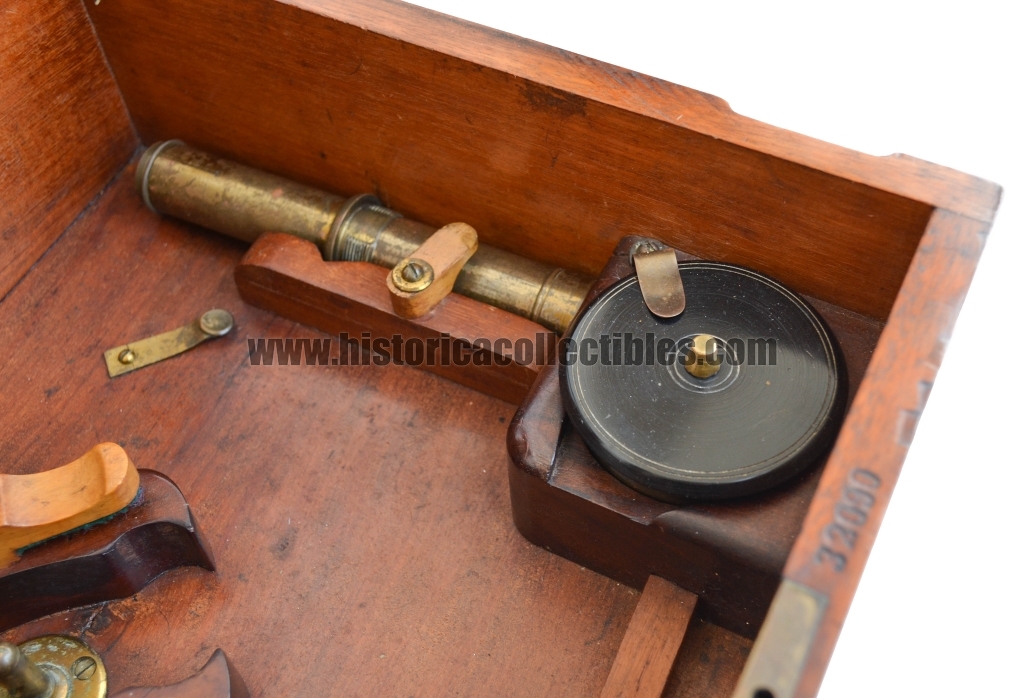
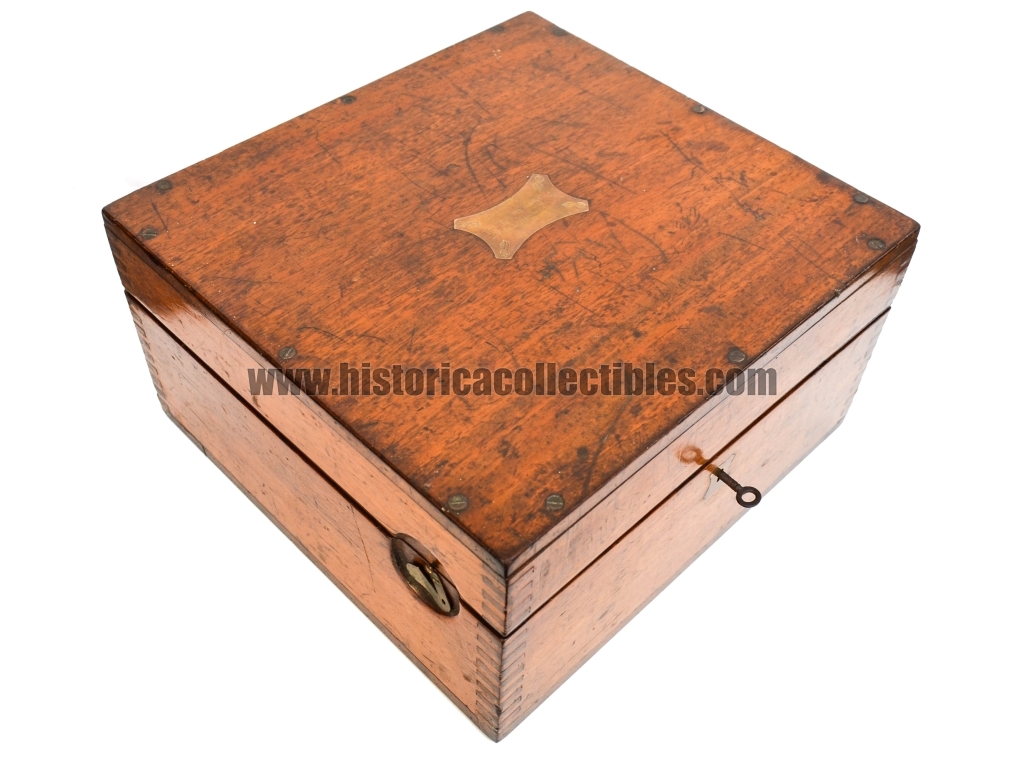
This instrument, complete with all its original accessories, is kept in its original mahogany case, equipped with a lock and original key.
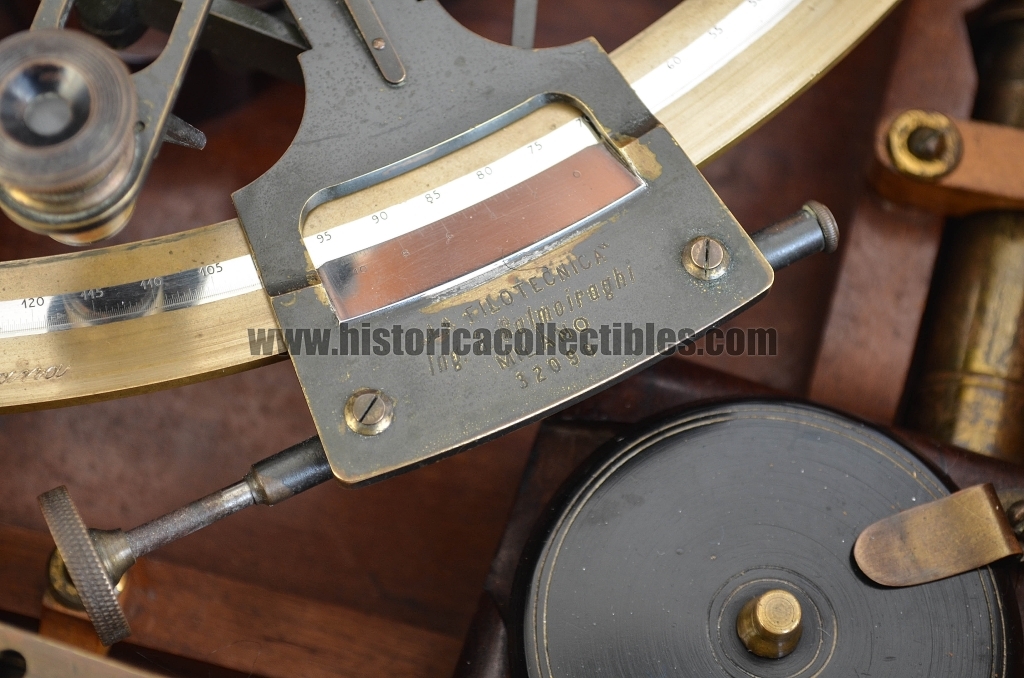
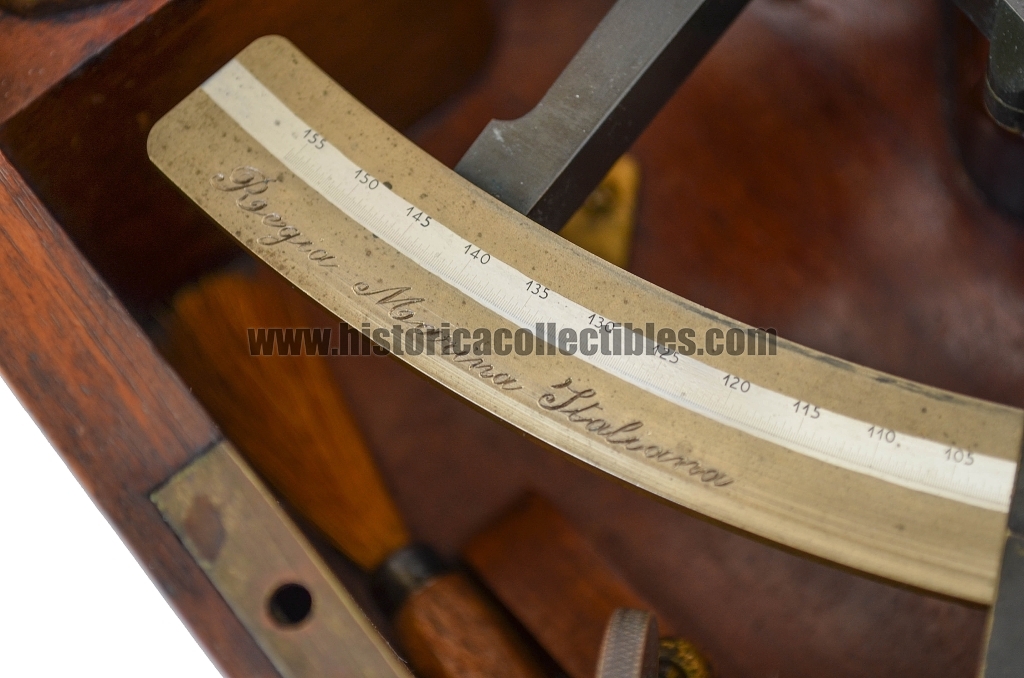
The sextant's graduated scale bears the inscription "Regia Marina Italiana" (Italian Royal Navy), while the vernier movement mechanism bears the manufacturer's logo with serial number 32090.
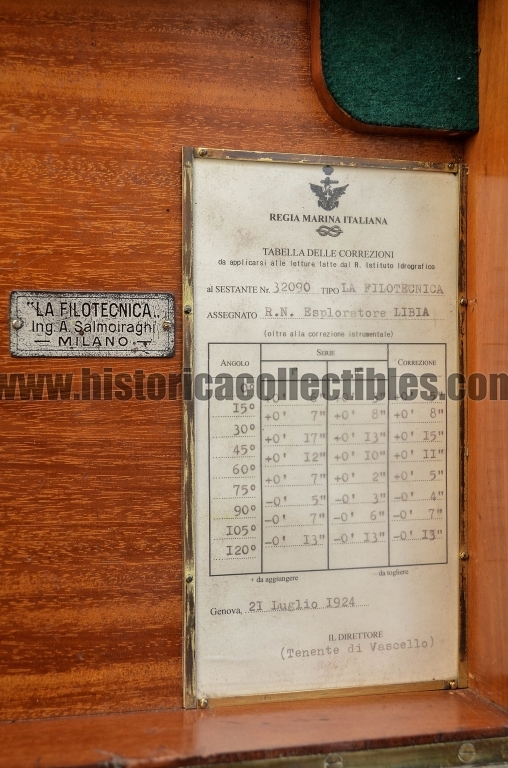
Inside the box lid is a table of the instrument's corrections, performed by the Italian Royal Navy's Hydrographic Institute on July 21, 1924, indicating the correspondence/assignment to the "Regia Nave Libia" (Royal Navy Ship).
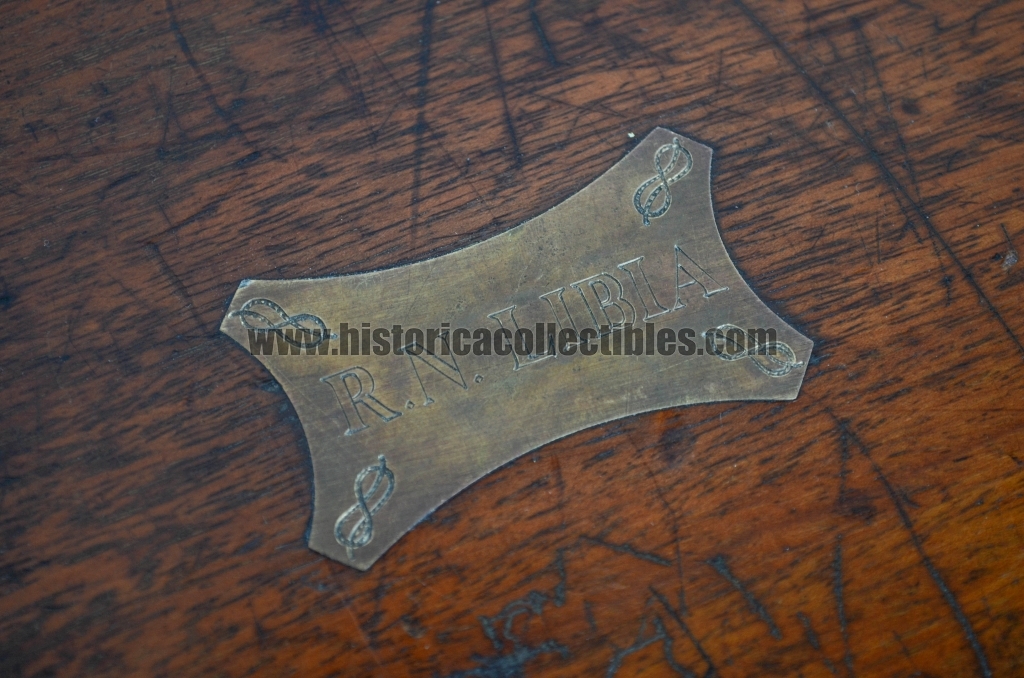
Also on the top of the lid is a bronze plaque bearing the name "R.N. LIBIA" surrounded by four Savoy knots, establishing its ownership (or assignment) to the ship.
The instrument is in a splendid state of preservation.
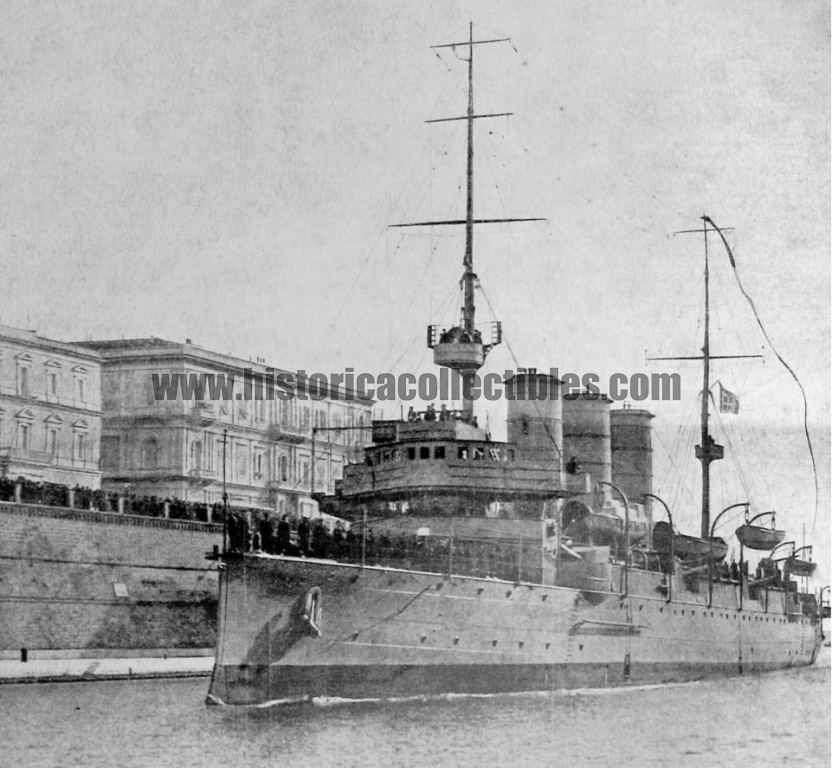
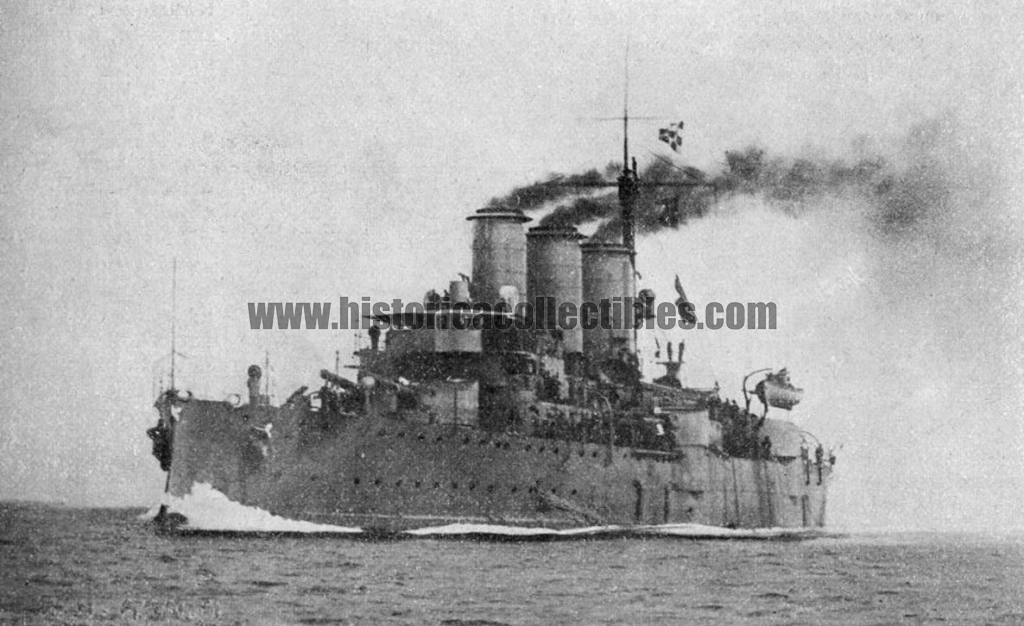
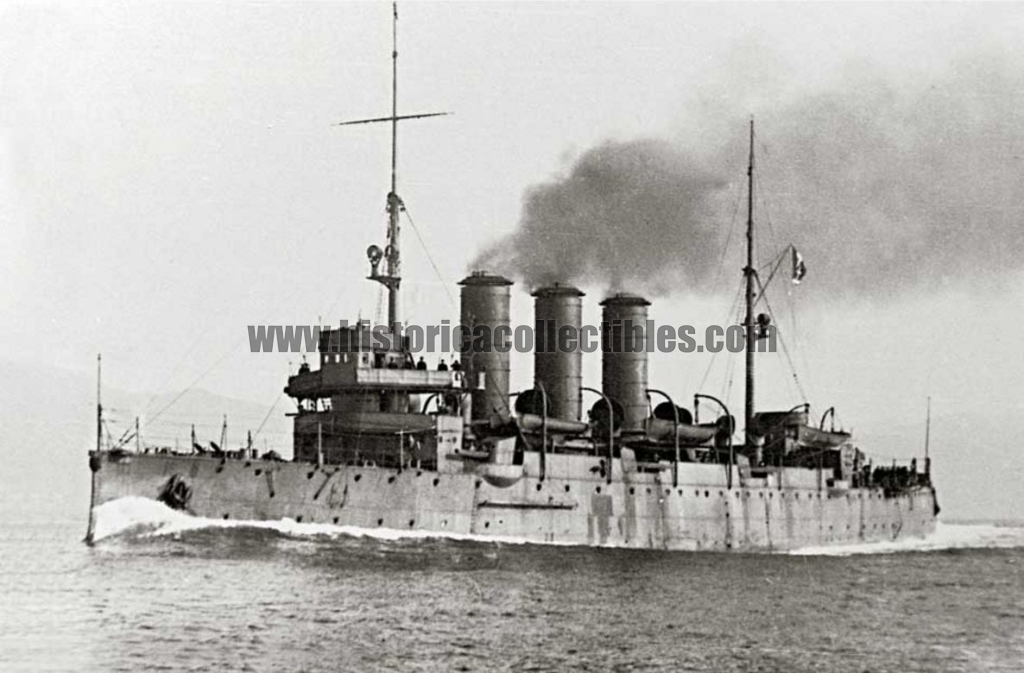
The R.N. Incrociatore Libia was built at the Ansaldo shipyard in Genoa, completing a construction project begun in 1911. It was originally intended to be called Drama, having been commissioned by Turkey. Due to the Italo-Turkish war (in Libya), the cruiser was instead requisitioned by the Italian government and completed in 1913 as designed, with the name "Libia," and assigned to the Royal Italian Navy.
It was a fast cruiser, armed but lightly armored, with characteristics similar to a Scout. This type of vessel could precede a formation of battleships, identifying and eliminating the threat of any torpedo boats or torpedo boats, for which it had sufficient armament and speed.
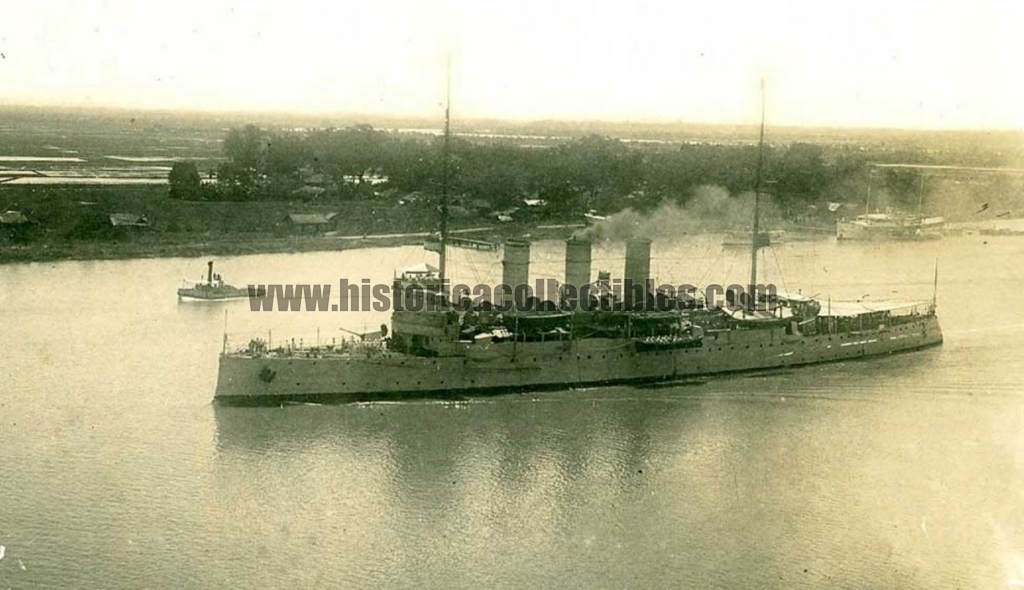
The Libia saw limited operational use during the First World War. In 1917, she was deployed to Greece and subsequently to Albania until the end of the conflict. After the war, her characteristics had become obsolete and no longer suitable for naval combat. However, being a ship of considerable tonnage and size, with good seaworthiness and spacious and extremely comfortable accommodations, it was decided to use her for ocean cruises and as a representation or stationary vessel in distant locations. She then completed her first round-the-world voyage with Commander Burzagli, departing from Naples on 10 March 1921 and returning to Taranto on 20 February 1923. She reached Cuba, Perù, the Caribbean, the Panama Canal, San Diego and San Francisco, Pearl Harbor, Sydney and Melbourne, arriving in Shanghai on 19 May 1922 (the total number of ports where the Regio Esploratore Libia landed was 59, with a total of 44,000 miles).
Libya was sent again to the Far East in 1924 with Commander Moreno, to replace Calabria, to support the small Carlotto and Caboto units. Libya often stationed in Shanghai, moving either north to the Taku Gulf, touching other ports as far as Japan, or traveling many miles south to Hong Kong.
In May 1925 he went up the Yang-tze-kiang to Hankow. In 1929, while assisting the crew of the fighter Muggia (which sank on the rocks), the Libya suffered a collision with a Chinese merchant ship, which sank; Libya's sailors saved several Chinese shipwrecked men. Commanders Alessio (1925), Miraglia (1927), Pini (1929), Bacci (1932) took turns in command of Libya.
Libya, after the voyage that had made it known throughout the world to foreign and Italian communities, dedicated the rest of its operational life to China, until its return to Italy in 1933 and there unarmed. For almost ten years it was a constant presence of the Italian Royal Navy in the Far East.
A detail worthy of note is the fact that in 1924 the second lieutenant of Vascello Carlo Fecia di Cossato, future submarine ace, was embarked on the "Libia".
Salmoiraghi was a company resulting from the experience that Angelo Salmoiraghi acquired, after graduating from the Milan Polytechnic, in the Filotecnica, founded in 1865, under the guidance of the founder Ignazio Porro. In Filotecnica, Eng. Salmoiraghi held positions of manager until acquiring the property in 1873, transforming the name into „Salmoiraghi, Rizzi e C.“ for the production of optical and topographical instruments.
In 1877 the company dissolved and Angelo Salmoiraghi continued the business alone with a new company called Filotecnica Salmoiraghi. At the end of the century he had excellent collaborations: above all that of Francesco Koristka, improving the offer of optical and precision instruments. Under his guidance, the company developed considerably, until it acquired a leading role among the manufacturers of optical and precision instruments, the Regia Aeronautica and the Regia Marina.