
Sextant Salmoiraghi, Royal Explorer "Da Recco", Italian Royal Navy, circa 1929
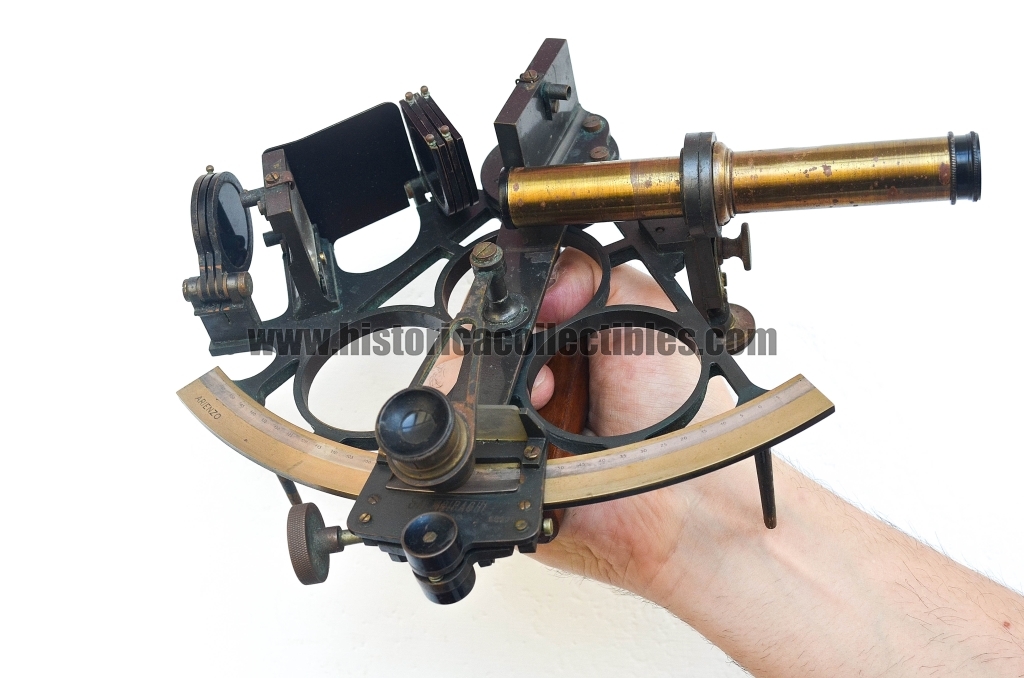
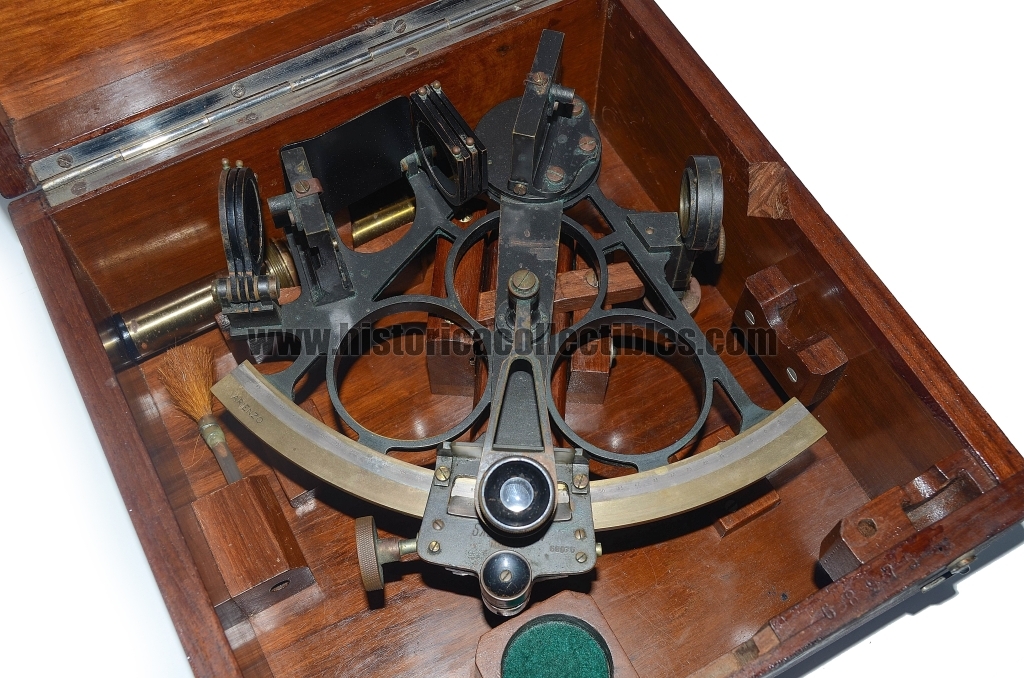
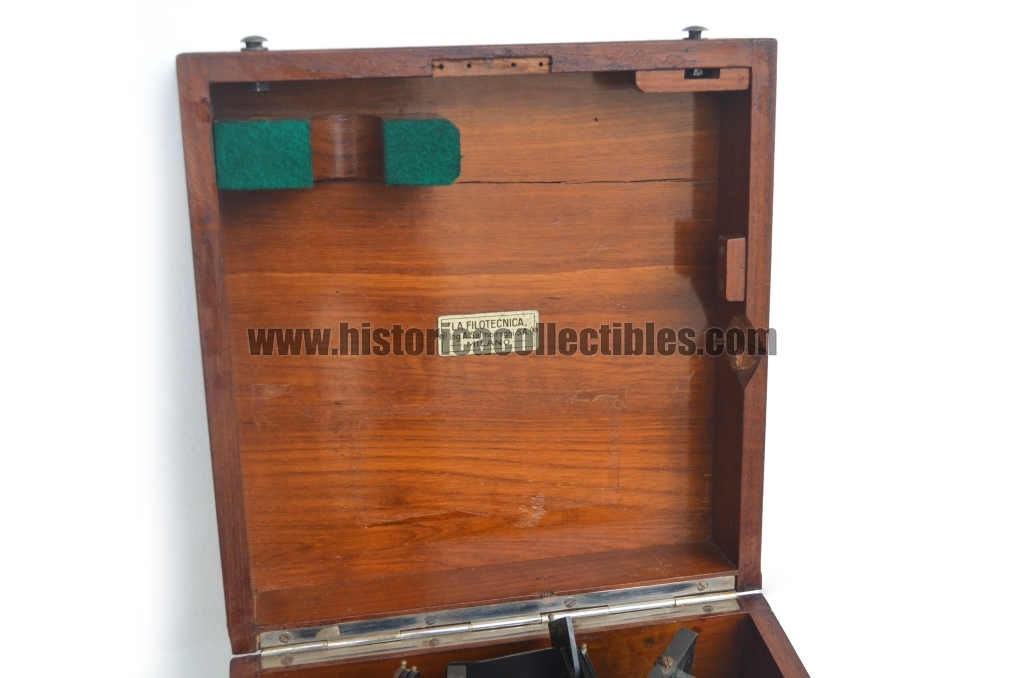
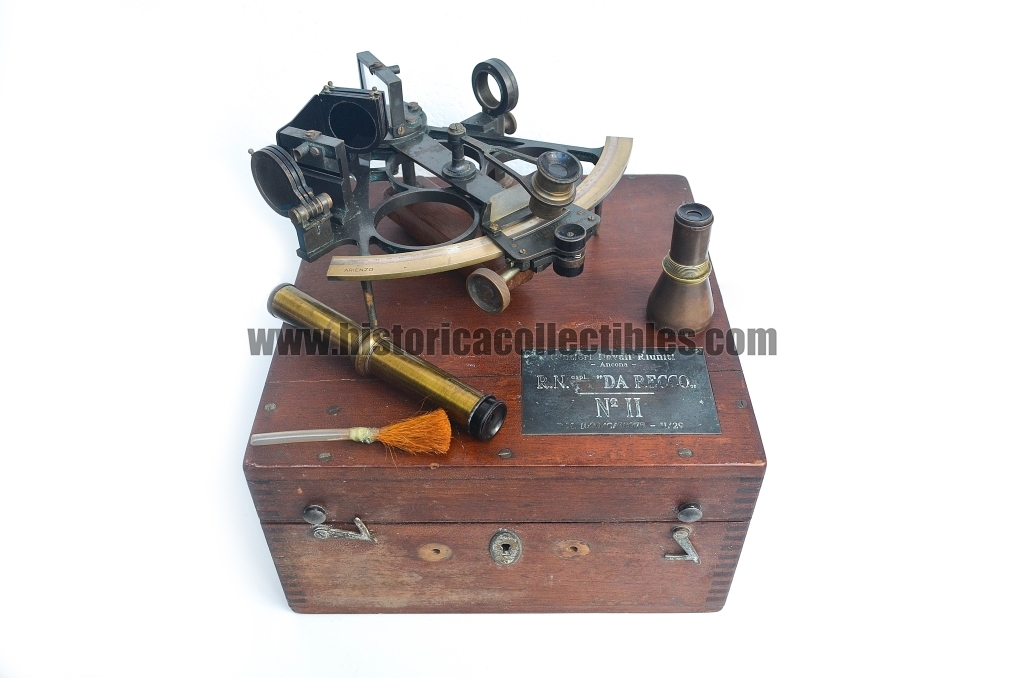
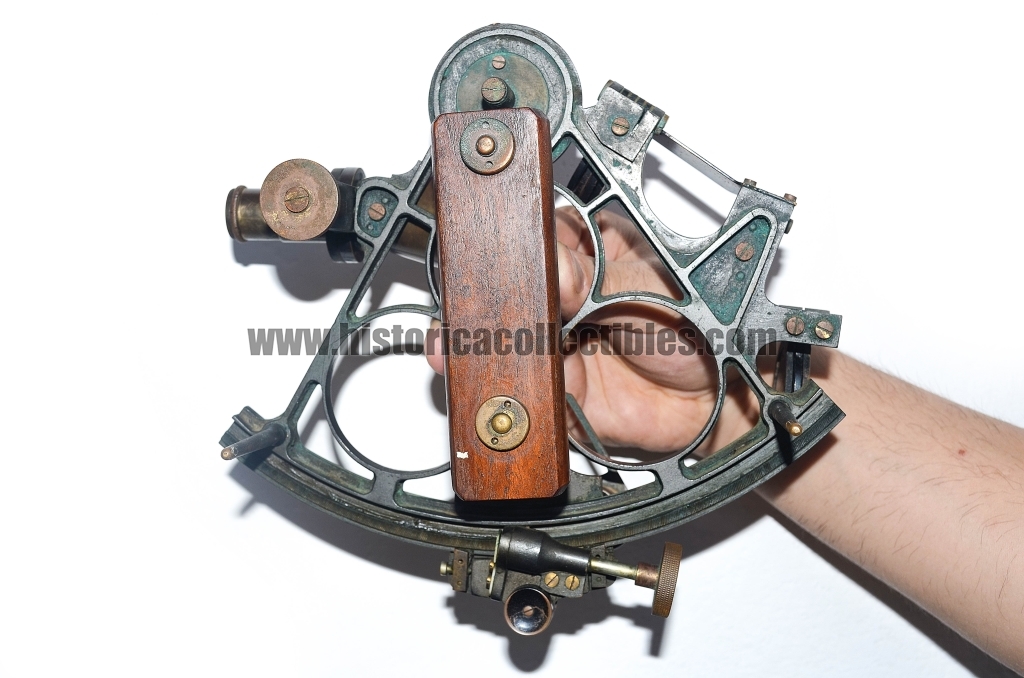
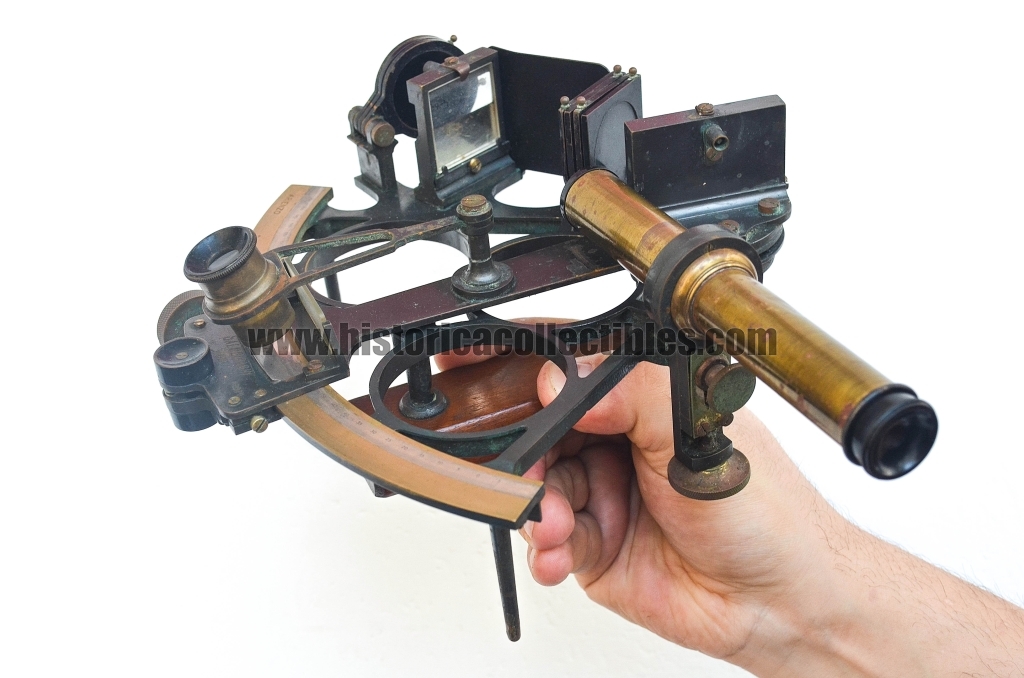
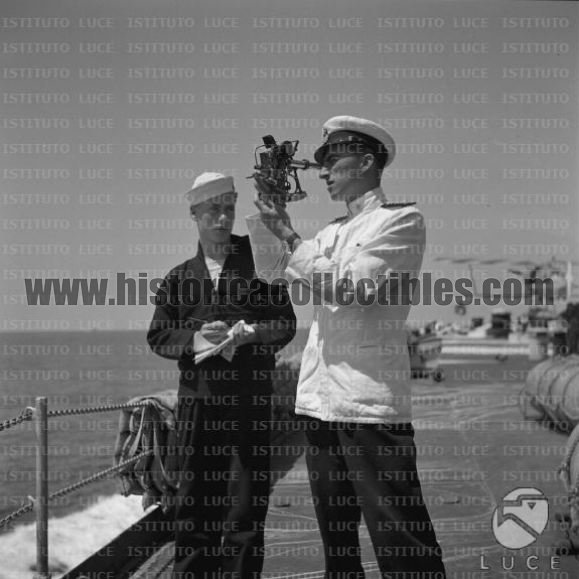
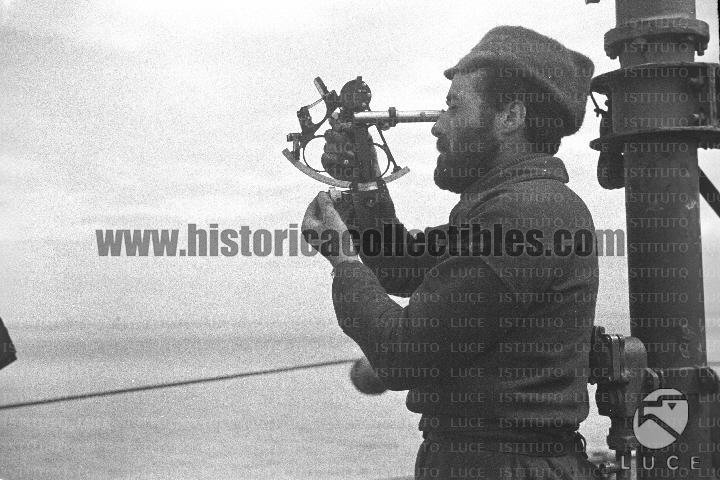
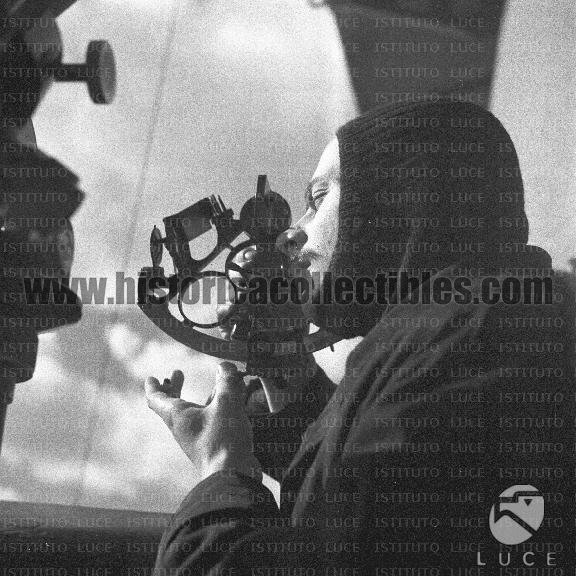
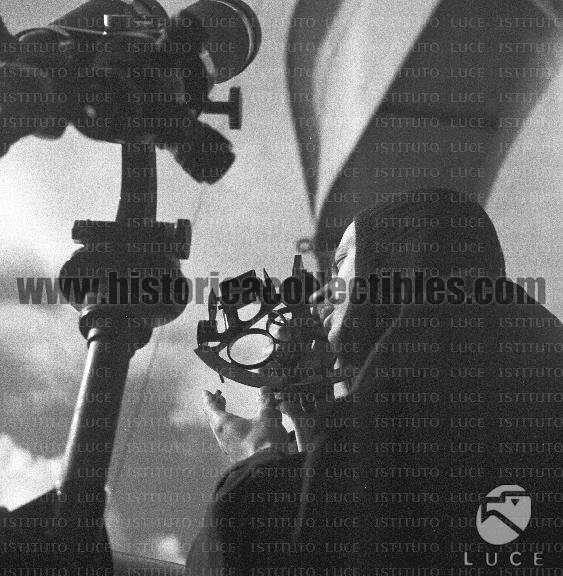
Nautical sextant manufactured for the Royal Navy by Filotecnica Ing. A. Salmoiraghi Milano S.A., dating back to around 1929.
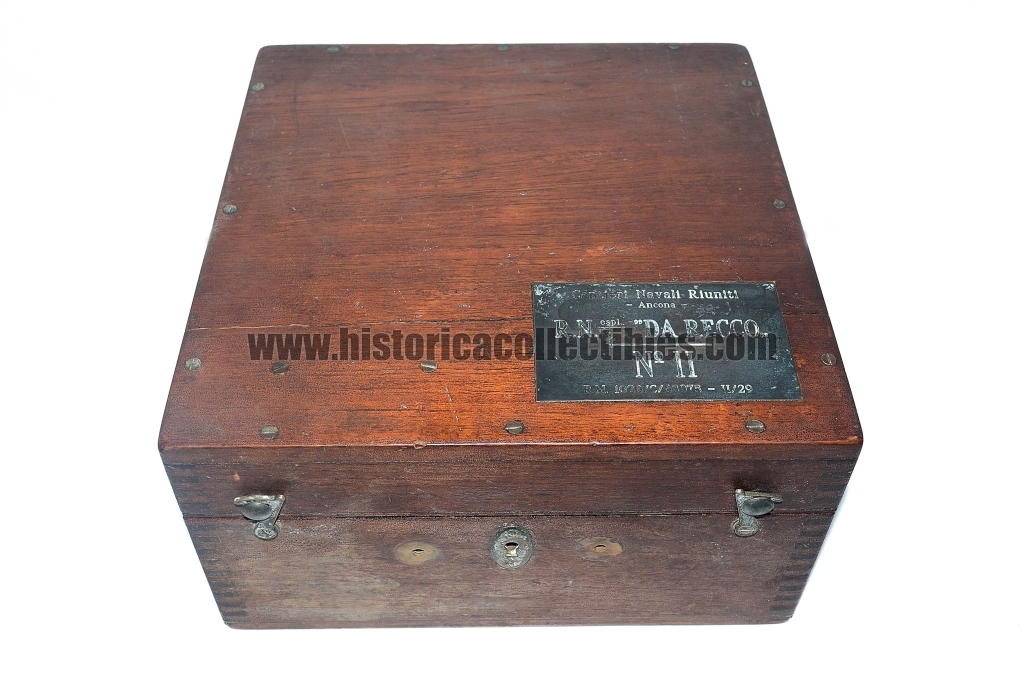
The instrument is preserved in its original case and appears to have been assigned to the Royal Explorer Da Recco. This attribution is attested by the plate affixed to the case, bearing the words "Cantieri Navali Riuniti – Ancona," the shipyard where the vessel was built for the Royal Navy and which also supplied and installed the onboard equipment, including this sextant.
The same plate also bears further information attributable to inventory or service marks, likely applied by the Royal Navy to identify and manage the onboard equipment. In particular, the abbreviation "N II" can reasonably be interpreted as the sequential number assigned to the sextant within the Royal Explorer Da Recco's equipment.
The collection constitutes a significant testimony to the Italian military nautical equipment of the interwar period, characterised by the presence of historical and inventory references that document with high probability its provenance and original purpose.
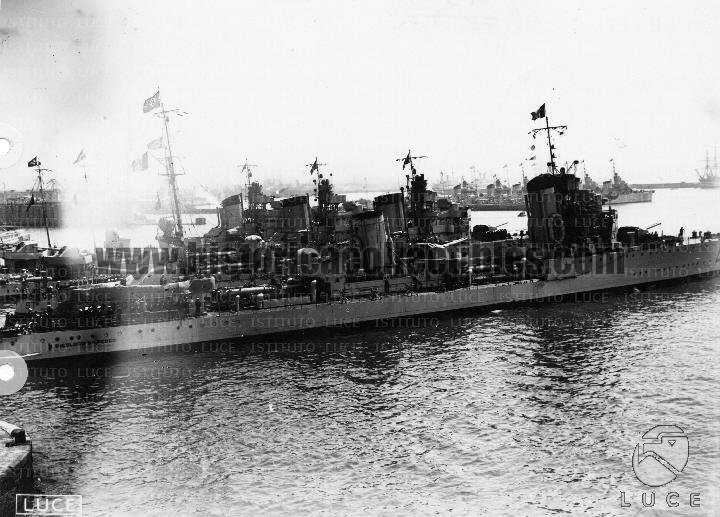
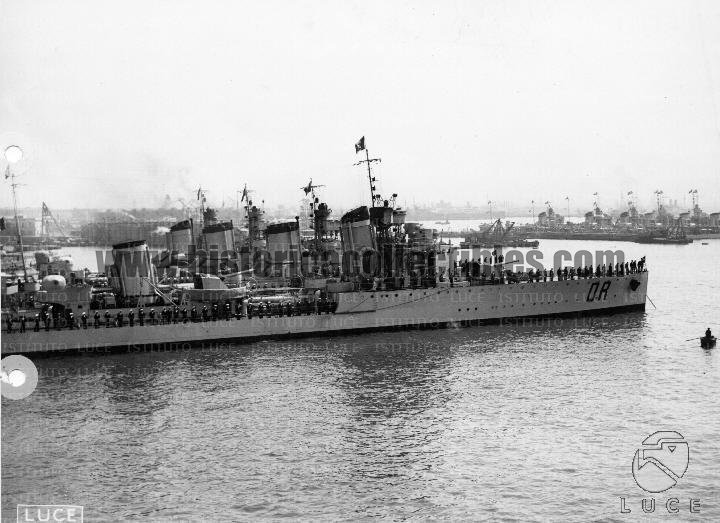
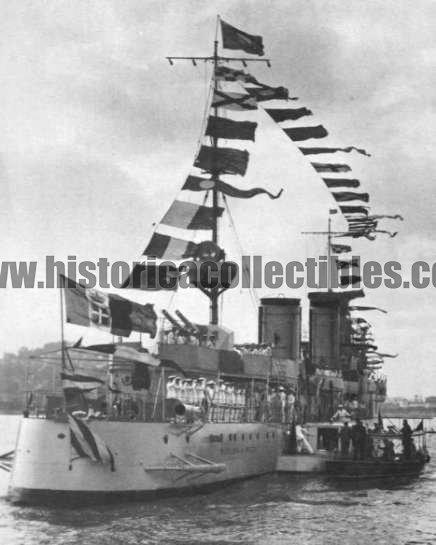
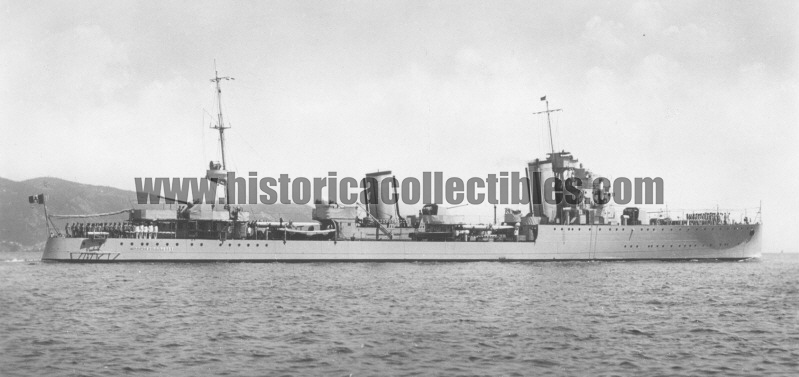
The Nicoloso Da Recco was an explorer and later a destroyer of the Royal Navy. The ship was named after the Genoese navigator Nicoloso Da Recco, who in 1341, along with the Florentine Angiolino del Tegghia de' Corbizzi, made a voyage to the Canary Islands on behalf of Alfonso IV of Portugal.
After delivery, after a brief training period, the ship returned to the shipyard for modifications to improve stability (lightening and lowering the superstructure), as well as replacing the rudder (1932) and torpedo tubes.
Together with its sister ships Alvise Da Mosto, Antonio da Noli, Lanzerotto Malocello, Leone Pancaldo, Emanuele Pessagno, and Luca Tarigo, as flagship of the Scout Division, it participated in the support escort for Italo Balbo's Savoia-Marchetti S.55A seaplanes during the famous Italy-Brazil flight that took place from December 17, 1930, to January 15, 1931. The ship, departing from La Spezia on December 1, spent over five months away from Italy, returning on May 27, 1931.
Upon its return, it began its squadron activities and that same year, after participating in the celebrations for the 50th anniversary of the Naval Academy in Livorno, it received its battle ensign in Genoa on December 8, donated by the municipality of Recco.
Between 1936 and 1938, during the Spanish Civil War, it took part in patrol operations in the waters of the western Mediterranean, based in Tangier and Cadiz and with an operational area in the western Mediterranean basin.
Downgraded to destroyer on September 5, 1938, he became Squadron Leader of the XVI Destroyer Squadron under the II Squadron based in La Spezia.
In March 1939, the Da Recco was sent to Tripoli, while in April, she took part in the operations for the occupation of Albania.
The Da Recco was then temporarily assigned to the Command School Division.
Subsequently, the XVI Destroyer Squadron was transferred to Taranto under the VIII Naval Division of the I Squadron.
On October 22, 1939, the Da Recco left Taranto and was deployed to Leros, where she remained, operating in the Aegean, until April 30, 1940.
In May 1940, she was deployed to Albania.
Unlike almost all of her sister ships (with the exception of Usodimare), she did not undergo the final round of modifications, thus retaining her original configuration until the end of her operational career.
At the beginning of the Second World War, she was squadron leader of the XVI Destroyer Squadron, which she formed with the twins Usodimare, Tarigo, and Pessagno.
At 2:00 a.m. on June 12, 1940, she set sail from Taranto, along with Pessagno, Usodimare, the 1st Division (heavy cruisers Zara, Fiume, and Gorizia), the 8th Division (light cruisers Duca degli Abruzzi and Garibaldi), and the IX Destroyer Squadron (Alfieri, Oriani, Gioberti, and Carducci) to patrol the Ionian Sea.
At 2:10 PM on July 7, 1940, she set sail from Taranto along with Pessagno and Usodimare and the IV (Da Barbiano, Di Giussano, Cadorna, and Diaz) and VIII (Duca degli Abruzzi and Garibaldi) Cruiser Divisions in support of a convoy to Libya (troop carriers Esperia and Calitea, motor vessels Marco Foscarini, Francesco Barbaro, and Vettor Pisani, escorted by the torpedo boats Orsa, Procione, Orione, Pegaso, Abba, and Pilo). She participated in the Battle of Punta Stilo on July 9, in which, however, Da Recco did not play a significant role, although she did take part in the anti-aircraft response to the air attacks the Italian fleet suffered after the battle.
On August 1st, she left Augusta with the twin ships Vivaldi, Da Noli, Pessagno, and Usodimare for an anti-submarine hunt, which ended with the sinking of the British submarine Oswald by the Vivaldi.
On November 28th, she, along with the destroyers Pigafetta, Pessagno, and Riboty and the torpedo boats Bassini and Prestinari, bombarded Greek positions near Corfu.
On December 18th, she again bombarded the Greek lines at Corfu with her own artillery, along with the cruisers Raimondo Montecuccoli and Eugenio di Savoia and the destroyers Pigafetta, Pessagno, and Riboty.
On March 4, 1941, she took part in bombardment operations off the Albanian coast.
At nine o'clock in the evening on March 26, 1941, she set sail from Brindisi with her sister ship Pessagno and the VIII Cruiser Division (Duca degli Abruzzi, Garibaldi), later joining the naval squadron—the battleship Vittorio Veneto, Cruiser Divisions I (Zara, Pola, Fiume) and III (Trento, Trieste, Bolzano), Destroyer Squadrons IX (Alfieri, Oriani, Gioberti, Carducci), XIII (Granatiere, Bersagliere, Fuciliere, Alpino), and XII (Corazziere, Carabiniere, Ascari)—destined to participate in Operation Gaudo, which ultimately resulted in the Battle of Cape Matapan. However, in the early stages of the operation, Pessagno suffered a boiler failure that significantly limited her speed; This damage effectively forced the entire VIII Cruiser Division, which only Pessagno and Da Recco were escorting, to withdraw from the theater of operations and return. Da Recco, however, was detached to escort Vittorio Veneto, which had been damaged by torpedo bombers, on its return route.
From April 19 to 23, 1941, together with the VII Cruiser Division (Eugenio di Saovia, Duca d'Aosta, Attendolo, and Montecuccoli) and the sister ships Da Mosto, Pessagno, Da Verrazzano, Pigafetta, and Zeno, she laid the minefields "S 11," "S 12," and "S 13" (using a total of 321 mines and 492 explosive floats) east of Cape Bon.
Between April 23 and 24, the units repeated the operation, laying another 740 mines.
On May 1, she again laid mines northeast of Tripoli, along with the twins Pigafetta, Da Verrazzano, Da Mosto, Zeno, and Pessagno and the cruisers Eugenio di Savoia, Duca d'Aosta, and Attendolo.
On May 4-5, she provided indirect escort—along with the twins Pigafetta, Da Mosto, Zeno, and Da Verrazzano and the light cruisers Eugenio di Savoia, Attendolo, and Duca d'Aosta—to a convoy (consisting of the troop transport Victoria and the cargo ships Marco Foscarini, Barbarigo, Calitea, Ankara, Andrea Gritti, and Sebastiano Venier, escorted by the destroyers Vivaldi, Da Noli, and Malocello and the torpedo boats Cassiopea, Orione, and Pegaso) en route from Naples to Tripoli. The ships reached their destination unscathed despite spotting a submarine, which, however, did not attack.
In the summer of 1941, it was deployed to Palermo.
On June 3, 1941, it laid two minefields northeast of Tripoli, along with the destroyers Pigafetta, Da Verrazzano, Usodimare, Gioberti, Scirocco, and Da Mosto, and the Divisions IV (light cruisers Bande Nere and Di Giussano) and VII (light cruisers Eugenio di Savoia, Duca d'Aosta, and Attendolo).
On June 28, it laid the "S 2" minefield in the Strait of Sicily, along with the cruisers Attendolo and Duca d'Aosta, and the destroyers Pigafetta, Da Verrazzano, Da Mosto, and Pessagno.
On July 7, together with the IV (Bande Nere and Di Giussano) and VII (Attendolo and Duca d'Aosta) Cruiser Divisions and the destroyers Pigafetta, Da Mosto, Pessagno, Da Verrazzano, Maestrale, Grecale, and Scirocco, she carried out a minelaying mission in the Strait of Sicily.
On August 19, she, along with the destroyers Gioberti, Vivaldi, and Oriani and the torpedo boat Dezza, later joined by the X Squadron (Maestrale, Grecale, Libeccio, and Scirocco), escorted a convoy sailing from Naples to Tripoli (troop carriers Marco Polo, Esperia, Neptunia, and Oceania). On August 20, when the transports had already secured their route to Tripoli (even escaping an attack by the submarine HMS Unbeaten), the British submarine Unique torpedoed the Esperia, which sank in position 33°03' N and 13°03' E. A total of 1,139 men were rescued, while 31 people died.
On September 1, the convoy sailed from Naples to escort, along with the destroyers Folgore, Dardo, and Strale, the motor vessels Andrea Gritti, Rialto, Vettor Pisani, Sebastiano Venier, and Francesco Barbaro. On the 3rd, the convoy was attacked by aircraft, and the Andrea Gritti, set ablaze by aircraft, blew up, killing 347 men. The damaged Francesco Barbaro had to be towed to Messina by the Dardo, assisted by the destroyers Ascari and Lanciere. The rest of the convoy arrived in Tripoli the next day.
On September 5th, she set sail from Tripoli to escort the destroyers Folgore, Freccia, and Strale, later joined by the torpedo boat Circe, the steamship Ernesto, the motor vessel Col di Lana, and the tanker Pozarica to Naples. On September 7th, the Ernesto was torpedoed and damaged by the Dutch submarine O 21 off the coast of Pantelleria. She was taken to Trapani by Strale and Circe (arriving there on the 8th), while the rest of the convoy continued on to Naples (arriving the following day).
In the early evening of September 16th, she departed Taranto to escort the convoy "Vulcania," bound for Tripoli. The convoy consisted of the troop transports Neptunia and Oceania, escorted by the Da Recco—which, under the command of Captain Stanislao Esposito, was the escort leader—and by the destroyers Antoniotto Usodimare, Antonio Da Noli, Vincenzo Gioberti, and Emanuele Pessagno. However, the convoy ran into a blockade formed off the Libyan coast by the British submarines Upholder, Unbeaten, Upright, and Ursula. At 4:15 on September 18th, torpedoes fired by the Upholder struck the Neptunia and Oceania, which became immobilized and began taking on water.
Simultaneously with the impact of the guns on the two ships, a belated warning reached the Da Recco from Supermarina—which had intercepted and deciphered a message from the Unbeaten—of the possibility of an underwater attack. Commander Esposito ordered the Vulcania, unscathed, to continue under escort from the Usodimare (both ships reached Tripoli unscathed despite an attack from the Ursula), while the other destroyers fruitlessly hunted for the attacking submarine, provided assistance to the Oceania, and recovered the survivors of the Neptunia, which was now sinking (the ship sank, stern first, at 6:50).
At 8:50, the Oceania, which was being evacuated while the Pessagno was preparing to tow her, was again torpedoed by the Upholder and sank rapidly; the destroyers had no choice but to recover the survivors. Of the 5,818 men aboard the two ships, 5,434 were rescued; the Da Recco contributed to the rescue operation, recovering a remarkable 1,302 survivors.
On October 12, 1941, she left Trapani to escort the destroyer Sebenico and the old torpedo boat Cascino, the steamships Nirvo and Bainsizza, and the tugboat Max Barendt, bound for Libya. On October 14, the Bainsizza was damaged by torpedo bombers in position 34°15' N and 12°12' E, sinking the next day while attempting to tow her by the tugboat Ciclope.
From October 16th to 19th, she was part of the escort (destroyers Folgore, Fulmine, Gioberti, Usodimare, Sebenico) of a convoy sailing from Naples to Tripoli (transports Beppe, Marin Sanudo, Probitas, Paolina, and Caterina), later joined by the trawler Amba Aradam and the torpedo boat Cascino. The Beppe was torpedoed on the 18th by the submarine HMSUrsula, having to be taken in tow by the tugboat Max Barendt, assisted by Da Recco and the torpedo boat Calliope, arriving in Tripoli on the 21st. The Caterina sank at a point 62 miles from Tripoli at an angle of 350° following damage sustained in an air attack. The rest of the convoy arrived in Tripoli on the 19th.
At 5:30 on November 21, she set sail from Naples to escort the modern motor vessel Monginevro and the large tanker Iridio Mantovani to Libya, along with the torpedo boat Cosenz, as part of a trafficking operation. The operation, however, failed following the torpedoing and severe damage to the cruisers Trieste and Duca degli Abruzzi (part of the indirect escort).
At 10:30 on December 12, she set sail from Messina to escort convoy "A," consisting of the modern motor vessels Fabio Filzi and Carlo Del Greco, to Taranto—from where the ships would continue to Tripoli—as part of Operation "M 41." At 2:30 a.m. on the 13th, while the ships were passing 15 miles south of Cape San Vito, about ten miles from Taranto, they were attacked by the submarine HMS Upright, which torpedoed the merchantmen. The Filzi capsized and sank within seven minutes, while the Del Greco, while attempting to tow her, sank from damage. 214 of the 649 men aboard the two ships perished.
From December 16th to 18th, as part of the "M 42" traffic operation, she escorted convoy "L" from Taranto to Tripoli, along with the twin ships Da Noli, Malocello, Vivaldi, Zeno, and Pessagno. The convoy consisted of the modern motor vessels Napoli, Monginevro, and Vettor Pisani. (The ships initially traveled with another convoy, "N"—motor vessel Ankara, destroyer Saetta, and torpedo boat Pegaso—and separated off Misurata.) At 9:40 PM on December 18th, Napoli was hit by bombers and torpedo bombers off Tagiura, sustaining serious damage. However, the Da Noli took her in tow and towed her to Tripoli (where she arrived the following day).
On December 19th, at 7:45 PM, she accidentally rammed and sank the auxiliary minesweeper (formerly a tugboat) G 32 Ferruccio at the entrance to Tripoli harbor.
At 10:15 AM on January 3, 1942, she set sail from Messina along with the destroyers Bersagliere, Fuciliere, Vivaldi, and Usodimare to escort a convoy composed of the modern motor vessels Nino Bixio, Lerici, and Monginevro to Tripoli as part of Operation M 43 (three convoys to Libya with a total of 6 merchant ships, 6 destroyers, and 5 torpedo boats at sea). All the merchant ships arrived at their destination on January 5th.
On 18 January, together with the Usodimare, she was escorting the large motor tanker Giulio Giordani when the convoy was attacked by Fairey Swordfish torpedo bombers of 830 Squadron, but escaped unscathed.
Captain Aldo Cocchia took command in March 1942. At the time, the Da Recco was undergoing extensive refitting in La Spezia, a work that continued until early May. This included, in addition to engine maintenance, the removal of most flammable materials and the loading of an echo sounder. On May 9th, the ship, having completed the work and conducted tests and exercises, left La Spezia.
On the afternoon of May 11, she departed Naples for Tripoli, escorting—along with the destroyer Premuda and the torpedo boats Castore, Polluce, and Climene—a convoy composed of the modern cargo ships Gino Allegri, Reginaldo Giuliani, Ravello, Agostino Bertani, and Unione, and the large German steamship Reichenfels. This was part of the "Mira" shipping operation, which involved the shipment to Libya of 58 tanks, 713 vehicles, 3,086 tons of fuel and lubricating oil, 513 men, and 17,505 tons of ammunition and other supplies. The Giuliani suffered a pump failure and was forced to retreat to Palermo; the Premuda was detached to escort her. The rest of the convoy reached its destination unscathed.
The vessel then left Tripoli escorting the large motor vessel Gino Allegri, which it escorted to Brindisi (while en route, it was necessary to warn the Allegri that it was about to run into an Italian minefield).
On May 30, it left Brindisi with the Allegri, later joining the destroyer Euro and the motor vessel Rosolino Pilo. After dropping some depth charges on a submarine of dubious nationality, the Da Recco separated from Euro and Allegri (the latter was sunk shortly thereafter by an air attack) and escorted the Pilo to Benghazi.
In the second week of June, the Da Recco underwent brief engine repairs, and in mid-June it was temporarily deployed to Messina to provide relief to any ships damaged in the Battle of Mid-June.
On June 20th, at two in the morning, she set sail from Naples, escorting the destroyer Strale and the torpedo boat Centauro, the motor vessels Rosolino Pilo and Reichenfels to Tripoli with a cargo of four tanks, 376 motor vehicles, 290 soldiers, 638 tons of fuel and lubricating oil and 7,117 tons of other supplies. The following night the Strale ran aground on the coast of Tunisia and the Centauro was sent to assist it, so only the Da Recco remained to escort the convoy, which at midday on 21 June was attacked by 9 Bristol Beaufort torpedo bombers escorted by 6 Bristol Beaufighter fighters: the strong reaction of the Da Recco shot down three aircraft, including the squadron leader (from on board the unit it was believed to have shot down double), dispersing the others, but one of the torpedoes still hit the target, hitting the Reichenfels on the bow, which, despite the Da Recco's attempt to approach to transfer personnel or at least take it in tow, sank within a quarter of an hour. Da Recco's only remaining option was to rescue the Reichenfels's crew and troops—approximately 300 men, with no casualties—as well as six airmen—a Canadian and a New Zealander from the attacking aircraft and four Germans from a Junkers Ju 88 of the indirect escort shot down by British aircraft in the battle—and escort the unharmed Pilo to Tripoli.
In June, together with the destroyer Saetta, she escorted the Italian motor vessels Monviso and the German Ankara to Libya; during the night, the convoy was unsuccessfully attacked by torpedo bombers, one of which was hit by the Da Recco and finished off by the Saetta.
In early August, she, along with her sister ship Da Verrazzano, carried out a transport mission to Navarino, where she landed supplies, and to Tobruk, where she transported troops (the Da Verrazzano carried out a similar mission to Benghazi). Off the coast of Libya, the Da Recco (which had meanwhile rejoined the Da Verrazzano) struck a submerged object with its propeller. On the return voyage, the forward engine evaporator exploded due to a malfunctioning safety valve.
To repair these damages, the vessel spent a month undergoing repairs at the Taranto dockyard.
On August 15, she was escorting the large motor vessels Lerici and Ravello from Brindisi to Benghazi, along with the torpedo boats Castore, Polluce, and Calliope, when, at 6:30 PM, in position 34°50' N and 21°30' E, the Lerici was torpedoed and set on fire by the submarine HMS Porpoise. The Da Recco continued to Benghazi with Castore and Ravello, while the Lerici, after futile rescue attempts by the Calliope, sank by the stern.
On August 17, she set sail from Benghazi to escort the motor vessels Sestriere and Nino Bixio to Brindisi, along with the destroyer Saetta and the torpedo boats Castore and Orione. At 3:35 PM that same day, however, the Bixio was hit and severely damaged by two torpedoes from the submarine Turbulent, killing 434 men. While the Bixio was towed to Navarino by the Saetta, the Da Recco continued on to its destination along with Sestriere and Castore.
On August 24, she left Brindisi bound for Piraeus to escort the motor vessel Manfredo Camperio. Once in the Greek port, the convoy was joined by the steamship Tergestea and the torpedo boats Polluce and Climene. Once the convoy had set off again for Benghazi, at 7.49 on 27 August the Camperio was torpedoed by the submarine HMS Umbra and caught fire: while the Polluce attempted to save the burning ship (but the attempt was in vain and at 12.28 it was the Polluce itself that had to finish off the Camperio with cannon fire, which sank in position 35°39' N and 23°07' E), the Da Recco spotted the attacking submarine and subjected it to the launch of four volleys of depth charges: air bubbles, wreckage, and slicks of diesel fuel surfaced and finally a capsized underwater unit was seen surfacing for a few seconds, which sank immediately afterwards: all this led to the belief that the enemy unit had been sunk, but the Royal Navy never confirmed any losses (the Umbra survived the war and was scrapped in 1946). The Da Recco then joined the Climene in escorting the Tergestea to Benghazi; during the voyage, four shipwrecked men were sighted and rescued (two from the Da Recco and two from the Climene), the sole survivors of a group of about a hundred men who had been lost overboard a week earlier following the torpedoing of the Bixio.
In September, the Da Recco was primarily employed in escort operations on the Aegean Sea routes.
One of these missions was the escort of the small German tanker Ossag from Pireo to Salonicco.
From Salonicco, Da Recco set sail with the German auxiliary minesweeper Bulgaria, escorting the tanker Albaro, bound for Constanta, to the Dardanelles.
On another occasion, she escorted the two small steamships Minerva and Ginetto from Iraklion to Pireo, along with two German armed motor launches.
She later escorted the auxiliary cruiser Barletta, loaded with ammunition, from Piraeus to Tobruk, evading a nighttime air attack.
On September 24, she left Pireo to escort the German steamships Menes and Anna Maria Gualdi to Tobruk, along with the torpedo boats Lupo, Sirio, and Castore. They were later joined by the tanker Proserpina and the torpedo boats Libra and Lira. The convoy reached its destination unscathed after repelling an air attack.
At eight o'clock in the evening on October 12th, she set sail from Brindisi, escorting the modern motor vessel D'Annunzio, along with the destroyer Folgore and the torpedo boats Ardito and Clio. The convoy then joined up with another from Corfu (the torpedo boat Partenope and the destroyer Lampo, escorting the motor vessel Foscolo). She reached port unscathed on the 14th, despite continuous air attacks, which were repelled by onboard gunfire. The Da Recco and the other escort vessels departed that day and then escorted the motor vessels Sestriere and Ruhr on their return journey, without being attacked.
On October 31st, she departed alongside the more modern destroyers Bersagliere and Corazziere to transport a cargo of 250 tons of ammunition (split between all three ships) to Tobruk. Sailing the eastern Mediterranean route, the three ships reached their destination on November 2nd, despite a violent air attack (lasting two and a half hours) carried out on the night between November 1st and 2nd. During this attack, at 1:40 a.m., the Da Recco was hit by a torpedo that fell unexploded onto her foredeck, causing minor damage and then rolling into the water, while the attacking aircraft was hit and shot down by the Da Recco.
After completing the repairs to repair the damage, the Da Recco carried out a first escort mission to Patras and then a second (for an Italian and a German transport) from Patras to Taranto.
On November 28th she set sail from Taranto to escort to Palermo, together with the destroyer Lampo, the steamship Gualdi and the tanker Giorgio: the Gualdi had to repair in Messina due to serious engine damage, while the other three units arrived in Palermo the following morning.
At midnight on December 2, the convoy set sail from Palermo under the command of Captain Aldo Cocchia, together with the destroyers Folgore and Camicia Nera and the torpedo boats Procione and Clio, to escort convoy "H" (the troop transports Aventino and Puccini, the German military transport KT 1, and the ferry Aspromonte) to Palermo. The convoy was carrying a total of 1,766 soldiers, 698 tons of supplies, mostly ammunition, 32 motor vehicles, 4 tanks, and 12 artillery pieces. Through the Ultra organization, the Royal Navy learned of the convoy and sent Force Q (the light cruisers Aurora, Sirius, and Argonaut, and the destroyers HMCS Quiberon and HMCS Quentin) against it. At 00:37, British ships intercepted convoy "H" and attacked it near the Skerki Bank (Tunisian coast). In the violent battle, which lasted for an hour, all the transports (except the Puccini, which was irreparably damaged and subsequently scuttled) and the Folgore were sunk, and the Procione was severely damaged.
The Da Recco, which was leading the convoy and had received the message from Supermarina informing it of the presence of Force Q at midnight, ordered a 90° turn to port at 00:05, and a 90° turn to starboard at 00:17 to return to the previous course. This order, due to the malfunction of the merchant ships' radio equipment, caused a collision between Aspromonte and Puccini and the loss of contact between KT 1 and the other ships. At 00:38, one minute after Force Q opened fire on KT 1, Commander Cocchia ordered the other units to counterattack and then headed toward the British formation, firing his 120 mm guns both in a pounding (to hit the British ships) and in a flash (to make them more visible to the other Italian ships). After a few minutes, he turned aside and returned to the attack at 00:55, continuing to fire until, at 00:57, Force Q was standing astern of Da Recco.
The destroyer then turned east to close in on the enemy formation. She found it around 1:30, about 4,000 meters away, and maneuvered to close unseen (and therefore without reopening fire), intending to close in and then attack with torpedoes. but when the ship was ready to launch, less than 2000 metres from the English ships, some diesel fuel that had accumulated in the smoke generator of the forward funnel caught fire, erupting a column of sparks, which revealed the position of the Da Recco to the enemy units.
As the ship turned to launch torpedoes and move away, a first salvo of four rounds landed a short distance away; immediately afterward, a second struck: two shells destroyed the twin bow complex and two others struck the ammunition magazine, causing a devastating explosion that engulfed the entire bow area and engulfed the bridge superstructure, killing or seriously burning everyone on board. In all, half the crew died or suffered serious burns, including Commander Cocchia himself, who nevertheless retained command for a long time.
While Force Q, having completed the destruction of the convoy, moved away without delivering the final blow to the Da Recco, aboard the burning ship, which had meanwhile stopped (the chief engineer, Captain Cesare Petroncelli of the Naval Engineers, had deemed it appropriate, in such a situation, to stop the engines), the remaining able-bodied crew (no more than a quarter, given that, in addition to the dead and wounded, many men had fallen overboard or jumped), under the direction of the second in command, Lieutenant Captain Pietro Riva, attempted to contain and extinguish the raging fire, while the communications officer, Lieutenant Alfredo Zambrini, and the radio operator Sergeant Mario Sforzi, both burned, reactivated a radio signal, informing the other ships of the critical situation of the Da Recco and requesting assistance. Around eight in the morning the fires were extinguished and the engines restarted; the seriously injured and burned, around sixty, were transferred to the sister ship Da Noli, while the Pigafetta took the battered vessel (which had also significantly bowed) in tow and towed it to Trapani.
In the battle, 118 men from the Da Recco were killed: 5 officers, 15 petty officers, and 98 petty officers and sailors.
The Gold Medal for Military Valor was awarded in memory of Lieutenant Zambrini, who died in hospital in Trapani from burns; Commander Cocchia also received a similar decoration during his lifetime.
The repairs were extensive: after twenty days spent in Trapani to be restored to seaworthy condition, the Da Recco was transferred to the Taranto Arsenal, where she remained from January 9 to June 26, 1943, returning to service in July 1943. In addition to repairing the damage, modifications were carried out, such as replacing the aft torpedo launcher and the 13.2 mm machine guns with two 37 mm and nine 20 mm guns, respectively. An EC3/ter "Gufo" radar was also embarked.
Between July and September, the ship operated escort missions for units tasked with laying mines in the Ionian Sea.
At 5:00 PM on September 9, 1943, following the proclamation of the armistice, the Da Recco set sail from Taranto along with the battleships Caio Duilio and Andrea Doria and the light cruisers Luigi Cadorna and Pompeo Magno to surrender to the Allies in Malta, where she arrived the following day at 5:50 PM, mooring off Madliena Tower.
On September 12, she refueled in Valletta and on September 14, she left the island, along with part of the Italian fleet that had surrendered there in the meantime (the battleships Italia and Vittorio Veneto, the cruisers Eugenio di Savoia, Duca d’Aosta, Montecuccoli, and Cadorna, and the destroyers Artigliere, Grecale, and Velite), and transferred to Alexandria, Egypt, where she arrived on the 16th.
Up until the armistice, the Da Recco had flown 176 war missions (including 70 escort missions).
Salmoiraghi was a company resulting from the experience that Angelo Salmoiraghi acquired, after graduating from the Milan Polytechnic, in the Filotecnica, founded in 1865, under the guidance of the founder Ignazio Porro. In Filotecnica, Eng. Salmoiraghi held positions of manager until acquiring the property in 1873, transforming the name into „Salmoiraghi, Rizzi e C.“ for the production of optical and topographical instruments.
In 1877 the company dissolved and Angelo Salmoiraghi continued the business alone with a new company called Filotecnica Salmoiraghi. At the end of the century he had excellent collaborations: above all that of Francesco Koristka, improving the offer of optical and precision instruments. Under his guidance, the company developed considerably, until it acquired a leading role among the manufacturers of optical and precision instruments, the Regia Aeronautica and the Regia Marina.