
Watchmaker's lathe, Rounding Machine and Magnifying Glass, belonged to Giovanni Panerai - Firenze, circa 1870
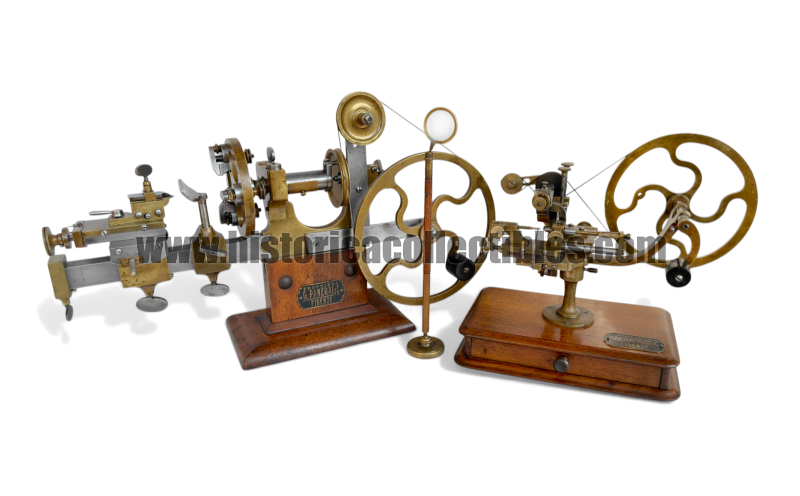
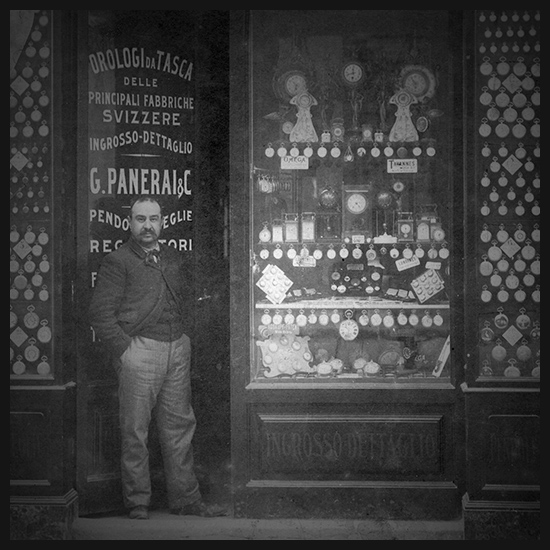
A watchmaker's lathe and rounding machine owned and likely used personally by Giovanni Panerai (1825–1897), founder of the eponymous and legendary Officine Panerai brand in Florence.
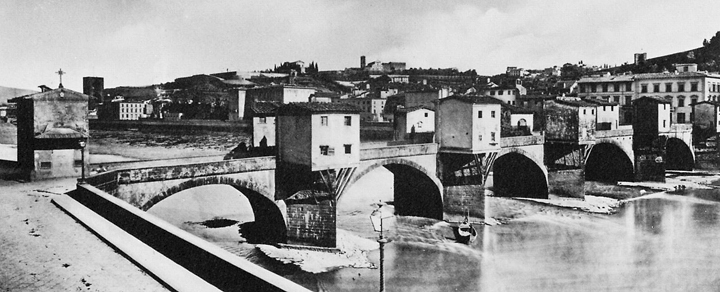
In 1860, Giovanni Panerai founded a workshop specializing in high-precision mechanical work and watchmaking, called “G. Panerai & C.”, in a small cell located on the piers of the Ponte alle Grazie (Firenze - Italy), once owned by the cloistered nuns of "Le Murate." He also established the first watchmaking school in Florence there.
Following the bridge's renovation, which required the removal of the existing premises, the business moved to its current historic location in Piazza San Giovanni. Here, Panerai, initially the city's only watch and clock repairer, quickly became a retailer of timepieces produced by the most important Swiss manufacturers. These watches were often shipped disassembled: Panerai itself therefore took care of assembling them before selling them, a practice that allowed the companies to respond to growing demand.
The two instruments presented here, likely acquired during the initial phase of his business at Ponte alle Grazie, were used in the construction and repair of key movement components. Their importance was such that Giovanni Panerai had them personalized with two plaques bearing the words "G. PANERAI & C. – Firenze." It is significant to note that the font of these plaques matches that of the trademark on the glass door of the shop in Piazza San Giovanni, visible in numerous period photographs.
Considering that the electric motor-powered lathe became widespread only in 1895, it is plausible that these instruments accompanied Panerai throughout his professional life, even at his Piazza San Giovanni headquarters until his death in 1897.
The two instruments are accompanied by a letter from the son of an important Florentine watchmaker, whose father was a friend and collaborator of Guido Panerai (1873–1934), Giovanni's nephew.
The instruments are accompanied by a document certifying their provenance, issued by the son of a Florentine watchmaker, whose father was a collaborator and friend of Guido Panerai (1873–1934), the founder's grandson and his successor at the helm of the company. The document is also accompanied by an original photographic postcard (circa 1930), also cited in the letter, depicting the watchmaker's workshop in Piazza Duomo, a short distance from the Panerai workshop.
The two instruments also include a small magnifying glass with a articulated head and base, used by Giovanni Panerai during his work, perfectly matching the height of the tool. This element is further embellished with the Officina Galileo di Firenze trademark, a detail that helps place the instruments' acquisition chronologically: the company used this name between 1864 and 1870, before adopting the name "Officine Galileo Firenze."
This complete set, owned and used by Giovanni Panerai, therefore represents a direct testimony to the work of the founder of one of the most important Italian watchmaking dynasties, which gave rise to what would become one of the most famous watch and military instrument manufacturers in the world: Officine Panerai di Firenze, located at Piazza San Giovanni 4.
These two extraordinary historical artifacts constitute a collection of exceptional value, not only from a collectibles perspective, but also for their historical and cultural significance.