
10 Surgical Instruments, made of wrought iron, for Cerusi or Surgeons, 1680-1730
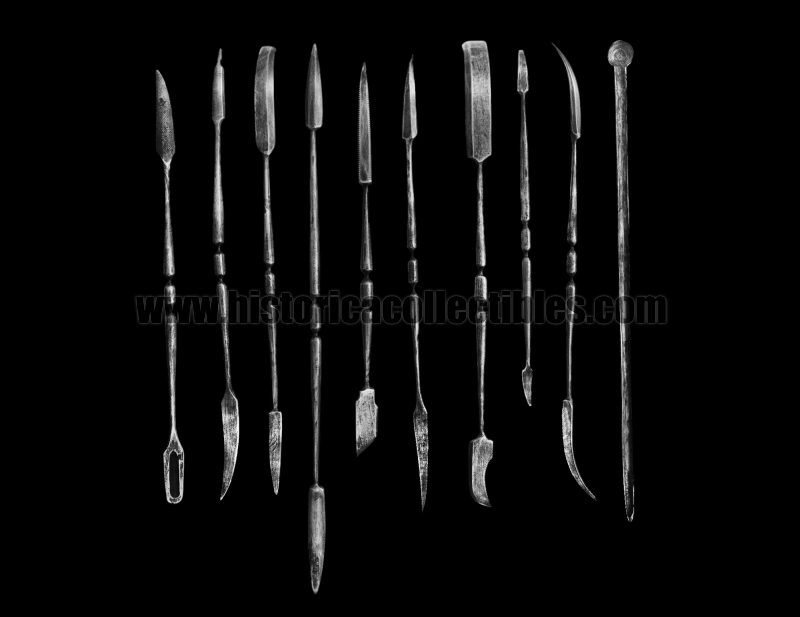
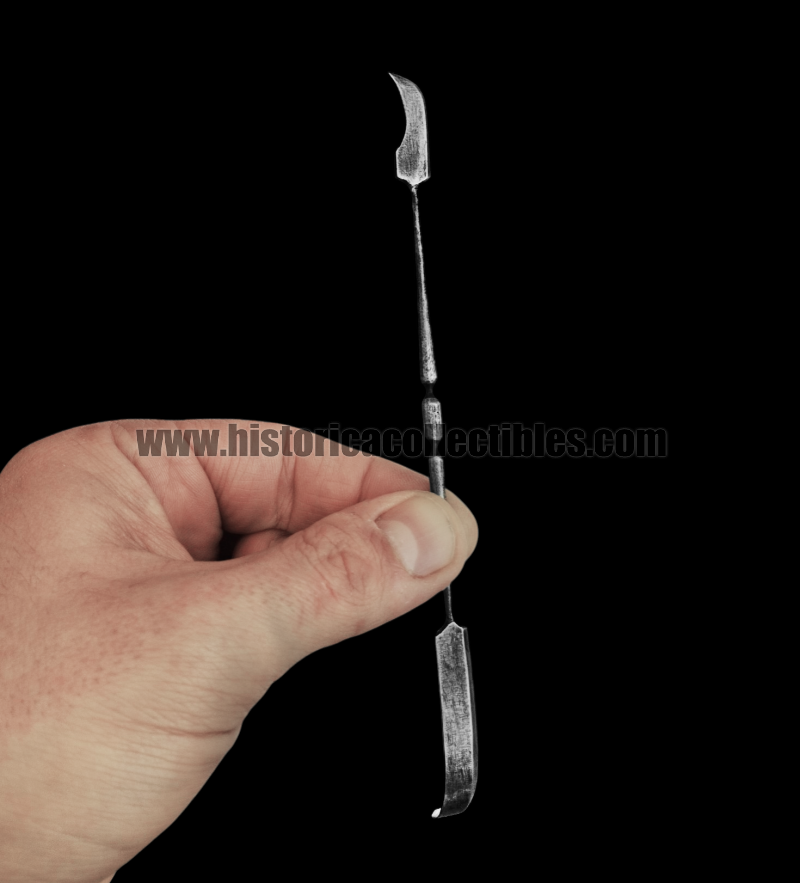
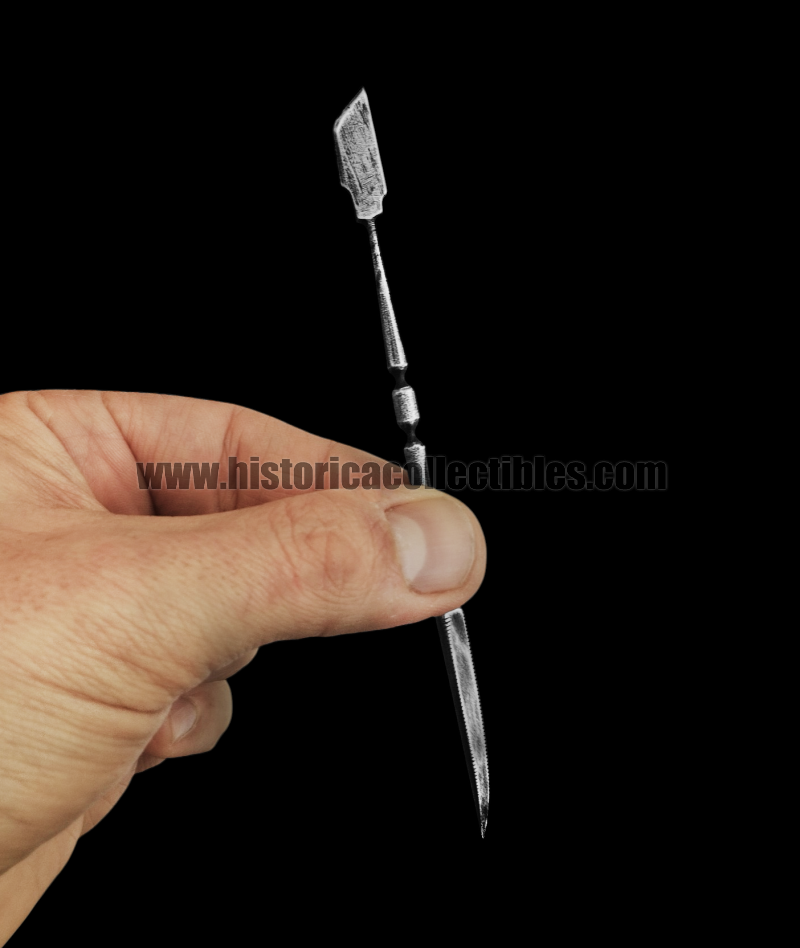
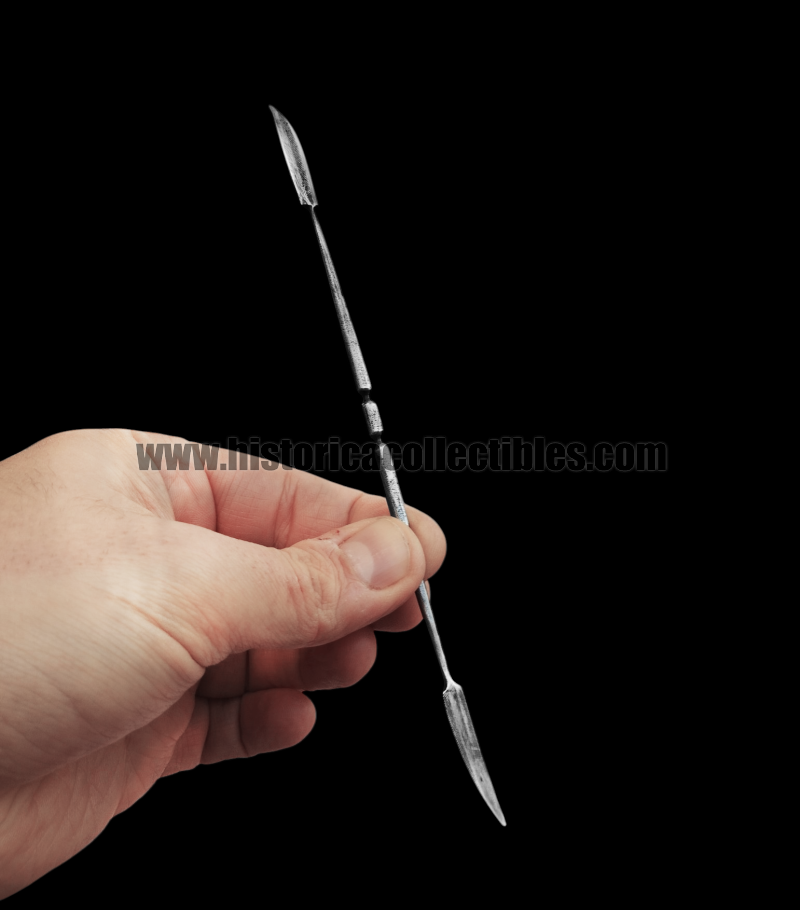
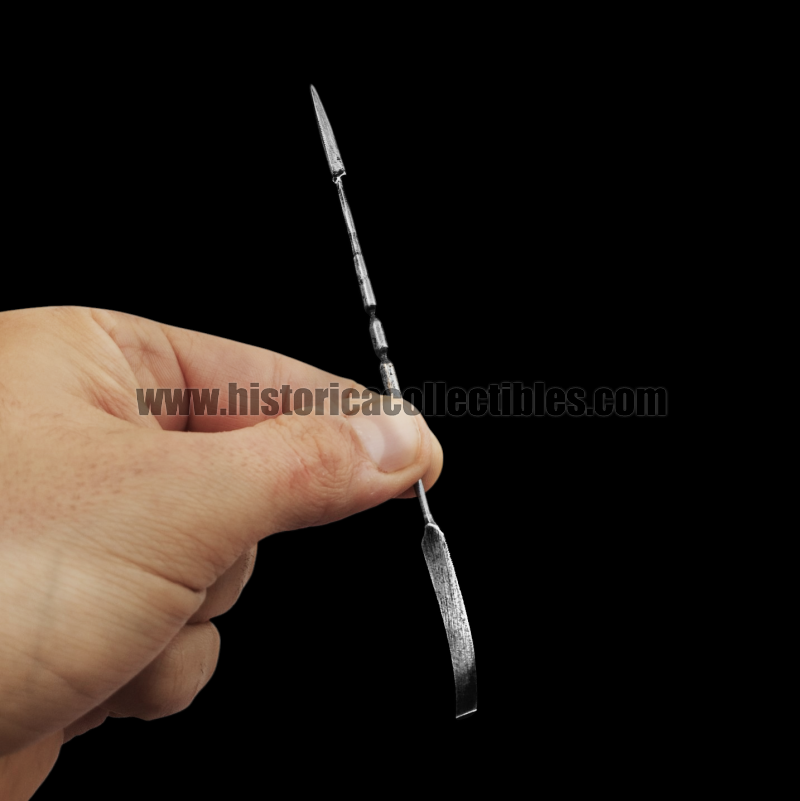
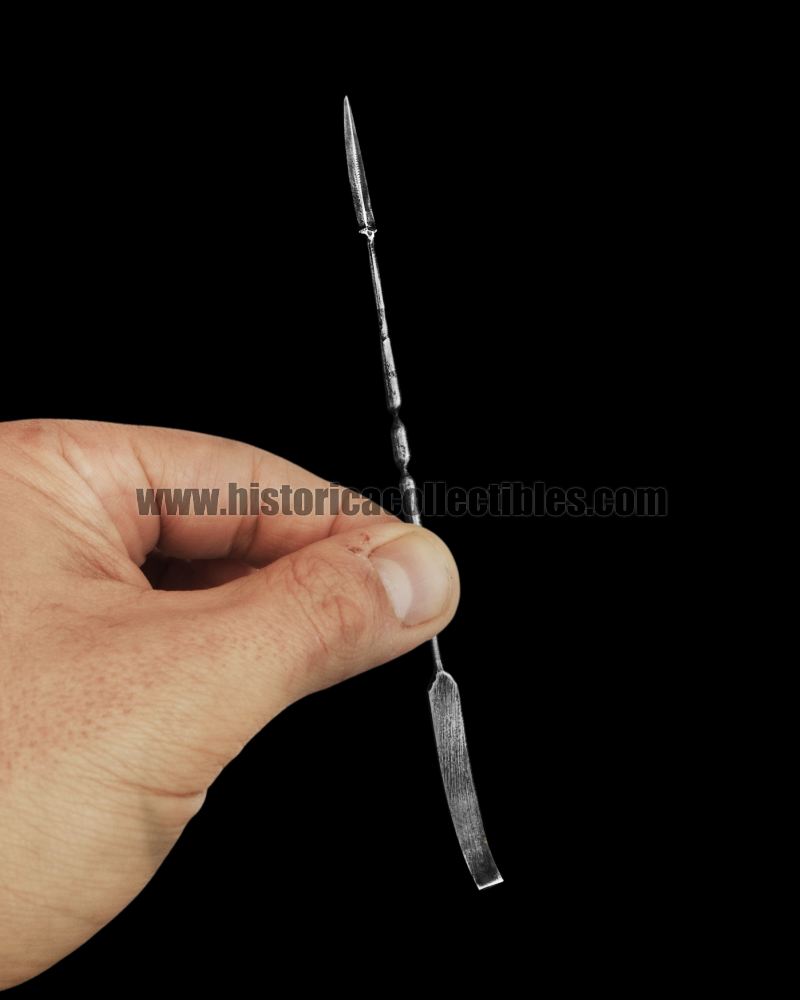
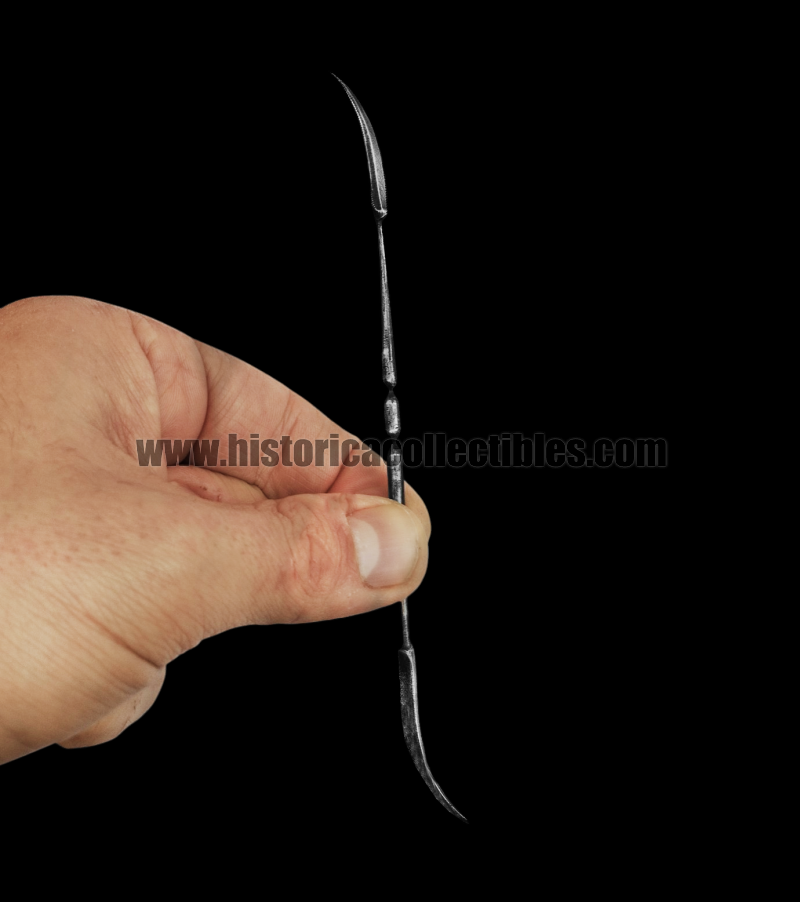
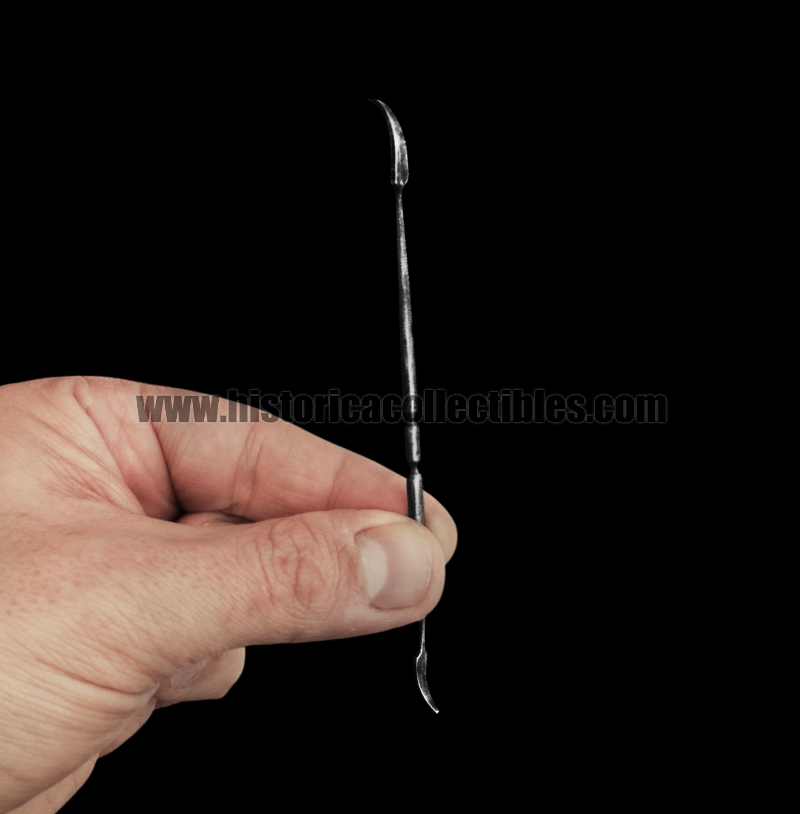
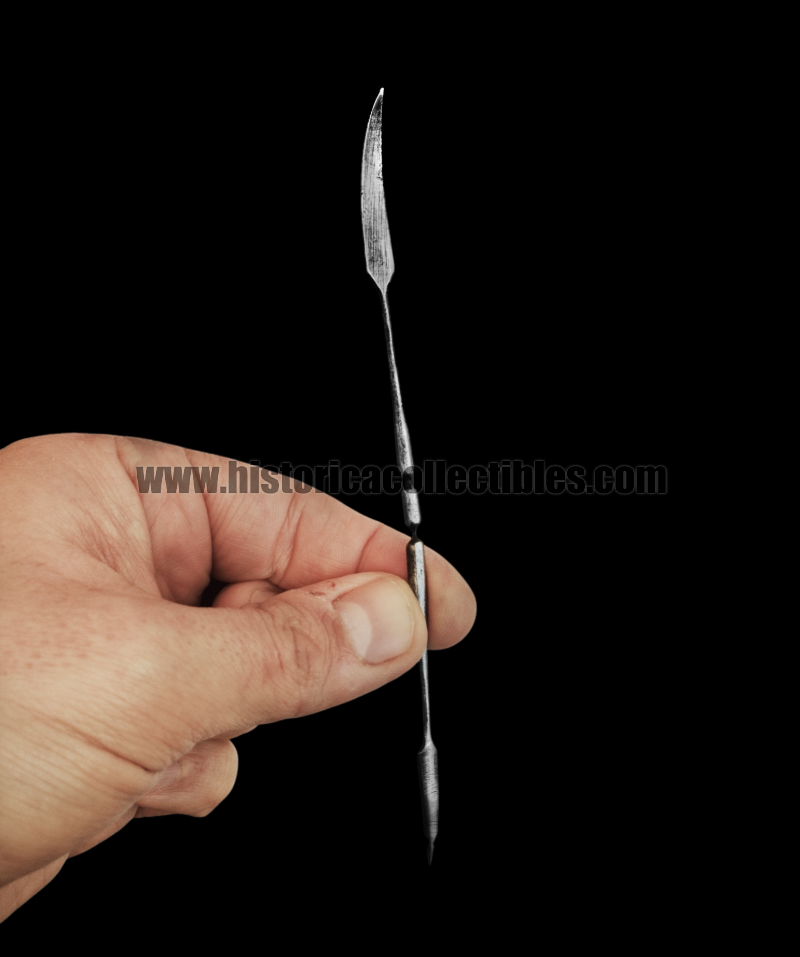
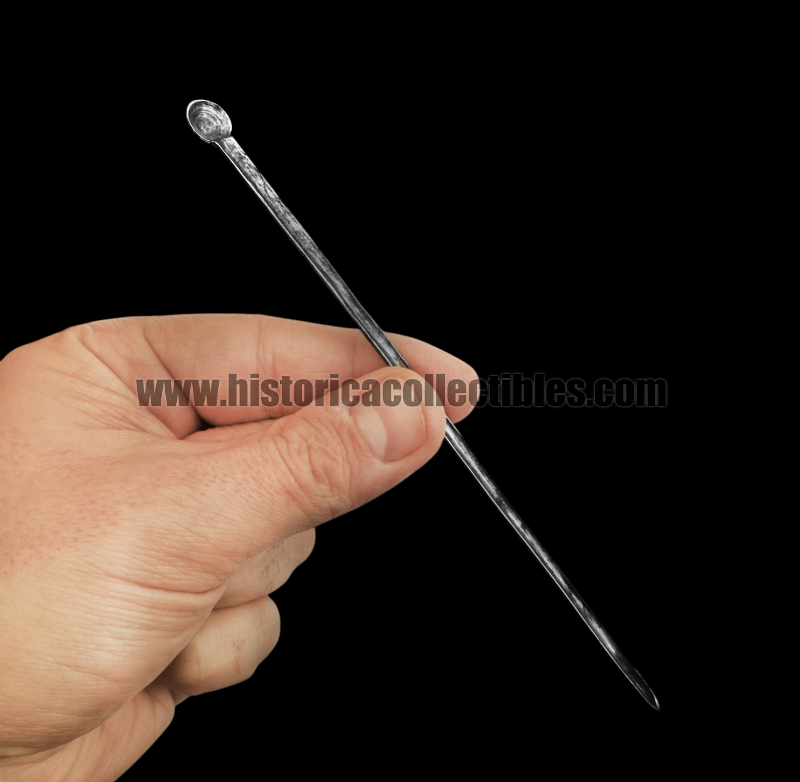



An important set of ten wrought-iron surgical instruments, dating between 1680 and 1730, designed for use by surgeons and doctors for both surgical and dental procedures, according to the practices popular during the Baroque period.
The set includes scalpels, spatulas, scrapers, chisels, files, and more, demonstrating the great versatility required of medical professionals of the time, who were required to operate with multifunctional instruments for a wide range of procedures.
In fact, almost all the instruments not only have dual functions, but each part has multiple uses: the scalpels, for example, have opposing edges on a single end.
All the pieces display the characteristic "spool" workmanship, which is less pronounced than that of instruments from the first half of the 17th century. With the end of the Baroque and the advent of the Rococo, the forms became lighter, favoring thin, less elaborate curved lines compared to the traditional designs of the time. Each instrument also features more advanced functional workmanship than similar instruments produced in previous periods: shapes, sharpening, serrations, and application details are more accurate and refined.
Despite the functional precision, the decorative finish suggests a high-ranking patron, likely a particularly prestigious surgeon.
The ensemble therefore represents significant evidence both of the evolution of surgical practices in the Baroque era and of the exceptional expertise of master blacksmiths in working iron and crafting medical instruments.