
Cufflinks gift by Gabriele d'Annunzio to Lieutenant Riccardo Frassetto (Jurior of Ronchi), circa 1919
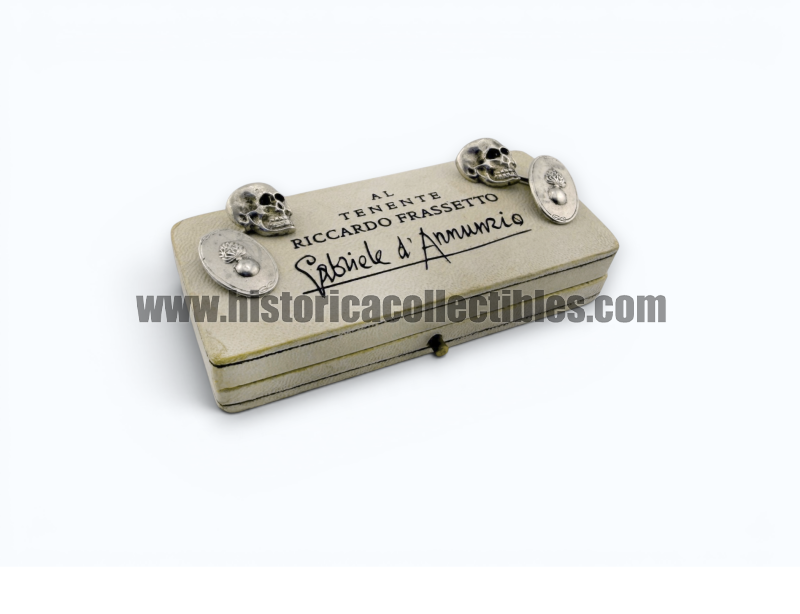
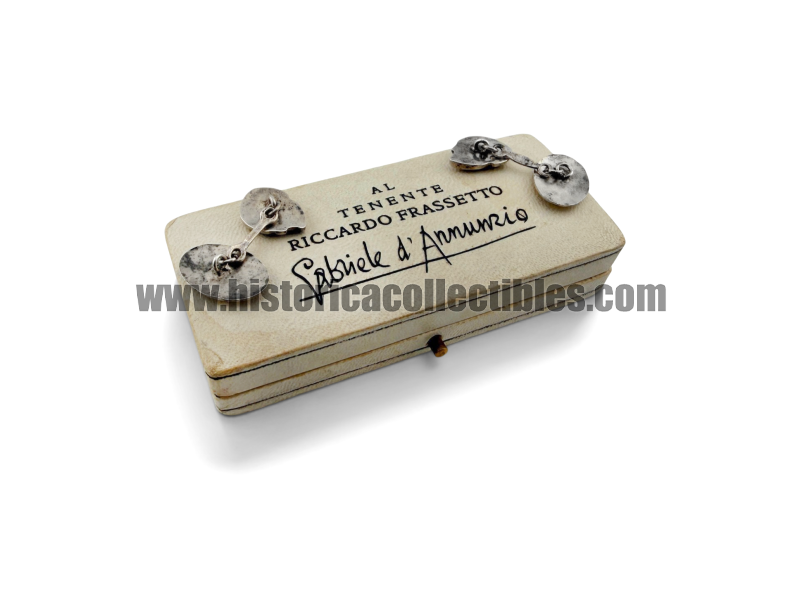
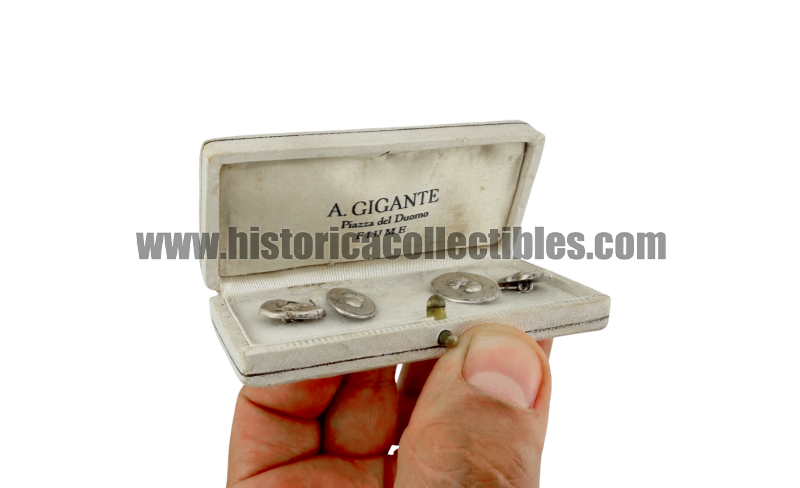
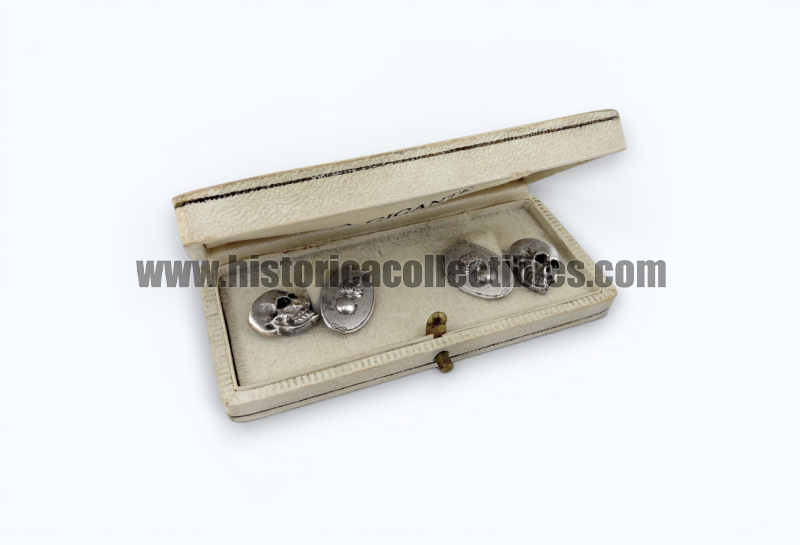
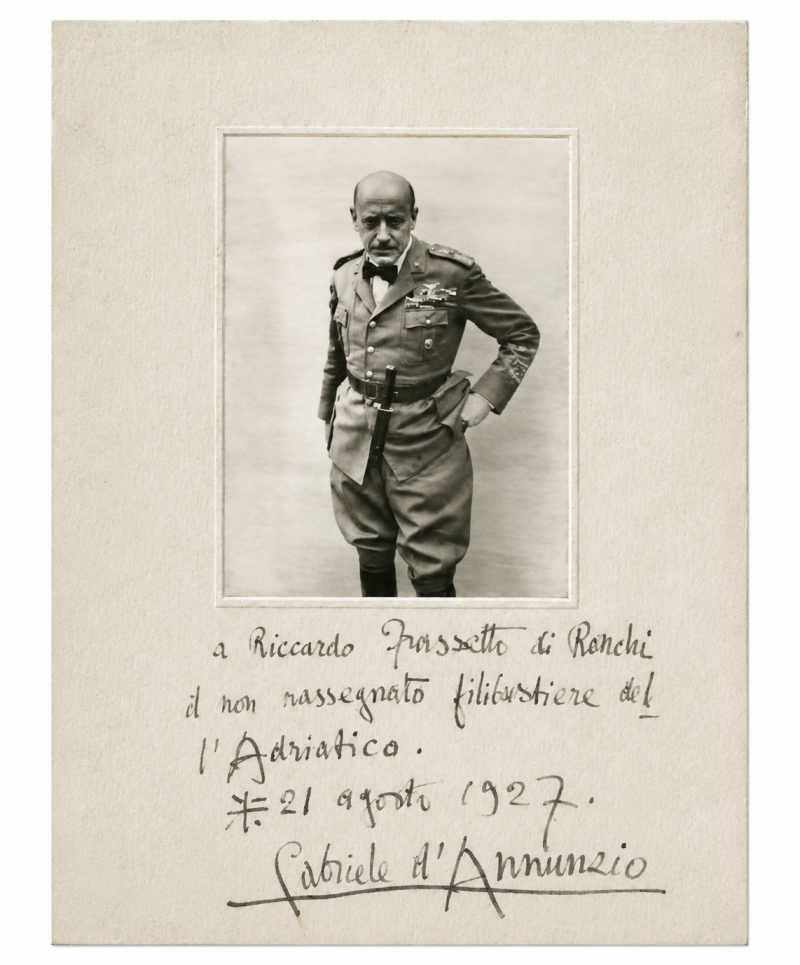
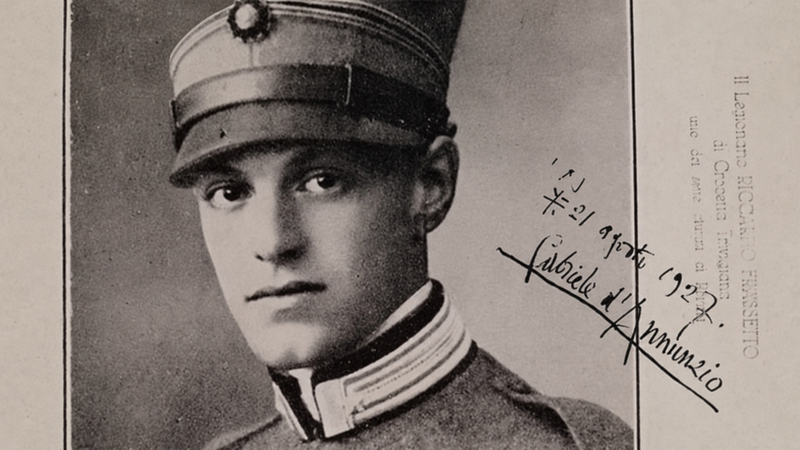
A pair of cufflinks crafted by the prestigious goldsmith Agostino Gigante from Fiume and donated by Gabriele d'Annunzio to Lieutenant Riccardo Frassetto, an officer of the Sardinian Grenadiers and a key figure in the initiators of the Fiume Expedition.
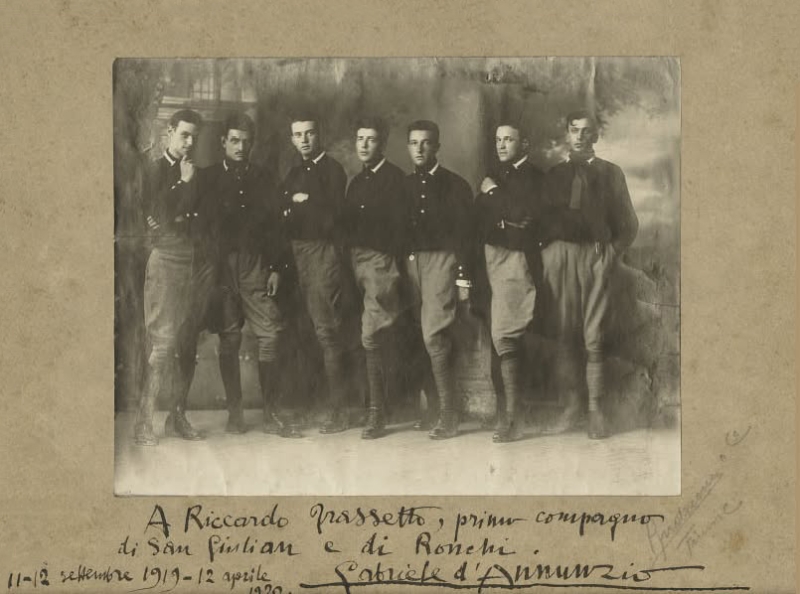
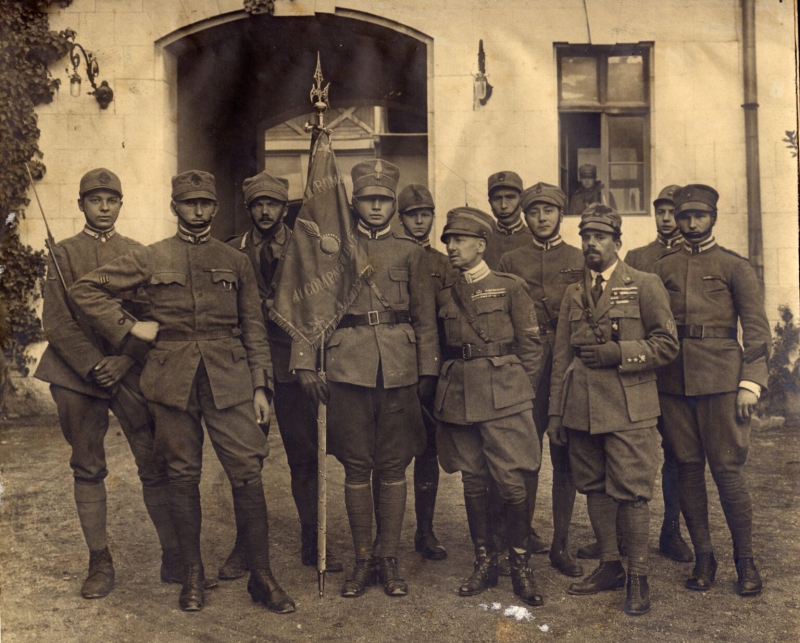
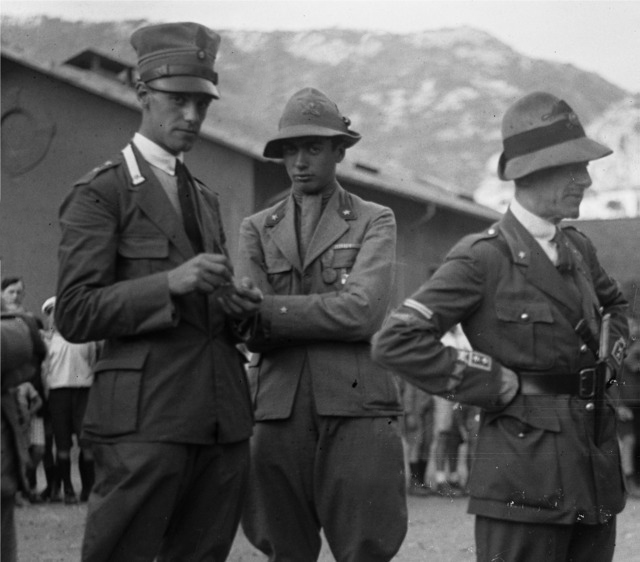
Frassetto was, in fact, the main figurehead of the famous "Seven Jurors of Ronchi," the group of officers who, on August 28, 1919, in Ronchi di Monfalcone, drafted the historic letter addressed to d'Annunzio, entrusting him with the moral and operational command of the expedition destined to march on Fiume. Frassetto himself personally delivered the document at d'Annunzio's famous "Red House" in Venice. On that occasion, the officers signed the "River or Death!" oath, an act that symbolically marked the beginning of the legendary Fiume Expedition.
The cufflinks, of refined workmanship, feature a particularly significant iconographic composition: on one side, the skull, symbol of the daring and fighting spirit that characterised the Fiume epic, on the other, the emblem of the Grenadiers of Sardinia, the corps from which Lieutenant Frassetto came.
The set is housed in an elegant white box with black trim. The choice of white takes on a highly symbolic meaning in D'Annunzio's thought. For the poet, white represented purity, idealism, and sacredness. In the early days of the Enterprise, he described Fiume as a bride dressed in white, pure and uncontaminated, ready to mystically reunite with Italy. White thus became the emblem of unredeemed Italianness, demanding to finally be welcomed by the motherland.
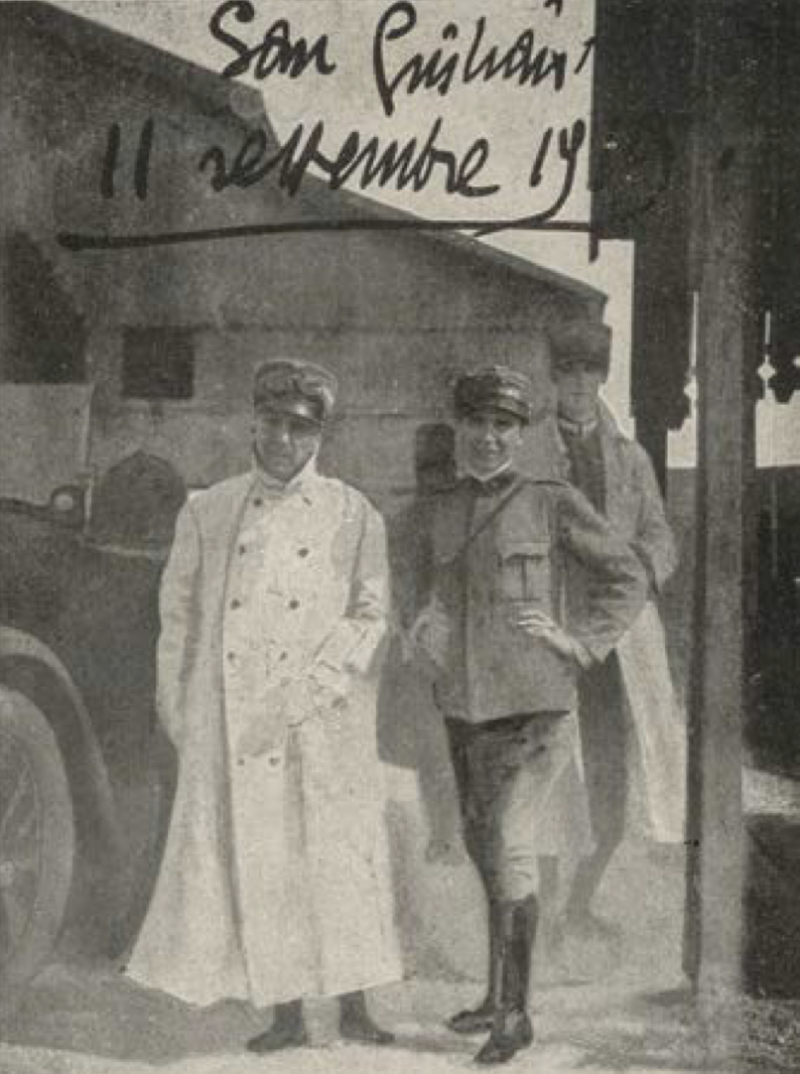
In all likelihood, d'Annunzio gave these cufflinks to Lieutenant Frassetto in September 1919. Supporting this hypothesis is one of the most famous photographs depicting the two protagonists together, taken on September 11, 1919, in San Giuliano di Mestre. In the image, both are wearing white duster coats and posing next to the historic Fiat Tipo 4, now preserved at the Vittoriale degli Italiani. The shot immortalizes the moments immediately preceding the departure of the expedition destined to enter the Kvarner city.
However, it cannot be ruled out that the gift was commissioned and delivered at a later date, likely during 1920, as a token of gratitude and a personal bond developed during the Rijeka experience.
The lid of the case bears the dedication: "To Lieutenant Frassetto," followed by the "autograph signature" of "Gabriele d'Annunzio."
The inscriptions are embossed, not handwritten with ink or a fountain pen. This characteristic suggests they were created concurrently with the case's production, likely using stamping, punching, or hot stamping techniques compatible with the techniques used by the finest goldsmiths of the time, which were specifically trained to personalize the case.
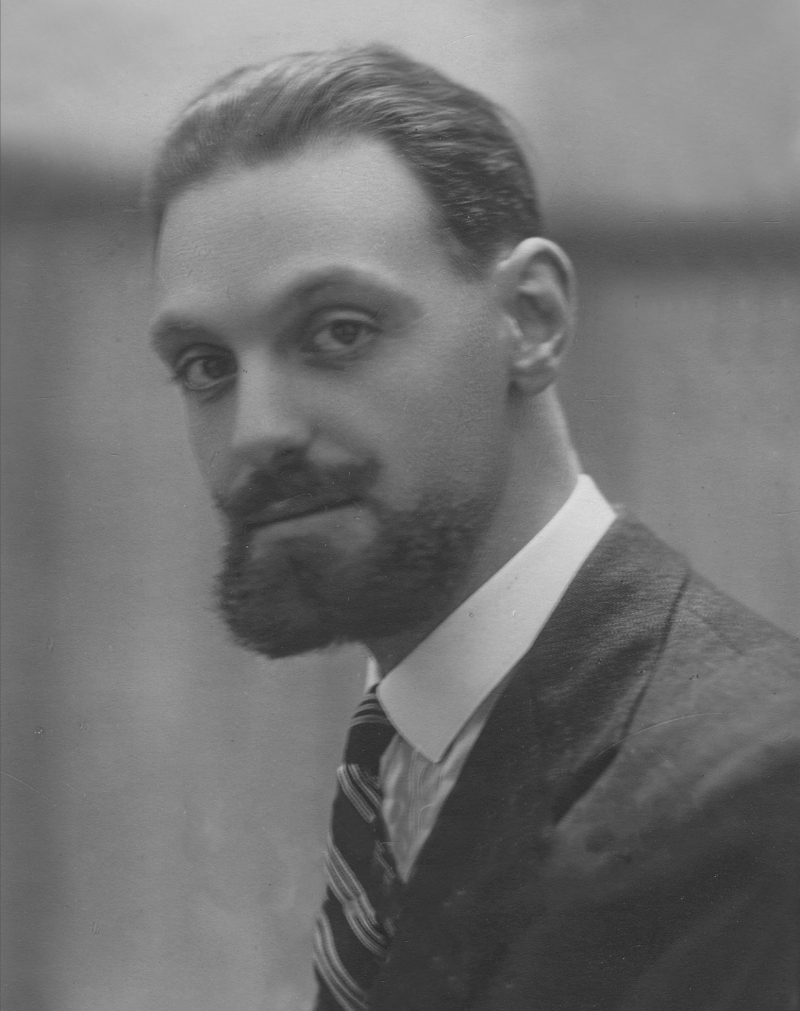
Riccardo Frassetto (Il Piave newspaper, June 10, 2024):
Riccardo Frassetto, although born in Rome in 1893, was originally from Treviso, from Crocetta del Montello, the hometown of the Frassetto family. He led an adventurous life, possessed exemplary intellectual vivacity, and had a natural aptitude for writing and debate. He had a strong personality, with recognized leadership qualities. He served as a lieutenant in the Sardinian Grenadiers during the Great War, where he was wounded three times.
In 1919, he was a promoter and key figure in D'Annunzio's Fiume Expedition. He maintained a twenty-year friendship with Gabriele d’Annunzio, based on trust and friendship, until the poet’s death in 1938. He wrote for the “Corriere dei Piccoli,” collaborated with the SIAE (Italian Society of Authors and Publishers), and in 1937 moved to Rome as the official photographer for E42, now known as EUR, the 1942 Rome Universal Exposition, which never took place due to the war. In 1941, he was called up as a major in the Second World War and fought in Albania and Greece. In 1943, he was captured in Athens by the Germans and interned in a concentration camp in Germany.
Returning to Italy, he settled in Treviso, where he died in 1964 at the age of 71.
He wrote two books: “I Disertori di Ronchi” (The Deserters of Ronchi) in 1926, was approved by Commander d’Annunzio with the following words: “Thank you for your beautiful book. Dear Riccardo, now you are an author among authors.” The publication reports the facts and background to the Enterprise, and is considered by historians to be a reliable account of the events in Fiume. "Fiume o Morte" (Fiume or Death), published in 1940, was not as successful as the first due to Italy's entry into the war and a bomb that hit the depot where they were stored.
The third, along with futurists Tommaso Marinetti and Mino Somenzi, was halted before it was even begun, again due to the war. On August 28, 1919, he wrote a letter from Ronchi di Monfalcone, on behalf of six other young officers, to Gabriele d'Annunzio, who was then residing in Venice, at the Casa Rossa.
Goldsmith Agostino Gigante of Rijeka:
The goldsmith's workshop: In the second half of the 19th century, together with Paolo Scarpa, he founded the firm "Gigante & Co." Their workshop in Rijeka (Fiume) quickly became the most important manufacturing workshop specializing in the creation of blackamoors and jewelry, all handcrafted without the aid of machinery. Gigante's jewelry spread beyond the local borders, receiving extraordinary recognition and medals at the World Exhibitions in Vienna (1873) and Paris (1878).
When the firm finally closed in 1925 (following Agostino's death), the equipment and catalogs were purchased by the Giraldis.
Historical note and curiosity: Agostino Gigante was also the father of Riccardo Gigante, an Italian irredentist, intellectual, volunteer in the First World War, later mayor of Rijeka, and a close associate of d'Annunzio during the Regency of Carnaro. In 1921, Riccardo Gigante fought Zanella's autonomists and served as mayor of Fiume from 1930 to 1934, when he was appointed senator of the Kingdom of Italy for patriotic reasons. He joined the RSI and served briefly as prefect of Fiume during the German occupation. He was killed in unclear circumstances in May 1945, when Tito's Yugoslav troops entered Fiume.
References:
"Il Piave" Newspaper Part I: https://www.ilpiave.it/gabriele-dannunzio-e-riccar...
"Il Piave" Newspaper Part II: https://www.ilpiave.it/gabriele-dannunzio-e-riccar...
National Association of Sardinian Grenadiers: https://www.granatieridisardegnapresidenza.it/2019...
The Vittoriale of the Italians: https://www.vittoriale.it/frassetto-torna-al-vitto...
National Association of Venice, Giulia and Dalmatia: https://www.anvgd.it/riccardo-frassetto-giurato-di...
Qdpnews (Piave Daily): https://www.youtube.com/watch?v=v3m39zHm6xA